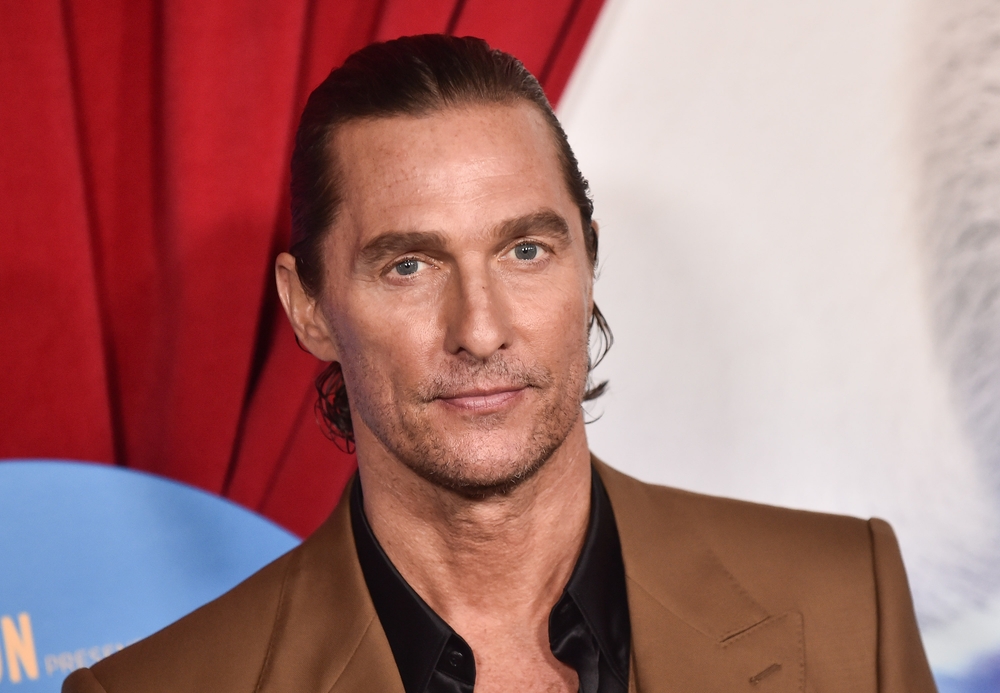

Something strange happened in early 2026 when Jim Carrey walked out onto a Paris stage to accept an honorary César Award. The photographs that landed on social media a few hours later triggered a reaction that had nothing to do with his speech, his French-language prep, or his lifetime of work. People stared at his face. They screenshotted it. They put it next to a still from Ace Ventura and asked, in varying degrees of concern and conspiracy, what had happened to him.
Carrey is not the only one. Matthew McConaughey showed up at a gala dinner in New York in the fall of 2024 and the internet ran the same drill: the screenshots, the side-by-sides, the “WTF happened to his face?” posts circulating on X within hours. Simon Cowell has been living this reality for years, his changing appearance dissected so relentlessly that he eventually admitted, in a moment of unusual candor, that he hadn’t recognized himself in an old photo. And lurking in the background of every conversation are Bradley Cooper, Tom Cruise, Zac Efron, each of them the subject of the same forensic public analysis that women in Hollywood have endured for decades.
So what is actually going on? The answers are more layered than a single verdict of “had work done” or “aged naturally” ever allows. Male celebrity plastic surgery is now a real, documented, growing trend, and the forces driving it are reshaping not just Hollywood faces but the culture of beauty itself.
What Jim Carrey’s César Moment Actually Set Off
Jim Carrey attended the César Awards in Paris, spending months learning French and crafting a speech to accept an honorary César for lifetime achievement on February 26. But once photos of the 64-year-old comedian hit the internet, the conversation shifted fast from his words to his appearance.
According to this Yahoo/AP report, side-by-side images of Carrey “then and now” circulated widely, with commenters zeroing in on what they perceived as a fuller, smoother look. Social media users began speculating about possible cosmetic procedures, facial fillers, and plastic surgery. Some went further: conspiracy theories about clones briefly trended. For an actor whose entire career has been built on the elasticity of his face, the idea that it had changed felt, to some fans, like something more than a cosmetic question.
Experts say the ongoing chatter points to a bigger issue, not specifically about Carrey but about a shift in how we view male aging and cosmetic intervention. Are male celebrities now stepping into the same ruthless beauty spotlight that women have endured for decades?
Women in the public eye have long faced a “lose-lose” equation. “If they age naturally, they’re dismissed as ‘old and ugly,'” says Sarah Kornfield, a gender studies professor at Hope College. “And if they intervene with Ozempic or plastic surgery, they’re critiqued for being ‘fake.'” Men, by contrast, have largely been spared from this level of scrutiny.
The scrutiny directed at Carrey, though, may reflect something more specific to his situation. The backlash seems rooted less in vanity and more in perceived authenticity. “We see a huge accusation of inauthenticity,” says Kornfield. For an actor whose career has relied on the mobility and expressiveness of his face, the idea that it has changed can feel, to some fans, like a betrayal.
As for what actually changed: plastic surgeon Dr. Paul Rosenberg speculates that some men, wary of surgical scars, choose filler instead, but “the filler is overfilled,” and this is what may have happened with Carrey. No procedure has been confirmed. The claim that plastic surgery explains Carrey’s new face remains unconfirmed. No verified statement from Carrey or his representatives has confirmed any cosmetic procedure. Other explanations, including different styling, a clean shave, harsh event lighting, and simply the passage of time, are all on the table.
The Matthew McConaughey Question
Matthew McConaughey’s most recent appearance caused alarm when he attended Kering’s 3rd Annual Caring For Women Dinner in New York City in September 2024. Social media exploded with shock and speculation over the actor’s gaunt face and slimmed-down appearance, with some suggesting he may have taken extreme measures to lose weight.
The theories ranged from Ozempic use to rhinoplasty. But a plastic surgeon who analyzed the images reached a quieter conclusion. Consultant plastic surgeon Reza Nassab recently weighed in, offering a professional perspective on what really happened to the actor’s face. According to Nassab, the changes are likely due to natural weight fluctuations rather than any form of cosmetic surgery. He dismissed the idea that the actor had undergone rhinoplasty, and went on to explain how significant weight loss can alter someone’s facial features.
A person’s facial features can change as a result of weight loss, with the reduction in facial fat making features appear more defined and prominent, including the nose. “This natural shift in appearance due to weight loss can often lead people to assume cosmetic procedures have taken place, but in this case, the change in his face could easily be because of his weight loss,” Nassab noted.
McConaughey has always been willing to reshape himself for a role, having dramatically dropped weight for his Oscar-winning turn in Dallas Buyers Club. This time, however, sources close to the actor insist the weight loss doesn’t seem to be for a role, with concerns that he may be feeling pressure to conform to Hollywood’s skinny standards. What makes this case interesting is how quickly “weight loss” gets read as “surgery” when the face in question belongs to a celebrity.
Simon Cowell and the Cautionary Arc

If Carrey and McConaughey represent the speculation end of this conversation, Simon Cowell represents something rarer: a celebrity who has actually talked. As AOL/People reports, during an April 2022 interview with The Sun, Cowell admitted he had gone overboard with cosmetic work at one point, so much so that he didn’t recognize himself. “There was a stage where I might have gone a bit too far,” he said, adding that many people in Hollywood were “having their faces pumped full of this and that.”
Cowell’s son Eric is the reason he stopped getting facial filler. Reflecting on the moment he realized he had gone “too far,” he said Eric “was in hysterics,” and he looked like “something out of a horror film.” “Enough was enough. There is no filler in my face at all now. Zero,” he said.
A board-certified plastic surgeon reviewing Cowell’s face concluded that he had relied on Botox and fillers through 2024. “The forehead and glabella are very smooth, which is uncommon for a male of his age,” the surgeon noted. But that smoothness comes with a tradeoff: “When we over-paralyze the forehead, the brow often loses its natural arch and begins to descend, which is exactly why his eyes look so much heavier and more crowded now.”
Cowell’s story is worth sitting with, because it illustrates the central paradox of non-surgical cosmetic work. The appeal of fillers over surgery is that they seem safer, less dramatic, easier to walk back. But the accumulation of repeated filler sessions, without surgical correction of the underlying tissue, can produce exactly the unnatural heaviness that makes people stare. Now, Cowell focuses on healthy eating and increasing his water intake, telling The Sun in November 2025 that he’s “aged backwards” thanks to “more exercise, less stress, and certain supplements.”
Zac Efron, Bradley Cooper, and the Anatomy of Speculation
Zac Efron’s jawline became a major talking point online after fans speculated he had undergone plastic surgery. However, the actor addressed the rumors directly in an interview with Men’s Health, saying the change followed a serious accident that shattered his jaw. He slipped while running through his house in socks and struck his chin on a granite fountain, losing consciousness and suffering a severe jaw injury. During recovery, his masseter muscles, the ones used for chewing, began to change. “The masseters just grew,” Efron explained. “They just got really, really big.” An injury that sounds like it belongs in a slapstick movie had remodeled one of the most scrutinized jawlines in Hollywood.
Bradley Cooper’s case is more ambiguous. According to cosmetic expert analysis, Dr. Rian Maercks suggested Cooper may have undergone a treatment designed to tighten the neck or outer face. Dr. Gary Linkov, analyzing Cooper’s features in a January 2026 video, suggested he may have added volume to his cheeks, noting they appear fuller and extend further toward the outer cheekbone than in earlier photos, which can sometimes indicate the use of filler. Cooper has not commented publicly on any of this.
In recent years, the appearances of Bradley Cooper, Zac Efron, and Tom Cruise have all faced speculation. While each has denied undergoing cosmetic surgery, the fact that the public is now analyzing changes in their jawlines and cheekbones suggests that the scrutiny once reserved for women is expanding. You can read more about AI Shows What Michael Jackson Would Like at 50 Without Plastic Surgery. and what that pressure does to ordinary people’s relationship with their own faces.
The Real Trend Underneath All of This

None of this is happening in isolation. Male celebrity plastic surgery is not just tabloid chatter. It reflects a statistically documented cultural shift.
The AAFPRS 2024 annual survey released its findings in February 2025, noting an ongoing boom in male cosmetic surgeries as advancements in medicine, evolving societal norms, and cultural influences fueled growing demand. The survey found that 92 percent of AAFPRS surgeons reported male patients in their practice, with blepharoplasty, rhinoplasty, and facelifts being the most common surgeries among men. Non-surgical treatments are gaining particular traction, especially neurotoxins like Botox, increasingly sought by men striving to look refreshed and maintain a competitive advantage. Neurotoxins, fillers, and skin treatments remain the top three non-surgical procedures among male patients.
Remote work culture and social media normalization have made men more comfortable with aesthetic enhancement. Spending hours on video calls will do that. When you can see your own face at that resolution, on a screen, every working day, what you notice is different from what you catch in a passing mirror.
Globally, eyelid surgery was the most popular surgical procedure among men in 2024, followed by gynecomastia and scar revision. That’s the same procedure multiple surgeons have pointed to in their analyses of Jim Carrey’s appearance. It is also, quietly, the fastest-growing cosmetic surgery in the world: eyelid surgery surged 13.4% between 2023 and 2024, according to the International Society of Aesthetic Plastic Surgery.
There’s also the Ozempic factor. As GLP-1 medications like Ozempic drive rapid weight loss, more patients are turning to facial plastic surgery to address the resulting aesthetic concerns. Facial plastic surgeons reported a 50 percent rise in fat grafting procedures over the past year, a trend likely fueled by patients addressing “Ozempic Face” and aiming to restore lost volume. When weight falls off quickly, the face often hollows in ways that read, to a casual observer, as “something is different about them” without being obviously surgical. This may well explain a portion of what people are seeing in male celebrities who appear dramatically changed without any confirmed procedure.
More men are seeking cosmetic procedures, influenced by social media, “looksmaxxing” culture, and anxiety about aging, but they’re still more hesitant about surgery than women. As a result, some opt for less invasive treatments. “They’re more fearful,” says Dr. Rosenberg. “They enter into doing something moderate in order to avoid what they believe are going to be some telltale scars.” “So they’ll have filler, for instance, but the filler is overfilled.”
That’s the irony tucked inside the male celebrity plastic surgery conversation. The very hesitation men bring to cosmetic procedures, the desire to avoid looking like they’ve had anything done, can produce the most noticeable and hardest-to-reverse results.
Read More: What Has Tom Cruise Done to His Face?
What We’re Actually Looking At

The celebrity face moment has become its own genre of social media content. A star appears somewhere after months away. Photos land. The internet dissects. Surgeons who have never met the person in question weigh in. Theories multiply. And somewhere underneath all of it is a real human being who is aging, or not aging, or responding to professional and social pressures that most of us will never fully understand.
What’s worth sitting with is what this scrutiny reveals about the rest of us. Women have been subjected to it for so long that it barely registers as unusual anymore. The fact that it’s now happening to men, that we’re zooming into Jim Carrey’s temples and measuring Bradley Cooper’s cheekbone projection, suggests the cultural obsession with faces and what they mean has not narrowed. It’s expanded.
The “shocking” part of any male celebrity transformation is often less about what a surgeon may or may not have done and more about the realization that men are not immune from this particular pressure. They never were. The industry that will recast a woman in her early forties as “too old” has always had opinions about what a leading man’s face should look like at 60. The difference now is that the conversation is happening in public, loudly, with screenshots, and without anyone’s permission.
Whether Jim Carrey had something done or simply arrived at a Paris awards ceremony looking different than he did in a twenty-year-old film reel, one thing is clear: the moment a famous man’s face changes, the world wants to know why. That instinct, more than any filler or facelift, is the thing that actually needs examining. Men in Hollywood have always faced pressure to look a certain way. The difference now is that we’re all watching, in real time, what happens when they respond to it.
AI Disclaimer: This article was created with the assistance of AI tools and reviewed by a human editor.