

Picking where to retire is one of the biggest financial decisions most people will ever make, and it doesn’t always get the careful thought it deserves. Most people spend more time choosing a car than they spend analyzing whether their state is slowly draining their retirement savings through income taxes, healthcare costs, or a cost of living that outpaces a fixed income year after year.
The difference between retiring in the right state and the wrong one can add up to tens of thousands of dollars over a decade, not counting the quality-of-life gap. Your zip code doesn’t just determine the weather. It determines how far your Social Security check goes, how much of your IRA withdrawal stays in your pocket, and how easily you can access decent healthcare at 75. For anyone who has watched retirement savings take longer to grow than expected, where you land matters enormously.
So what actually makes a state good or bad for retirement? It comes down to three things: the tax picture, the cost of living, and healthcare access. Some states win on all three. Many win on one and fail the others. And a handful manage to work against retirees on every front at once.
The 13 Best States To Retire In 2026

WalletHub’s 2026 study compared all 50 states across 46 key indicators of retirement-friendliness, from financial factors like tax rates and cost of living to access to quality medical care and recreational activities, noting that 65% of non-retired adults say their retirement savings aren’t on track. Senior care company CareScout took a complementary approach, examining affordability, quality of life, and healthcare access together. The two analyses don’t always agree on exact rankings, but they paint a consistent picture of which states genuinely work for retirees in 2026 and which ones are working against them.
1. Wyoming
Wyoming tops the 2026 retirement rankings, largely due to affordability. Adjusted for retirees’ needs, Wyoming’s cost of living falls in the more affordable half of the nation, and the state is highly friendly to retired taxpayers, offering no estate or inheritance tax. There is no state income tax at all, which means Social Security, pension, and 401(k) withdrawals arrive in full without the state taking a cut.
On quality of life, Wyoming has the 10th-best elder abuse protections in the country and the fifth-lowest violent crime rate. Its communities are tightly knit, with low rates of social isolation among seniors and high rates of volunteerism. The trade-off is real: winters are harsh, and Wyoming’s healthcare quality is below average, with few public hospitals earning high ratings and a low number of top-rated geriatric specialists relative to retirees’ needs. For someone who values financial freedom over urban amenities, Wyoming is genuinely hard to beat.
2. Florida
Florida is the retirement classic, and there’s a reason it keeps showing up near the top of every credible list. Florida has no state income tax, no estate or inheritance tax, and does not tax Social Security benefits or retirement-plan distributions. The state also receives more funding per senior from the Older Americans Act than all but two other states, money that goes toward transportation, homemaker assistance, and nutrition programs.
Florida has the second-most adult volunteer activities, fifth-most theater companies, and eighth-most golf courses and country clubs in the country, giving seniors plenty of ways to stay healthy and active. That activity level shows up in the data: Florida has the third-lowest death rate for people ages 65+. The downsides are real and worth naming. Hurricanes are unpredictable and can significantly drive up homeowners’ insurance premiums, while HOA fees are rising in the most desirable areas. Avoiding regions particularly prone to hurricanes or floods helps keep insurance bills under control.
3. South Dakota
South Dakota has no state income tax, which immediately makes it attractive for anyone drawing from a 401(k) or IRA. According to spending data from Plootus Research, the average cost of living there is 4% below the national average, and annual spending for a comfortable retirement in South Dakota runs around $60,998. For comparison, Tennessee’s equivalent figure is around $55,425, the seventh-lowest in the country, and North Dakota’s is around $61,222. All three states sit well below the national norm.
South Dakota also has one of the highest numbers of arts, entertainment, and recreation businesses per capita. Cities like Rapid City and Sioux Falls offer genuine cultural infrastructure that surprises people who picture only wide-open prairie. Around 20% of the state’s population is already aged 65 or older, which means the senior services and community networks for retirees are well-established. Add in outdoor access – Badlands National Park, Mount Rushmore, the Black Hills – and South Dakota makes a compelling case that frequently gets overlooked.
4. Tennessee
Tennessee consistently ranks among the best states to retire for anyone watching their budget. The cost of living is 12% below the U.S. average, and the state has no income tax, helping retirement income go further.
Nashville and Chattanooga offer real urban amenities – music, food, arts scenes that punch above their weight – while smaller cities like Knoxville and Franklin give retirees a more relaxed pace without sacrificing access to services. The climate is mild by most standards, with genuine four seasons that don’t veer into Wyoming extremes. Healthcare quality in major metro areas is solid, though rural Tennessee is more limited. If affordability is the top priority and warmth without Florida’s insurance headaches sounds appealing, Tennessee belongs on the short list.
5. New Hampshire
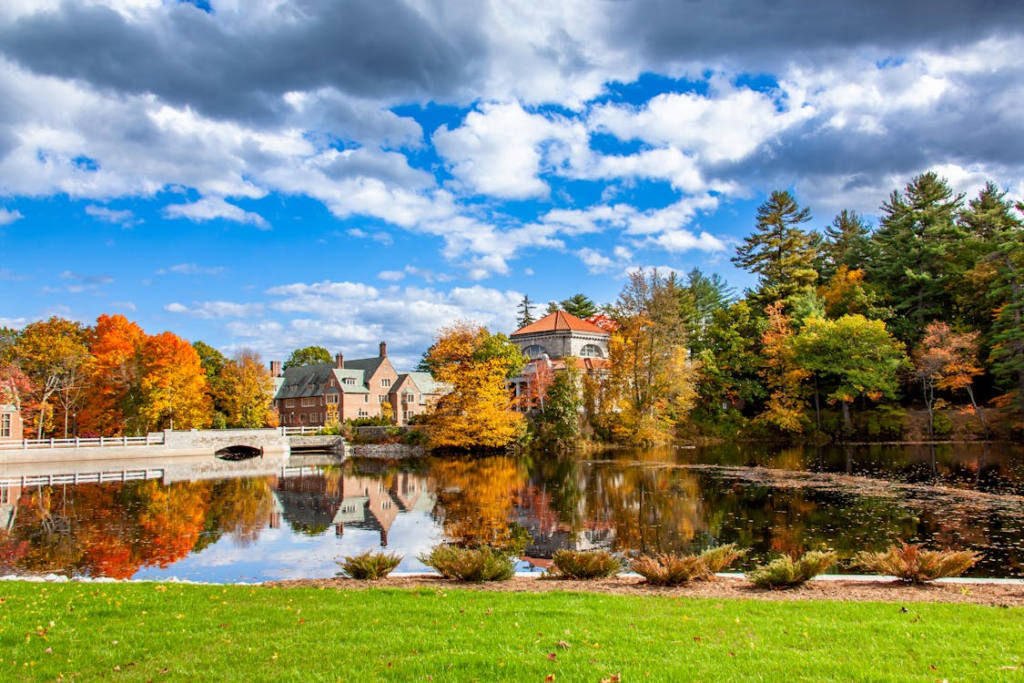
New Hampshire’s appeal is less obvious than Florida’s but arguably more durable. The state does not tax wages or Social Security and is phasing out investment income taxes. There is no state sales tax either, which makes daily spending significantly cheaper than in most neighboring Northeastern states. While the cost of living is about 18% above the national average, this is partially offset by the favorable tax picture, and New Hampshire ranks fifth in the country for senior healthcare quality.
The state’s safety record is consistently strong, its small-town character is genuinely distinctive, and the fall foliage is as good as advertised. The winters are cold and snowy, and housing costs in popular areas like Portsmouth and the Lakes Region have crept up. For retirees who want top-tier healthcare, real safety, and tax relief in a region most people write off as too expensive, New Hampshire delivers.
6. Colorado
Colorado’s tax picture is more complicated than it first appears, but it works in retirees’ favor once you look closer. Colorado charges a 4.4% state income tax rate, but the state allows individuals 65 and older to deduct Social Security benefits entirely for state tax purposes. Residents aged 55 to 64 can still claim deductions on Social Security income if their adjusted gross income falls under $75,000 as a single filer, or $95,000 for married couples filing jointly.
Beyond taxes, Colorado’s quality-of-life score for retirees is exceptional. Five national parks, the Rocky Mountains, a genuine outdoor culture, and cities like Colorado Springs, Fort Collins, and Boulder that are walkable and culturally rich. The trade-off is cost: urban Colorado has become expensive, and winters at elevation are serious. For retirees who are healthy, active, and plan to spend their days outdoors rather than inside a condo, Colorado’s combination of natural access and reasonable tax treatment is worth the premium.
7. Montana
Montana has been climbing retirement rankings steadily. CareScout’s 2026 analysis found that Montana scored well across measures of affordability, tax policy, and quality of life, earning a spot among the top five states overall for retirement. There is no state sales tax, which is a meaningful day-to-day saving. Housing in most of the state remains affordable relative to its scenery, though Bozeman and Whitefish have gotten expensive as remote workers moved in.
Montana partially taxes Social Security and other retirement income, which is worth planning around if Social Security is a primary income source. The healthcare network is thin outside Billings and Missoula, so proximity to a well-equipped hospital matters when choosing where to settle. For retirees who want big sky country without Wyoming’s full cold-weather trade-off, and who have a mix of retirement income sources that can work around the state tax, Montana is a serious option.
8. Texas
Texas has no state income tax and does not tax Social Security benefits, and for retirees with significant retirement account balances, that’s a substantial annual saving. Low housing prices and a generally low cost of living continue drawing new retirees to cities like San Antonio, Austin, and the Hill Country.
The honest trade-offs: property taxes run between 1.3% and 1.8%, higher than Florida and California, and housing costs have been rising over the past decade as businesses and workers have relocated to the state. Harsh summers, unpredictable winters, floods, and tornadoes all drive up home insurance and energy costs. Texas works best for retirees who are heat-tolerant, own modest property rather than a high-value home, and want to stay close to major family hubs like Houston, Dallas, or San Antonio.
9. Georgia

Georgia is widely considered retirement-friendly because it offers generous retirement income exclusions while still maintaining a state income tax. Social Security is fully exempt from state taxes, and the overall cost of living is below the national average. Cities like Savannah offer that rare combination of genuine charm, walkability, mild winters, and a strong community of retirees, without Florida’s price tag or risk profile.
Healthcare quality in Georgia’s metro areas is solid. Atlanta’s hospital network is genuinely strong, and retirees who settle in suburban Atlanta or coastal Georgia have real access to specialists. The summers are humid and hot, and parts of the state are prone to flooding. For someone who wants Southern warmth, low taxes on retirement income, and a lower cost of living than most Sun Belt alternatives, Georgia is a strong choice.
10. North Dakota
North Dakota doesn’t get the attention it deserves on retirement lists. The cost of living is just 1% above the national average, and average healthcare costs for a retired couple fall below the national average. The state is considered tax-friendly, with income tax rates between 1.01% and 2.9%.
The winters are genuinely cold, and the social infrastructure is more limited than in larger states – this isn’t a destination for retirees who want a thriving arts scene or restaurant culture. For those who value financial stability, safety, and community ties, North Dakota delivers reliably. Healthcare in Fargo and Bismarck is solid, and the state’s low poverty rate among seniors reflects a stability that more glamorous retirement destinations can’t always match.
11. Vermont
Vermont’s tax situation requires some planning, but it isn’t as punishing as it looks from the outside. Vermont residents with an adjusted gross income of $55,000 or less (up to $70,000 for married couples) owe no state taxes on Social Security benefits. Even those with slightly higher income may receive a partial exemption. Vermont’s income tax rates run from 0% to 8.75%. For moderate-income retirees, the real tax bite is manageable.
What Vermont offers in return is significant: consistently strong healthcare rankings, low crime, and a quality of life that is genuinely hard to put a number on. The state is small, safe, and deeply community-oriented. Towns like Stowe, Burlington, and Woodstock offer a lifestyle that appeals strongly to retirees who want intellectual and cultural engagement without urban density. The winters are long and cold, and it’s not cheap. Vermont retirees who budget carefully and plan their tax withdrawals tend to do very well.
12. Minnesota
Minnesota is the surprise entry on this list for many people. Its winters are legitimately harsh, and its top income tax rate of 9.85% looks alarming at first glance. For the majority of retirees drawing moderate income, the picture is much more favorable. Minnesota offers generous state tax exemptions on Social Security: married couples filing jointly who earn less than $108,230 enjoy a full exemption, single filers with incomes under $84,490 are also fully exempt, and married couples filing separately are exempt if income falls below $54,160.
On healthcare, Minnesota consistently scores near the top nationally. The Twin Cities metro has world-class medical institutions, and even smaller cities like Rochester, home of the Mayo Clinic, offer extraordinary healthcare access. Add in relatively affordable housing outside of Minneapolis-St. Paul, a strong sense of civic community, and cultural infrastructure that rivals states three times its size, and Minnesota deserves a serious look from retirees who prioritize healthcare above everything else.
13. Nevada
Nevada closes out the best-states list with a tax profile that is among the cleanest in the country. Nevada has no income tax and no estate tax, with property tax averaging just 0.53%, among the lowest in the nation. That combination means retirees keep more of their income and pay less to own their home than in almost any other state.
Las Vegas gets most of the attention, but Henderson, Reno, and the Carson City area offer genuinely affordable, well-serviced retirement communities without the casino-strip noise. Healthcare access in the Las Vegas metro has improved significantly. The summers are extremely hot, which is non-trivial for older adults, and water scarcity is a long-term concern for the region. On pure financial terms, Nevada’s tax structure is as clean as it gets for retirees who want to keep the maximum share of what they’ve saved.
The 7 Worst States To Retire In 2026

When considering retirement, some states present significant challenges. High state taxes can heavily impact fixed incomes, making it difficult for retirees to stretch their savings. Elevated income and sales taxes can strain daily living expenses.
Access to healthcare is another critical concern; areas with limited medical facilities or a shortage of providers can leave retirees struggling for necessary treatments. Poor health outcomes and limited Medicare options complicate care access.
Living costs also play a role, with some regions experiencing exorbitant housing prices that strain retirement budgets. Additionally, safety and quality of life are crucial; areas with high crime rates or inadequate public services can deter retirees seeking a peaceful environment. These factors can create an unfavorable retirement experience. Let’s look at the worst states to retire in 2026.
1. New Jersey
For the second year running, New Jersey ranks last overall among all 50 states for retirement. The state carries some of the highest living costs in the country and a top personal income tax rate of 10.75%. Despite offering the highest average Social Security incomes in the nation at $29,562 annually, the state struggles with poor health outcomes among older adults, with 68% of Medicare beneficiaries carrying three or more chronic conditions.
The irony of New Jersey is that it’s one of the wealthiest states in the country, which is precisely why retiring there is so expensive. Housing costs are among the highest nationally, property taxes are punishing, and the overall financial squeeze on a fixed retirement income is severe. Many New Jersey retirees end up relocating to Pennsylvania or Florida simply because the math stops working once the paycheck stops.
2. Massachusetts
Massachusetts shares extremely high living costs and a high personal income tax burden, though it offers a strong medical environment, ranking near the top in both Medicaid spending and doctor availability. The healthcare quality is genuinely world-class, which is the one legitimate reason a retiree with serious medical needs might accept the financial hit.
For most retirees on a fixed income, Massachusetts is simply too expensive. Boston-area housing costs are among the highest in the country, and the overall cost of daily life piles up fast. The state is not retirement-hostile in spirit, but the financial structure makes it very difficult to stretch a modest retirement income into a comfortable life.
3. New York
New York presents the same fundamental problem as its neighbors: extraordinary costs that overwhelm most retirement budgets. New York is the least affordable state for retirement in the U.S. after Hawaii. The state does offer some tax relief on retirement income – Social Security is fully exempt and there is a $20,000 exclusion for private pensions and IRA withdrawals – but those concessions barely dent the overall financial burden of living there.
Upstate New York is significantly cheaper, and cities like Buffalo and Syracuse have lower costs than the metro area. Even upstate, property taxes are among the highest in the nation, winters are brutal, and many rural areas have limited access to quality senior healthcare. The people who retire well in New York tend to be those with substantial assets. For the median retiree, the numbers just don’t work.
4. Hawaii

Hawaii looks like a dream retirement destination until you see the actual costs. Annual spending for a comfortable retirement there runs $117,724, the highest of all 50 states, with a cost of living 65.7% above the national average. While the weather is beautiful and island retirement sounds idyllic, Hawaii is one of the most expensive places to both live and retire in the country.
Hawaii’s quality of life is only average despite its warm temperatures, with drawbacks including traffic congestion, limited cultural offerings, and long travel distances to visit loved ones on the mainland. For retirees with significant assets who want permanent warmth and are genuinely at peace with being far from family, Hawaii can work. For everyone else, the cost-to-benefit calculation is brutal.
5. California
California taxes all pension and 401(k) income at rates up to 13.3%, with no special retirement income exemptions, property taxes at 0.71%, and sales tax starting at 7.25%. The total tax burden for a retiree drawing from retirement accounts in California is among the highest in the country.
Crime can be an issue in several of California’s largest urban areas, while wildfires and earthquakes are driving up insurance costs, HOA fees are high, and traffic is a persistent issue. The state has genuine strengths – excellent healthcare, extraordinary natural beauty, and a cultural depth that’s hard to match. For most retirees, the math requires either significant wealth or significant compromise. The most financially sensible California retirement destinations are inland cities with lower costs, not the coastal metros most people picture.
6. Kentucky
Kentucky places at the very bottom of retirement rankings in 2026, the same position it held in 2025. Although known for horse racing, bourbon, and Southern hospitality, the state is prone to natural disasters including floods and tornadoes, along with humidity and other quality-of-life concerns.
Kentucky’s cost of living is about 19% lower than the U.S. average, which is genuinely attractive for budget-constrained retirees. Affordability alone doesn’t make a good retirement destination, though. Healthcare quality across much of rural Kentucky is poor, the state consistently ranks near the bottom on health outcomes for older adults, and the combination of weather risk and limited cultural and recreational infrastructure drags the overall experience down significantly.
7. Oregon
Oregon ranks 40th overall for retirement in 2026, largely due to high costs and limited affordability. The cost of living runs 10-13% above the national average, driven by rising housing prices, expensive healthcare, and steep state income taxes on most retirement income – including pensions, IRAs, and 401(k) withdrawals – though Social Security is exempt.
Additional drawbacks include air quality issues from frequent wildfires, rainy weather in much of the state, higher crime rates in some urban areas, and limited access to specialized senior healthcare outside major cities like Portland. Oregon has real beauty and a laid-back quality of life that attracts people for good reasons. The financial profile simply doesn’t work for most retirees on a fixed income, and the wildfire risk is becoming a more significant factor every year.
Read More: How To Make Your Money Last Longer In Retirement
What to Do With All of This

According to the Federal Reserve’s 2024 Economic Well-Being of U.S. Households report, only about 35% of non-retired adults feel their retirement savings are on track. A record 61.2 million Americans are now 65 or older, representing 18% of the U.S. population, and the average 65-year-old is expected to live nearly 20 more years. Where you choose to land in retirement is not a minor logistical detail. It’s a decision that compounds over two decades.
No single state is perfect for everyone, and the rankings shift depending on what you prioritize. Someone managing serious health conditions should weight healthcare access heavily, which makes Minnesota, New Hampshire, or Florida better answers than Wyoming or Montana, even if the tax math elsewhere looks cleaner. Someone with a small, fixed income and no major health concerns might find that Tennessee or South Dakota stretches further than any other option on this list. The states to genuinely avoid are the ones where the costs work against you on multiple fronts at once – where the taxes are high, the living costs are high, and the healthcare quality doesn’t compensate enough to justify staying. That’s the real test. Not which state is objectively best, but which one stops quietly taking more than it gives.
AI Disclaimer: This article was created with the assistance of AI tools and reviewed by a human editor.