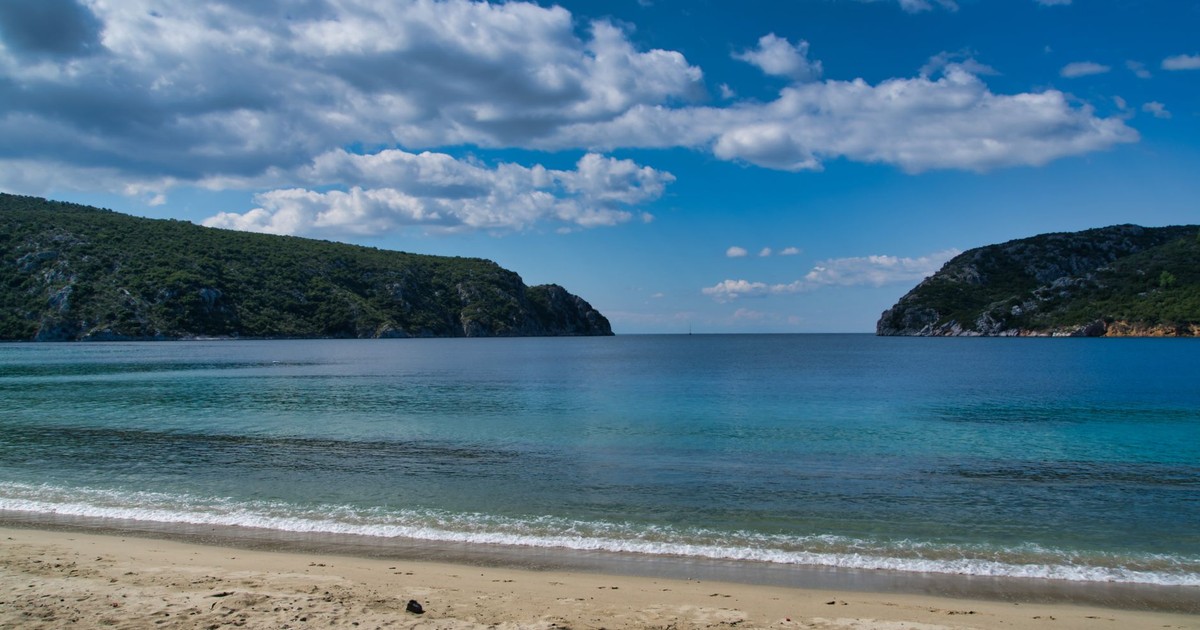

Greece has more than 200 inhabited islands and over 13,000 kilometres of coastline, which puts the question of where to actually swim in summer somewhere between a wonderful and genuinely overwhelming problem to have. The Aegean and Ionian Seas don’t play favorites. Both deliver water so clear it reads almost artificial, the kind of blue that looks like someone turned up the saturation in post. And yet, for all that abundance, some beaches really are different from the rest. The sand is the wrong color. The cliffs are too big. The lagoon is too still. Something happens to the light at a certain hour and you can’t quite explain it to anyone who wasn’t there.
The best beaches in Greece are spread across very different islands, and they don’t all suit the same traveler. A few require a boat and some planning. Others are a short drive from a rental car. Some reward an early alarm clock; others only come alive after noon. Greek beach season runs roughly from May through October, but the experience varies month to month. July and August are peak season, with water temperatures at their warmest, every beach bar open, and prices and crowds at their highest. June and September are arguably the sweet spot: the sea is warm, the sun is reliable, the crowds thin out, and accommodation drops noticeably in price.
According to Keep Talking Greece, Greece received 657 Blue Flag awards for 2025, including 623 beaches, 17 marinas, and 17 sustainable tourism boats, securing second place worldwide among 52 participating countries. Greece holds 15% of all internationally awarded beaches. That’s a meaningful signal about water quality and management standards across the country as a whole. The ten beaches below are the ones that keep appearing at the top of traveler rankings, travel writer shortlists, and professional assessments alike, each for a distinct reason.
1. Elafonissi, Crete
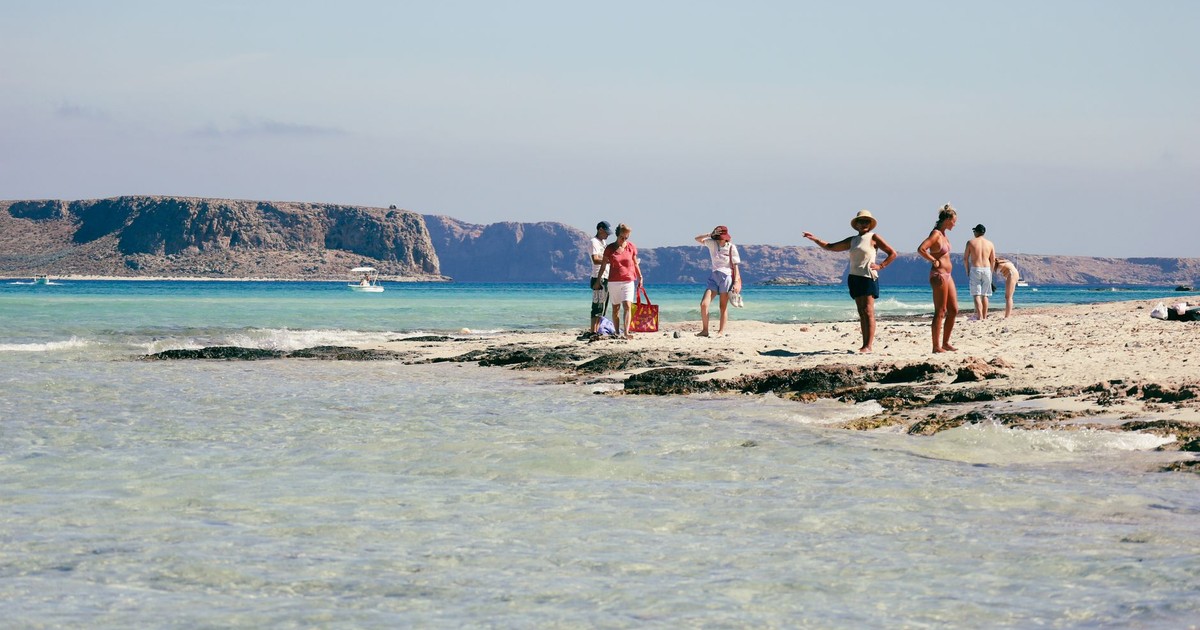
According to Greek Reporter, four beaches in Greece rank among the world’s top 15 coastal destinations in the 2026 Tripadvisor Travellers’ Choice Awards, with Elafonissi Beach placing second globally and first in Europe. Balos Lagoon follows in third place worldwide, Falassarna ranks eleventh, and Paleokastritsa on Corfu comes in fourteenth. That two of the world’s top three beaches sit on the same island, within 80 kilometres of each other, says something significant about northwestern Crete’s coastline.
Elafonissi sits on the southwestern tip of Crete, roughly 75 kilometres from Chania. Visitors consistently cite its shallow lagoon and pink-tinted sand, a coloring produced by crushed shells and coral fragments that shifts depending on where you stand and what time of day it is. It’s part of the EU’s Natura 2000 protected area network, which limits commercial development and keeps the ecosystem largely intact. The protected status also means the dunes behind the beach are fenced off during nesting season, so the natural topography remains unusually well preserved for a beach this famous.
In peak summer it gets very crowded. Going early or late in the day delivers a noticeably calmer experience. The drive from Chania is spectacular, winding through the White Mountains before descending to the coast.
2. Balos Lagoon, Crete
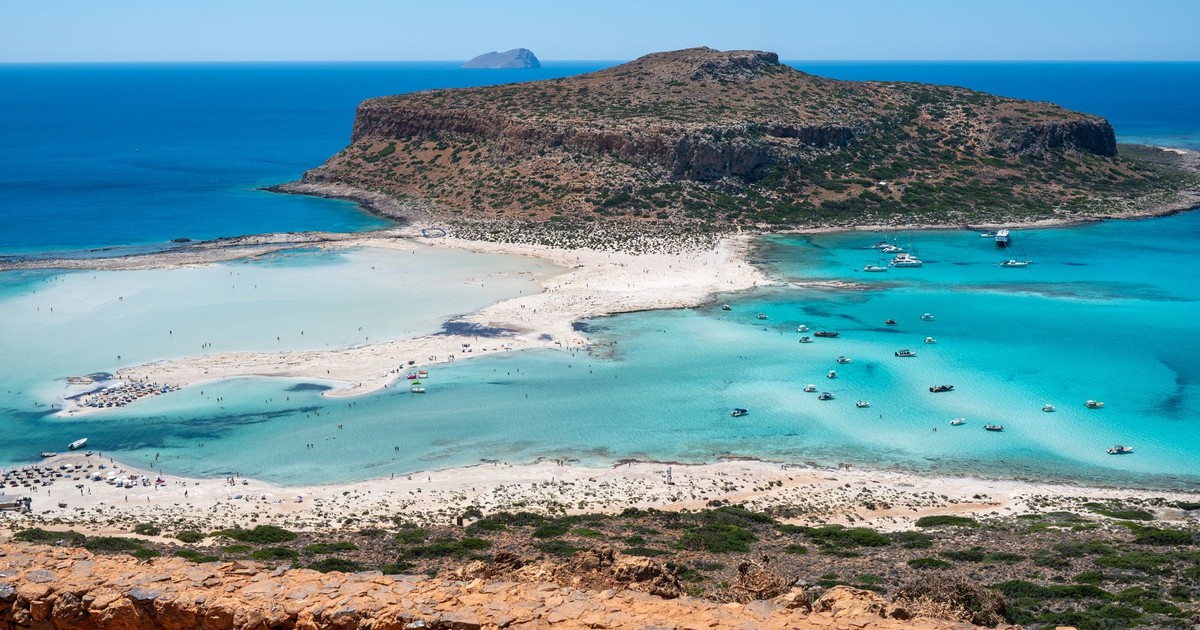
Balos is the kind of place that makes travelers suspicious of their own photos because nothing looks real. The water cycles between milky turquoise, pale jade, and a deep cobalt depending on depth, with a long sandbar separating the lagoon from the open sea. The shallow, calm water makes it ideal for families with young children.
Access requires either a two-hour ferry from Kissamos port or a 45-minute drive on an unpaved road followed by a 20-minute walk down to the beach. Neither option is difficult, but both filter out visitors who aren’t prepared to make an effort, which keeps the experience from feeling like a theme park even at peak season. The hike back up from the beach at the end of the day, in full sun, deserves a mention in the planning stage.
Balos’ third-place global ranking in the 2026 Tripadvisor Travellers’ Choice Awards confirms what regular visitors to Crete already knew. The northwestern coastline of the island is doing something different from the rest of the Aegean, and Balos is a large part of why.
3. Navagio (Shipwreck Beach), Zakynthos
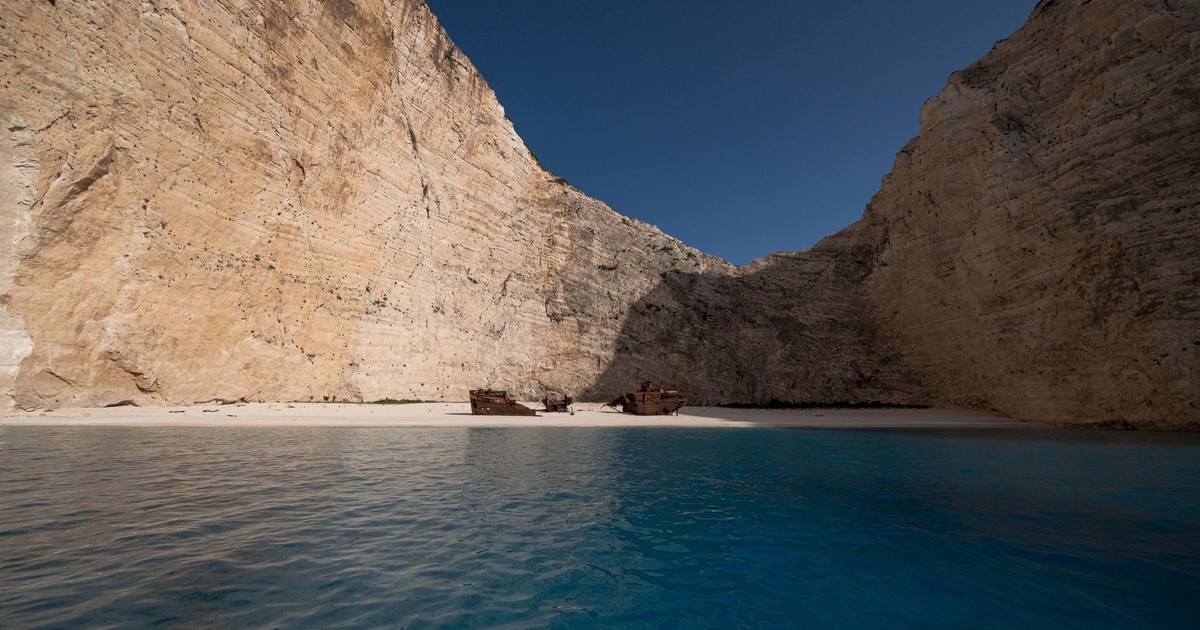
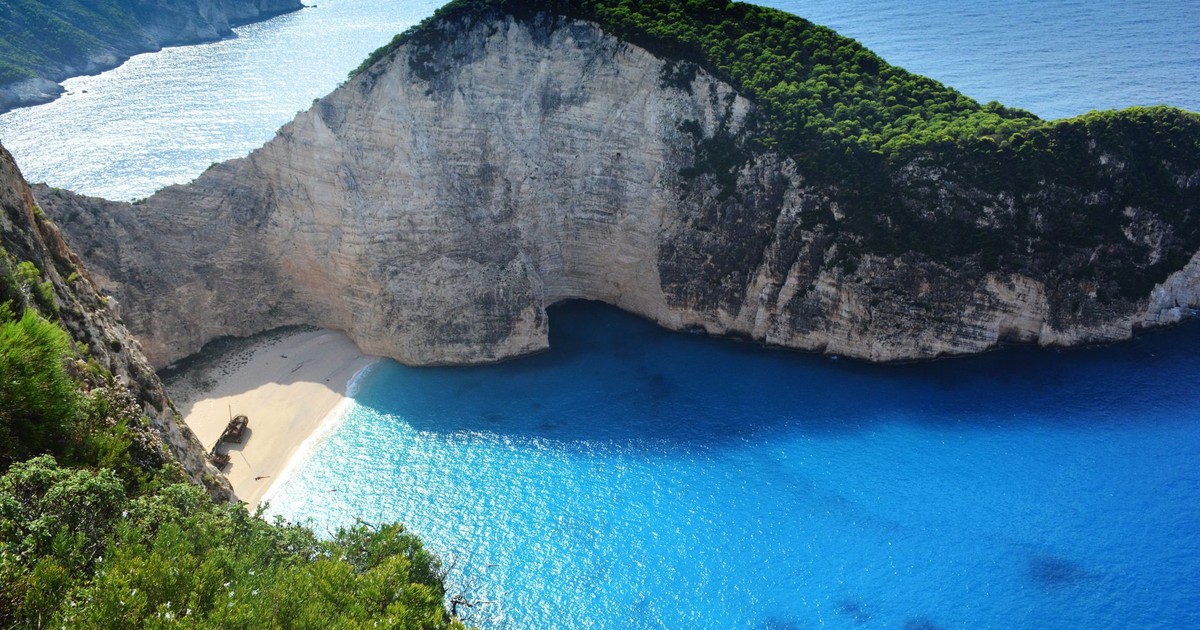
Navagio Beach remains the single most photographed landmark in the Ionian Islands and one of the most recognized beaches in all of Europe. Accessible only by sea, this enclosed cove is surrounded on three sides by sheer limestone cliffs rising up to 200 metres above the water. The rusting hull of the MV Panagiotis, run aground in 1980, sits in the center of the bay, streaked with orange rust against brilliant turquoise water.
The vessel ran aground during a storm while reportedly carrying contraband cigarettes, which is how the beach earned its local nickname, Smugglers’ Cove. The wreck has been rusting into the sand for over four decades now, and it looks better for it. The orange and brown tones against white sand and electric blue water produce a color combination that genuinely shouldn’t work as well as it does.
As of 2026, Navagio Beach is closed to visitor landings through at least October 31, 2026, following extended safety restrictions responding to ongoing landslide risks from the surrounding limestone cliffs. Most visitors now experience the beach from a boat holding position offshore or from the designated clifftop viewpoint, which is freely accessible by car and gives one of the most photographed vistas in Greece. The view from either angle is every bit as striking as the photographs suggest. It simply isn’t the visit the old photographs sold you.
4. Porto Katsiki, Lefkada
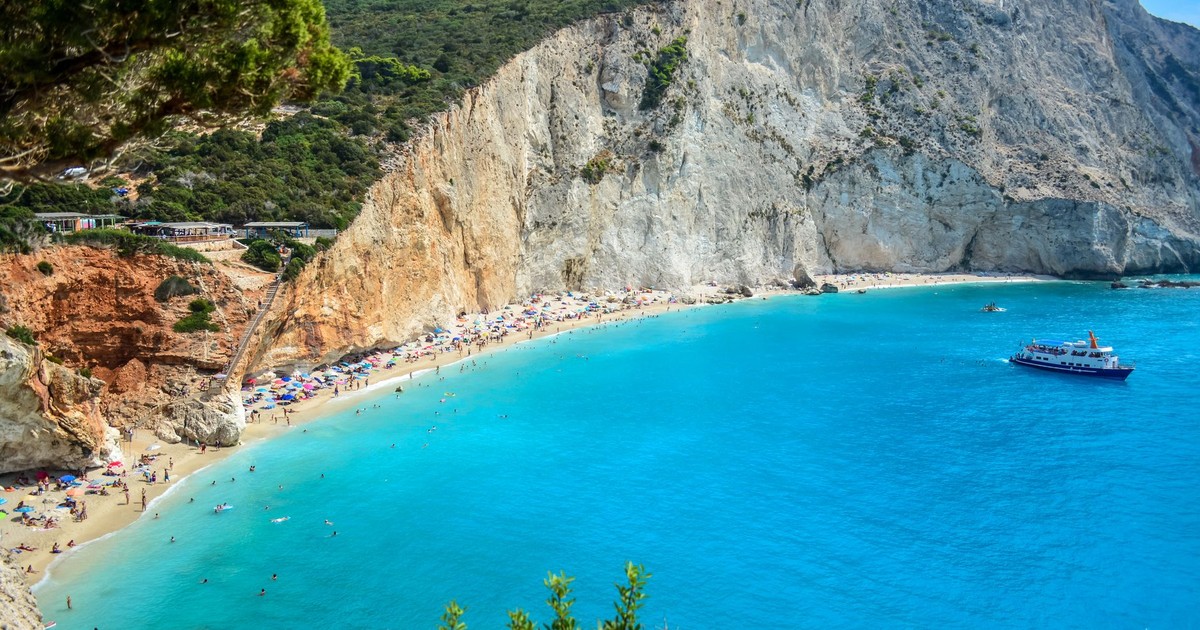
Lefkada’s west coast is, kilometre for kilometre, possibly the most dramatic beach stretch in Greece. Porto Katsiki sits below a 100-metre vertical white limestone cliff. The water directly below it is a color somewhere between turquoise and neon green, and the contrast between the two is sharp enough to look like a screensaver. It doesn’t look like it belongs to the Mediterranean.
Lefkada is connected to the mainland by a bridge, which makes it one of the easiest Greek islands to reach without a ferry. Fly into Preveza, rent a car, and you’re at Porto Katsiki in about 45 minutes. That accessibility sets it apart from most of Greece’s most dramatic beaches, which typically involve ferry crossings, multiple connections, and a degree of logistical planning that begins to feel disproportionate to the goal.
The west-coast beaches of Lefkada are mostly white pebbles rather than sand, the water famously clear with visibility often exceeding 25 metres, and there is almost no shade. Bring water, sun protection, and shoes that can handle steps. The descent to the beach involves a long staircase carved into the cliff face.
5. Myrtos Beach, Kefalonia
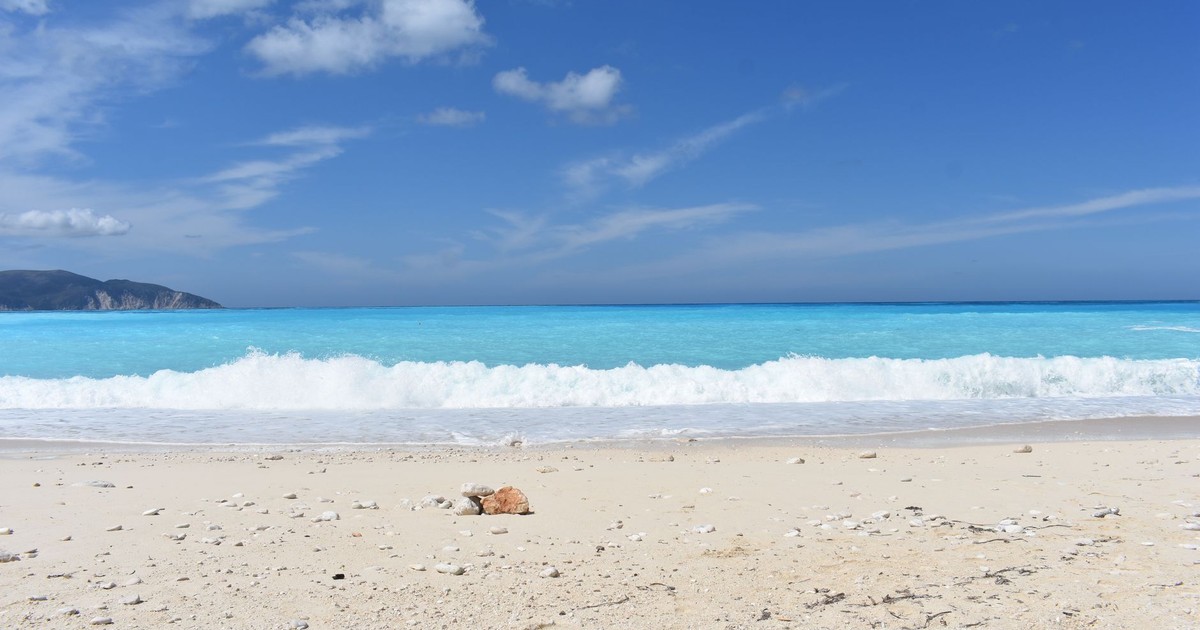
What makes Myrtos special is the scale. It feels grand in a way that smaller cove beaches don’t. The beach is a long crescent of white pebbles backed by two steep limestone peaks that frame it like a stage set. From the road above, which winds along the cliff edge on the drive from Argostoli, the first view of Myrtos stops cars. People pull over and just look at it for a while before continuing down.
Many of Lefkada and Kefalonia’s most famous beaches are made up of fine white pebbles or coarse sand that looks almost white, which helps create their intense turquoise and cobalt water color. Myrtos’ water runs deep and cold relative to other Ionian beaches, which makes it superb for swimming but means it can be rougher in afternoon winds. The morning window, before the Ionian sea breeze builds, is consistently the calmest time to swim.
Kefalonia in general is one of the more underrated Greek islands for beaches, with Antisamos and Xi Beach both worth adding if you’re staying for a week.
6. Sarakiniko, Milos
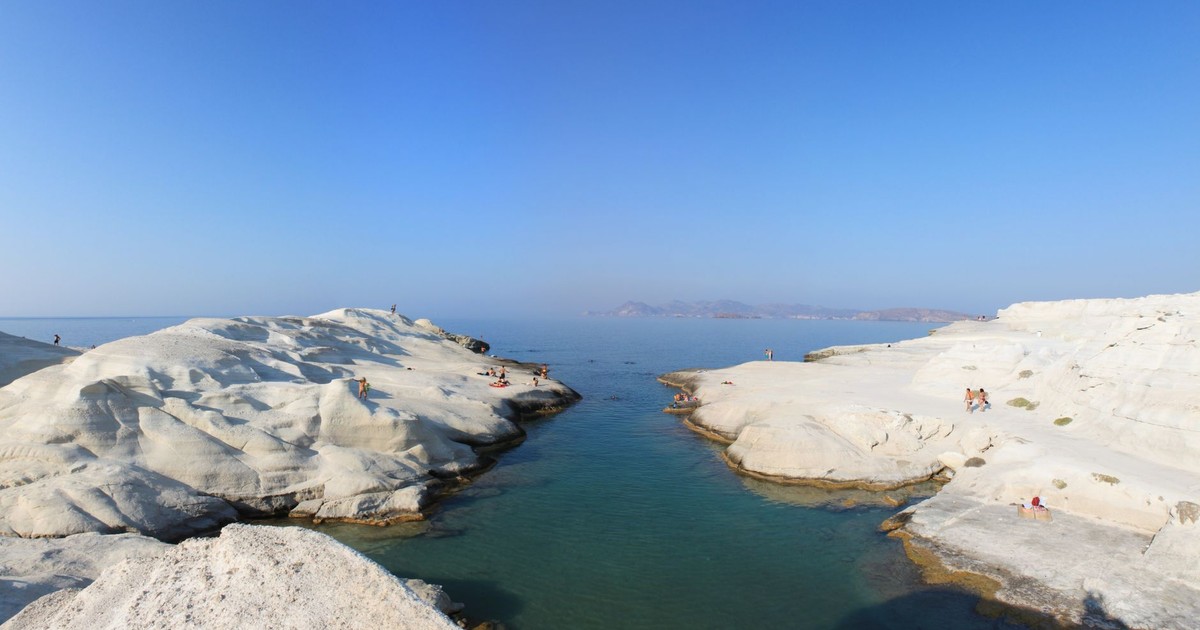
Sarakiniko looks like nowhere else in Greece. Smooth white volcanic rock formations shaped by wind and water create a lunar surface that drops into deep blue sea. It’s more of a swimming spot than a traditional beach, with no sand at all, but it’s one of the most visually striking coastal spots in the entire country. The volcanic rock is bright white, almost reflective in full sun, sculpted into rounded domes and shallow channels by centuries of sea erosion. Swimming here means jumping from ledges into clear deep water, then climbing back out on rock worn smooth by generations of visitors doing the same thing.
Milos as a whole rewards the traveler who makes the effort to get there. The island sits in the southwestern Cyclades and requires either a flight to Milos Airport or a ferry from Piraeus, around three to four hours on a fast boat. Milos is the geological standout among Greek island groups. Alongside Sarakiniko, the island has over 70 beaches in total, ranging from the red-sand Paleochori to the sheltered swimming at Provatas.
The visit is at its most dramatic in the mid-morning, when the sun is high enough to illuminate the white rock but before the afternoon crowds arrive from Adamas, the island’s main port.
7. Voidokilia, Peloponnese
Voidokilia Beach has a perfect half-moon shape and soft golden sand, and it feels untouched in a way that genuinely takes you by surprise the first time you see it. It’s also one of the few genuinely great beaches on the Greek mainland, which tends to get overlooked in favor of island hopping. Voidokilia sits on the Messinia coast of the Peloponnese, about 60 kilometres from Kalamata. The name translates roughly as “ox belly,” a reference to its rounded shape when seen from the hill above.
Part of what makes it special beyond the shape is what surrounds it: a freshwater lagoon backs the bay on its north side, and the medieval castle of Navarino overlooks it from the hill above. It’s the rare Greek beach where the terrain goes three-dimensionally interesting in every direction.
Access involves a 20-minute walk from the nearest car park, which is enough to keep casual visitors away. The beach is undeveloped, with no sunbeds, no beach bar, and no commercial infrastructure, making it an exception to almost everything else on this list. Bring what you need.
8. Falassarna, Crete
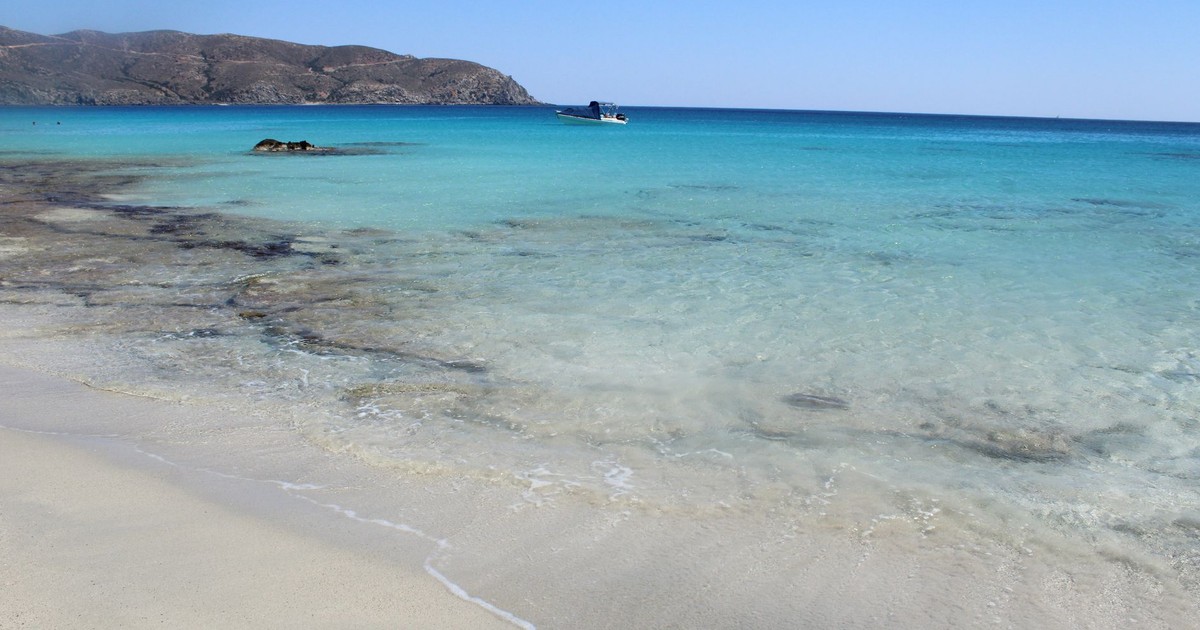
Falassarna ranks eleventh globally in the 2026 Tripadvisor Travellers’ Choice Awards. It sits on the far northwestern corner of Crete, which means it catches the full force of the Cretan sunset in a way that most east-facing beaches don’t. The sky above the beach turns orange and deep pink as the sun drops, and the combination of that light with the fine pale sand and the shallow water makes it one of the most photogenic beaches on the island at dusk.
The beach runs for about two kilometres, which gives it more space than most Cretan shores and means it absorbs summer crowds better than smaller, more enclosed spots like Balos. The water is clean, the sand is soft, and the facilities, including parking, tavernas, and sunbed rentals, are well organized without being overwhelming. Of everything on this list, Falassarna is the closest to a beach that simply works well across all the practical requirements of a day trip.
For travelers based in Chania, Falassarna is roughly an hour’s drive west, mostly on good roads. The final stretch drops through a small agricultural valley before opening onto the sea, and the moment the beach appears below the road is reliably memorable.
9. Paleokastritsa, Corfu
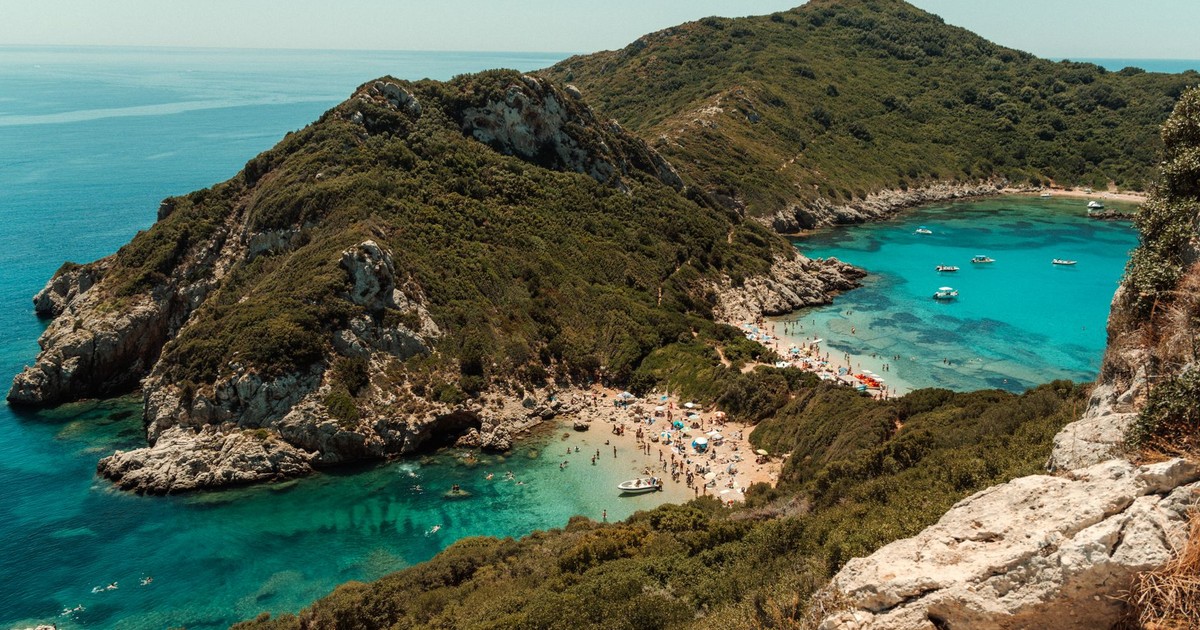
Paleokastritsa Beach in Corfu ranks fourteenth worldwide in the 2026 Tripadvisor Travellers’ Choice Awards, placing it among the top European beaches globally alongside Elafonissi, Balos, and Falassarna. This is a beach that works as a collection rather than a single spot. Paleokastritsa is a cluster of six coves arranged around a headland on Corfu’s northwest coast, each one slightly different in character. Some are calm and suited to swimming; others are better for snorkeling over the rocky beds. The Byzantine monastery that sits on the clifftop above the whole arrangement is open to visitors and gives a view across the coves that genuinely can’t be planned for.
Corfu is one of the most accessible Greek islands for northern European travelers, with direct flights operating from dozens of airports throughout summer. That accessibility makes Paleokastritsa busier than it might be on a more remote island, but the configuration of the coves distributes visitors across six separate swimming spots, which prevents any single one from becoming unbearable. Arrive before 10am in August if you want first pick of the water.
The surrounding coast offers good boat trip options, including sea caves and hidden inlets not visible from the road. Several local operators run hourly trips from the main cove.
10. Simos Beach, Elafonisos
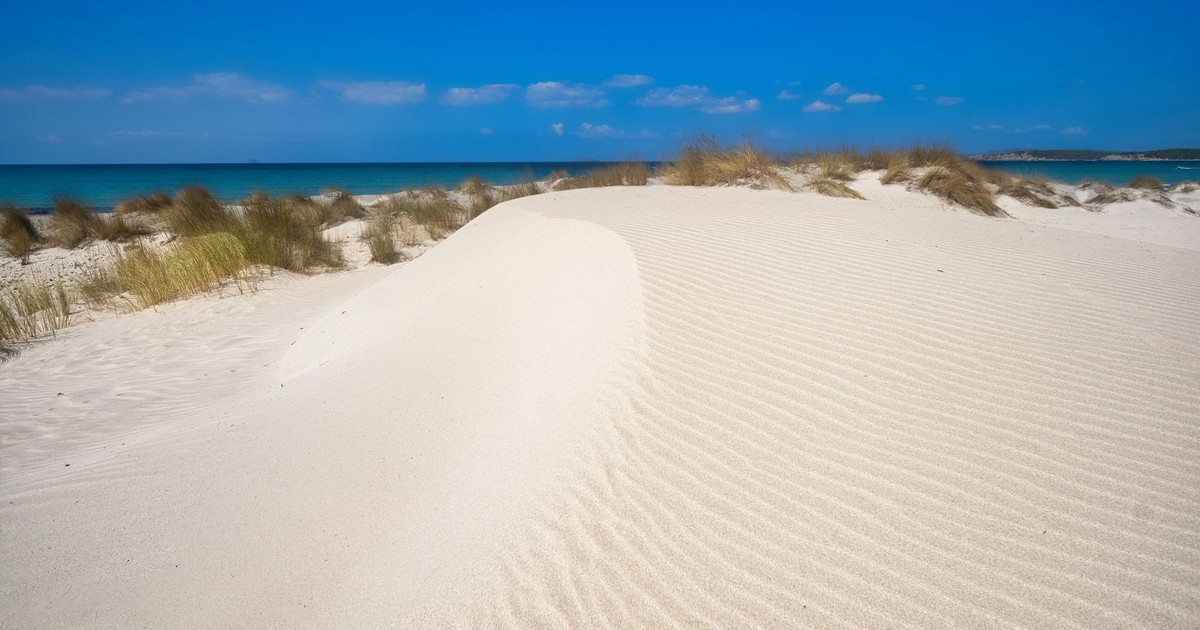
Greek City Times lists Simos Beach on the island of Elafonisos among Greece’s top beaches for 2026, recognized for its soft white sand and crystal-clear water. Elafonisos is a tiny island off the southern tip of the Peloponnese, reachable by a five-minute ferry from the small port of Pounta. The crossing takes longer to queue for than to complete. The island has a year-round population of around 700 people, which gives it a different pace from the Cycladic hotspots.
Simos is actually two beaches joined at their midpoint by a narrow sandy strip, a twin-bay formation that means you can move from one side to the other depending on wind direction and sun position. The sand is fine and very pale, the water is exceptionally shallow for its first stretch, and the island’s small scale means development stays modest. A campsite behind the dunes has operated here for decades and functions as an institution among Greek summer regulars.
The ferry from Pounta runs frequently throughout summer, and the island can be visited as a day trip from the Peloponnese. Given the ferry takes five minutes, the logistics are about as straightforward as Greek island travel gets.
What to Know Before You Go
The difference between the best beaches in Greece and everywhere else often comes down to timing rather than location. Any of these ten spots visited in the wrong hour on the wrong day in July will feel like a car park with sea views. The same beach at 8am in late September feels like a private discovery. June and early October are consistently cited by experienced travelers as the windows that preserve what these beaches are actually like. The water is fully warm by then, the tourist infrastructure is running, but the crowds that transform Elafonissi or Balos into queuing exercises haven’t yet materialized, or have already cleared out.
A few things apply broadly. Ionian beaches like Porto Katsiki and Myrtos tend to have pebbles rather than sand, and the water runs deeper and colder. That’s excellent for serious swimmers but potentially less comfortable for young children or anyone who finds rocky entries difficult. Cretan beaches are generally sandier, shallower, and more forgiving. Sarakiniko on Milos is a different category entirely, a geological curiosity as much as a beach, requiring a different kind of visit. And Voidokilia and Simos, on the mainland and Elafonisos respectively, represent a register that rewards travelers willing to skip the islands entirely for a day or two. As for Navagio, the view from the clifftop or from a boat at the mouth of the cove remains one of the better half-days in the Ionian. It just isn’t the half-day the old photographs sold you. Greece’s coastline is long enough that nobody sees all of it. That’s mostly good news.
Disclaimer: This information is not intended to be a substitute for professional medical advice, diagnosis, or treatment and is for information only. Always seek the advice of your physician or another qualified health provider with any questions about your medical condition and/or current medication. Do not disregard professional medical advice or delay seeking advice or treatment because of something you have read here.
AI Disclaimer: This article was created with the assistance of AI tools and reviewed by a human editor.