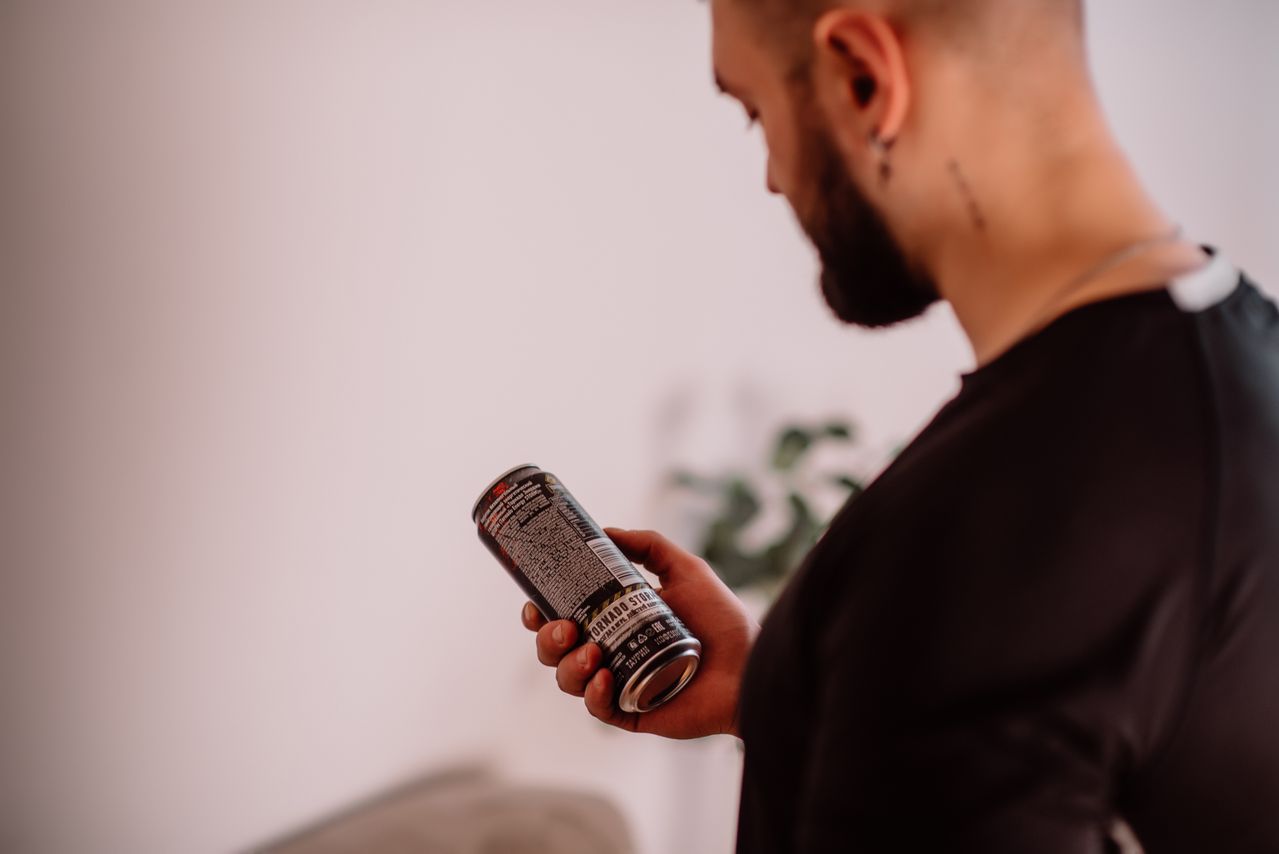

Barron Trump launched an energy drink with an “insane” price tag while Americans struggle with rising prices, and the internet did not receive it quietly. Within days of the May 2026 debut of Sollos Yerba Mate, the youngest son of President Donald Trump found himself at the center of a social media storm that had less to do with the drink itself and more to do with what the price for twelve cans says about who this product is actually for.
The backlash was swift, pointed, and very online. But it also opens up some interesting questions about celebrity-linked beverage brands, the growing yerba mate market, and whether a 20-year-old NYU business student with a $150 million net worth can sell a lifestyle drink to a country currently stretched thin at the grocery checkout.
This is Barron Trump’s most public business move yet. And it came with a price tag that a lot of people couldn’t get past.
What Is Sollos, and Where Did It Come From?
The company was incorporated in Delaware in December 2025 and registered to operate in Florida in January, adopting a conventional early-stage startup structure despite its high-profile leadership. According to SEC filings reviewed by multiple news outlets, Sollos raised $1 million through a private placement, with Barron listed alongside four others as executive officers and members of the company’s board of directors.
The other founders are Rodolfo Castillo, Spencer Bernstein, Stephen Hall, and Valentino Gomez, a group of Palm Beach friends who work with Barron. In the months leading up to the launch, Bernstein posted on LinkedIn that he was pausing his final semester at Villanova University to focus on the company, while Hall stepped down from his role as a McKinsey analyst. For a startup that hadn’t yet sold a single can, those are not trivial sacrifices.
Sollos announced on Instagram that the drink would make its debut on May 22, 2026. The launch was marked by a splashy West Palm Beach party. The brand’s origin story, as told on its own website, leans hard into Florida coastal culture. The brand, which seeks to “truly fit how people in Florida actually live,” is registered to an address in Billionaire Beach, just a few blocks from the president’s Mar-a-Lago in Palm Beach, one of the country’s wealthiest towns.
According to the company, the name “Sollos” comes from the Spanish word for “sun,” sol, and its reverse, los, meant to represent a sunset. The motto: “It Begins Where It Ends.”
The Barron Trump Energy Drink: What’s Actually in the Can?
The product contains organic Brazilian yerba mate, pineapple and coconut flavoring, cane sugar, raw honey and monk fruit extract, and retails for $39 for a 12-pack. According to the Sollos website, its drinks are crafted with 120mg of natural caffeine, 5 grams of added sugar, and antioxidants, totaling 50 calories per can.
Yerba mate itself is not a gimmick ingredient. It is a caffeinated herbal drink that has gained widespread popularity as a coffee alternative throughout the U.S. and South America. Yerba mate contains caffeine, polyphenol antioxidants, and vitamins B1, B2, and C. For many consumers who have switched from coffee or conventional energy drinks, the draw is the absence of the familiar mid-afternoon crash, with the energy arriving more gradually and lasting longer.
The company has committed to a single flavor for the foreseeable future. A Sollos spokesperson told The Independent in April: “We didn’t set out to make a flavor lineup; we set out to make the perfect drink. Most brands launch with five flavors, hoping you’ll like one of them. We spent all of our time, energy, and resources obsessing over a single recipe until it was flawless.”
That’s a bold strategic call for a first product. It positions Sollos as a perfectionist brand rather than a range-first play. Whether the market rewards that kind of restraint is another matter.
The Price Problem Everyone Is Talking About
Here is where the story gets uncomfortable. A 12-pack of Sollos enters the market at $39, while a 12-pack of Red Bull, the country’s leading energy drink, sells on Amazon for anywhere from $17 to $25. A 12-pack of Coke can go for anywhere between $7.50 and $13.00. Put simply, the Barron Trump energy drink costs roughly twice what most Americans pay for an equivalent quantity of the market leader.
A 12-pack of yerba mate from the popular brand Guayakí Yerba Madre retails for about $34, according to the company’s website. Even within the premium yerba mate category, Sollos sits at the top of the price range. The argument for a $5 premium over the category leader is harder to make than the brand’s website currently makes it.
This price tag and business model are not targeted toward the average Floridian, who earns less than the average American annually. The drink is pitched at someone who surfs in the morning, plays tennis in the afternoon, and doesn’t flinch at paying $3.25 per can for the privilege. That is a real consumer. It is just a very specific one.
The brand’s launch comes as the Trump administration faces criticism over the cost of the war in Iran, causing gas prices to surge and cost-of-living pressures to hit American households. The timing attracted exactly the kind of commentary you’d expect.
The Social Media Reaction
The online response was fast and largely unforgiving. Social media users called out the price, with users labelling it “absurd” or a “grift.” One user wrote: “The grift never stops with these people.” Another asked: “$39 for a 12-pack? That is absurd, who buys that?”
The criticism wasn’t only about price. The company came under fire on social media even before its launch for using a South American product and name while the Trump administration targeted Latinos via its current immigration policies. The phrase “sell the culture, deport the people” circulated widely. It’s the kind of optics problem no branding consultant can solve with better packaging.
Another user wrote: “This reeks of family privilege – boycott Sollos yerba mate.” Not every reaction was negative, though. One user posted: “Barron Trump is in business, launching an energy drink called Sollos, which puts a new spin on the traditional South American herbal elixir yerba mate. Nice packaging.”
One reviewer from Slate actually tried it and admitted, somewhat reluctantly, that the drink kept growing on her. The review captured something real: whatever people think of the Trump name, the product itself isn’t easy to dismiss.
Merch, Branding, and the Lifestyle Play
The drink is only part of what Sollos is selling. Sollos also offers a merch collection, which includes a $95 hoodie, $80 insulated beach bag, and $30 baseball cap. The company also sells $40 shorts on its website.
This is a familiar playbook in premium lifestyle branding. You sell a drink, but you’re really selling an identity, an aesthetic, a set of values the buyer wants to project. It works for brands like Alo Yoga, Lululemon, and dozens of celebrity-founded beverage companies that came before Sollos. From Stiller’s Soda by actor Ben Stiller, to Prime by content creators Logan Paul and KSI, and Chamberlain Coffee by Emma Chamberlain, there has been a surge of big names entering the beverage space.
What separates those founders from Barron is that they did the promotional work themselves. Logan Paul’s face was everywhere when Prime launched. Barron, by contrast, is a mostly private person with rare public appearances. His exact role at Sollos remains unclear, and he hasn’t spoken publicly about the company. The company appears to be following Melania’s approach of keeping details about Barron away from public view.
That silence creates a strange situation. The Trump name is clearly driving attention, but Barron himself isn’t out there doing interviews, posting content, or putting his personality behind the brand. Attention without a voice behind it is hard to convert into loyalty.
Barron’s Broader Business Profile
Sollos is not Barron Trump’s first venture into business, just his most visible one. He is also a part of his family’s cryptocurrency business, World Liberty Financial, where he’s listed as one of the co-founders alongside his father, Donald Trump, and his brothers, Donald Jr. and Eric. Forbes reported in October 2025 that World Liberty Financial has added more than $1.5 billion to the Trump family’s worth, with 10%, or approximately $150 million, belonging to Barron.
He also launched a real estate company, Trump, Fulcher & Roxburgh Capital Inc., in Wyoming in July 2024, but ultimately dissolved it after Trump won the presidential election. The company had reportedly planned to focus on high-end real estate endeavors, including golf courses and properties in Utah, Arizona, and Idaho.
The 20-year-old NYU Stern undergraduate keeps a low profile, despite the internet’s intense interest in him. He has also been credited with helping boost his father’s appeal among younger voters by connecting him with influencers such as Adin Ross and Theo Von, as well as podcast host Joe Rogan. His cultural instincts are sharper than his low profile might suggest.
The Market Barron Is Betting On
Whatever the backlash, Barron chose a smart category to enter. According to Persistence Market Research, the global yerba mate market is projected to reach $2.1 billion in 2026, growing at a compound annual growth rate of 5.2% through 2033. Ready-to-drink formats are among the key growth drivers, alongside rapid expansion in organic and functional product launches.
Health-boosting beverages such as yerba mate have become increasingly popular in the U.S. as alcohol consumption declines among Gen Z and younger demographics. Sollos, with its organic ingredients and clean-label positioning, is aimed directly at that shift. The 18-to-30 consumer who has swapped Friday night drinks for a yoga class and a functional beverage is the exact target, and that demographic accounts for over 45% of global yerba mate consumption, according to the same report.
Sollos enters a field dominated by established wellness brands, but its single-product strategy and tightly defined lifestyle identity do give it a distinct angle. In a crowded category, one well-executed product is a cleaner story than six average ones.
Read More: Common Drinks That May Increase Your Risk of Alzheimer’s
What the Noise Is Actually About
The conversation around Sollos keeps getting reduced to a single number: $39. Understandable. It’s a striking number when gas prices are climbing and a lot of American families are watching every line item on a grocery receipt. The timing was always going to attract that kind of commentary, regardless of what Barron Trump put in the can.
Premium beverages routinely charge $3 or $4 per unit. Athletic Brewing Company’s non-alcoholic beer, Alo’s coconut water, and dozens of brands in the functional wellness space sit at exactly this price point or above it. The real friction isn’t the number on the can. It’s who is selling it and when. A family synonymous with economic nationalism and immigration enforcement, selling a South American herbal tea at luxury prices to Florida beachgoers, while simultaneously talking to farmers in Wisconsin about cost-of-living relief: that contradiction is what’s driving the reaction.
Celebrity product launches have always lived or died on perceived authenticity. And right now, Sollos has a founder whose name generates enormous attention but who has said nothing publicly about the product, the brand, or what it means to him. Whether Sollos sustains past its first news cycle depends less on the $39 price tag than on whether Barron eventually puts himself behind this thing in a personal way, rather than just a legal one. That’s the only version of the story where the drink gets to be judged on its own merits.
Disclaimer: This information is not intended to be a substitute for professional medical advice, diagnosis, or treatment and is for information only. Always seek the advice of your physician or another qualified health provider with any questions about your medical condition and/or current medication. Do not disregard professional medical advice or delay seeking advice or treatment because of something you have read here.
AI Disclaimer: This article was created with the assistance of AI tools and reviewed by a human editor.