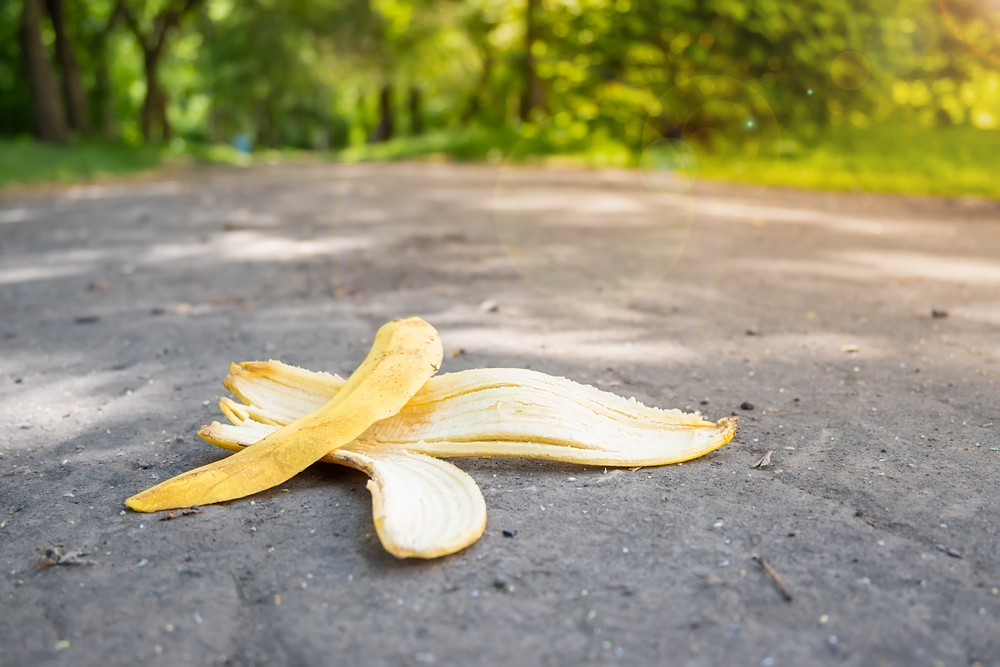

Most of us can recall tossing a banana peel out a car window without a second thought. It’s just a peel. It’s organic. It came from the earth, so surely it goes back to the earth – right? That’s the story we tell ourselves, and it feels reasonable enough that very few people ever stop to question it.
The truth, as it turns out, is a bit more complicated. That peel you lobbed toward the trees on your last road trip didn’t vanish by morning. It probably didn’t vanish by last month either. And beyond the slow decomposition sitting at the roadside, what happened next – what the peel’s presence meant for the animals living nearby – is the part most people never think about at all.
This isn’t a lecture about littering. It’s something more specific than that: a close look at why “biodegradable” doesn’t mean what most of us assume it means, and why a single banana peel tossed into the woods can set off a small chain of consequences that’s worth understanding before your next hike.
The Myth of the Disappearing Peel
The assumption behind flicking a banana peel out the window is that nature handles it. Given time, everything natural breaks down. That’s technically true – but “given time” is doing a lot of heavy lifting in that sentence.
Left outdoors, a banana peel takes anywhere from seven months to two years to decompose, with the timeline shortening in warmer temperatures because microbes need heat to actively break the material down. Under cold, dry conditions – a banana peel thrown onto asphalt in December, say – it could take the full two years.
Why does it take so long? A compost bin is essentially a designed ecosystem: controlled moisture, the right mix of bacteria and fungi, oxygen flow, maintained temperature. For organic matter to decompose rapidly, specific conditions are essential, including the right temperature, appropriate moisture levels, and the presence of decomposers such as bacteria and fungi. A roadside shoulder has almost none of those conditions. Exposure to direct sunlight or pollutants from vehicles can further slow the process, and without sufficient heat, moisture, and microbial activity, organic matter decomposes much more slowly – persisting significantly longer than in more suitable natural settings.
In a home compost setup with the right conditions, the same peel can be gone in a few weeks. On the shoulder of a highway in November, or on a dry, sun-baked trail in August, it just sits there – slowly darkening, softening, and waiting. For months.
What the Peel Actually Attracts
Here’s where the problem goes beyond aesthetics. Once you throw a banana skin on the road, it attracts wildlife in search of food. Animals can smell it from afar and may keep coming back, leading to potential conflicts with humans. That’s the short version of a much longer story.
Conservative estimates show that black bears can smell a food source from over a mile away, with other estimates placing the black bear’s range between 18 and 20 miles. So when a banana peel lands near a campsite or a trailhead, a bear doesn’t need to stumble upon it by accident. According to Grizzly Bear Management Specialist Kim Annis, bears use scent more than any other sense to find food – and once they encounter it and associate the opportunity for a meal with humans, they become food-conditioned, increasing the potential for a negative human-bear encounter. When bears figure out how to access high-calorie human food, they lose their desire to seek natural food sources.
Bears learn quickly and will return to areas where they find food. Not only is this dangerous for people, it’s harmful to bears too. Once bears continue to associate the opportunity for a meal with humans, they become food-conditioned and the potential for a negative encounter increases. When bears get access to human food, they don’t forget it and will likely keep seeking it – and over time may stop seeking natural sources of food entirely, becoming more aggressive in their attempts to find anything that looks or smells like a meal.
What happens then is the part nobody wants to talk about. Bears looking for human food and garbage can damage property and injure people – and these bears are often euthanized as a result. The banana peel doesn’t directly hurt the bear, but the pattern it reinforces can be a death sentence for an animal that was simply following its nose.
The same logic applies to smaller wildlife too. When wildlife including squirrels, chipmunks, and birds eat something that’s not typically in their diet, it often leads to future issues, including things like an inability to process large amounts of salt or winter starvation.
The “Natural Food” Fallacy
One argument people make goes like this: okay, so the peel doesn’t decompose instantly – but at least the wildlife eating it is getting something natural. It’s fruit. It grows on a tree. What’s the harm?
Quite a bit, actually. The bananas in your grocery store are commercial cultivars – selectively bred over generations for sweetness, size, and texture that suits human preferences. Ripe banana peels contain up to 30% free sugars, and their lignin content increases with ripening – from 7 to 15% dry matter – alongside changes in tannin content that raise concerns about digestive effects in animals not accustomed to them. That’s a sugar load that a white-tailed deer, a raccoon, or a black bear living on grasses, berries, nuts, and insects has no regular exposure to. Many animals find bananas tasty and sweet, making them prone to over-consumption, which can cause health problems due to the high sugar content. Additionally, unripe bananas contain compounds that can cause digestive upset if the animal can’t process them properly.
Bananas and apple cores are not native to all environments. Introducing them into areas where they don’t belong creates unforeseen consequences: they provide an unnatural food source for wildlife, disrupting local ecosystems, and there’s also the risk of introducing non-native seeds into the environment, which can lead to invasive plant species spreading.
So the peel isn’t a free snack for local wildlife. It’s an unfamiliar food that draws animals toward human-frequented areas, delivers a sugar hit their digestive systems didn’t evolve for, and may introduce foreign plant species into an ecosystem that doesn’t want them.
The Road Danger Nobody Thinks About
One more dimension here gets less attention than it deserves, and it’s the most viscerally dangerous. An estimated 1 to 2 million crashes between motor vehicles and large animals such as deer occur every year in the U.S., causing approximately 200 human deaths, 26,000 injuries, and at least $8 billion in property damage and other costs. Wildlife on roadsides is one of the most dangerous things a driver can encounter, and food scraps tossed from vehicles are one of the things that draws animals there in the first place.
Dumping garbage along the roadside, dropping food from vehicles, and provisioning from passing vehicles can attract wildlife to roads – exactly the place where the risks to both animal and driver are highest. A deer drawn to a banana peel on a highway shoulder at dusk is a deer in traffic. A raccoon learning to associate the sound of a car slowing down with a food source is a raccoon that stops avoiding vehicles. The connection is direct.
Once animals get the idea that there are food options outside their familiar territory, they’ll frequent the place, expecting to find something. The peel is long gone before the behavior change corrects itself – if it corrects itself at all.
What To Do Instead
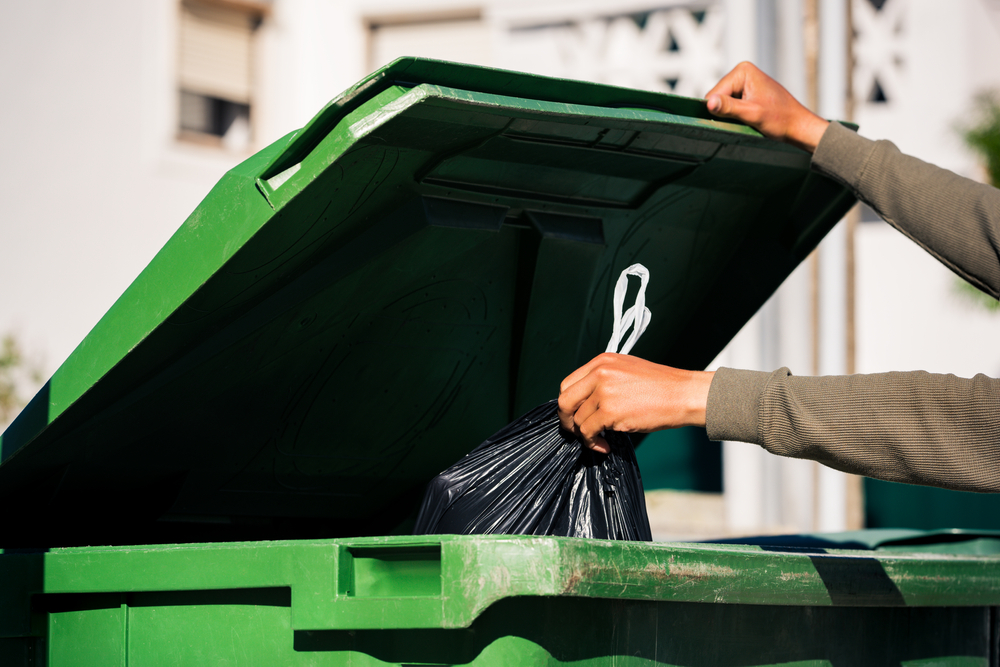
The fix here is straightforward, and it requires almost no effort. Bring a small resealable bag on every hike or road trip. Any food scraps – including the banana peel you planned to ditch at the trailhead – go in the bag and come home with you. A good general rule of thumb is that if you bring something with you when outdoors, you should bring it back with you too.
Once you’re home, the banana peel becomes genuinely useful. Composting is a much better alternative, as it supports decomposition and offers numerous environmental benefits. A compost pile or bin has the warmth, moisture, microbial life, and oxygen the peel needs to actually break down. In a proper compost setup, the same peel that would linger on a trail for up to two years can be transformed into usable soil amendment in a matter of weeks. Composted bananas contribute important nutrients – potassium and phosphorus – to the soil.
If you don’t compost at home, many cities and towns now run municipal composting programs. The peel still gets diverted from a landfill and still ends up doing something useful – without spending the next year sitting on a roadside attracting animals to somewhere they shouldn’t be.
Here’s the Thing
The banana peel is a small thing. One peel, one moment of convenience, one less piece of trash in your bag. It feels genuinely inconsequential – and for the peel itself, maybe it is. The problem isn’t really the peel.
It’s what the peel stands for: a widespread, well-meaning assumption that “natural” and “harmless” mean the same thing. They don’t. A banana peel on a roadside isn’t nature returning something to nature. It’s a slow-burning attractant sitting in the wrong ecosystem, under the wrong conditions, in front of animals whose behavior we are quietly reshaping without meaning to.
When people – intentionally or unintentionally – leave food out for bears to find, a bear’s natural drive to eat can overcome its wariness of humans. Bears that grow too comfortable around people can destroy property or become a threat to human safety, and habituated bears often must be killed. That’s the cumulative result of small, innocent decisions made over many years by many people who all thought the same thing: it’s just a peel, it’ll be fine. While, yes, there are some things you should never throw away because you’ll regret it, banana peels are not one of those things.
Keeping your food waste in a bag until you reach a bin is a two-second habit. It doesn’t ask much. But it’s one of those rare cases where a genuinely tiny action has a genuinely real effect – not on some abstract ecosystem far away, but on the specific animal that was going to follow its nose to your roadside tonight.
AI Disclaimer: This article was created with the assistance of AI tools and reviewed by a human editor.