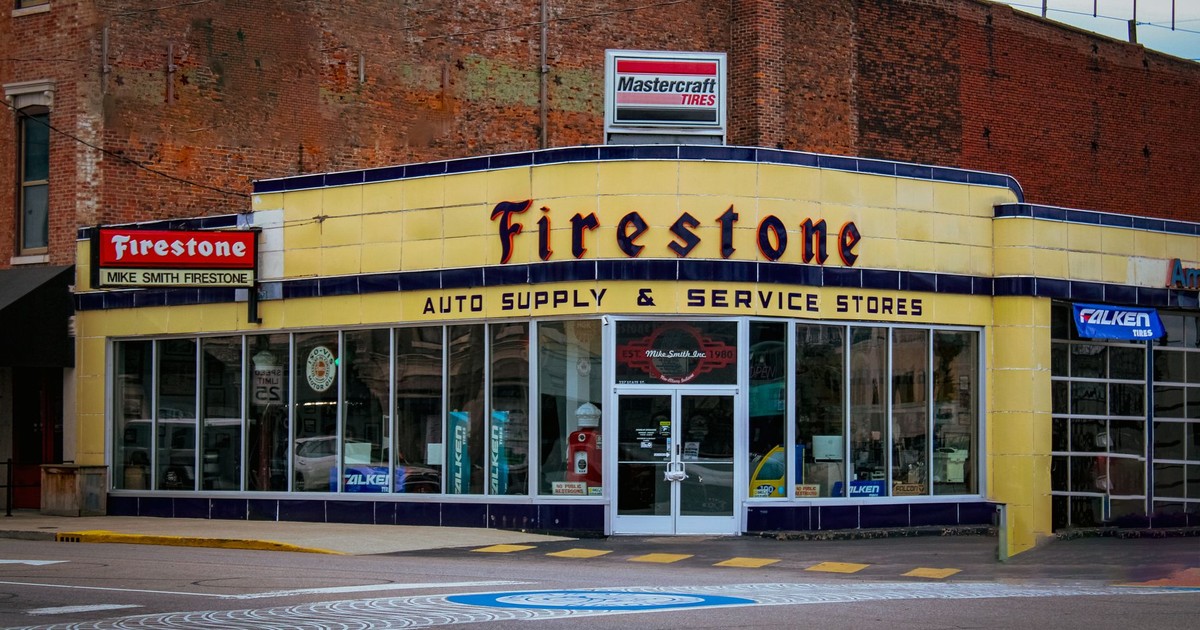

The way Americans buy things has changed completely within just a few generations. Your great-grandmother ordered a house from a catalog. Your mother drove to a mall on a Saturday. You checked out online without ever speaking to a person. Each of those shifts had a starting point: a single business that looked at what shopping was and decided to make it something else entirely.
American retail history is, at its core, a story about access. Who got it, who was locked out of it, and which companies figured out how to tip the balance. The businesses on this list didn’t just build successful stores. They restructured the relationship between ordinary Americans and the things they needed and wanted, often in ways that outlasted the companies themselves.
Some of them are gone. Some of them are still here, bigger and stranger than anyone in their founding era could have imagined. All of them left a mark that every shopping trip you take today still passes through, whether you’re on your phone in bed or walking into a big-box store off the interstate at 9 a.m. on a Tuesday.
1. F.W. Woolworth’s and the Birth of American Retail History
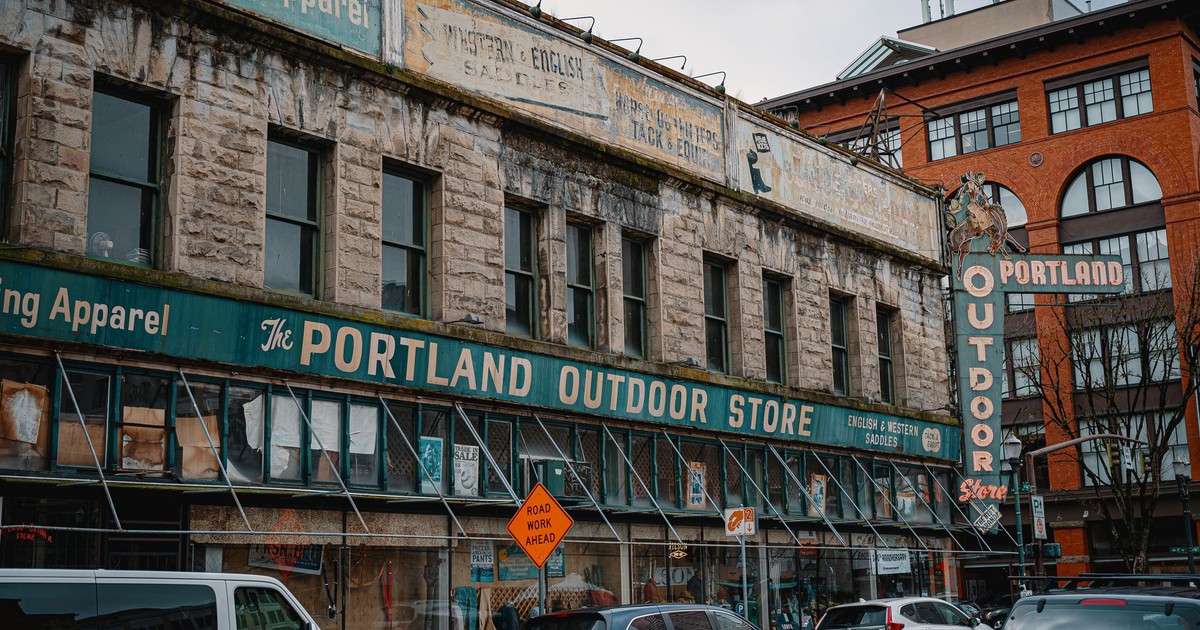
According to the Library of Congress, Frank Winfield Woolworth established two stores in 1879: one in Utica, New York, which failed within months, and a second in Lancaster, Pennsylvania, which survived and eventually became the template for how an entire country learned to shop. The concept was a general-merchandise retail chain built on the five-and-ten model, in which all merchandise originally sold for a nickel or a dime. That sounds modest. What it actually did was revolutionary.
Before Woolworth’s, retail was a negotiation. Merchandise was kept behind counters or on inaccessible shelves, and customers had to ask clerks to show them items. Prices were not fixed. What you paid depended on who you were, how you looked, and how persuasive you were at the counter. Woolworth stripped all of that out. Fixed prices, open displays, goods you could pick up and examine yourself. The store wasn’t just selling household goods. It was making a statement about who deserved fair treatment as a consumer.
In the first half of the twentieth century, the main street of virtually every town and city in the United States featured a Woolworth’s. The lunch counters became neighborhood gathering spots. The toy sections became destinations. The chain’s sheer scale meant that national buying power lowered costs in ways smaller independent shops simply couldn’t compete with. Woolworth stores also played a pivotal role in the Civil Rights movement. On February 1, 1960, four Black college students staged a sit-in at a segregated Woolworth’s lunch counter in Greensboro, North Carolina, turning a chain store into a civil rights battleground and cementing Woolworth’s place not just in retail but in American history.
Woolworth’s success inspired many entrepreneurs to launch similar ventures, leading to the development of various discount and department store chains, with stores like Kmart, Target, and eventually Walmart drawing from the foundational principles Woolworth established. That lineage is the real legacy. The five-and-dime is gone, but its DNA is in every big-box store in America.
2. Sears, Roebuck & Co.
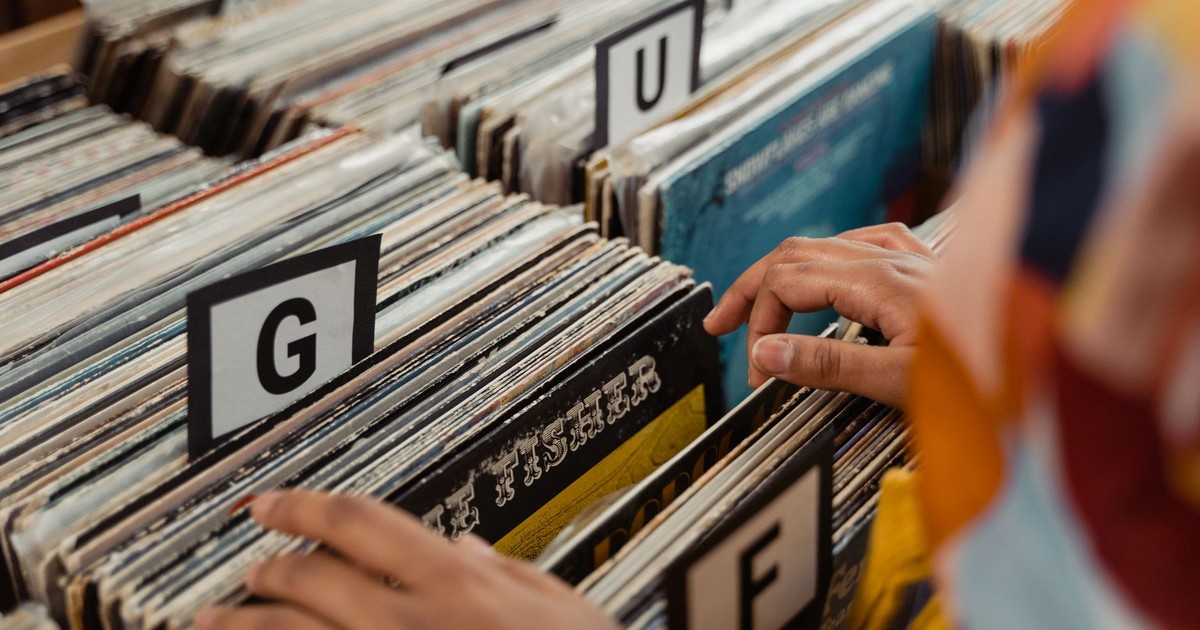
Before there was Amazon, there was the Sears catalog. According to History.com, Sears and Roebuck expanded into a general mail-order catalogue that catered to America’s enormous 19th-century rural population. Roughly two-thirds of Americans lived in rural areas in the late 1890s, and local general stores were typically high-priced and offered little selection. The Sears catalogue gave America’s farm families a lot of options at a lower cost and often included delivery.
Richard Warren Sears founded the R.W. Sears Watch Company in Minneapolis in 1886. He relocated to Chicago in 1887, where he hired Alvah Curtis Roebuck as a watch repairman, and the pair built a mail-order business together. Their formal partnership was incorporated as Sears, Roebuck and Company in 1893. They were responding to major changes in transportation and communication. An expanding rail system was increasingly connecting the country, allowing retail items to be shipped to once-remote rural areas, and the introduction of Rural Free Delivery in 1896 meant that rural Americans could now have goods shipped directly to their homes. The catalog that resulted was staggering in scope. Over its century-plus span, the Big Book grew to well over 1,000 pages and sold more than 100,000 items, including tools, hardware, apparel, appliances, furniture, sporting goods, auto supplies, farm equipment, and entertainment centers.
What makes Sears remarkable isn’t just its scale. It’s what it sold. Smithsonian Magazine reports that in 1908, the firm introduced its mail-order home kits: whole houses that arrived in parts, from the nails to the lumber to the staircases, via railroad. By providing instructions, mass-produced materials, and, by 1911, financing, Sears transformed the housing market, making the American dream possible for an estimated 70,000 to 75,000 buyers. You could order your life from this company. Sears’ retail stores spread across the country and its sales stayed strong even during the Great Depression, as the company spawned now-famous brands like Kenmore, Craftsman, and even Allstate Insurance.
The traditional Sears catalog was finally discontinued in 1993. The following year, Jeff Bezos founded Amazon. The timing is almost too perfect. Sears spent a century proving that Americans would buy anything, from anywhere, if the price was right and the catalog was thick enough. Then it stopped. The idea didn’t.
3. Macy’s and the American Department Store
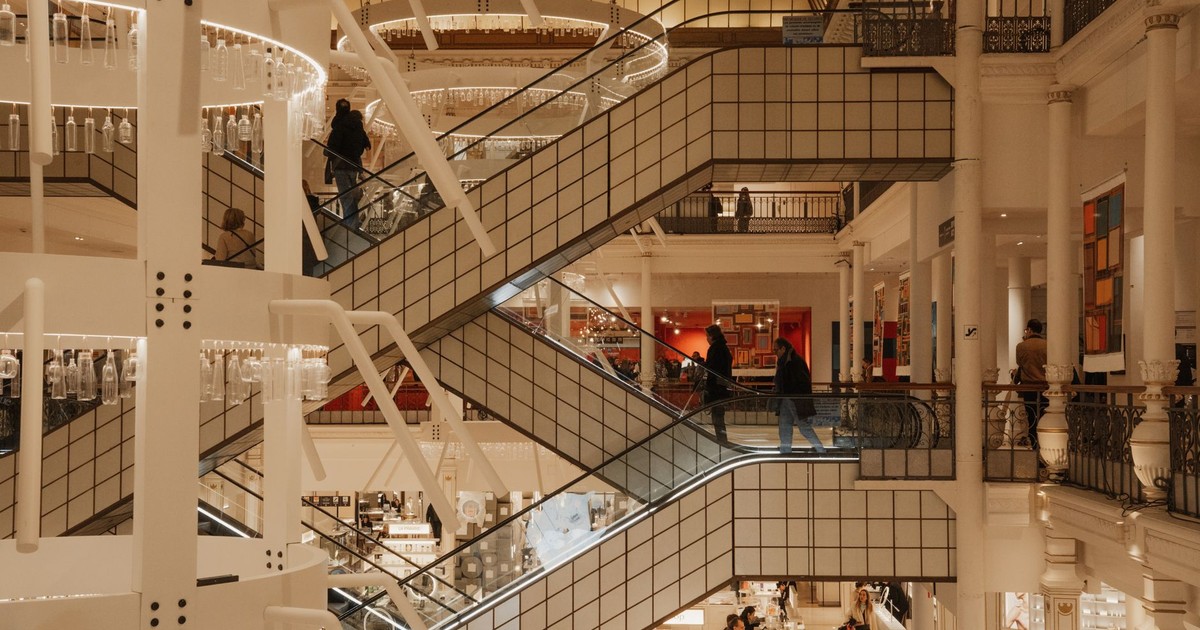
Macy’s didn’t just sell things. It invented the idea that shopping could be an experience worth making a special trip for. Founded in New York City in 1858, Rowland Hussey Macy built a store that deliberately blurred the line between commerce and spectacle. The Thanksgiving Day Parade began in 1924. The store that inspired the film Miracle on 34th Street was Macy’s. The relationship between department stores and cultural life in America ran deep for over a century, and Macy’s sat at the center of it.
The department store model itself was a radical departure from anything that came before. Rather than a shop that sold one kind of thing, the department store offered everything under one roof, organized into discrete sections that shoppers could wander at will. Clothing, cosmetics, housewares, furniture, toys, appliances were arranged not as a warehouse but as an environment. Display windows became theater. Store layouts were engineered to slow you down, move you past things you hadn’t planned to buy, and make the act of shopping feel pleasurable rather than utilitarian. These were ideas that became so foundational to retail that they’re still in use today, from the way grocery stores place staples at the back to the way any large retailer organizes seasonal displays near the entrance.
Macy’s also changed what it meant to give a gift. The rise of the department store registry, the gift wrap counter, the store credit account all normalized a form of aspirational spending that had previously been available only to the wealthy. The middle-class shopper who spent a Saturday afternoon at Macy’s wasn’t just buying a blouse. She was participating in a version of retail that told her she deserved a beautiful store, attentive service, and goods worth the trip. Today, department store sales have declined sharply from their peak, and chains from JCPenney to Saks Off 5th have been closing locations steadily through 2025 and into 2026. The model is contracting. But a century of shaping how Americans understand shopping, the idea that a store could be a destination, not just a transaction, didn’t leave with the closing sales.
4. Walmart
Sam Walton opened the first Walmart in Rogers, Arkansas, in 1962. His saturation strategy involved clustering stores near a warehouse, minimizing advertising costs, dominating local markets, and replicating the model in nearby towns and states. The approach sounds straightforward written down. Executed at national scale, it rewired American commerce.
The key insight Walmart brought to retail wasn’t just low prices. It was supply chain discipline. Walton invested heavily in logistics and technology when other retailers were still managing inventory by hand and intuition. The result was a company that could consistently undercut competitors not through sacrifice of quality but through genuine operational efficiency. The first Sam’s Club membership-only warehouse retailer opened in 1983 and the first Walmart Supercenter in 1988, expanding a model that already worked and pushing it into new formats. By the time most competitors understood what Walmart was doing, the company was already in their backyard, literally, given the saturation strategy.
According to Britannica, as of January 2025, Walmart operated 10,771 stores worldwide, including 5,205 in the United States and 5,566 in 18 other countries, with fiscal year 2025 revenue of $681 billion. Those numbers are almost abstract in their size. What they mean in practice is that Walmart’s pricing decisions affect what manufacturers charge, what competitors can afford to offer, and what the average American family expects to pay for groceries, clothing, and household goods. A company with 2.1 million employees worldwide doesn’t just participate in the economy. It sets terms for a significant portion of it.
The criticism of Walmart is real and well-documented: the effect on small local businesses, the wage debates, the pressure on suppliers. But the scale of what it changed is undeniable. Walmart proved that discount retail could reach everywhere, and that “everyday low prices” wasn’t a slogan but an operational philosophy that required rebuilding logistics from the ground up.
5. Amazon

When Amazon was first founded in 1994, it was operating out of founder Jeff Bezos’ garage and earning $20,000 per week in sales within two months. It sold books. Specifically, it was a bookstore that happened to be on the internet, at a time when most Americans were still getting used to the idea that the internet was a place where transactions could happen safely. Within a decade, it had become something harder to categorize.
In the early days, Amazon’s disruption was primarily centered around price. The company’s business model allowed it to offer products, starting with books, at lower prices than traditional brick-and-mortar stores, and this competitive pricing attracted more customers, which in turn increased sales volume, a cycle that fueled Amazon’s rapid growth. The real turning point, though, was Prime. Amazon Prime launched in 2005, and by offering unlimited free two-day shipping for an annual fee, Amazon not only provided a service unmatched by other retailers but also fostered customer loyalty and increased shopping frequency. Two-day delivery was once a luxury. Amazon made it an expectation, and then spent years making it feel slow.
The ripple effects on American retail businesses went far beyond any single category. In the decade following Prime’s launch, more consumers shifted their purchasing to Amazon from brick-and-mortar retailers. RadioShack, Toys R Us, and Sears went bankrupt, and tens of thousands of stores went dark as retailers sought to cut costs. Amazon’s acquisition of Whole Foods in 2017 marked its entry into the grocery sector, while innovations like Amazon Go stores, which offer cashier-less shopping, pointed toward a completely transformed shopping experience. The company that started by undercutting a local bookstore is now rewriting what it means to buy groceries.
6. The American Shopping Mall
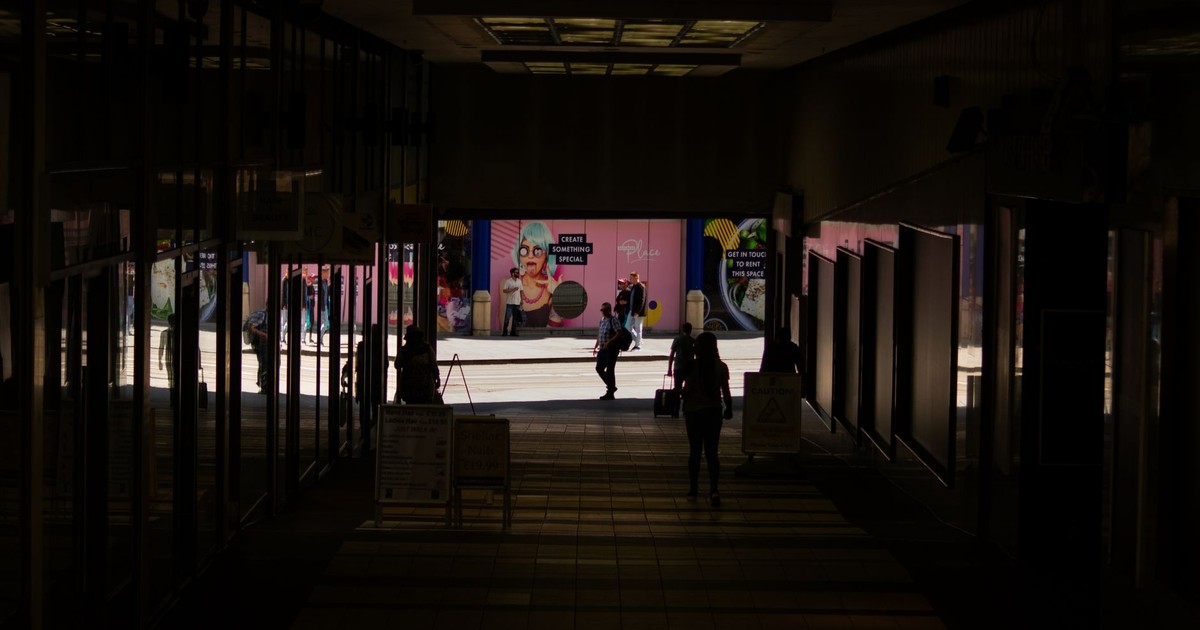
The shopping mall didn’t begin as a retail format. It began as a social vision. Victor Gruen, an Austrian architect, designed Southdale Center in Edina, Minnesota, in 1956 with the explicit goal of creating a European-style public square for American suburbia: a covered, climate-controlled gathering place that happened to have stores. The mall was meant to be a civic center with retail attached. What it became was something else: America’s dominant commercial environment for nearly four decades.
The timing was perfect. With 1950s suburbia built around cars, malls replaced walkable shopping. Main Street had served its era. The shopping center, anchored by a department store on each end and lined with specialty retailers in between, served the new one. For a generation of Americans, the mall wasn’t just where you bought things. It was where teenagers spent Saturday afternoons, where families went in December, where communities gathered without a strictly civic reason to do so. The food court, the multiplex cinema, the anchor stores: the mall invented a form of shared space that millions of Americans treated as their default public square.
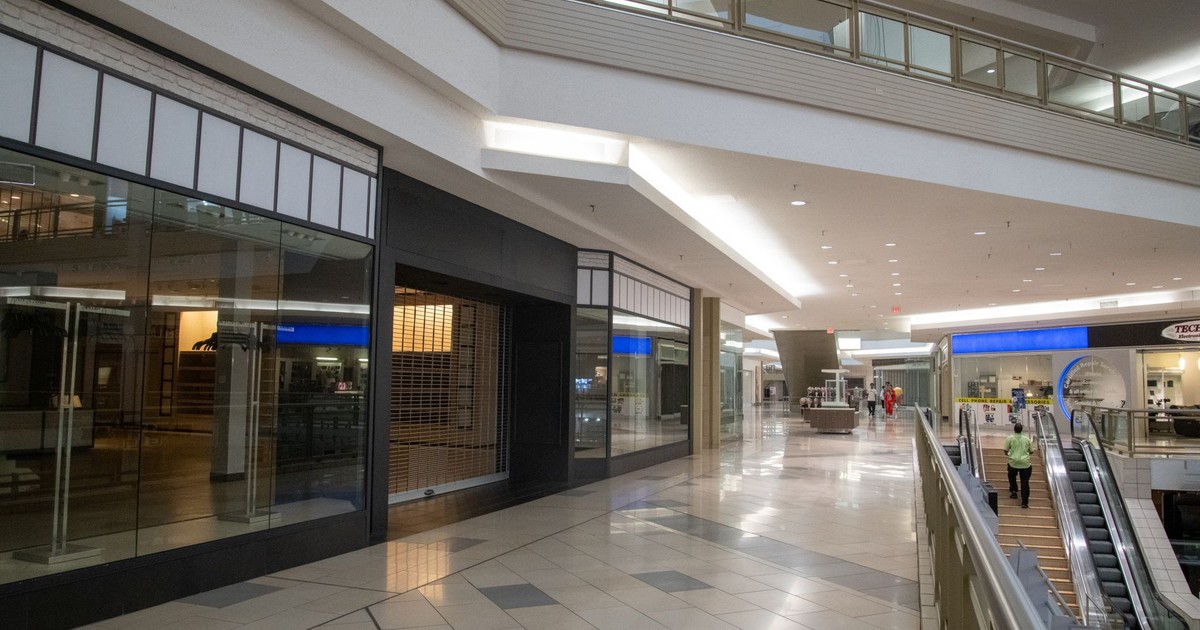
What the mall also did was accelerate the death of the downtown independent retailer, a pattern that would repeat with every subsequent retail revolution on this list. Retailers like Kmart, Walmart, Target, and Kohl’s offered comparable products at lower prices with more efficient operations, while specialty retailers like Best Buy, The Gap, and Bed Bath & Beyond chipped away at departments that once had little competition. The mall model that Gruen designed as a humanist urban alternative ended up fueling exactly the kind of commercial homogenization he had hoped to avoid, a fact Gruen himself lamented publicly before his death. By the 2010s, a growing divide had emerged between the haves and have-nots of U.S. malls. Some became luxury destinations. Others became cautionary tales, with empty anchor stores and the same fast-food smell. The mall’s arc, from utopian community hub to retail punchline to cautious reinvention, mirrors the arc of American retail itself.
What the Pattern Tells Us
Every business on this list solved the same basic problem: American consumers wanted more, cheaper, faster, and more conveniently than what existed. Woolworth’s made everyday goods affordable for working families who had been at the mercy of unpredictable local pricing. Sears reached the rural third of the country that retail had largely ignored. Macy’s told middle-class women that a beautiful store was for them too. Walmart drove prices down so far and so consistently that the entire manufacturing supply chain had to bend around it. Amazon made geography irrelevant and delivery an expectation rather than a service. The mall gave suburban America somewhere to go.
What’s harder to reckon with is what each of those innovations cost. The small hardware store. The downtown department store. The independent bookshop. The locally owned grocery. Each wave of retail transformation displaced something that had existed before, often something woven into the texture of a community. That isn’t an argument against the change. Most of it made goods more accessible to people who genuinely needed the price reduction. But the pattern is consistent enough that it’s worth naming: every American retail revolution has been, simultaneously, a story of access gained and community altered. The next one will be too.
Disclaimer: This information is not intended to be a substitute for professional medical advice, diagnosis, or treatment and is for information only. Always seek the advice of your physician or another qualified health provider with any questions about your medical condition and/or current medication. Do not disregard professional medical advice or delay seeking advice or treatment because of something you have read here.
AI Disclaimer: This article was created with the assistance of AI tools and reviewed by a human editor.