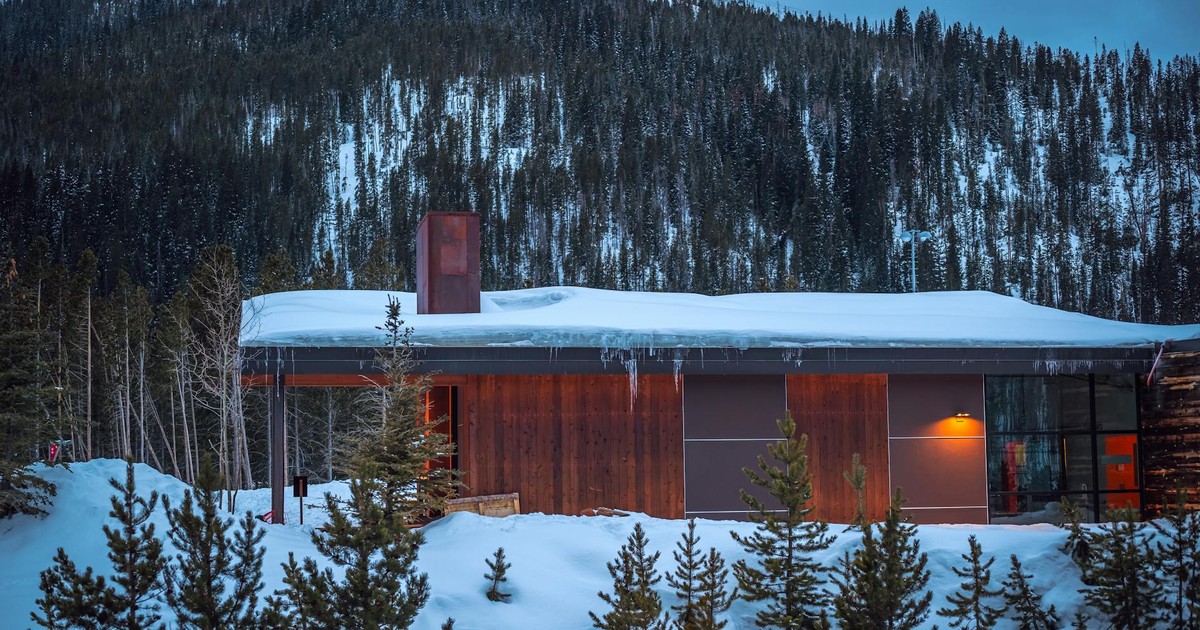

Owning a cabin in the mountains used to feel like the kind of dream you held loosely, the way you hold a lottery ticket. You’d scroll the listings late on a Sunday, half-hoping to be wrong about the prices, and then close the tab feeling vaguely worse about your life. For most American mountain towns, the math simply doesn’t work for ordinary people. Aspen, Telluride, Jackson Hole – these aren’t places you buy a cabin. They’re places you visit and then try not to think about on the drive home.
But the story of American mountain real estate is not entirely one of exclusion. From 2020 through 2025, the median home price in Eagle County, Colorado climbed 111%. It rose 98% in Routt County and 80% in Pitkin. Prices in San Miguel and Summit counties went up 71% in that same six-year span. Those numbers explain the sticker shock in the famous towns. What they don’t explain is what’s been happening everywhere else. While Vail and Breckenridge absorbed wave after wave of remote-working buyers with deep pockets, a handful of lesser-known mountain communities held their ground. Some of them are still remarkably affordable today.
The five towns below all have real mountain credentials – trails, snow, elevation, the whole thing – and real estate prices that don’t require a trust fund or a second mortgage on a city apartment. Each one is different in character, region, and what the surrounding land offers. What they share is the fact that a cabin is still within reach. Here’s what the listings actually look like right now.
1. Ironwood, Michigan (Upper Peninsula)
Most people’s mental map of “mountain towns” stops at the Rockies, which is exactly why Ironwood keeps flying under the radar. Tucked into the far western tip of Michigan’s Upper Peninsula, Ironwood sits at the edge of the Gogebic Range, a line of ancient, weathered ridges that don’t hit the dramatic heights of the Tetons but make up for it in sheer wildness. The UP, as locals call it, is nearly 400 miles of forest, waterfall, and lake-strewn terrain – and Ironwood is one of the best entry points into it.
The skiing alone makes a case. Big Powderhorn Mountain, just minutes from town, receives over 200 inches of Lake Effect snow annually, that phenomenon where winter storms crossing the Great Lakes dump their payload on the western edge of the peninsula. The result is a season that stretches well into spring and a base of powder that bigger-name resorts sometimes envy. Beyond the slopes, Copper Harbor – accessible from Ironwood – has developed into a world-class mountain biking destination, with close to 100 miles of trail carved into terrain that draws riders from across the Midwest.
As of May 2026, the median listed home price in Ironwood sat at $180,000. That’s not a typo. For context, according to Redfin, the national median home price currently sits at $396,173. The Ironwood market includes genuine log cabins on substantial acreage – the kind of property that in a more famous zip code would cost ten times as much. If your budget allows a bit more flexibility, properties on larger parcels with creek access or forest frontage can be found well under $300,000. The tradeoff is distance from a major city and winters that are genuinely cold. If that sounds like a feature rather than a bug, Ironwood is worth your time.
2. Anaconda, Montana
Montana has become expensive in ways that would have seemed unthinkable fifteen years ago. Bozeman, once a scrappy college town, now has a median home price above $750,000 – roughly what you’d pay in San Francisco. But Montana is a big state, and Bozeman is not the whole story. Anaconda, a historic copper smelting town in the southwestern part of the state, has held onto affordability that the glamour markets surrendered long ago.
According to Zillow, the average home value in Anaconda currently sits at $299,499, up 2.3% over the past year. For a Montana mountain town with that kind of access to public land, that’s a striking number. Just down the road from Butte, Anaconda benefits from proximity to Georgetown Lake and a range of outdoor recreation that makes the area genuinely appealing. Georgetown Lake, ringed by the Flint Creek Range, is a serious fishing and ice fishing destination. The Pintler Wilderness is within reach. And Anaconda is close enough to both Butte and Warm Springs that it doesn’t feel completely isolated.
The town itself has a gritty, real-deal character. It was built around mining and smelting, and the Anaconda Smelter Stack – a 585-foot landmark – still anchors the skyline as a state park. That industrial history means Anaconda never became a resort community, which is precisely why the prices stayed sane. The cabins and homes available here are genuinely usable mountain properties, not vacation shells sitting empty eleven months a year. For buyers who want authentic Montana without the Bozeman price tag, Anaconda is about as honest a deal as the state currently offers.
3. Robbinsville, North Carolina
The Smoky Mountains draw millions of visitors every year, and most of them funnel through the same handful of towns: Gatlinburg, Pigeon Forge, Asheville. The prices in those places reflect that traffic. Robbinsville, sitting in the southwestern corner of North Carolina near the Tennessee border, gets a fraction of that attention and prices its real estate accordingly.
The town is surrounded by the Nantahala National Forest and sits within a 30-minute drive of Great Smoky Mountains National Park. That geographic position means the recreation is genuinely excellent – whitewater paddling on the Nantahala River, some of the best trout fishing in the South at Lake Santeetlah just outside town, and trail access that puts you deep into hardwood forest within minutes of your front door. With unimproved property available for buyers who want to build, and ready-to-occupy options like a 2-bed, 2-bath cabin on 2.5 acres with a creek and fishing pond available for around $250,000, Robbinsville offers the kind of cabin-in-the-woods situation that people spend years dreaming about and never finding in more popular markets.
The honest caveat is that Robbinsville is genuinely remote. The nearest proper city with a hospital, a grocery store with real hours, and a hardware store that stocks more than the basics is a significant drive away. For buyers looking for a second home or a deliberate retreat from urban life, that’s fine. For anyone expecting the conveniences of a mountain resort town, Robbinsville will feel austere. But the land is beautiful, the water is clean, and the prices are, by Appalachian standards, still remarkably fair.
4. Craig, Colorado
Colorado’s famous resort counties have gotten so expensive that many buyers have given up entirely on the state. That’s understandable but premature. Craig, in the Yampa Valley of northwest Colorado, operates in an entirely different economic register than Aspen or Steamboat Springs. Built on the banks of the Yampa River and serving as the Moffat County seat with a population of around 10,000, Craig sits at the edge of a territory where BLM and National Forest land dominate the horizon, and the Elkhead Mountains rise to the east.
Locals have long called Craig “the elk hunting capital of the world,” a claim that speaks to the density and scale of the public land surrounding it. Beyond hunting, the Yampa River offers serious fishing, and the broader region connects to some of the least-crowded public land in the state. Steamboat Springs is about 40 miles east – close enough for a day trip to its ski resort, far enough that Craig operates on its own economy rather than borrowing its identity from a resort. That distance is exactly what keeps property prices grounded. And notably, even as transaction volumes have shifted across Colorado’s mountain markets, the Colorado Sun reported in May 2026 that prices in the high country have not fallen after more than doubling post-pandemic, which is precisely why towns like Craig – further from the resort core – remain the last realistic entry points into Colorado mountain ownership.
The appeal here is for buyers who want a working mountain town rather than a polished resort. Craig has hardware stores, a hospital, a local diner culture, and a community that existed before the second-home market arrived. For anyone who wants Colorado mountain property without competing against cash buyers from Denver, and who prefers the company of elk hunters and river fishermen to the après-ski crowd, Craig deserves serious attention. Buying property in a smaller Western mountain town comes with its own considerations, but the tradeoffs here tend to run in the buyer’s favor.
5. Sandpoint, Idaho
Idaho doesn’t get the same real estate press as Montana or Colorado, which has kept a few of its mountain towns on the affordable side of the ledger longer than anyone expected. Sandpoint, in the northern part of the state, sits on the edge of Lake Pend Oreille – one of the deepest lakes in the country – tucked into the bases of three mountain ranges, with the Schweitzer ski resort just 10 miles away. It’s a genuinely striking location: the kind of place that photographs like a postcard but functions like an actual town.
The cabin inventory around Sandpoint has historically been diverse and, by the standards of similarly scenic towns, relatively accessible. A-frames, log cabins on acreage, small homes with national forest borders – the selection spans a range of sizes and price points. The broader Sandpoint market has seen some price softening recently, with the median sale price coming in around $450,000 as of early 2026, down notably from prior-year peaks. That correction has created an opening for buyers who were priced out two or three years ago. The skiing, mountain biking, and summer hiking would feel right at home in any top-tier resort region. The difference is that Sandpoint hasn’t fully priced out the ordinary buyer yet.
That caveat – “yet” – matters. Northern Idaho has been on the radar of remote workers and lifestyle buyers for several years, and Sandpoint in particular has attracted sustained attention. The deeply discounted deals of five years ago are harder to find, and while the recent softening has restored some breathing room, this is still a market that has moved substantially from its pre-pandemic baseline. Buyers who act in 2026 are almost certainly ahead of where buyers in 2030 will find themselves.
Read More: Retirees Regret Moving There: 8 States That Aren’t Worth the Hype
The Window Is Real, But It Won’t Stay Open
The towns on this list have one thing in common beyond price: none of them are secrets to people who live nearby. The real estate agents in Ironwood know what’s happening in Aspen. The brokers in Anaconda have watched Bozeman transform from a distance. What’s kept prices in check in these places isn’t ignorance – it’s a combination of remoteness, industrial history, limited name recognition, and the honest fact that they require a different kind of buyer. Someone willing to drive an hour for a specialty grocery run. Someone who doesn’t need a Michelin-starred restaurant within walking distance. Someone who actually wants the mountain, not just the mountain aesthetic.
Even as transaction volumes shift in some Colorado markets, property values across the high country remain strong, and the broader mountain real estate story continues to move in one direction. The towns that remain affordable today are affordable for specific reasons, and those reasons have a shelf life. That’s not alarmism – it’s just how these markets have moved for the past twenty years. The window isn’t closing tomorrow. But the buyers who found Craig or Robbinsville three years ago did better than the buyers who find them three years from now will. At current prices, in 2026, any one of these five towns still represents a genuine opportunity for someone willing to do the research, make the drive, and take the place seriously on its own terms.
AI Disclaimer: This article was created with the assistance of AI tools and reviewed by a human editor.