

Ninety seconds is the actual duration of the chemical storm that rolls through your body when something triggers a strong emotion. Harvard-trained neuroscientist Jill Bolte Taylor spent years studying what the brain does during emotional arousal. When an emotional response is triggered, the brain releases a surge of neurochemicals that create physical sensations: a racing heart, tense muscles, a sinking feeling in the stomach. If we do nothing to feed the emotion, this chemical reaction naturally dissipates within 90 seconds. Any emotion that persists beyond that point is sustained by repeated thoughts about the triggering event.
The feeling isn’t the problem. The loop is. The difference between people who get dragged underwater by their emotions and people who don’t has less to do with willpower or temperament than with whether they know that distinction exists.
What’s Actually Happening in Your Brain
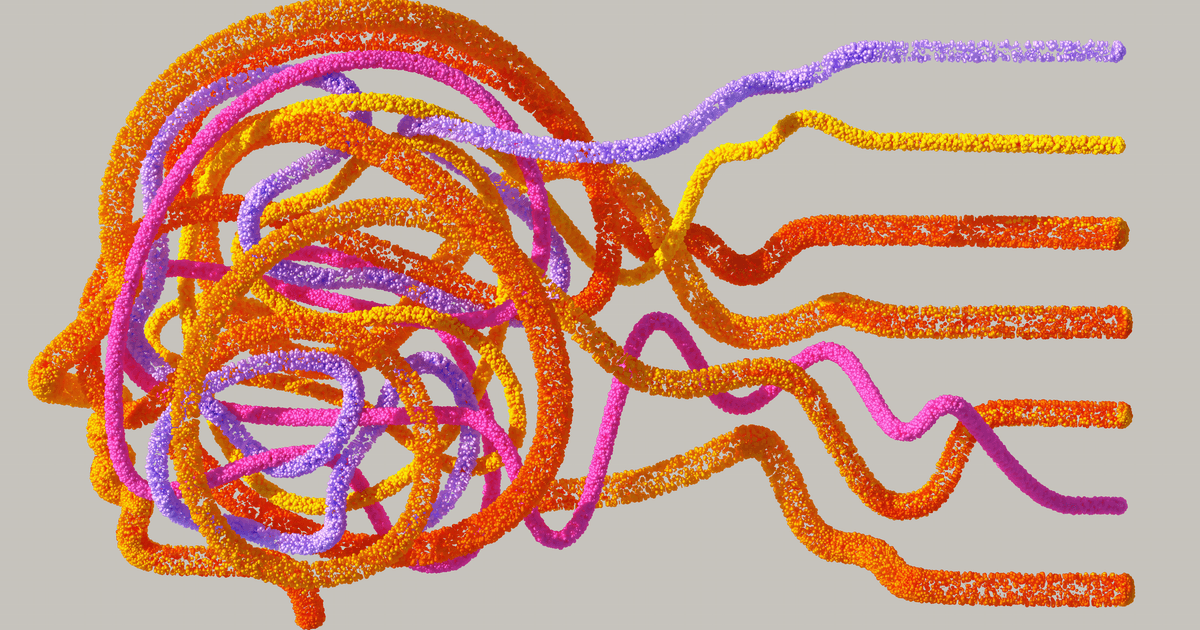
When an emotional response is triggered, the brain releases a surge of neurochemicals that create physiological sensations including a racing heart, shallow breathing, tense muscles, and a change in body temperature. The chemicals begin to naturally fade within 90 seconds, and the body then begins to return to baseline. Ongoing mental engagement, repeatedly thinking about the triggering event, activates another round of stress chemicals in the brain. The loop continues not because the body wants it to, but because the mind insists on feeding it.
Jill Bolte Taylor is a Harvard-trained neuroscientist, author, and TED speaker. She’s also the architect of the 90-second rule. Taylor suffered a massive stroke in her late thirties, and in the process of rebuilding her own cognitive and emotional function, she observed from the inside how the brain constructs and sustains emotional states.
Taylor describes the 90-second rule this way: when a person has a reaction to something in their environment, there’s a 90-second chemical process that happens. Any remaining emotional response is just the person choosing to stay in that emotional loop. The neurochemical grip releases after 90 seconds, every single time. A 2025 Forbes article covering Taylor’s framework noted that even strong emotions like anger, anxiety, or frustration are inherently short-lived, often feeling prolonged due to mental habits such as replaying scenarios, overanalyzing, or reinforcing negative interpretations. The body is ready to stand down. The mind keeps drafting the next response.
The Emotional Reset Technique: How It Actually Works
The moment you notice a strong emotional reaction beginning, the goal is to let it run its course without interruption rather than immediately fighting it or surrendering to it entirely. You observe the wave rather than body-surf it or drown in it.
In practice, that looks like this: you feel the anger, the dread, or the flush of humiliation arrive. Instead of immediately reaching for your phone, saying something you’ll regret, or starting to build the case in your head, you give the feeling 90 seconds of full, unresisted attention. You notice where it sits in your body. You watch the physical sensations without narrating them or explaining them. When the 90 seconds ends, you make a deliberate choice about whether to continue thinking about the trigger or to redirect your attention.
The body stops producing stress hormones after 90 seconds only if we are able to pull our thoughts away from what stimulated the emotion to begin with. As long as we keep stewing over the situation, our emotions keep churning and our brains keep flooding our bodies with adrenaline. The reset technique doesn’t require suppression or denial. It requires patience: the kind that says “I’ll feel this completely, and then I’ll decide what I actually want to do with it.”
Taylor points out that if we can observe this response rather than engage with it, we have more power over what we express in the world when we’re under pressure. Emotional regulation isn’t emotional dampening. The goal isn’t to feel less. It’s to feel it on your terms rather than the body’s automatic timer.
The Man Who Used It When It Mattered Most

Mo Gawdat is not who you’d expect to be teaching this. He spent decades as a technology executive, eventually rising to Chief Business Officer at Google X, the company’s moonshot factory, where projects included self-driving cars and stratospheric internet balloons. He is, by training and temperament, an engineer. When he became inexplicably miserable despite professional success, he responded the way an engineer would: he turned happiness into a problem to be solved systematically.
After the loss of his son Ali in 2014, he developed the happiness model at the heart of his bestselling book Solve for Happy (2017). Ali died aged 21 due to medical negligence during a routine appendix removal operation. For Gawdat, the loss stress-tested everything he’d built and proved, under the most catastrophic conditions imaginable, that it held.
The framework Gawdat had developed, which he’d been working on for years before Ali’s death, is built around a deceptively clean equation. Happiness equals your perception of events minus your expectations of life. Suffering is almost never purely about what happens. It’s about the gap between what happened and what you thought should happen. The event is one variable. Your expectation is the other. Only one of those is within your control.
Gawdat didn’t pivot to optimism. He channeled the loss into a purpose: his mission to help one billion people become happier is his attempt to honor Ali by spreading the message that happiness can be learned and shared.
The 90 Seconds and the Expectation Gap
The 90-second rule and Gawdat’s happiness equation are doing slightly different work, but they solve for the same underlying problem. Taylor addresses the physiological loop. Gawdat addresses the cognitive one. Between the two of them, they’ve mapped the complete anatomy of why we get stuck.
Taylor’s neurochemical research shows that the body’s emotional response has a built-in expiry. Gawdat’s framework adds an explanation for why we keep overriding that expiry: we have a story about how things were supposed to go, and reality has departed from the script. The anger isn’t just chemistry. It’s the distance between the expectation and the event, expressed as a hormone. The reset isn’t just waiting out the 90 seconds. It’s asking, once the chemicals clear, whether the expectation that fired the trigger in the first place was realistic.
That combination of moves is what gives this emotional reset technique its staying power, and why it keeps appearing across psychology and emotional intelligence research as a serious tool rather than a self-help shortcut.
Getting It to Work in Real Life

The technique sounds clean in theory. It’s harder in practice, and for an honest reason: most of the triggers that hit hardest are the ones attached to people we care about most. The 90-second rule applied to an irritating stranger on public transit is straightforward. Applied to a partner who said the exact wrong thing at the exact wrong moment, or a parent who still knows precisely which two sentences will knock you sideways, it requires real discipline.
Taylor’s practical suggestion for the hardest moments: give yourself a full minute and a half to just really feel it. Not to narrate it, not to build a case around it, just to feel it. Observe what the emotion is doing physically. Notice where the tension sits. Let the wave peak. At 90 seconds, ask whether you want to ride it again or step off.
The riding-again part is important to name honestly. It is entirely possible to be angry for more than a minute and a half. Inc.com’s 2025 coverage of Taylor’s work put it plainly: we’re actually rerunning that loop, rethinking the thought that’s restimulating the emotional circuit. Every rerun is a new choice. That shifts the question from “why can’t I stop feeling this” to “why do I keep choosing to restart it.” The second question is answerable. The first one just spirals.
For people who find the 90-second count abstract, Taylor has offered a practical anchor: literally watch the second hand of a clock move. The physical act of tracking time interrupts the mental loop without requiring willpower. It gives the analytical brain something concrete to do while the emotional brain runs its cycle. By the time the hand completes the arc, the chemistry has already begun to settle.
The Part No One Tells You

The reset doesn’t work if you treat it as a way to stop feeling things faster. It works when you treat it as a way to feel things more completely before deciding what to do with them. The 90 seconds isn’t a timer you’re waiting out. It’s a window you’re using. There’s a real difference between a person who white-knuckles through 90 seconds of anger in order to perform calm, and a person who gives the anger its full run and then genuinely decides not to restart it. The first person is suppressing. The second person is regulating.
Gawdat would add the upstream question: what expectation is sitting underneath this feeling, and was it ever a reasonable one to hold? Not every expectation we carry is conscious. Some of them were installed in childhood, reinforced by relationships, or handed down by cultural scripts about how things are supposed to go. The reset creates the space to notice them. Naming the expectation that made the event hurt as much as it did is usually enough to begin loosening its grip. You don’t have to let go of it. You just have to know it’s there.
Ninety seconds is almost nothing in a day. As a daily practice, it accumulates into something you’d recognize in a year.
Disclaimer: This information is not intended to be a substitute for professional medical advice, diagnosis, or treatment and is for information only. Always seek the advice of your physician or another qualified health provider with any questions about your medical condition and/or current medication. Do not disregard professional medical advice or delay seeking advice or treatment because of something you have read here.
AI Disclaimer: This article was created with the assistance of AI tools and reviewed by a human editor.