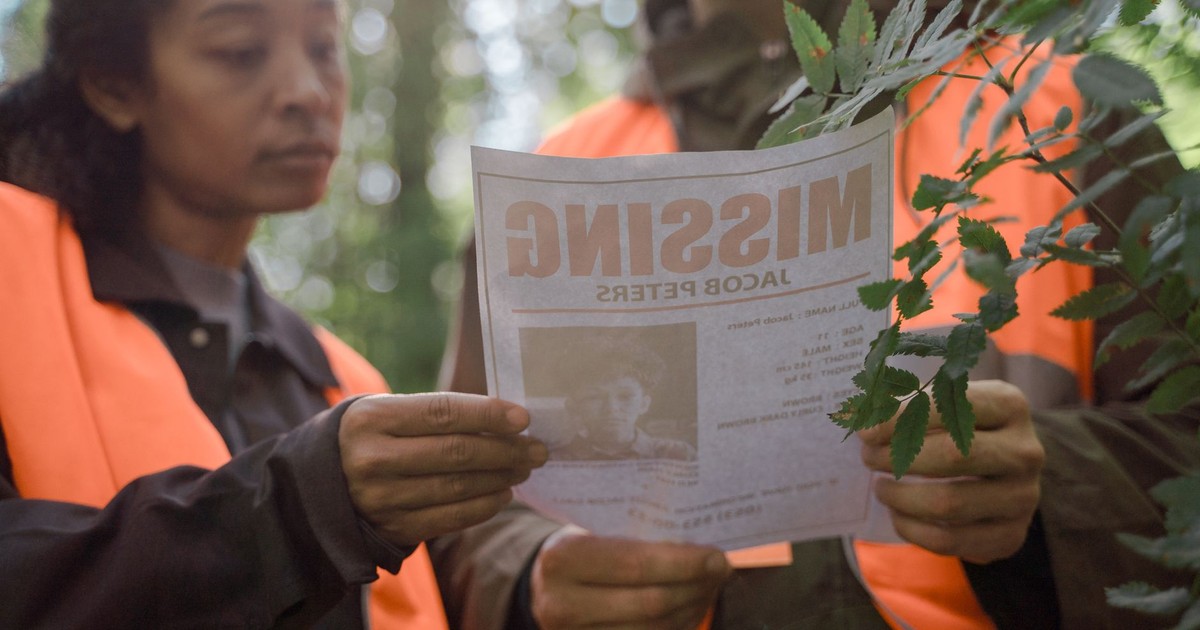

Prank missing-person posters featuring Senator Mitch McConnell have been put up around Washington, D.C., as his prolonged absence from Congress continues. The flyer features the words “MISSING PERSON” in large red lettering above an image of the Kentucky Republican recovering in a hospital bed. Taped to lampposts outside the U.S. Capitol and near a hospital emergency room, they describe the 84-year-old senator as “turtle-like” and note that he is known for “blocking something in the Senate.” At the very bottom, in the space usually reserved for a phone number to call, the poster offers a final instruction: if you have any information about his whereabouts, please keep it to yourself. He would.
A sitting U.S. senator has been absent from the chamber for nearly seven weeks. His office has released two photos and a handful of written statements. He has cast zero votes. For a stretch of several weeks following his June hospitalization, the public’s information about his condition was so thin that speculation ran from the plausible to the conspiratorial, with one far-right activist claiming he was “brain dead” and even some of his Republican colleagues admitting they weren’t sure he was alive.
Who Put Them Up and Why
The posters were made and distributed by the Save America Movement, an anti-Donald Trump political organization and political action committee co-founded by ex-Republicans like Steve Schmidt and executive director Mary Corcoran, both of whom left the GOP in the Trump era.
According to SAM’s own social media posts, “search parties have checked the Capitol, the Russell Senate Office Building, and, just to be thorough, the emergency room,” with photos of the flyers placed at all three locations. The group documented their stunt on Facebook and X, noting they’d taped flyers to poles outside the Capitol and near an emergency room entrance.
Save America Movement’s co-founder and executive director Mary Corcoran told Newsweek: “The posters are obviously parody but parody built on a disturbing reality: the senior senator (forgive the pun) from Kentucky has been MIA for going on seven weeks.”
The group’s spokesperson put it more bluntly in a separate statement: “We put those flyers up because this has gotten absurd. For more than a month now, the senior senator from Kentucky has not cast a vote, has not appeared for the work of the chamber, and has not, in any provable or functional sense, represented the four and a half million people who sent him there.”
During a podcast appearance, SAM co-founder Steve Schmidt argued that the opacity around McConnell’s condition reflects something rotten at the center of American public life. “The lie has so strangled the truth that whether a man who served in the United States Senate since 1985 turned into a force and a joke around the world, whether he’s alive or not,” Schmidt said, was a question that shouldn’t even be up for debate about a serving senator.
What We Actually Know About McConnell’s Condition
The 84-year-old Kentucky Republican has been hospitalized since June 14, his office confirmed. On the same day, emergency medical personnel responded to an unconscious person at McConnell’s home, according to a public EMS dispatch call reviewed by CBS News. The dispatch audio included a report of “cardiac arrest” and a medic saying “CPR in progress” at McConnell’s address. His office has not confirmed whether the call concerned the senator.
For weeks, his office said almost nothing publicly. Rumors circulated. Then, on July 12, McConnell released a lengthy written statement alongside a photo of himself in the hospital, sitting up next to his wife, former Labor Secretary Elaine Chao, with a copy of The Washington Post sports section on his lap.
“My doctors have confirmed that I didn’t break any bones or suffer a concussion. I didn’t have a heart attack or a stroke. I don’t have any tumors or hemorrhages. But I was briefly unconscious and was taken to the hospital. While receiving excellent care over the past several weeks, I’ve also had to deal with a mild case of pneumonia,” he said.
McConnell is a childhood polio survivor and has faced several health scares in recent years. The Office of the Attending Physician said in a statement that the senator had experienced several falls this year that were attributed to his post-polio condition. Post-polio syndrome refers to a cluster of weakening and fatigue symptoms that can emerge decades after a person recovers from polio, often affecting mobility significantly in later life. The illness left him with permanent mobility challenges that “haven’t exactly gotten easier to manage with age,” McConnell wrote.
McConnell said he moved from a hospital to a rehabilitation center to continue regaining his strength. Then on July 27, his office released another statement alongside a new photo. The Office of the Attending Physician said its physicians visit the senator every day, that he has maintained a strenuous course of physical therapy and rehabilitation including multiple sessions per day, and that he is “not yet medically cleared to leave the rehab facility and return to the office.”
That July 27 update arrived alongside a new photo but still no video, no public appearance, and no interview.
The Health History Behind the Headlines
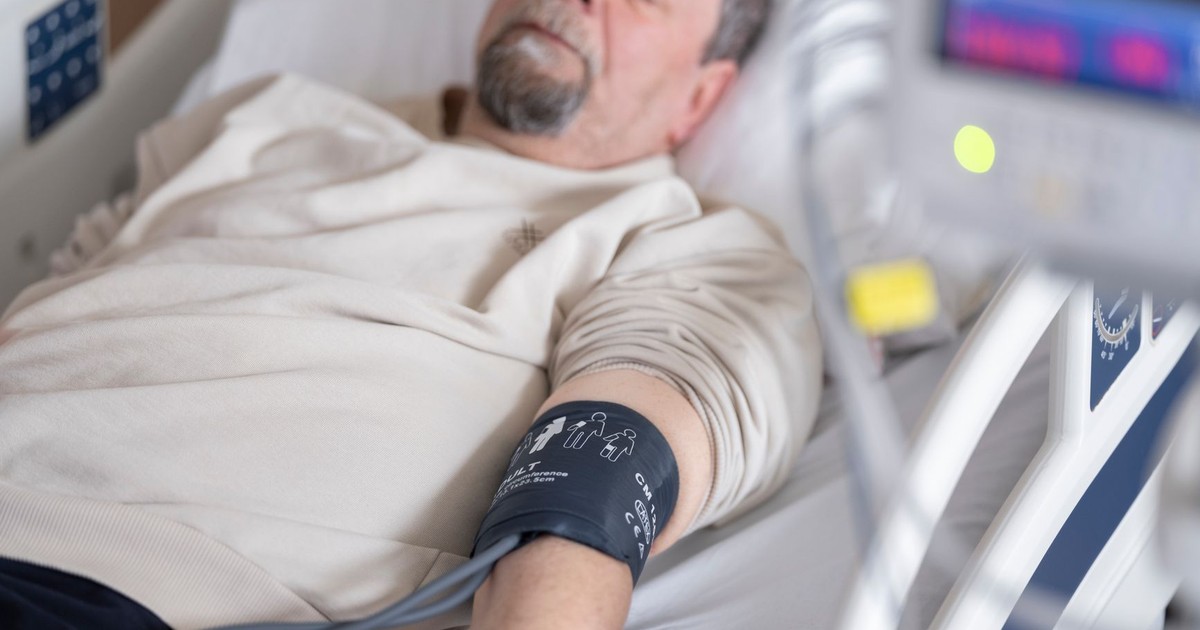
In February, McConnell spent more than a week in the hospital after checking himself in for “flu-like symptoms.” In March 2023, he was hospitalized after falling at a Washington hotel, fracturing a rib, and he later appeared to freeze in two separate public instances.
The senator fell at least five times between 2019 and 2025, the first of which occurred at his home and resulted in a fractured shoulder. In October 2025, he tripped and fell while being questioned by an activist about his feelings on immigration enforcement. In a video of the incident, McConnell, who was walking with a visibly stiff gait and relying on a person beside him for stability, can be seen stumbling to the ground.
This absence is different from prior episodes because of its duration and the silence surrounding it. Scott Jennings, a CNN senior political commentator and former McConnell aide, reported on July 7 that he had spoken to the senator by phone and that he was “still recovering in the hospital,” with a voice that “sounded strong.” The call happened more than three weeks after McConnell’s hospitalization, and for many people, a report of a phone call from a former aide was the most substantial piece of information available about a sitting senator’s condition.
The poster that reads “last seen: June 11, 2026” is not entirely a joke. The flyers claimed the 84-year-old senator was last seen on June 11, three days before he was taken from his home by ambulance.
Calls to Resign and the Political Stakes

Kentucky Governor Andy Beshear issued an ultimatum in letters warning McConnell and Senate Majority Leader John Thune that he may begin the process of replacing the senator. “As Governor of the state you serve, I am calling on you to directly and verbally address the people of Kentucky and provide proof of your capacity to serve, or resign,” Beshear wrote.
Beshear’s letter stated that it had been 43 days since McConnell’s hospitalization and that in that time he had cast no votes, engaged in no official activities, and aside from two photos and statements, had not provided any proof he could carry out his duties as senator. Beshear argued that even the attending physician’s written statement “does not discuss your actual condition, including whether you can speak, reason, or carry out your duties as a senator.”
Beshear also sent a separate letter to Senate Majority Leader John Thune, calling on Thune to investigate McConnell’s condition and, if McConnell did not show he could continue serving in the Senate, to begin the process of potentially expelling him from the chamber.
The political stakes are real. With Republicans holding a narrow 53-47 Senate majority, even a temporary vacancy in McConnell’s seat could affect votes on nominees, legislation, and Senate control. The path to filling that seat is legally murky. Kentucky’s Republican-controlled legislature passed a law in 2024 barring the Democratic governor from appointing a temporary senator and instead requiring a special election. The law has never been tested, and the seat would remain vacant until a winner was certified. Legal experts say the law could face a constitutional challenge.
The uncertainty has spread across party lines. President Trump said of McConnell, “I have no idea how he’s doing.” Republican Representative Marlin Stutzman added, “I don’t know if he’s alive or has passed away. I have not heard from him, and I think it’s a question that Republicans should be asking because he does represent the state of Kentucky.”
McConnell is due to retire in January 2027 at the end of his current term. At more than 40 years of service, he is the 10th longest-serving senator in U.S. history. What happens between now and January, and whether he returns to cast a single vote in that time, is genuinely unknown.
The Posters as Political Pressure, Not Just Prank

Political parody has a long history as a form of dissent when conventional pressure fails to produce results, and the Mitch McConnell missing posters fit squarely in that tradition. The humor comes not from invention but from recognition.
Beshear wrote to Thune: “If Senator McConnell is unwilling to voluntarily show that he still has the capacity to serve, I will insist that you as the Majority Leader of the Senate fully investigate his condition, report to the American people, and begin the process if warranted.” That’s a formal, legal-register letter from a sitting governor to the Senate majority leader. The SAM posters are laminated flyers taped to a Capitol lamppost. Both are making the same argument.
A photo of a “MISSING PERSON” flyer for a U.S. senator, complete with a hospital bed photo and a note that his distinguishing feature is a “tortoise-like appearance,” is exactly the kind of image that travels fast online. By the time cable news picked up the story, the posters had already done their work. A governor’s formal letter requires follow-up coverage, committee proceedings, and a willing majority leader to act on it. A laminated flyer taped to a pole outside the Senate at 7am needs none of that.
The Civic Question Nobody Wants to Ask Directly
McConnell is not a private citizen. He is a sitting U.S. senator representing 4.5 million Kentuckians, drawing a federal salary, and occupying a seat whose presence or absence in the chamber directly shapes which legislation passes and which doesn’t. Whether he can speak, reason, and vote is not a personal question about one man’s health. It is a structural question about whether the people of Kentucky have a functioning representative in the Senate right now. His family doesn’t owe the public an answer to that. His office does.
The tagline at the bottom of the poster, “if you have any information about his whereabouts, please keep it to yourself. He would,” is funnier the longer you sit with it. Not because it’s cruel, but because it’s accurate. His office has done exactly that for nearly seven weeks. A governor wrote two formal letters. Colleagues went on television to say they weren’t sure he was alive. His own senior communications adviser was filmed walking away from a reporter without a word. At the point where all of that has happened and the result is still two photos and a written statement, a missing-person flyer on a lamppost isn’t just a prank. It’s a record of what every more formal pressure failed to produce.
Disclaimer: This information is not intended to be a substitute for professional medical advice, diagnosis, or treatment and is for information only. Always seek the advice of your physician or another qualified health provider with any questions about your medical condition and/or current medication. Do not disregard professional medical advice or delay seeking advice or treatment because of something you have read here.
AI Disclaimer: This article was created with the assistance of AI tools and reviewed by a human editor.