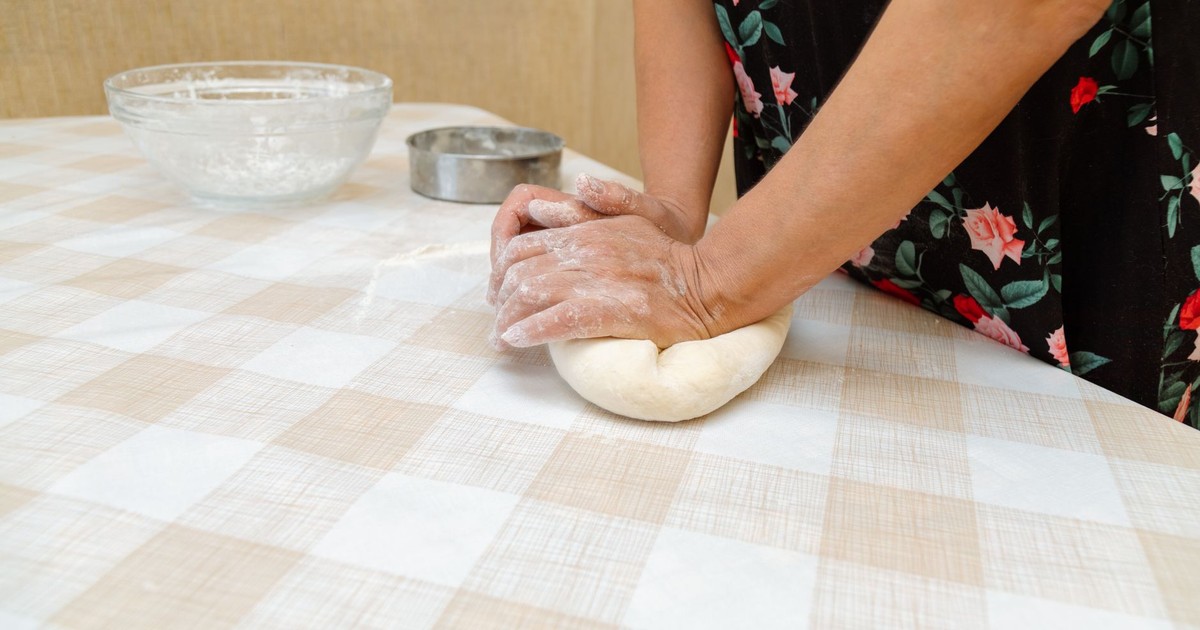

If you were born between 1960 and 1985, you probably grew up in a house where dinner was cooked from raw ingredients, a broken faucet got fixed rather than reported to a landlord, and a thank-you note went in the mail. These weren’t considered virtues. They were just Tuesday. The people who raised you didn’t call any of it self-sufficiency. They called it life.
People who came of age in the 60s, 70s, and 80s absorbed a particular set of daily practices that researchers are discovering had cognitive, financial, and social benefits nobody was consciously aware of at the time.
Nine of those habits stand out as particularly telling about what gets lost when the constraint disappears.
1. Writing Things Down by Hand

According to research from the University of Stavanger in Norway, 40% of Generation Z have lost elements of handwriting, and researchers estimate this could be the first human generation to no longer be able to write functionally. For people raised in the 60s, 70s, and early 80s, handwriting was non-negotiable. Every school assignment, every grocery list, every birthday card, every note passed in class. The hand was the primary tool of recorded thought, and it stayed that way for the first two decades of most people’s lives.
Research on note-taking has generally found that writing by hand tends to support better retention than typing, in part because handwriters must summarize and reframe rather than transcribe verbatim. Some more recent studies have found smaller or less consistent differences, and the overall evidence remains mixed. The generation raised on ballpoint pens and spiral notebooks got a version of that cognitive workout by default. Nobody was optimizing for memory consolidation. They were just doing their homework.
In 2016, only 14 states mandated cursive instruction in schools. By July 2024, that number had grown to 25 states requiring cursive writing instruction in public schools. That reversal says something. Somewhere along the way, enough educators and legislators looked at what had been discarded and decided it was worth getting back.
2. Reading an Analog Clock Without Thinking About It

Ask someone who grew up in 1975 what time it is, hand them a watch with hands, and they’ll tell you without breaking conversation. For a growing segment of younger adults, that same task now requires a pause. A cross-sectional study published in a PubMed study analyzing clock drawing performance across four generations found that younger adults were over four times more likely to make errors on the clock drawing test compared to older adults.
Common errors included writing digital time, such as “11:10,” instead of drawing analog clock hands, or placing the hands incorrectly. Crucially, these difficulties were not associated with cognitive performance. The problem wasn’t intelligence. It was sheer unfamiliarity. Digital displays are so dominant now that many younger people have simply never needed to decode an analog face with any regularity.
The study concluded that younger adults demonstrate significantly higher rates of clock drawing errors compared with older adults, independent of cognitive performance, suggesting a need for generation-specific norms in clock drawing test interpretation. In other words, neurologists and doctors who use clock reading as a cognitive screening tool may now need to account for the fact that struggling with an analog clock says something very different for a 25-year-old than it does for a 70-year-old.
3. Cooking a Meal From Raw Ingredients

Baking a potato. Making a stock. Knowing without a recipe that an onion goes in first. These were unremarkable skills for anyone who grew up in a household before meal delivery apps and pre-marinated everything. Gen X watches today’s cooking videos with a knowing smile, for that generation, it was simply called “making dinner.”
From sourdough starters to homemade pickles, the “grandma trend” of Gen Z making food from scratch is understood as a sharp contrast to the meal-kit and delivery app culture that defined the early 2020s. The fact that cooking from scratch registers as a trend at all, rather than as a baseline expectation, is where the real change lives.
People raised in the 60s through 80s knew how to feed themselves in the most literal sense: from raw materials, with a pot and a stove and whatever was in the refrigerator. The knowledge was passed down in kitchens, not learned from YouTube. Losing it costs more than flavor. It costs the ability to control what goes into your body, to stretch a dollar at the grocery store, and to feed other people well without spending $40 on a delivery order.
4. Making and Receiving Phone Calls Without Anxiety

The older generation grew up on corded wall phones. You called, someone picked up, you talked, you said goodbye. There was no caller ID, no text preview, no way to screen. You simply answered, or you didn’t. When it comes to scheduling appointments or speaking with businesses, many older adults will simply call and speak with a human, while younger generations prefer online booking systems and actively avoid phone calls.
The avoidance of phone calls among younger adults has become pronounced enough that researchers and employers have commented on it extensively. Jobs, professional relationships, and a range of everyday logistics still require the ability to talk to a stranger on the phone without dread, and for many millennials and Gen Z, that’s a skill that never fully formed because the option to text instead was always available.
For people who grew up in the 60s and 70s, phone calls weren’t a choice among alternatives. They were the only way. That constraint produced a comfort with improvised verbal communication, practiced over decades, that’s now noted as a workplace skill rather than an assumed baseline.
5. Carrying Cash and Knowing How to Use It

Adults 50 and up are more likely to say they always have cash on hand, 71%, compared to just 45% of adults under 50, according to a Pew Research report via CNBC. For people who grew up before digital payment options were widely available, cash was the primary way to transact. You budgeted in bills. You counted change. You understood exactly how much you had because you could feel it in your wallet.
The practical case for maintaining the habit is stronger than it might seem in 2026. Card systems go down. Certain vendors, particularly at local markets, food trucks, and small independent businesses, are cash-only. Power outages knock out digital payment systems. And there’s growing evidence that spending physical cash creates a different psychological relationship with money than digital transactions do. When you hand over a $20 bill, you feel it leaving. A tap of a card doesn’t register the same way, which is one reason budgeting is harder for people who never handle cash.
People raised in earlier decades didn’t need to be taught that cash was real money. They grew up budgeting their allowance in coins, watching parents count bills at the grocery checkout, and understanding in a tactile way that money was finite. That relationship with spending is harder to develop when every transaction is invisible.
6. Performing Basic Home Maintenance

One of the starkest generational differences in habits between people who came of age before the 1990s and those who came after involves knowing how to fix things around the house. A 2025 survey conducted for Nationwide Building Society found that 30% of people believe DIY skills are being lost among younger generations, with baby boomers most likely to think the knowledge has slipped through the cracks between generations. The gap becomes clearest in specific tasks: only 9% of Gen Z have performed basic home maintenance such as bleeding a radiator, compared to 53% of baby boomers.
The survey identified key reasons behind this shift: less hands-on education, greater reliance on professionals, and the fact that knowledge is no longer consistently passed down between generations.
People raised in the 60s and 70s typically grew up in households where things got repaired rather than replaced, and where calling someone to fix a leaky tap was considered an unnecessary expense if you had two hands and twenty minutes. That ethos taught spatial reasoning, patience, and the kind of confidence that comes from making something work again. It also saved, and continues to save, a significant amount of money for those who kept it up.
7. Sending Handwritten Cards and Letters

Boomers often send out dozens of handwritten cards every year, with updates, family photos, and summaries of their year. To digital natives, this can feel like an ancient form of social media, but to older adults, it’s a considered tradition, not spam.
Putting pen to paper and mailing something to another person involves several things digital communication doesn’t: deliberate effort, a physical object the recipient can hold and keep, and a delay that forces you to think before you write. A text can be composed in eight seconds and regretted in ten. A letter, or even a birthday card with a note inside, requires sitting down, finding the right words, and committing.
The social research on connection and loneliness consistently finds that gestures of direct, effortful communication have an outsized impact on the recipient’s sense of being valued. A text that says “thinking of you” and a card that says the same thing arrive very differently. People who grew up in the 60s through 80s learned this by practice, because it was the only option. That the practice has become rare now doesn’t make it less powerful.
8. Navigating Without GPS

Knowing where north is. Keeping a mental map of your city. Glancing at the sun to get your bearings. Remembering the turns on a route you’ve driven twice. These were ordinary cognitive tasks for anyone who drove before the late 1990s, when navigation was entirely self-directed. You consulted a paper map before leaving, then stored what you needed and drove.
GPS is an excellent tool. The concern researchers have raised is that consistent reliance on it may gradually reduce the spatial reasoning skills that have other uses. Spatial cognition, the ability to mentally represent and manipulate your environment, supports performance in mathematics, science, and engineering. People who grew up reading road maps and finding their way through unfamiliar cities without digital assistance exercised those capacities repeatedly, without ever thinking of it as exercise.
Older generations kept this habit not because they were more capable but because they had no alternative. The incidental exercise of finding your way without being told where to turn built an internal map of the world that passive GPS use simply doesn’t replicate. A generation of drivers who never had to think about north or remember an exit ramp is a natural experiment in what happens when a cognitive habit disappears.
Read More: Baby Boomer Habits That Are Actually Good For You
9. Sitting With Boredom Without Reaching for a Screen

Of all the generational differences in habits between people raised in the 60s and 80s versus those who grew up later, this one might be the hardest to notice from the inside. Boredom has been so thoroughly eliminated that most younger adults have never had the chance to find out what happens when it’s sustained for more than a few minutes.
People who grew up before cable television arrived, before video games were household staples, and long before the internet existed, spent significant stretches of time doing nothing in particular. Waiting rooms. Long car rides. Sunday afternoons in July. The response was not to fill the silence but to exist inside it until the mind found something to do with itself. That’s where daydreaming happens, where creative thinking takes root, where the problem that’s been stewing since Tuesday afternoon suddenly resolves.
The research on boredom and creativity is consistent: unstructured mental time is productive in ways that look, from the outside, like inactivity. Older generations absorbed this by accident, simply because the option to eliminate boredom wasn’t available. The habit of tolerating restlessness without immediately reaching for stimulation is one that came standard with growing up in a pre-digital era, and it’s proving to be genuinely difficult to reclaim once the alternative is always in your pocket.
What Actually Gets Lost

None of this is an argument that people raised in earlier decades were smarter or better. They weren’t. They also held onto a lot of things that deserved to go. But the habits listed here share something in common: they were byproducts of constraint. Writing by hand because there was no keyboard. Cooking from scratch because there was no alternative. Tolerating boredom because there was nothing else to do. In most cases, the constraint turned out to be doing something useful that nobody intended.
The loss isn’t irreversible. You can learn to write by hand again. You can start cooking real food, carry cash, pick up the phone. None of these habits require a different era, just a decision to do the thing the slightly longer way. The people who kept them going didn’t do it out of stubbornness. They did it because the habits worked, and most of them still do. Some of these patterns go back further than any single generation. Naming that isn’t a solution, but it’s usually where the real conversation starts.
Disclaimer: This information is not intended to be a substitute for professional medical advice, diagnosis, or treatment and is for information only. Always seek the advice of your physician or another qualified health provider with any questions about your medical condition and/or current medication. Do not disregard professional medical advice or delay seeking advice or treatment because of something you have read here.
AI Disclaimer: This article was created with the assistance of AI tools and reviewed by a human editor.