
The ceasefire was supposed to hold. On April 8, after five weeks of strikes, counter-strikes, and threats serious enough to move oil markets by double digits overnight, the United States and Iran agreed to a two-week pause. Oil dropped nearly 16 percent in a single day. Stock markets surged. Pakistan’s Prime Minister Shehbaz Sharif, who had brokered the truce, called it a chance for diplomacy to run its course.
That was three months ago. The Middle East is back on a war footing, and the trajectory is harder to talk down than the one that preceded April.
Over the past week, the conflict between the United States and Iran has gone from a simmering tit-for-tat to something that resembles all-out war. The ceasefire that briefly held has collapsed. The Strait of Hormuz, the narrow chokepoint through which a fifth of the world’s oil passes, is contested again. Yemen’s Houthis have threatened to lock down a second critical shipping lane. Israel, which spent much of the past few months formally on the sidelines, is drawing up contingency plans.
How It Started: February 28 and the Day That Changed Everything
On February 28, 2026, Israel and the United States began a series of strikes against Iran, saying they aimed to induce regime change and to target Iran’s nuclear and ballistic missile program. The move came when the Iranian regime was arguably at its lowest domestic ebb in years. Extensive protests in Iran in early 2026, driven by a weakened economy and crumbling infrastructure, had illustrated the regime’s weakened legitimacy, and those protests had been put down with extensive force.
The joint US-Israeli campaign evolved from initial strikes that killed Supreme Leader Ali Khamenei and dozens of senior military figures into sustained, large-scale air operations across Iran. Tehran’s response was not to fold. Iran’s war strategy widened the arena of conflict into the political and economic realms, with the aim of withstanding bombardment until the conflict became too costly to sustain. Iranian strikes targeted US embassies and military installations in the United Arab Emirates, Saudi Arabia, Qatar, Kuwait, Bahrain, Iraq, Oman, and Jordan.
The conflict also saw the resumption of hostilities between Israel and Hezbollah in Lebanon, which had been observing a fragile ceasefire arrangement from late 2024. Despite that earlier arrangement, which required the disarmament of Hezbollah and the withdrawal of Israeli forces from southern Lebanon, Hezbollah had been restoring its military capabilities, and the IDF had continued to strike targets in the south almost daily. On March 2, Hezbollah launched missiles and drones into Israel, prompting an escalation in Israeli airstrikes that reached north to southern Beirut.
The Ceasefire That Wasn’t

After more than five weeks of fighting, the United States and Iran agreed on April 7-8 to a ceasefire that included Israel. The terms were stark in their simplicity: Iran would reopen the Strait of Hormuz; the US would suspend strikes. Pakistan’s Prime Minister Shehbaz Sharif mediated the truce, requesting the 14-day break from hostilities to allow diplomacy to run its course. Iran submitted a 10-point peace plan that included the retention of its uranium enrichment program.
The economic relief was immediate. Around the time Trump announced the ceasefire, the average price of a gallon of gas across the US had risen to $4.16, up from $2.98 just before the war began. Financial markets were thousands of points below their pre-war levels, though they responded positively to the announcement.
But the ceasefire was conditional and fragile. As the war with Iran marked its 100th day, the conflict stood on the verge of full resumption following a dramatic military escalation between Israel and Iran and the Houthis announcing a Red Sea naval blockade of Israeli vessels. In just 24 hours, tension spiked considerably, starting with Israel’s strikes on Beirut’s southern suburbs and Iran’s retaliation against Israel. Despite President Trump’s urging Israel not to retaliate, Israel subsequently hit targets in Iran, including a petrochemical plant, which could prompt Iran to once again target Gulf energy infrastructure.
By July, the ceasefire was formally dead. The US said it was striking Iran in retaliation for attacks on three commercial ships in the Strait of Hormuz. President Trump, speaking at the NATO summit in Turkey, declared that the ceasefire was “over” and said that negotiating with Iran was a “waste of time.”
The Hormuz Stranglehold and What It’s Doing to the World
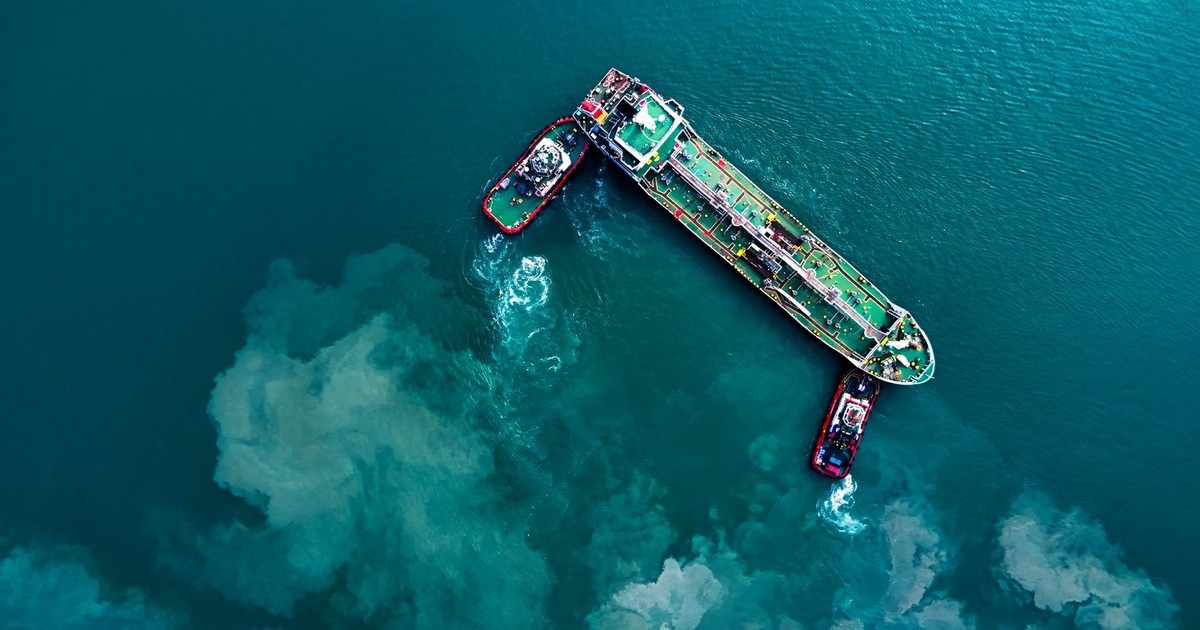
The danger of crossfire and threats from Iran led to severe disruption of traffic through the Strait of Hormuz, one of the world’s most volatile oil chokepoints, causing fuel shortages in parts of Asia and rippling effects across the global economy. The disruption is not a temporary spike. The International Energy Agency has characterized the situation as “the largest supply disruption in the history of the global oil market,” a designation that puts the 2026 crisis above the 1973 oil embargo in terms of sheer volume of trade affected.
Oil prices, while still well below the war’s peak when prices neared $120 per barrel, were heading in the wrong direction again through mid-July. As of July 23, Brent crude had topped $100 per barrel, yanking Wall Street lower.
Trump threatened to broaden the war unless Iran stops attacking ships transiting the Strait of Hormuz. In recent days, the US expanded its targets beyond Iranian coastal sites housing radar and drone facilities to include roads, tunnels, railways, port infrastructure, and, according to Iranian media, a desalination plant. Iran, in turn, expanded its target list across seven countries in the region, with official media outlets suggesting that major ports in Gulf Arab states could be next.
The energy shock is not contained to the Persian Gulf. Analysts at The Washington Institute have warned that the Houthis are trying to compound the crisis by targeting a second chokepoint. The Iran-aligned Houthis in Yemen are signaling a major escalation in the war, threatening a blockade on a key Red Sea shipping route that, according to the US Energy Information Administration, accounted for about 9 percent of total seaborne-traded petroleum before the current conflict. The Houthis specifically announced they are targeting all of Saudi Arabia’s energy and other exports through the Bab al-Mandeb Strait. The Bab al-Mandeb is 18 miles wide at its narrowest point, with tanker traffic limited to two 2-mile-wide channels. If it closes alongside the Strait of Hormuz, the effective disruption to global trade would be without modern precedent.
Those worried about what a wider conflict could mean for personal security at home are not alone. Searches for nuclear war preparedness have risen sharply across the US since February.
Israel on the Sidelines, For Now
One of the more unusual features of the current phase of the Middle East escalation is Israel’s posture. Despite being the co-initiator of the February 28 strikes, Israel has spent the past several weeks watching the US-Iran exchange from a position that is officially described as restrained. With its forces on high alert, Israel is drawing up operational plans for a further escalation in the US-Iran conflict, three Israeli sources have confirmed, but for now remains on the sidelines and has no imminent plans to join.
The reason is partly strategic. Iran’s retaliation strikes have targeted US bases and Arab partners more than Israeli soil in recent weeks, giving Jerusalem less immediate justification to re-enter. But the calculus could change rapidly. Iran has struck Israeli-linked infrastructure and continued to support Hezbollah’s sporadic attacks from southern Lebanon. After a ceasefire was announced in April, Israel launched its largest wave of airstrikes since the operation began in March. Israel continues to treat Lebanon as a separate front from the regional conflict, making any meaningful de-escalation uncertain.
Israel’s stated goal has been to push Hezbollah away from southern Lebanon, degrade its ability to target Israeli forces with anti-tank missiles, and to destroy buildings in villages near the border. That campaign has not stopped. Israeli airstrikes and ground operations across Lebanon, combined with Hezbollah’s rocket and drone attacks toward northern Israel, resulted in heavy casualties and widespread displacement. By mid-April, more than 2,000 people had been killed in Lebanon, and over one million had been displaced.
Iran’s Strategy: Spread the Pain
Understanding why the conflict keeps re-escalating means understanding what Iran is actually trying to accomplish. It is not, by most analysts’ reading, trying to win a conventional military exchange with the United States. It can’t. Iranian strikes followed a pattern of what international security scholar Robert A. Pape, writing in Foreign Affairs, described as “horizontal escalation,” widening the arena of conflict to extend the war beyond mere military might and into the political and economic realms, aiming to make the conflict too costly for the US and Israel to sustain.
That playbook has worked before. The longer the Strait of Hormuz stays disrupted, the more pressure builds on US allies in Asia, Japan, South Korea, India, whose energy imports transit that waterway. The more oil prices climb, the more Trump’s domestic political position deteriorates. The confrontation escalated after years of rising tension over Iran’s nuclear program, its ballistic missiles, and its military reach across the region. Attempts to renegotiate a nuclear deal after the collapse of the 2015 Joint Comprehensive Plan of Action were unsuccessful in both 2025 and 2026. That failed diplomacy left both sides without an off-ramp when the shooting started.
Iran’s 10-point peace plan, submitted during the April ceasefire, included the retention of its uranium enrichment capability. The US has not accepted those terms. Negotiators reached a 60-day memorandum of understanding to extend the ceasefire and begin negotiations over Iran’s nuclear program, but President Trump still had to approve the deal. He did not. The bombing resumed.
Read More: The Safest Places to Live in the U.S. Amid Nuclear War Concerns
Where Things Stand, and Where They Could Go

The pattern of the past five months has followed a grim rhythm: escalation, a ceasefire brokered under extreme economic pressure, a period of fragile calm, and then re-ignition triggered by some combination of Israeli unilateralism, Iranian proxy activity, or a breakdown in the nuclear talks that neither side has fully committed to. As of July 22, the US military launched more airstrikes on Iran as Iran hit back against US military targets in the Gulf and Jordan. The attacks overshadowed diplomatic efforts in Pakistan, one of the conflict’s mediators, where Iranian officials visited for talks aimed at reviving the collapsed ceasefire.
The attacks have left enormous damage, thousands of people dead in Iran, Lebanon, Israel, and the Gulf Arab states, and millions of people displaced across the region. The humanitarian toll is severe and growing. But it is, from a geopolitical standpoint, secondary to the question that every energy market, every government in Asia and Europe, and every diplomatic back-channel is currently wrestling with: whether the next phase of this war will cross a threshold that makes resolution genuinely impossible.
The UN Secretary-General issued a warning in early April that the world was “on the edge of a wider war.” That was when the ceasefire was still holding. The ceasefire is no longer holding.
What Comes Next
The US has staked enormous political and military capital on forcing a change in Iran’s nuclear behavior. Iran has staked its regime’s survival on not capitulating. Israel is watching its northern border burn while drawing up plans it has not yet executed. The Houthis are threatening to turn the Red Sea into a second front.
The most likely near-term scenario, based on the diplomatic contacts still visible in Pakistan and the economic pain that $100-plus oil is inflicting on the US domestically, is another ceasefire attempt. But a ceasefire is not a resolution. Every pause in this conflict so far has ended with both sides in a stronger military position than before and a weaker diplomatic one. Iran still has its enrichment program. The US still has three carrier strike groups in the region. The structural reasons this war started have not changed, and no one has yet found the formula that makes them change.
Disclaimer: This information is not intended to be a substitute for professional medical advice, diagnosis, or treatment and is for information only. Always seek the advice of your physician or another qualified health provider with any questions about your medical condition and/or current medication. Do not disregard professional medical advice or delay seeking advice or treatment because of something you have read here.
AI Disclaimer: This article was created with the assistance of AI tools and reviewed by a human editor.