

Everyone knows what an obvious villain looks like. The real problem is the ones who don’t.
People who cause the most lasting damage in relationships, workplaces, and families are often the ones whose names come up in every glowing description. The colleague everyone trusts. The relative who’s always called so generous. The partner whose friends think you’re lucky to have them. That gap between the public performance and the private reality is one of the most studied problems in personality psychology, and one of the hardest to name when you’re in the middle of it.
In 1941, psychologist Hervey Cleckley published The Mask of Sanity, describing individuals who concealed destructive behavioral patterns behind a convincing facade of charm, intelligence, and apparent sincerity. They didn’t look dangerous, and that, Cleckley argued, was precisely what made them dangerous. Decades of research since have mapped that territory in increasingly specific ways, producing a vocabulary for what was previously just a bad feeling you couldn’t explain.
Psychologists Delroy Paulhus and Kevin Williams identified what they called the Dark Triad: three overlapping personality traits sharing a common core of manipulation, emotional coldness, and self-interest. These traits rarely show up in their most extreme clinical forms. More often, they appear in the person sitting across from you at Thanksgiving, in the office down the hall, or in the bed next to you. What follows covers 16 recognizable human patterns that look one way to the world and operate very differently in private.
The Communal Narcissist

Communal narcissists see themselves as deeply altruistic and claim to care about fairness, presenting themselves to others as supportive and selfless. They run the school fundraiser, organize the neighborhood mutual aid group, and post regularly about causes they care about. The problem is that the generosity is always visible, always performed, always somehow about them.
Research has found that narcissism correlates positively with visible altruistic acts but negatively with actual emotional empathy. The communal narcissist gives, conspicuously, and then holds it over you. The charity isn’t really about the recipient. It’s currency for the self-image. When they don’t receive the recognition they feel their giving deserves, the warmth vanishes fast.
The Gaslighter
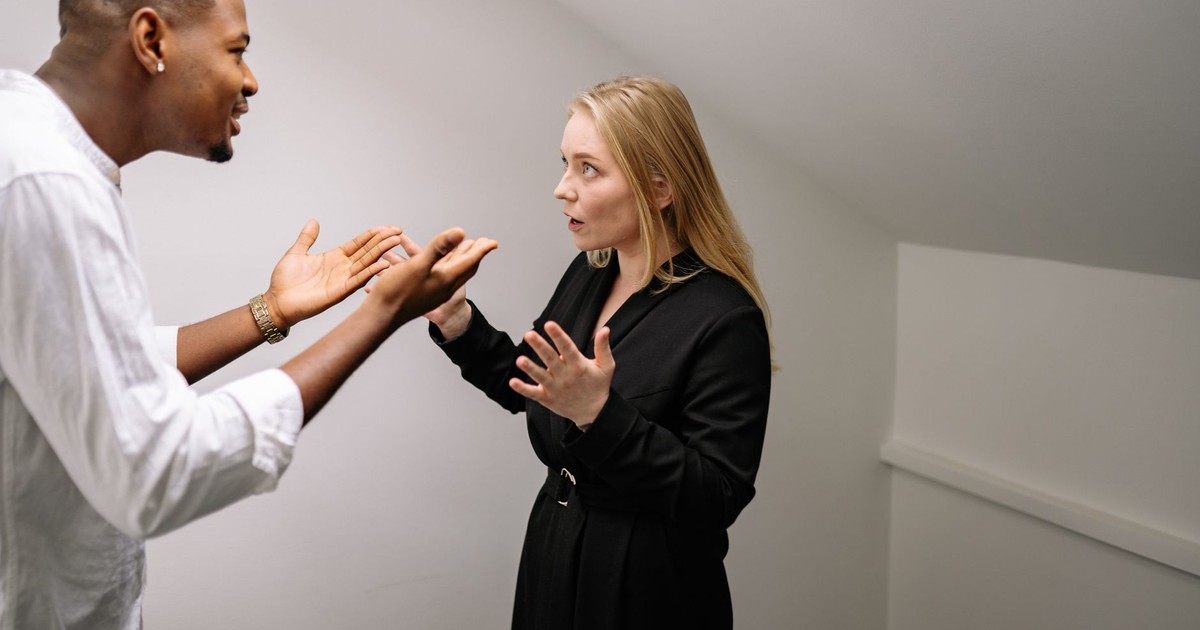
A 2024 study published in the Journal of Social and Personal Relationships found that gaslighting exposure was strongly linked with greater depression and lower relationship quality, above and beyond other forms of intimate partner violence. Gaslighting doesn’t just hurt you, it makes you doubt that you’ve been hurt.
The gaslighter is often described by their social circle as calm, reasonable, measured. They’re the one who always seems to have a rational explanation for the thing that upset you. “That’s not what I said.” “You’re too sensitive.” “You always do this.” Sociologist Paige Sweet argued in a 2019 paper that gaslighting is most effective when the perpetrator can leverage social credibility. The nicer someone appears to the outside world, the more power they have to distort your reality without anyone noticing.
The Covert Narcissist

The covert narcissist is harder to clock than the grandiose variety because they’re not the loudest person in the room. They’re often introverted, wounded, always somehow the one who had it hardest. Covert narcissists are extremely sensitive to criticism and tend to suffer from low self-esteem. They can be defensive and passive-aggressive, while being less likely to overestimate their emotional abilities than overt narcissists.
Because covert narcissists are introverted, it’s easy to overlook negative traits like self-absorption or manipulative behavior. They attract sympathy where overt narcissists attract eye-rolls, which means they face far less accountability. The guilt they generate is chronic and low-grade, the kind you can’t quite articulate to someone else without sounding unkind.
The Love Bomber

Love bombing is what the beginning of a relationship looks like when one person is running a strategy rather than falling in love. The texts at every hour, the gifts after two weeks, the declarations of soulmate-level connection after a month. It feels, for a while, like the most intense romantic experience of your life. A classic narcissistic manipulator will use love bombing to win your trust and affection, guilt-tripping to gain favors, and gaslighting to make you doubt yourself.
The love bomber builds a pedestal specifically so they can knock you off it. The intensity of the early phase isn’t affection, it’s investment. They’re building a debt you’ll spend years repaying. Once the idealization ends and devaluation begins, you’ll spend months trying to get back to the version of the relationship you had at the start. That version was never real.
The Malignant Narcissist

Psychiatrist Otto Kernberg, a professor of psychiatry at Weill Cornell Medicine, described malignant narcissism as a severe personality syndrome involving grandiosity, aggression, paranoid tendencies, and psychopathic features. Unlike the grandiose narcissist who causes harm as a side effect of self-centeredness, the malignant narcissist can cause harm intentionally, and experience something close to satisfaction in doing so.
This is the type that becomes genuinely dangerous when you try to leave. In relationships, this may appear as deliberate cruelty, threats, financial sabotage, and gaslighting intended to destabilize. The escalation at separation is a distinguishing clinical feature: where other narcissistic types may become emotionally punishing during a breakup, the malignant narcissist often becomes genuinely dangerous.
The Dark Empath

A 2021 study from researchers in the UK identified a subgroup they called “dark empaths,” people who score high on dark triad traits but also have genuine empathic ability. Dark empaths were less agreeable than typical people and empaths, but more extroverted, with a tendency to be sociable, lively, and active.
The dark empath is uniquely dangerous because they actually understand how you feel and use that understanding to get under your skin more precisely than someone who can’t read a room. They know what you need to hear. They know where the soft spots are. That empathy doesn’t make them kind. It makes them accurate.
The Machiavellian Operator

Machiavellianism describes a strategic, calculated, and cynical approach to manipulating other people for personal gain. In the office, this is the colleague who mentors you enthusiastically right up until you become competition. In a friendship, it’s the person who’s always warmly supportive until they need something you’re not providing. Every interaction is a transaction, run through a silent cost-benefit calculation you’re not aware you’re part of.
Narcissists tend to emerge as leaders but don’t lead more effectively, and psychopathy is the strongest predictor of bullying. The Machiavellian, by contrast, is rarely the most visible person in a hierarchy. They prefer operating from slightly to the side, pulling strings, managing narratives, staying liked by everyone who matters. The competence is real. The loyalty evaporates the moment it stops serving their interests.
The Perpetual Victim

This type causes harm entirely from within the role of someone who is harmless. They’re always the one who was wronged, always the one who needs support, always the one whose story positions everyone around them as capable of disappointing them. The emotional labor required to be in a relationship with them is enormous, and if you try to reduce it, you become the latest person to have let them down.
Assuming the role of victim allows covertly narcissistic individuals to pivot away from responsibility and blame while gathering sympathy, using guilt and pity to solicit attention and care from others. The perpetual victim doesn’t need to threaten or coerce. They’ve built a situation in which refusing them feels like cruelty.
The Charming Psychopath
Research published in Frontiers in Psychiatry in 2025 argued that psychopathic traits warrant recognition as a public health concern, given their robust links to documented interpersonal and societal harm. The clinical picture of psychopathy is nothing like what film and television suggest. Most people with significant psychopathic traits are not violent. They’re charming. They’re often successful. They make you feel, at least initially, like the most interesting person in the room.
People with psychopathic traits engage in calculated risk-taking, often for the thrill it provides. They lack the fear response that would normally inhibit dangerous behavior and experience neither conscience nor guilt, which removes internal barriers to harmful actions. When the relationship ends or the situation no longer serves them, the exit is clean and total. There’s no grief on their end, and that absence of grief, when you encounter it, is one of the most disorienting experiences a person can have.
The Workplace Saboteur

They praised your presentation in the meeting and then told the director it had a structural problem, but only as a quick aside, just so he knew. They forwarded your email with a single-line addition: “Worth discussing further?” They introduce you to important contacts with a description that’s technically accurate and subtly damaging. People with dark triad traits can undermine colleagues in lasting ways, all while maintaining a charismatic and charming exterior.
The workplace saboteur is often well-liked because they’re helpful. They just happen to be helpful in ways that also benefit them and, occasionally, hurt you. They understand institutional credibility. They know that a single well-placed word of concern from a respected source carries more weight than a direct attack. Patterns become visible over time, especially in writing.
The Controlling Helper

By becoming your indispensable hero, fixer, or savior, a covertly narcissistic person slowly erodes your ability to trust yourself. The controlling helper swoops in whenever you’re struggling, to drive you to appointments, manage your schedule, handle the things you’re overwhelmed by, and in doing so builds a dependency. They never say no. They also never let you forget what they’ve given. The help arrives uninvited, then becomes the reason you owe them something.
The cleanest way to identify this person is to try doing something yourself. If they support your independence, the help was real. If they become hurt, withdrawn, or critical when you no longer need them, the help was always about their need for control, not yours for assistance.
The Passive-Aggressive Punisher

This person never raises their voice. They never say anything you could clearly call unkind. But they have a way of going very still when you’ve done something they disapprove of, answering in two words where they’d normally use ten, being just slightly less warm until you work out what you’ve done wrong and correct it. A covert or vulnerable narcissist is often characterized by a lack of empathy, entitlement, hypersensitivity, and passive-aggressive behavior.
The passive-aggressive punisher never technically has a conflict. They just have a temperature that changes based on whether you’ve pleased them, and they never tell you the rules. You spend enormous energy reading the room, monitoring their mood, adjusting your behavior, all to avoid a punishment that’s never explicitly announced.
The Triangulator

Triangulation involves pitting people against each other to maintain control. The triangulator is excellent at relationships, many of them, simultaneously. They keep people connected to them by keeping people slightly insecure about each other. They mention, casually, that your mutual friend said something about you. They tell you they’ve been having such good conversations with your partner lately. They create a web in which they’re always at the center, always slightly more valued than you feel.
In families, triangulation often runs through generations without anyone naming it. In romantic partnerships and toxic relationships, it shows up as the former friend they’re still very close to, the ex they “occasionally check in with,” the colleague who seems to come up a lot. The goal isn’t to pursue those people. It’s to keep you slightly off balance. Insecurity makes people easier to hold.
The Social Chameleon

Untrustworthy people can be chameleons, adjusting their views to match yours so you let your guard down, agreeing with everything you say, nodding enthusiastically, pretending to share your interests, until their true nature becomes apparent. This calculated mimicry makes them seem likable at first but ultimately feels hollow once you realize the connection was never genuine.
The social chameleon is whoever they need to be in any given room. They reflect your values back to you with impressive precision in early interactions, and it feels like genuine connection because they are genuinely skilled at this. The problem surfaces when you compare notes with other people who know them and discover that every one of you has a slightly different version of this person in mind.
The Sadist in Plain Sight

Sadism is defined as deriving pleasure from the physical or psychological suffering of others. In its everyday form, this doesn’t mean violence. It means the person who pushes the joke past where everyone else has gone quiet. The manager who delivers criticism with an extra twist. The family member who finds the one thing you’re most insecure about and returns to it, reliably, at every gathering. Research finds that sadism predicts everyday cruelty such as online trolling and bullying, making it a significant addition to the Dark Triad model.
What makes the everyday sadist hard to call out is that their behavior operates right at the edge of social acceptability. They know exactly how far is too far, and they stay just inside it. When you react, the room isn’t sure whether to side with you. That ambiguity is precisely what they’re managing.
The Remorseless Cheater

A person with psychopathic traits typically shows minimal emotional response to rejection, viewing a failed relationship as a failed transaction rather than a personal wound. If they pursue any form of retaliation, it’s calculated to restore their position or punish someone who interfered with their goals. The remorseless cheater applies this same framework to fidelity. The infidelity itself isn’t the defining feature, since people make terrible choices in relationships for all kinds of complicated reasons. What distinguishes this type is the absence of remorse, the reframing of the betrayal as your overreaction, and the speed with which the narrative is rewritten so they remain the reasonable one.
A 2024 study found a correlation between dark triad traits and cyber dating abuse, defined as using technology to control, monitor, and harm a partner. The remorseless cheater often uses this same toolbox: monitoring your responses, managing the story across multiple relationships, and staying charming enough that no one outside would believe you if you told them.
What to Do With This Knowledge

None of these 16 types come with a warning label. When you first meet someone with an underlying personality structured around manipulation, you won’t recognize it. You may actually be drawn to them, because individuals with these traits can excel at impression management, especially at the start. The charm is real. The attentiveness is real. The problem only becomes visible over time, in patterns.
The single most useful thing you can take from understanding these types is this: your confusion is information. That feeling of not being able to explain why an interaction left you feeling smaller, or why you feel vaguely guilty but can’t say for what, or why you’re doing more work than seems reasonable to maintain a relationship that should feel easier, none of that is coincidence. Confusion is often the product of a gap between what you’re being told and what is actually happening. Dark personality traits often produce a boom-and-bust arc: intense charm early, gradual erosion later. That pattern, if you can name it clearly, is one of the clearest signals available.
Recognizing the pattern doesn’t mean every difficult person in your life is a manipulator, and it doesn’t mean anyone who has hurt you did so deliberately. People are complicated. Intentions are mixed. Some of the behavior described here comes from people who are themselves in real pain. But understanding what these patterns look like, and what your own responses to them feel like, gives you something real to work with. Not a solution, but a starting point. Some of these dynamics go back further than the relationship does. Naming that isn’t a resolution, but it’s usually where the real conversation begins.
Disclaimer: This information is not intended to be a substitute for professional medical advice, diagnosis, or treatment and is for information only. Always seek the advice of your physician or another qualified health provider with any questions about your medical condition and/or current medication. Do not disregard professional medical advice or delay seeking advice or treatment because of something you have read here.
AI Disclaimer: This article was created with the assistance of AI tools and reviewed by a human editor.