

JD Vance called himself an “OG Epstein conspiracy theorist” on the July 16, 2026 episode of The Joe Rogan Experience, and then sat there for three hours explaining why he believes it. He didn’t walk it back. He agreed with it. White House Chief of Staff Susie Wiles had reportedly told others inside the administration that Vance was a “major conspiracy theorist” on the Epstein case, and when Rogan brought that up, Vance called the characterization “somewhat true, somewhat false” – before effectively confirming it. “Like, I am actually,” he told Rogan.
That’s not the odd part. The odd part is that the Vice President of the United States also spent a significant chunk of that same interview admitting that his administration had badly botched one of its most politically explosive promises. For years, Trump and his allies had dangled the Epstein files as a campaign-trail weapon, framing their eventual release as proof that powerful people in Washington had been covering something up. Vance’s comments on the podcast are among the clearest public acknowledgments yet from the Trump administration that the Epstein files release became a major political liability, with many noting at the time that it came with clumsy messaging and puzzling redactions that fueled sustained political pressure on the president.
What Vance told Rogan on Wednesday cuts in two directions at once. He admitted the rollout was a failure. He also refused to accept that the failure meant something deeper was going on. Whether you find that convincing depends heavily on what you make of the events between February 2025 and now.
A Promise Years in the Making

During the 2024 election, President Trump promised to release the Epstein files as part of a campaign message arguing the government was run by powerful people hiding the truth from Americans. It was effective politics. The Epstein case had been a slow-burning obsession across the political spectrum for years, with every new court filing, flight log, or deposition excerpt landing like a small explosion online. The promise of full disclosure gave Trump’s base something specific to rally around – and gave everyone else the sense that this administration might actually do something that prior ones hadn’t.
What happened after the election was a different story. In February 2025, then-Attorney General Pam Bondi went on Fox News and claimed Epstein’s alleged “client list” was sitting on her desk. The claim spread instantly. It turned out to be a falsehood. The Justice Department’s own review later confirmed no such list existed, and when Bondi’s team offered binders of “Epstein files” to right-wing influencers, the material held no new information and prompted even more scrutiny.
Vance, speaking to Rogan, didn’t defend Bondi’s move. He said, “I think the reason we screwed up the comms of the Epstein files is Pam Bondi said, ‘The client list is on my desk.'” He added that he thought “Pam was trying to respond to the political moment,” before saying she “overstated what we had and what we didn’t have, and I think she got roasted for it publicly by a lot of people, including me.”
Congress Forced the Issue
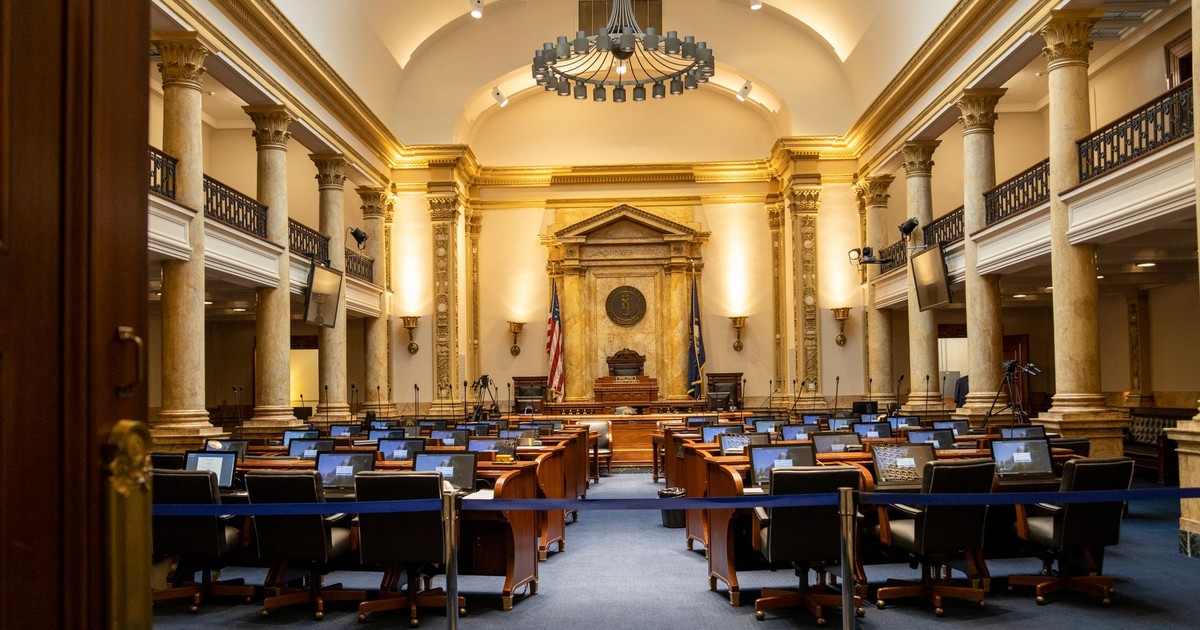
The Epstein files did not get released because the Trump administration decided to release them. They got released because Congress passed a law requiring it, over months of intense resistance from the White House.
On September 2, 2025, Republican Representative Thomas Massie moved to force the House to vote on requiring the Justice Department to release the files through a discharge petition. Trump and other Republicans launched a pressure campaign to prevent it, with one anonymous official calling signing the petition a “very hostile act to the administration.” The effort nearly stalled several times. The discharge petition ultimately received the minimum-required 218 signatures from 4 Republican and 214 Democratic representatives, forcing a House vote.
President Trump ultimately signed a bill ordering the Justice Department to release its files on Epstein after the measure passed by a near-unanimous vote in Congress. Trump, a former friend of Epstein’s, stressed that he had asked Republican leaders to pass the bill – even though his administration had reportedly opposed the push to release the files. On the Rogan podcast, Vance pushed back on the idea that Trump had been forced into it, arguing the president could have killed the legislation if he’d wanted to. Critics pointed out that in reality, Trump had desperately tried and failed to kill the legislation, and had public tantrums over Republicans who supported it.
The Rollout That Backfired

Vance told Rogan in the nearly three-hour podcast interview, “We absolutely screwed up the comms of the Epstein files.” He framed the problem as one of communications strategy, not substance. But the rollout’s failures went well beyond messaging.
The files slowly trickled out over the course of a month after a congressionally mandated deadline under the Epstein Files Transparency Act, and the rollout included heavy redactions while some documents openly identified victims – which went against the law itself. When Rogan asked what the purpose of Bondi’s “performative display” had been, Vance replied, “I don’t know what the purpose of it was, but I know that the effect of it was to make people mistrust the entire effort.”
Rogan pressed further. He pointed out that some of the names that had been redacted from the released files weren’t alleged victims. Vance gave a meandering answer about the difficulty of distinguishing victims from perpetrators in the documents. Critics noted that the DOJ had devastated some survivors by leaving their names unredacted, while conversely redacting the names of several powerful and wealthy men, in seeming defiance of the transparency act itself.
The client list never materialized. When the Epstein Files Transparency Act was signed into law in November 2025 and batches of the files were released, some pages were completely blacked out, and the Justice Department acknowledged that less than 1% of the files had been released by the initial deadline. The DOJ identified over 6 million potentially responsive pages in total; its January 30, 2026 release brought the cumulative total to nearly 3.5 million pages released under the Act, according to the DOJ’s own press release.
The JD Vance Epstein Files Theory
Vance didn’t only come on Rogan to apologize for communications failures. He also came to share what he actually believes about Epstein – and that part of the interview was considerably more candid than the political hedging around Bondi’s binders.
Vance agreed with Wiles’ assessment that on this topic, he is a conspiracy theorist. When Rogan pointed out that many people think Epstein was a Mossad agent, Vance lent credence to the idea. “Yeah, Mossad or CIA or some other deep state, whether in America or Israel or another country,” he said. He continued: “He clearly had connections to the highest levels of American intelligence. He clearly had connections to the highest levels of Israeli intelligence.”
Vance told Rogan that what he had seen on the inside had not made him think Epstein never blackmailed people or never engaged in broader sex trafficking. “What I have seen, and I’ve looked at most of the files, is that there just wasn’t dispositive evidence,” he said. “And if that dispositive evidence ever existed, it was probably destroyed after 2006, 2007.”
He told Rogan: “There’s a story there and, you know, I will go to my deathbed believing there is a story there, but I can’t prove it.” That’s an unusual statement for a sitting Vice President to make about a matter under his own administration’s jurisdiction – but Vance made it plainly, without apparent hesitation.
He also defended Trump directly. Vance said he had seen no “credible evidence” that Trump had ever engaged in wrongdoing with minors – though the files contain an interview with a woman who alleged that Trump sexually assaulted her in the 1980s when she was a minor. Trump has denied all such allegations.
What the Files Actually Contain
The scale of what’s in the Epstein files is worth understanding. The vast majority of the roughly 250,000 documents now publicly available about Epstein are from public court dockets, Freedom of Information Act requests from state and federal agencies, and records turned over to the House Oversight Committee by Epstein’s estate.
California Democratic Representative Ro Khanna said on NPR that FBI witness interviews are among the documents he is still looking for. “I know from survivors and survivors’ lawyers that when they had these conversations with FBI agents, they specifically named other men who they were trafficked to or who showed up at the island or who covered up for this abuse,” Khanna said. “There were lawyers of the survivors present there. There are dozens of these interview memorandums. The DOJ has not released a single one.”
Among the people whose names have appeared in the released files are President Trump, former Prince Andrew, Commerce Secretary Howard Lutnick, and Elon Musk. All have denied wrongdoing. The presence of Trump’s name in multiple documents has been a source of sustained political tension, and one that Trump himself has repeatedly described as a Democratic “hoax” – even as his own Vice President sits on a podcast saying he’ll go to his deathbed believing there’s a story there.
Read More: 10 Everyday Products Being Regulated Right Now in the U.S.
The Quiet Part, Said Out Loud
The Rogan interview is unusual not because Vance said something no one suspected, but because he said it on the record, at length, while serving as the second-highest official in the United States government. The admission that the administration “screwed up” the communications sits alongside a claim that the screwup wasn’t cover for anything deeper – and alongside a personal conviction that Epstein was connected to intelligence agencies at the highest levels of two countries, and that evidence of his broader operation was likely destroyed before anyone with power was seriously inconvenienced.
Those two things don’t resolve neatly. A communication failure doesn’t explain why the DOJ missed its own congressionally mandated deadline. It doesn’t explain why documents were released in a way that exposed victims while shielding other names. It doesn’t explain why Trump fought the legislation until passage was inevitable, or why Bondi told the world a client list existed before the DOJ confirmed it didn’t. Vance’s framing – guilty of bad messaging, innocent of bad intent – asks the public to accept a version of events where every damaging detail is the result of incompetence rather than calculation.
That may be true. Governments are genuinely capable of extraordinary incompetence. But when the Vice President of the United States tells a podcast host that he personally believes the deceased sex offender at the center of his administration’s biggest scandal had connections “at the highest levels” of American and Israeli intelligence, and that the evidence probably doesn’t exist anymore, the gap between “we screwed up our communications” and everything else becomes very wide indeed.
Disclaimer: This information is not intended to be a substitute for professional medical advice, diagnosis, or treatment and is for information only. Always seek the advice of your physician or another qualified health provider with any questions about your medical condition and/or current medication. Do not disregard professional medical advice or delay seeking advice or treatment because of something you have read here.
AI Disclaimer: This article was created with the assistance of AI tools and reviewed by a human editor.