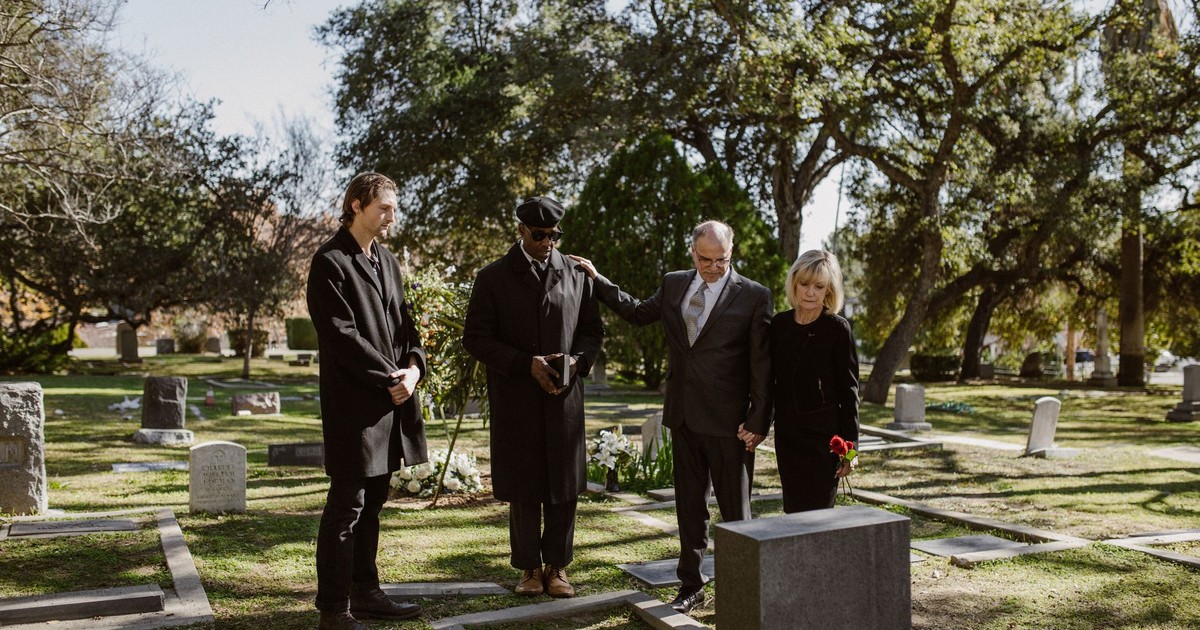

Say something honest about your abusive uncle at the wake and someone will almost certainly murmur, “Let’s not speak ill of the dead.” Most people hear that and step back. A growing number are asking why they should.
The rule against speaking ill of the dead has become one of the sharper points of friction between generations. Survivors of abuse, adult children of volatile parents, people who spent years in therapy unpacking what someone did to them are refusing to perform a grief they don’t feel. The original logic was narrower than most people assume. When you look at what’s actually being protected, the case for an update gets harder to ignore.
Where the Rule Actually Came From
The idea traces back to Chilon of Sparta, one of the ancient Greeks’ famous “Seven Sages,” who advised: “Of the dead do not speak ill.” It was later codified in the Latin phrase de mortuis nil nisi bonum dicendum est, typically shortened to nil nisi bonum, which translates literally as “of the dead, nothing but good is to be said.”
In 1432, Italian theologian Ambrogio Traversari translated Diogenes’ work into Latin, popularizing the phrase in that language. By the time Anthony Trollope was dropping it into Victorian novels, it had become something closer to a social law than a personal philosophy.
The original intent was straightforward: to discourage public slander after someone’s death, functioning as a kind of last rite of social protection. A dead person cannot respond to accusations, cannot clarify, cannot defend their reputation. Speaking ill of them is, in that sense, a one-sided fight.
That logic held up reasonably well when the dead in question were mostly public figures, senators, generals, merchants, whose reputations affected trade, alliances, and civic life. It made less sense when applied to the father who broke his children’s trust for decades, or the mother whose abuse shaped a daughter’s entire psychology. The ancient Greeks weren’t thinking about those cases. They were thinking about political stability.
How a Social Courtesy Became a Silencing Tool

In modern times, the phrase has taken on more weight than it was designed to carry. For someone who was hurt by a person who died, the rule reinforces a specific and damaging idea: your pain is less important than preserving the image of someone who is no longer here.
That shift didn’t happen because anyone made a decision. It crept in gradually as the rule was passed down through families and communities without the original context, until it became less a civic courtesy and more a reflex. The intention is to keep the peace. The effect is to keep the survivor quiet.
This reluctance is reinforced by social norms that tend to uphold a sanitized version of those who have passed. The concept is deeply rooted in cultural beliefs emphasizing respect for the deceased, but that desire to preserve a positive legacy often removes the person from any possibility of wrongdoing the moment they die.
For people who had loving, uncomplicated relationships with the deceased, this norm is easy to follow. Grief is already hard enough without controversy. But for the adult child of a volatile parent, for the survivor of domestic abuse whose abuser just died, for the estranged sibling who spent years in therapy unpacking what happened, this rule asks them to participate in a collective fiction at precisely the moment when honesty feels most urgent.
The Particular Cruelty of Complex Grief
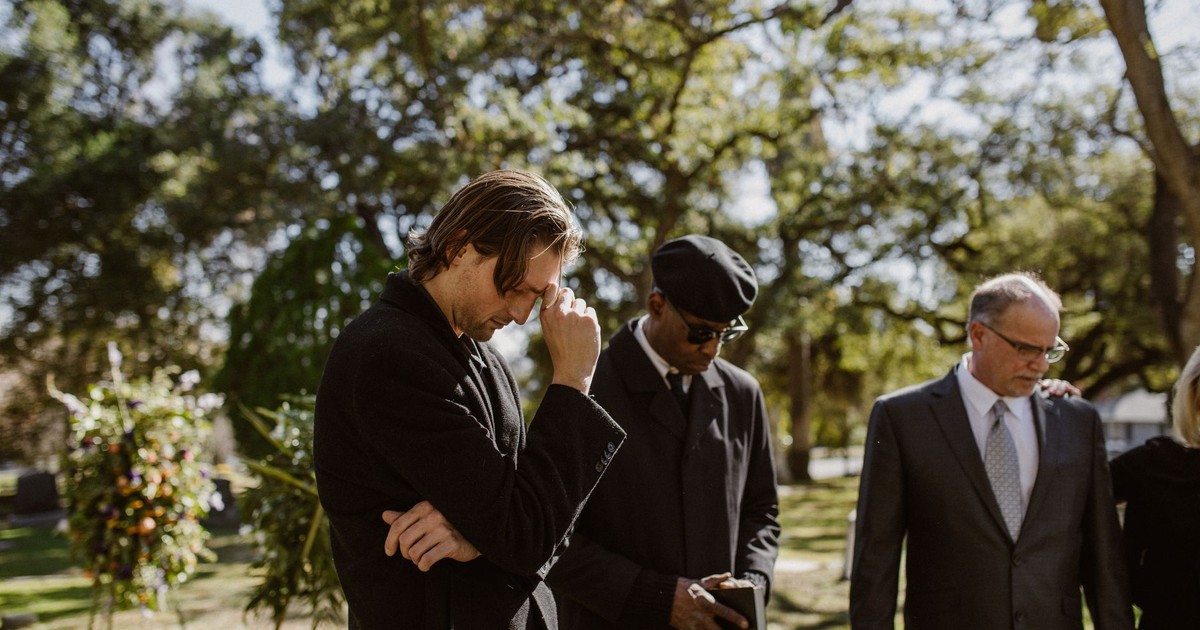
Writing in Counseling Today, Elizabeth Crunk, a licensed graduate professional counselor specializing in grief and loss in Washington D.C., put it plainly: “Having conflicted feelings about the deceased happens more often than is discussed. There’s a societal expectation that we don’t speak ill of the dead, and I think that sometimes can keep people even from seeking counseling.” The stigma doesn’t stop at the funeral. It follows people into the therapist’s office, where they wonder whether the professional across from them will judge them for feeling relief instead of sadness.
Crunk notes that this experience often falls under the definition of disenfranchised grief, a type of grief that is unsupported or unrecognized by society or culture. Clients who don’t feel “sad” in the traditional sense about a death may believe that their experience is not socially acceptable. Conflicted feelings about the deceased are far more common than most people discuss publicly, precisely because the social rules around death don’t leave room for them.
When an abuser dies, what’s often being mourned isn’t the individual themselves but the loss of a relationship that never was, the lost opportunity for repair, and a fractured sense of self shaped by the ongoing impact of trauma. That kind of grief is real and it’s heavy. But it looks nothing like the grief society has a script for, which means survivors often end up performing the expected version in public while carrying the actual version alone.
In Crunk’s clinical experience, shame, relief, and guilt are the most commonly expressed emotions. Feeling a sense of relief that a person is gone often causes clients to question what that means about them. “It’s feeling release, but [clients] have a very difficult time naming that. ‘What does that say about me if I’m relieved that this person has died?’ And with that relief comes shame.”
When Honesty Is the Braver Choice

When Jennette McCurdy published her 2022 memoir with the title I’m Glad My Mom Died, the reaction told you everything about where the culture was standing. Cultural mythologies about the everlasting love of families, and especially mothers, are finally beginning to be contested, as with McCurdy’s disturbing account of her mother’s lifelong abuse in her best-selling memoir. But too often these honest recollections are denied or disbelieved. When the title and cover first appeared, the internet had a strong reaction, people shocked that anyone might seem to celebrate or make light of the death of a parent. The shock itself was the point. McCurdy had violated a rule so deeply embedded that most people hadn’t consciously noticed it existed until she broke it publicly on a bestseller cover.
As writer Christina Wyman observed in HuffPost, the news media and most people in general have highly specific expectations for how one is supposed to publicly perform grief. Writing honest obituaries, she argued, “isn’t about getting even or besmirching someone’s good name.” “It’s about telling the truth, holding people accountable for what they did, and hopefully, in doing so, finding a way to become whole again.”
The viral obituary of Gayle Harvey Heckman in 2023 followed a similar pattern. A newspaper published Heckman’s account of lifelong abuse at her mother’s hands. A few days later, the publication pulled the obituary, citing a “disgraceful mistake” in not reading the submission more carefully. The outlet described it as a “spiteful hate piece against a beloved member of our community.” The audience’s discomfort with the possibility that someone had made heinous choices while alive was treated as more important than validating a survivor’s truth. That’s what the don’t speak ill dead rule does in practice. It doesn’t protect the dead. It protects everyone else from discomfort.
Shakespeare Already Saw the Problem

Previous generations weren’t blind to the tension in this rule. Shakespeare put it on the stage directly. In Julius Caesar, Mark Antony says “The evil that men do lives after them; the good is oft interred with their bones,” which is essentially the inverse of the Spartan maxim. The harm people cause doesn’t disappear when they die. It continues to exist in the people who survived it.
Shakespeare’s framing was cynical about a person’s good deeds dying with them, but he was correct that a person’s evil has an afterlife. To follow Chilon’s rule and avoid commenting on that afterlife for the sake of “fairness” requires putting a clock on the moral weight of harm, a clock that benefits no one except those who’d rather not look at it.
History sidesteps this issue by making it a matter of scale. We discuss the atrocities of historical figures with no hesitation. We routinely criticize the dead. The entire study of history would be impossible without it. The rule has always had a silent asterisk: it applies to people you knew personally, whose relatives are still in the room, whose legacy hasn’t yet calcified into documented fact. Once enough time passes, honesty is suddenly permitted again.
Younger people are asking why survivors of abuse should have to wait decades for permission to tell the truth about what happened to them. The passage of time doesn’t change what occurred. It just makes it safer for everyone else to hear it.
What the Rule Protects and What It Costs

Fair to the original impulse: at its heart, the rule not to speak ill of the dead is a matter of respect. The instinct to grant the newly dead a moment of peace, to let the people who loved them grieve without immediate debate, comes from a genuinely human place. A funeral is not the time to litigate a person’s failures. Nobody disputes that.
The problem is that the rule rarely stays limited to the funeral. It extends through the wake, the following weeks, the family dinners for years afterward. It becomes a standing instruction to never revisit certain facts, to let certain histories quietly die along with the person who created them. When an abusive person dies, those who know their true character often struggle with how to speak about them. They may not want to lie about the person, but they also don’t want to lie to themselves, and the social norm leaves very few spaces for people who were harmed by someone who has now passed.
Counselors working with survivors have noted that this silence can itself become a source of extended suffering, not just because the truth goes unspoken, but because the person who lived through the harm is left to carry it in isolation, unable to process what happened without being accused of disrespect toward the dead. These situations also spur conflict within family networks. One or more members may have had a loving relationship with the deceased, while others did not. Family discussions about how or whether to memorialize the person can become deeply fraught with tension.
Two people can attend the same funeral for the same person and come away with entirely different experiences of who died. The rule implicitly sides with the version that requires less honesty.
Read More: 25 Brutal Truths About Life That Will Make You Rethink Everything
The Part Worth Keeping
None of this means the rule should be abandoned entirely. The instinct behind it, that the moment of death is not the moment for attack, still holds in most ordinary situations. As Patheos writer Dan Peterson put it, the sentiment “probably goes too far” in absolute terms, but “there seems to be an intuitively obvious bit of wisdom in it for most ordinary cases.” There’s a real difference between speaking honestly about harm and choosing a funeral reception to deliver a verdict.
What younger generations seem to be pushing toward is not cruelty but proportion. The rule should not function as a lifetime gag order imposed on anyone who survived the deceased’s behavior. It should not require survivors to perform grief they don’t feel, or sit silent while a one-sided eulogy rewrites the person who caused them harm into someone unrecognizable. And it certainly shouldn’t be the reason a person avoids therapy, afraid that speaking honestly about their abusive parent will make them look like the bad one.
The Permission Nobody Gave You

The version of this rule that has the most integrity is not “say nothing bad about anyone who dies.” It’s closer to: choose your timing and your audience with care. Honesty doesn’t require a public stage or a family confrontation at the graveside. It does require, at minimum, that survivors have access to some space, a therapist’s office, a trusted friend, a journal, where the full, unpolished truth of their experience is allowed to exist.
Survivors commonly review an abusive relationship after an abuser dies and wonder whether it was really as bad as they remember. That’s not a character flaw. It’s a predictable response to grief, guilt, and years of minimizing. The more useful instinct is to slow down, acknowledge what comes up, and remind yourself that you don’t owe anyone a denial of your own experience.
The ancient Greeks were trying to build a stable society that could survive the deaths of its powerful figures without dissolving into slander and political chaos. That was a reasonable problem to solve. But the cultural inheritance they left behind was never designed to handle the specific situation of the adult survivor who finally, finally has the space to say what happened to them and is told that the calendar, not their experience, gets to determine whether that’s allowed.
Some patterns go back further than the death that triggered this conversation. Naming them honestly isn’t disrespect. For a lot of people, it’s the only form of repair that’s actually available.
Disclaimer: This information is not intended to be a substitute for professional medical advice, diagnosis, or treatment and is for information only. Always seek the advice of your physician or another qualified health provider with any questions about your medical condition and/or current medication. Do not disregard professional medical advice or delay seeking advice or treatment because of something you have read here.
AI Disclaimer: This article was created with the assistance of AI tools and reviewed by a human editor.