

The last penny rolled off a coin press in Philadelphia on November 12, 2025. United States Treasurer Brandon Beach held it up for the cameras. After 232 years, that was it. No new pennies, no more production runs, just a ceremonial moment and a coin that will never spend as anything other than a collectible. Since then, businesses and consumers have been figuring out what to do when a cash register comes up a cent or two short.
The Common Cents Act, which lets businesses round cash transactions to the nearest nickel, passed the House of Representatives on July 14, 2026, and now moves to the Senate. The bill creates a national framework for rounding that businesses have been improvising without for eight months.
How a 232-Year Run Came to an End

The U.S. Mint hosted a ceremonial strike event at its Philadelphia facility on November 12, 2025, where United States Treasurer Brandon Beach struck the final circulating one-cent coin, marking the official end of the penny’s 232-year production run.
The Secretary of the Treasury determined it was no longer necessary to meet the needs of the United States, influenced by the rising cost of producing the penny, which had increased to 3.69 cents per coin. The coin had crossed from minor inefficiency into something harder to justify: a coin that costs nearly four times what it’s worth, produced in the billions, and routinely tossed into a jar on the kitchen counter.
The Treasury didn’t announce a hard stop. The federal government stopped manufacturing new pennies, but the Federal Reserve will continue to recirculate the roughly 114 billion pennies currently in the banking system for as long as possible. Your local gas station or diner isn’t going to run out of pennies tomorrow. The coins already in drawers, cash registers, and coin rolls will keep moving through the economy for years.
The penny’s production cost had exceeded its face value for the 19th consecutive fiscal year, according to the U.S. Mint, and the nickel suffers from the same predicament, with its production costing nearly three times its face value.
What the Common Cents Act Actually Does

The Common Cents Act permanently ends penny production while allowing the U.S. Mint to continue producing limited collectible pennies. Existing pennies may still be used for all cash transactions, and businesses may continue providing exact change. Payments made electronically, by credit card, check, gift card, or other non-cash methods are still charged to the exact cent. The legislation establishes a national framework for cash transactions when exact change is unavailable.
The rounding rules work like this: purchases with final digits of 1, 2, 6, or 7 cents are rounded down; purchases with final digits of 3, 4, 8, or 9 cents are rounded up; and purchases ending in 0 or 5 cents are not rounded at all. A total of $1.98 or $1.99 would round up to $2.00, whereas $1.96 or $1.97 would round down to $1.95.
The bill does not mandate rounding. A business that has enough pennies to give exact change can still do so. The law just means that if a business rounds, whether up or down, it’s operating within a clear federal framework rather than in a legal grey zone that has made some operators genuinely nervous about litigation.
The legislation also authorizes the Treasury Department to use a lower-cost composition for the nickel if testing demonstrates it reduces production costs without significantly affecting coin-operated machines.
Why Businesses Have Been Anxious

Establishments are vulnerable to litigation if they fail to provide customers with exact change, even when they round up in a patron’s favor. That’s the specific reason the National Restaurant Association has been pushing for federal clarity since the moment penny production stopped.
“When a customer pays in cash and a register doesn’t have a penny available to give exact change, it can create a legal liability for businesses,” National Restaurant Association chief advocacy officer Sean Kennedy told CBS News. While the penny is still in circulation, some regions face shortages while others have surpluses of the lowest-denomination coin.
Roughly one in four restaurant customers transact in cash, according to the National Restaurant Association. For a restaurant doing hundreds of cash transactions a day, even a small systematic rounding issue adds up. Many restaurant operators, out of fear of possible litigation, have opted to round down rather than up, always in the customer’s favor, but consistently at the restaurant’s expense. The group estimates that rounding down because of a lack of pennies could cost restaurants up to $168 million annually.
The retail industry has been dealing with a related problem: inconsistency. Some stores round up, some round down, some require exact change, and some post signs explaining policies that differ by location. A coalition of 16 business trade associations wrote to House leaders calling the patchwork of roughly 15 state-level approaches “confusing” and urged Congress to set a single national standard.
The Math on the Rounding Cost

Researchers at the Federal Reserve Bank of Richmond estimated that rounding to the nearest nickel would cost consumers about $6 million annually. Spread across the adult population, that works out to roughly two cents per person per year. The reason it’s not neutral, as it theoretically should be if rounding went equally up and down, is that cash transaction totals are statistically more likely to end in digits that round up rather than down.
The burden isn’t evenly distributed. The brunt of the cost would be carried by Americans who use cash for all their transactions. For someone who pays with a card 90 percent of the time, the rounding cost is essentially invisible. For a cash-only household, often a lower-income household, it’s a real, if still small, cumulative cost.
The savings side of the ledger is cleaner. The U.S. Mint projects an immediate annual savings of $56 million in reduced material costs by stopping penny production.
Other Countries Have Done This Already
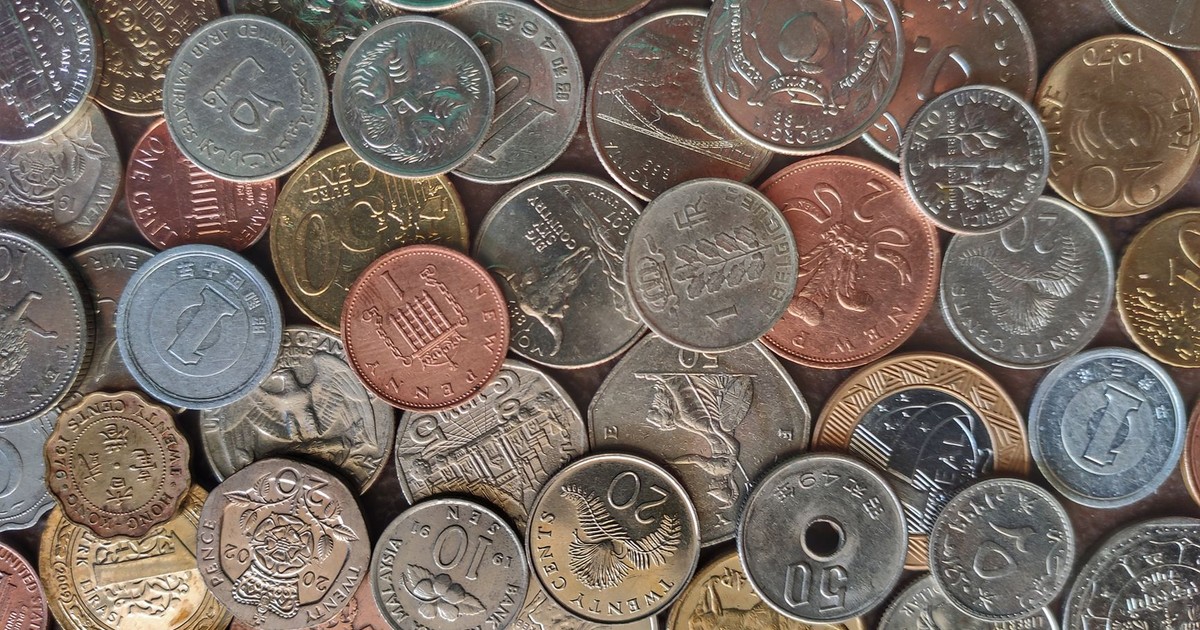
The U.S. is not the first country to retire a low-denomination coin and survive the transition. Canada dropped its penny in 2013. Australia did it in 1992. New Zealand in 1990. In each case, the predictions of consumer chaos didn’t materialize.
When the U.S. stopped using the half-cent in 1857, that coin was worth more than 8 cents in today’s currency, making eliminating it then a bigger leap than stopping production of the penny today. The Canadian transition was managed without federal rounding mandates, and no significant inflationary effect was recorded. Some retailers benefited slightly more from rounding than consumers did, but the differences were small enough to be absorbed without public uproar.
What the Senate Needs to Decide

The bipartisan bill was introduced by Congressman Robert Garcia (D-Calif.) and Congresswoman Lisa McClain (R-Mich.) in April 2025 and passed through the House by voice vote on July 14, 2026. It will now head to the Senate, where a committee will go through a similar voting process, and if it passes, it will go to the President to be signed or vetoed.
The Senate companion bill, S.1525, was introduced alongside the House version. Right now, the Treasury’s decision to stop producing pennies rests on an executive order, not law. A future Secretary of the Treasury could, in theory, reverse it. The Common Cents Act would make that much harder to do.
As of mid-2026, 25 states and territories have rounding legislation, with 20 laws enacted, Arizona’s being the only outright mandate. A national business operating in multiple states currently has to navigate different rounding rules in different markets, which creates compliance headaches and customer confusion.
The Nickel Is Next in Line

The penny debate has a coda that most people haven’t started thinking about yet, and it involves the coin that’s about to become the smallest denomination in American currency.
Eliminating the penny could increase demand for nickels, which are even more costly to produce. In 2024, it cost 13.8 cents to mint a nickel, more than double its face value, resulting in a seigniorage loss of $1.75 for every $1 issued in nickels. That’s a worse economic proposition than the penny ever was, on a per-coin basis.
Eliminating the nickel in addition to the penny could result in significantly higher rounding costs: up to $56 million per year for consumers, nearly ten times the cost of eliminating just the penny. The Common Cents Act’s provision allowing the Treasury to test a lower-cost nickel composition is, in this light, less a footnote and more a hedge against the next version of this conversation.
What’s Already Settled

For all the legislative uncertainty about what the Senate will do, one part of this story is already over. The penny is done. It remains legal tender and may still be used for transactions, probably for years, given how many are still in circulation, but no new ones are coming. The jar on your kitchen counter is now a finite resource.
What the Common Cents Act does, if it becomes law, is tidy up the aftermath. It gives businesses a legal framework they can cite. It gives consumers a clear expectation about what rounding means and when it applies. It tells the rest of the world that this is a deliberate policy decision, not an administrative accident.
The deeper thing it settles is a question Americans have been arguing about for decades: does a one-cent coin earn its place in a modern economy? The nickel is already in that same conversation. The arithmetic on the five-cent coin is sitting in the same Richmond Fed report that started this whole debate.
Disclaimer: This information is not intended to be a substitute for professional medical advice, diagnosis, or treatment and is for information only. Always seek the advice of your physician or another qualified health provider with any questions about your medical condition and/or current medication. Do not disregard professional medical advice or delay seeking advice or treatment because of something you have read here.
AI Disclaimer: This article was created with the assistance of AI tools and reviewed by a human editor.