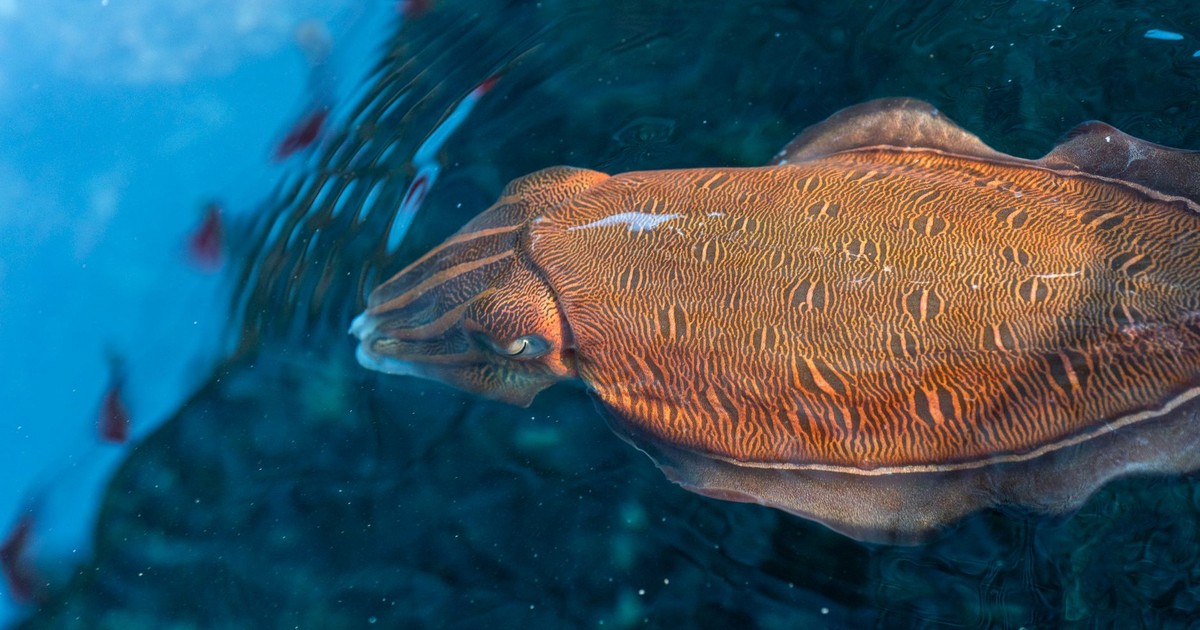

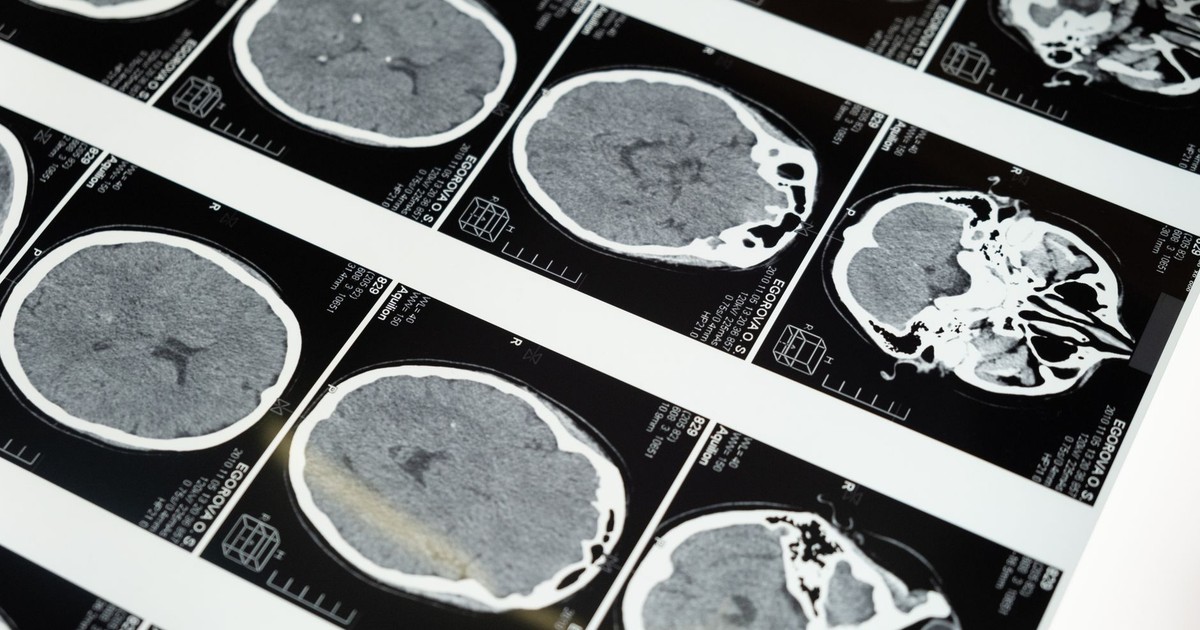
The squid in the experimental tank looked completely normal to start. Same size, same shape, same body proportions as the squid growing up in water with present-day chemistry. When researcher Garett Allen ran the MRI scans after 90 days, the difference wasn’t subtle. Allen saw that their brains were half the size and had to check the diagnostic output of the software.
The experiment was straightforward in design. A study presented at the Society for Experimental Biology conference in Florence, Italy, had raised bigfin reef squid (Sepioteuthis lessoniana) from hatching inside elevated levels of dissolved CO2 and found significant changes in brain physiology, the most striking being an average 49% reduction in brain volume compared to a control group. The variable between the two tanks was a single number: pH. One group developed in water at pH 8.2, which matches today’s ocean average. The other lived in water at pH 7.8, which is where climate models predict the ocean will sit by the end of this century. Everything else was the same. The brains were not.
The squid that developed in the acidified water had bodies of the same size as their counterparts. The study found no effect of CO2 on whole-body size, so brain volume was measured relative to body length to account for any natural variation. That matters, because it rules out the idea that the animals were simply stunted overall. Their bodies grew. Their brains didn’t.
The Squid Brain Climate Change Finding That Unsettled Its Own Researcher
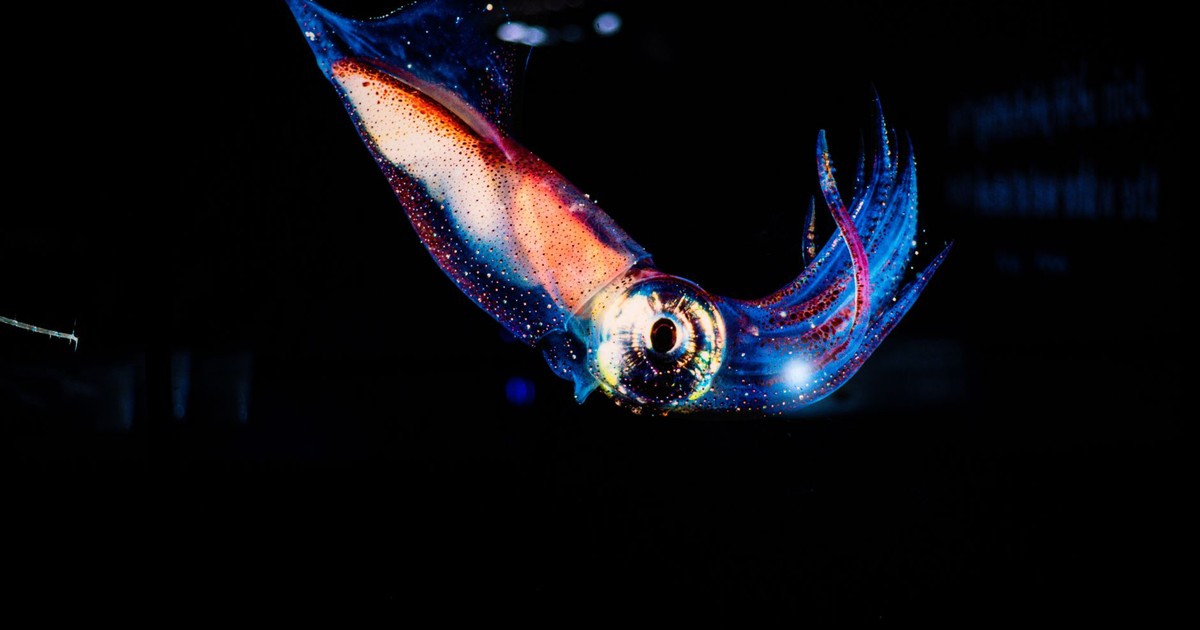
Dr. Garett Allen, an assistant professor at Acadia University in Canada, describes cephalopods as widely regarded as being one of the most intelligent groups of animals living in the ocean. The Coleoidea subclass, which includes squid, cuttlefish, and octopuses, is believed to contain the most intelligent invertebrates on Earth, possessing a similar number of neurons to dogs. These are animals that can solve puzzles, change color and texture in milliseconds to match their surroundings, and hunt with the kind of coordinated focus that requires real-time visual processing at high speed.
The brain volume reduction was observed across the whole brain, but the greatest reductions were found in the optic lobes and optic tracts, which were 52% and 62% less voluminous, respectively, than in squid reared under modern ocean conditions. The optic lobes are the parts of a cephalopod’s brain devoted to processing visual information. In bigfin reef squid, vision is central to survival. The ability to rapidly capture and interpret visual information is vitally important for bigfin reef squid, as they rely on their eyesight to track and catch their prey.
The Hunting Problem Came First
The brain shrinkage data builds on a finding that was already alarming on its own. A January 2026 paper published in Communications Biology showed that prolonged exposure to projected year-2100 acidification conditions substantially impairs predatory behavior in bigfin reef squid. Chronic acidification exposure reduced the expression of acetylcholine receptors in the optic lobes and altered metabolic rates. While basic visual processing remained intact, behavioral impairments appeared to stem from changes in downstream neural integration pathways. The eye was still receiving the image, but something between seeing and acting was breaking down.
The behavioral numbers from that earlier work were stark. An acute seven-day exposure to high CO2 levels resulted in a 65% reduction in hunting behaviors in adult squid, and squid exposed from hatching for a full 90 days showed a 42% reduction in hunting behaviors compared with controls. Now, with the brain imaging data alongside it, the picture becomes clearer. The squid that hunted less had also developed with significantly smaller optic structures.
Allen’s interpretation connects the two: “We think that the reduced willingness to feed may be linked to a decline in visual acuity, not because of the retina itself, which looks to stay the same, but perhaps because the optic lobe is shrinking.” The retina collects the image. The optic lobe decides what to do with it. If the optic lobe has lost more than half its volume, the squid isn’t going blind so much as losing the ability to act on what it sees.
Allen describes the effect in terms of decision-making rather than physical incapacity. Considering that earlier work found squid reared under the same conditions for the same duration experienced reductions in willingness to feed, he suggested “it seems reasonable to propose that reduced brain volume carries some influence on decision-making, seemingly making them more hesitant, rather than less effective as predators.”
Why the Ocean’s Chemistry Is Changing

According to NOAA, the ocean absorbs about 30% of the CO2 released into the atmosphere, and as levels of atmospheric CO2 increase, so do levels in the ocean. When CO2 is absorbed by seawater, a series of chemical reactions increases the concentration of hydrogen ions, making the water more acidic and causing carbonate ions to be relatively less abundant. Since the industrial revolution began, ocean acidity has risen by approximately 30%.
Estimates of future CO2 levels, based on business-as-usual emission scenarios, indicate that by the end of this century surface ocean waters could be nearly 150% more acidic, resulting in a pH that the oceans haven’t experienced in approximately 14 to 17 million years. The pH 7.8 water that shrank the squid brains in this experiment isn’t a worst-case science fiction scenario. It’s the central forecast.
The effects of acidification on marine life are not evenly distributed. Corals, oysters, and shelled organisms have received the most attention, largely because their shells dissolve in lower-pH water in ways that are visually obvious and economically significant. The squid finding is different in kind. These animals don’t have shells. Their vulnerability is neurological, and it’s only become apparent now that researchers are looking at brain anatomy directly, rather than just counting whether the animals eat their prey.
For an informed look at how the threats facing ocean life are being documented and discussed in 2026, Blue Planet III at the Amazing Times covers the BBC’s upcoming series on ocean adaptation and recovery in detail.
The Reason Behind the Shrinkage Is Still Unknown
Allen’s initial hypothesis was that the squid’s brains were being starved of energy during development, limiting growth. But a separate possibility is more troubling: that the brain tissue is not failing to grow, but is actively deteriorating, potentially through oxidative stress, a process in which cellular damage accumulates faster than cells can repair themselves. The factors causing brain volume shrinkage are still being investigated.
To answer that question, the research team is conducting further studies at Academia Sinica’s Marine Research Station, reducing the original 90-day time frame to learn more about when and how CO2-derived brain damage occurs in cephalopods. Allen noted that he had expected any shrinkage to be a progressive event from early development, though a first look at 30-day-old squid seemed to suggest brain volume is stable at that stage. If the damage arrives later in development, that changes everything about how the harm is happening and what, if anything, could help.
Read More: 8 U.S. Cities Where the Weather Has Become So Intense, Locals Want to Leave
What Comes After the Brain
Bigfin reef squid are active, mid-water predators. They’re not ecologically marginal. They sit near the middle of many food webs in tropical and subtropical oceans, feeding on smaller fish and invertebrates and being eaten in turn by larger fish, marine mammals, and seabirds. An animal that is 42% less willing to hunt is not just a less effective individual. It’s a less reliable link in a chain that a lot of other animals depend on.
The squid brain climate change data also raises a broader methodological question for ocean science. Most research into the behavioral effects of acidification has measured what animals do: how often they swim toward a stimulus, whether they respond to a threat, how frequently they hunt. This study looked at what their brains actually look like after prolonged exposure. Behavior changes were already documented. The structural explanation for why they were happening is only now becoming visible.
What Remains Genuinely Open
Allen described the moment he first looked at the MRI output as a surprise that required him to double-check the software. He designed the experiment. He formulated the hypothesis. He was still not prepared for what he actually found. The brain was half the size. He checked the machine.
The researchers building pH 7.8 tanks to simulate end-of-century conditions aren’t producing dystopian fiction. They’re modeling what ocean chemistry will look like within the lifetimes of people alive today. The squid brains growing in those tanks aren’t a warning that the future might be difficult. They’re a measurement of a future that is already chemically scheduled, given current emissions trajectories.
What remains genuinely open is the reason, the full scope across other cephalopod species, and whether the damage follows a critical developmental window or accumulates throughout a lifespan. The 30-day data suggesting brain volume may be stable early on is a thread worth pulling. If there’s a specific period during which the brain becomes vulnerable to acidification, that changes the nature of what’s happening and potentially what could be done about it. Allen’s team is running those follow-up experiments at Academia Sinica’s Marine Research Station in Taiwan right now.
Disclaimer: This information is not intended to be a substitute for professional medical advice, diagnosis, or treatment and is for information only. Always seek the advice of your physician or another qualified health provider with any questions about your medical condition and/or current medication. Do not disregard professional medical advice or delay seeking advice or treatment because of something you have read here.
AI Disclaimer: This article was created with the assistance of AI tools and reviewed by a human editor.