

The charge of witchcraft has toppled more careers, ended more lives, and settled more scores than almost any other accusation in recorded history. From medieval Ireland to colonial Massachusetts, the accusation functioned less like a religious verdict and more like a political instrument, a way to destroy someone who had become inconvenient, threatening, or simply too powerful to remove by ordinary means.
Military heroes. Noblewomen. Enslaved women with no power at all. A king. A royal physician. What links them is not guilt but vulnerability, the wrong enemy at the wrong moment, or the wrong reputation in the wrong town. The through-line connecting them is rarely the supernatural. It is almost always power, fear, and the need to justify what had already been decided.
Dame Alice Kyteler (1324)

Dame Alice Kyteler was the first recorded person condemned for witchcraft in Ireland. She was a wealthy Flemish-descended merchant based in Kilkenny, married at least four times, to men generally assumed to have been named William Outlaw, Adam le Blund, Richard de Valle, and Sir John le Poer. Each husband died, and each death left Alice considerably richer.
In 1324, her stepchildren brought their complaint to Richard de Ledrede, the Bishop of Ossory, who twisted it into an elaborate Satanic conspiracy. It was the first witchcraft trial to treat the accused as heretics and the first to accuse a woman of having acquired the power of sorcery through sexual intercourse with a demon, features which later became common in the famous witchcraft trials of the sixteenth and seventeenth centuries.
Seven formal charges were brought against Kyteler. She was accused of denying the power of Christ and of the Church, cutting up living animals at crossroads, and consorting with a demon named Robin, Son of Art. She is believed to have fled to either England or Flanders, but there is no record of her after her escape. Her maid, Petronilla de Meath, was flogged and burned at the stake on 3 November 1324, after being tortured and confessing to the crimes she, Kyteler, and Kyteler’s associates were alleged to have committed.
Joan of Arc (1431)

Joan of Arc is one of history’s most dramatic reversals. The teenager who led French armies to victory against the English and secured the coronation of Charles VII was, within two years of her greatest triumph, standing trial for witchcraft, heresy, and wearing men’s clothes. She was ordered to answer to some 70 charges against her.
By putting her on trial for witchcraft and heresy, the English-Burgundian forces sought to undermine her importance with the French people before executing her. Painting Joan as a witch would also cast doubt on Charles VII’s wisdom as a ruler, suggesting he had been controlled by dark forces. In May 1431, after a year in captivity and under threat of death, Joan relented and signed a confession denying that she had ever received divine guidance. Several days later, however, she defied orders by again donning men’s clothes, and authorities pronounced her death sentence. On the morning of May 30, 1431, at the age of 19, Joan was burned at the stake in the old marketplace of Rouen. Twenty years later a new trial ordered by Charles VII cleared her name. She was canonized by the Catholic Church in 1920, making her one of the only people in history to be condemned as a witch and later declared a saint by the same institution.
Eleanor Cobham, Duchess of Gloucester (1441)
Eleanor Cobham was the wife of Humphrey, Duke of Gloucester, who stood as heir presumptive to the young and childless King Henry VI. That proximity to the throne made her dangerous to everyone who feared Humphrey’s ambitions, and to those who feared her own.
In 1441, Eleanor consulted astrologers who cast a horoscope predicting the future health of King Henry VI. The astrologers, Thomas Southwell, a physician and canon of St Stephen’s Chapel, and Roger Bolingbroke, an Oxford scholar, predicted that Henry would suffer a life-threatening illness. When the king’s guardians discovered the prophecy, they viewed it as treasonous sorcery designed to usurp power. Eleanor was arrested and forced to perform a public penance: she was made to walk barefoot through the streets of London on three separate market days carrying a lighted taper, in front of crowds who had turned out to watch.
Her associate in the affair was Margery Jourdemayne, a woman known around Westminster as a folk healer and maker of love potions. According to the Wikipedia entry on Eleanor Cobham, Jourdemayne was burned at the stake as a relapsed heretic, while Southwell died in the Tower and Bolingbroke was hanged, drawn, and quartered. Eleanor spent the rest of her life imprisoned in a series of remote castles, stripped of her title and any claim to political influence.
Gilles de Rais (1440)

Gilles de Rais presents one of the most disturbing and contested cases in the entire history of witchcraft allegations, because his story involves charges of genuine atrocity alongside the supernatural ones. A French nobleman and decorated military commander who had fought alongside Joan of Arc during the Hundred Years’ War, de Rais was one of the wealthiest men in France at the height of his power.
Born around 1404, he was a companion of Joan of Arc and carried the title of Marshal of France. The trial in 1440 included charges of summoning demons, practicing black magic, and conducting what prosecutors described as satanic rituals in which he was alleged to have sacrificed children to a demon called “Barron.” He confessed, though confessions made under threat of torture in a 15th-century ecclesiastical court carry limited evidential weight by any modern standard. According to Wikipedia, skeptics have pointed to the numerous irregularities of the proceedings, the Duke of Brittany’s financial interest in his ruin, and the fact that Rais confessed under threat of torture. He was executed by hanging at Nantes on 26 October 1440.
The supernatural charges layered over secular crimes gave the Church legal jurisdiction over a case that might otherwise have remained a civil matter, lending the proceedings a gravity that served to justify the severity of what followed. Whether de Rais was a genuine serial killer whose crimes were embellished by religious hysteria, a political target whose enemies seized on rumors to destroy him, or something in between, historians continue to argue.
Anne Boleyn (1536)

The speed of Anne Boleyn’s fall from queen to condemned prisoner, a matter of weeks in the spring of 1536, still astonishes historians. She had given Henry VIII one surviving child, the future Elizabeth I, but had failed to produce the male heir he needed, and by 1536 the king had grown cold toward her and warm toward Jane Seymour.
Courtiers claimed Anne had bewitched the king with magic, pointing to her sixth finger and alleged moles as “witch’s marks.” The physical “evidence” of witchcraft, bodily anomalies reinterpreted as marks left by the devil, was a standard feature of accusations in this period, and Anne’s enemies used it with precision. The suggestion was that Henry’s infatuation had been unnatural from the start, that he had been ensnared rather than smitten. She was executed for adultery and treason rather than witchcraft. The witchcraft allegations were never formally prosecuted. Their purpose was not legal but reputational: to retroactively explain a king’s obsession and to prepare the public for what was coming. Anne was beheaded on May 19, 1536.
Agnes Sampson (1591)
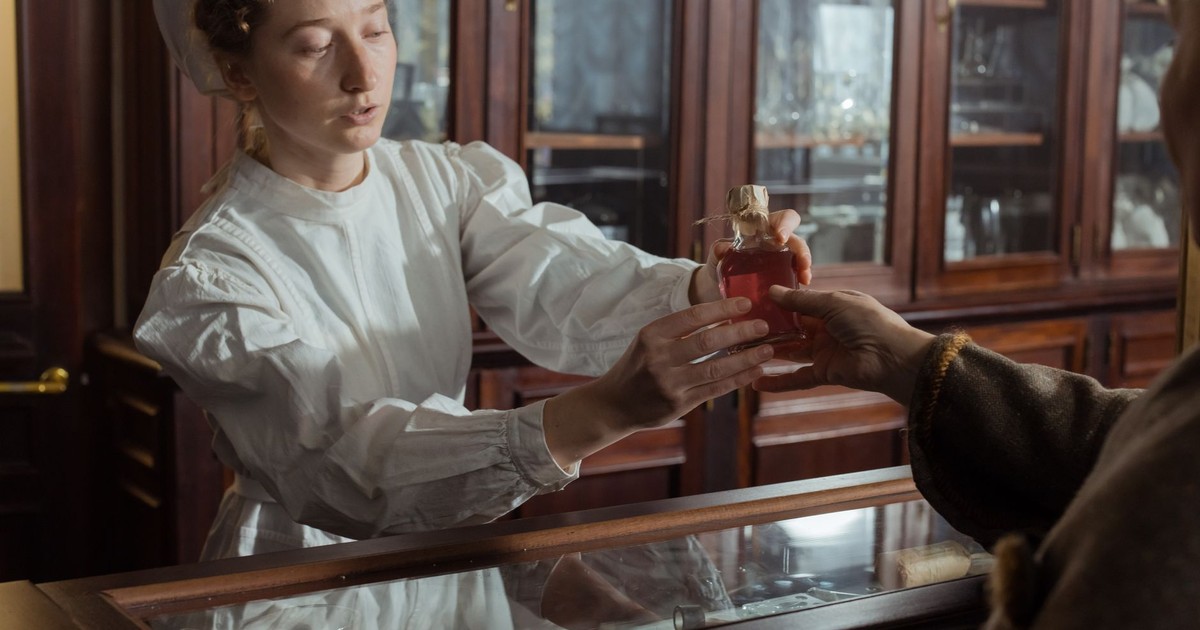
Agnes Sampson was a respected midwife and healer in East Lothian, Scotland, known locally as the “Wise Wife of Keith.” Her knowledge of herbal medicine and her work delivering babies made her a trusted figure across several communities east of Edinburgh. She was also, by the cruel logic of late-16th-century Scotland, exactly the kind of woman a witch-hunting king would target.
Her downfall was tied directly to King James VI’s paranoia following the storms that battered his fleet returning from Denmark in 1589. A maidservant named Geillis Duncan, tortured into confession by her own employer, named Sampson as an accomplice in a supposed plot to sink the royal ships. Sampson was brought to Holyrood Palace, where she was shaved to find the “witch’s mark” and subjected to sleep deprivation and rope torture. She held out longer than most. King James himself had been skeptical of her guilt until, according to the 1591 pamphlet Newes from Scotland, she reportedly told him details of his wedding night conversation with Anne of Denmark that she could not have known. On 27 January 1591, the 53 formal charges against her were drawn up as articles of indictment. Agnes Sampson was strangled and burned at the stake on 28 January 1591.
Under torture, accused witches named other accused witches, who then named others, expanding the circle of guilt with each confession. According to the charges against her, she had led 200 witches in a dance at North Berwick Kirk and had plotted the king’s death by raising storms at sea, allegations that played directly into James’s existing dread of maritime weather and supernatural conspiracy.
King James VI of Scotland (1590-1597)
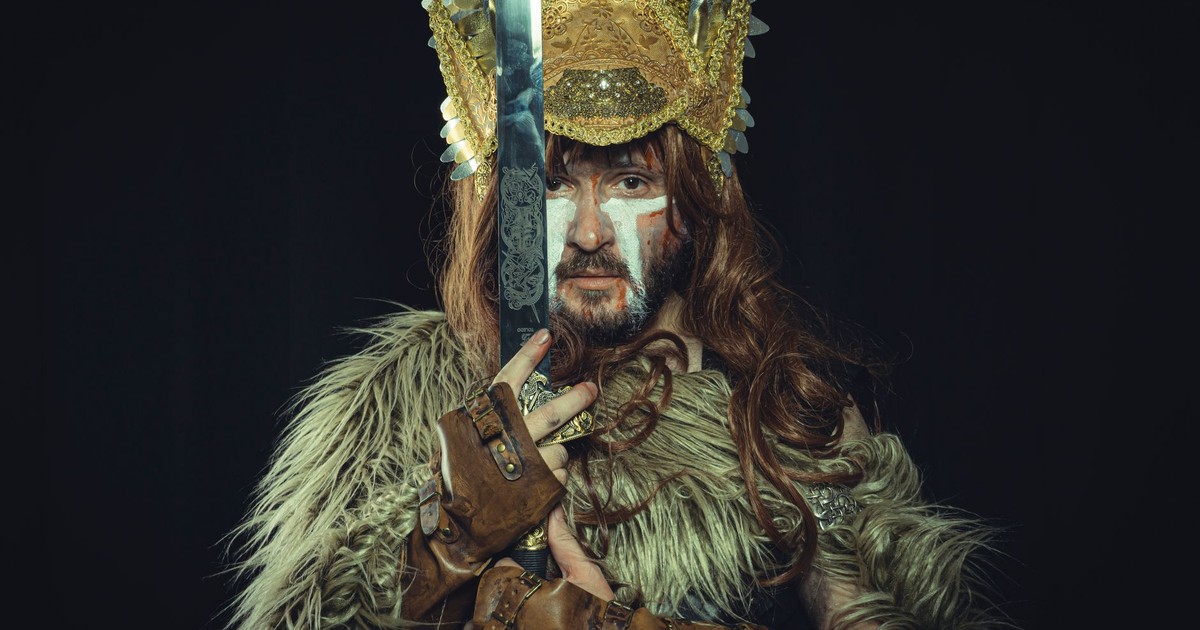
Most of the historical figures witchcraft allegations find themselves on the receiving end of the accusation. James VI of Scotland is the exception: he was the accuser, the interrogator, and eventually the author of one of the era’s defining texts on witch-hunting. His relationship with witchcraft wasn’t a footnote to his reign. It shaped legislation, drove executions, and left a body count.
The North Berwick trials unfolded in 1590, just months after James VI’s voyage to Denmark to marry Anne of Denmark. On the journey home, his fleet was battered by storms, which some contemporaries claimed had been stirred up by witches. Back in Scotland, when witchcraft accusations began circulating around the town of North Berwick, James inserted himself directly into the interrogations. Around 70 individuals, mostly women, were rounded up, tortured, and put on trial.
Following his encounter with the North Berwick witches, the young monarch authored Daemonologie in 1597, a theological and philosophical defense of witch-hunting. When James became James I of England in 1603, that text and the ideas it codified crossed with him into English legal and political culture. According to Historic UK, an estimated 4,000 to 6,000 people, mostly from the Scottish Lowlands, were tried for witchcraft during this period, a much higher rate than for neighboring England. James himself grew increasingly skeptical toward the end of his reign and took steps to limit prosecutions, but the machinery he had set in motion kept running without him.
Tituba (1692)
Tituba’s story sits at the very center of the Salem witch trials and is one of the most striking examples in American history of how witchcraft accusations fell along lines of race, class, and social power. Documents refer to her as “Indian,” but it is likely that she was from an Indigenous Arawak community in present-day Venezuela. Reverend Samuel Parris had enslaved Tituba and brought her to Boston and then Salem Village when he returned north from Barbados in 1680.
Parris’s daughter Betty and her cousin Abigail Williams identified Tituba as the perpetrator of their January and February afflictions, the first accusations of 1692. Tituba’s testimony on March 1 and 2 confirmed for locals that a witchcraft conspiracy existed. She confessed and embellished her confession with an elaborate tale of how she had been told to serve the devil, describing rides on sticks and a black dog who commanded her to hurt the children. She also accused Sarah Osburn and Sarah Good and said there were seven more witches, quickly widening the scope of the crisis. The court left Tituba to languish in prison until May 1693, when a grand jury rejected the charges against her. Tituba survived, possibly because her confession, however coerced, had made her useful to prosecutors. The 20 people executed in Salem had refused to confess.
Urbain Grandier (1634)
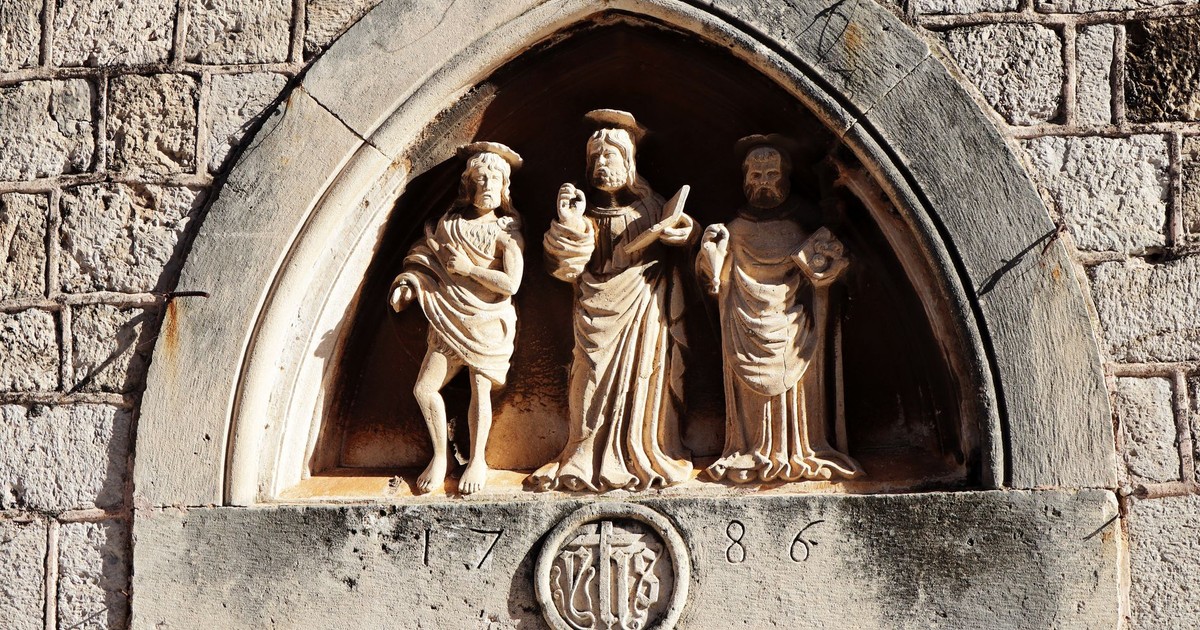
Urbain Grandier was a Catholic priest in Loudun, France, whose intelligence, eloquence, and considerable personal vanity had made him both admired and despised in equal measure. When a community of Ursuline nuns in Loudun began exhibiting what their superiors described as demonic possession, convulsions, blasphemous outbursts, obscene behavior, Grandier’s local enemies saw their opportunity.
The accusation was that Grandier had bewitched the nuns through a demonic pact, sending evil spirits to possess them. The case against him rested almost entirely on confessions extracted from the possessed nuns themselves and on the testimony of exorcists who claimed to have conversed with the demons inside them. One document produced at trial was a supposed pact Grandier had signed with the devil, complete with the signatures of Satan, Beelzebub, and several other named demons, written, conveniently, in backward Latin. Despite protesting his innocence throughout, Grandier was convicted in 1634. He was tortured before his execution, his legs shattered, and then burned alive at the stake.
The political dimensions of Grandier’s case were barely concealed. Cardinal Richelieu, the most powerful man in France at the time, had a personal grudge against Grandier, who had written a satire mocking him years earlier. The nuns’ supposed possession began shortly after Grandier refused to become confessor to their convent, and several of his most prominent accusers had pre-existing disputes with him.
Catherine Monvoisin, “La Voisin” (1680)
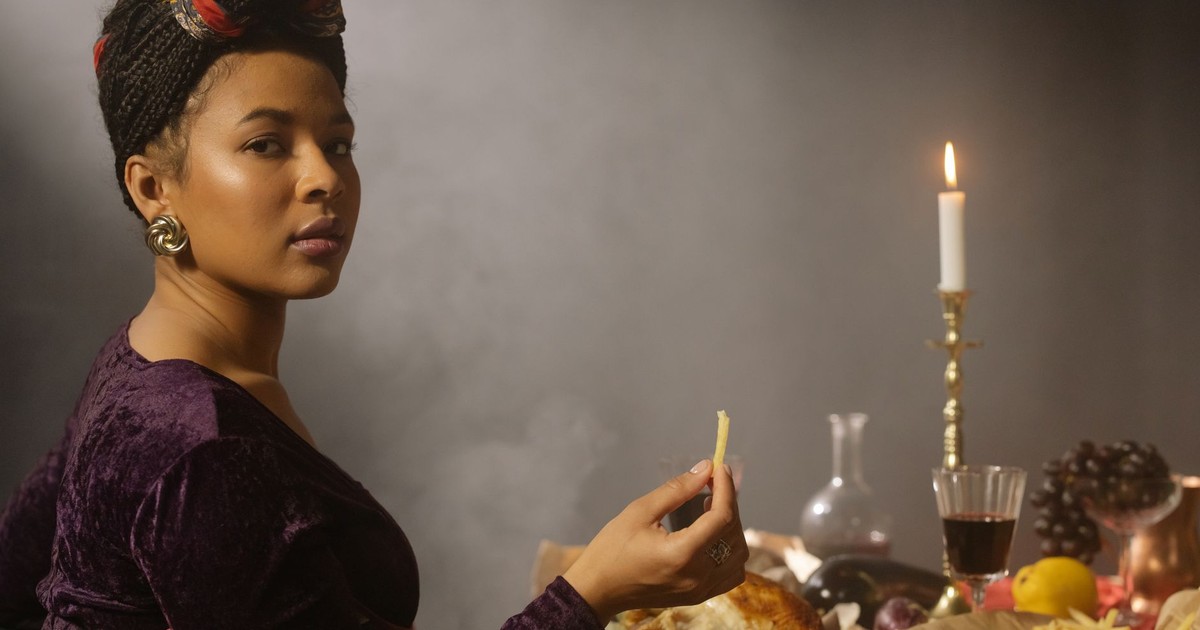
Catherine Monvoisin, known to her extensive Parisian clientele simply as La Voisin, occupied an unusual position in the history of witchcraft allegations: she was not merely accused of magic, she actually provided it, or at least, provided what her customers believed was magic. A fortune-teller, abortionist, and supplier of poisons operating in Paris in the 1670s, she sat at the center of what became known as the Affair of the Poisons, one of the most sensational scandals in the court of Louis XIV.
Three years of inquiry and 210 sessions of a special tribunal brought to light the numerous members of the higher nobility, as well as ordinary folk, who applied to La Voisin for fortune-telling, drugs, poisons, and black masses. Her clientele reportedly included some of the most powerful women at Versailles, among them the Marquise de Montespan, Louis XIV’s own mistress, who was alleged to have used La Voisin’s services to retain the king’s affections. La Voisin was burned at the stake on February 22, 1680, as the central figure in the Affair of the Poisons, which ran from 1679 to 1682.
La Voisin is distinct from most figures on this list because the witchcraft dimension of her case came wrapped in very real evidence of criminal activity, including the supply of poisons used in actual murders. Yet the “black mass” allegations, the claims of infant sacrifice, and the accusations of satanic ritual bore all the hallmarks of moral panic layered over genuine crime. The investigation eventually became so explosive, threatening to implicate the king’s own household, that Louis XIV shut it down before the full extent of aristocratic involvement could be made public.
Read More: Greek vs. Roman Myths: 8 Differences That Are Majorly Important
The Pattern That Never Changes

Witchcraft accusations rarely emerged from nowhere. Almost every case here began with a pre-existing dispute, over money, over power, over romantic rivalry, over political survival, and the witchcraft charge was the weapon that gave that dispute legal and moral weight. It transformed a personal conflict into a cosmic one, and it had the added advantage of being almost impossible to disprove.
Wealthy widows who had outlived too many husbands. Women who healed people and knew too much about herbs. Enslaved women at the bottom of a colonial social hierarchy. A priest with the wrong enemies. A teenage military commander whom powerful men needed to discredit. The accusation of witchcraft was not random. It tracked power and vulnerability the way water tracks a slope, finding the person who could be destroyed most efficiently and with the least political cost. The historical figures linked to witchcraft allegations are not united by guilt. They are united by the fact that someone, at a specific moment in history, needed them gone.
What changed over time was not human nature but the available tools. When ecclesiastical courts lost the power to burn people, the witchcraft charge faded. The impulse behind it, to frame a convenient enemy in terms that justified their destruction, did not.
AI Disclaimer: This article was created with the assistance of AI tools and reviewed by a human editor.