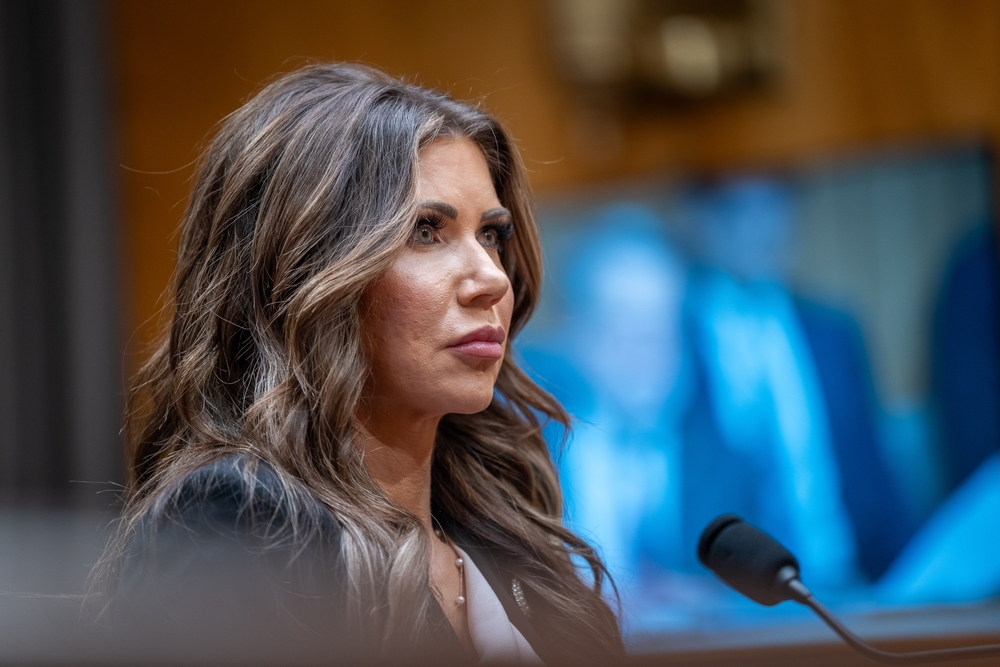

McKenna Wendel was 14 years old when she vanished from Sioux Falls on March 13, 2026. She loved animals, attended powwows with her grandparents, and, according to her obituary, “had a vibrant personality and a zest for life.” She and her grandparents were Rosebud Sioux Tribe members. Her body was found six days later in rural Brookings County, an hour’s drive north of the city she’d grown up in. The man now charged in connection with her death is her uncle, Mark Milk. He would not have been a free man to charge at all had it not been for a decision made three years earlier by then-South Dakota Governor Kristi Noem.
That decision, a Kristi Noem commutation that cut short a life sentence, is now at the center of one of the most disturbing criminal justice stories to emerge from the American heartland in 2026. Milk, 51, of Sioux Falls, faces five counts related to McKenna’s death. He was almost three decades into a life term on a manslaughter conviction when Noem commuted his sentence in 2023. That he walked free, that his niece testified on his behalf at a parole hearing, and that she is now dead with him charged in her killing, is a sequence of events that is almost impossible to absorb.
The case raises questions that don’t resolve easily: about the process of executive clemency, about how thoroughly a person’s transformation in prison can ever really be known, and about what accountability looks like when the official who granted freedom is no longer in office. Before any of those questions can be answered, though, there is a girl who loved the sound of drums. And there is a set of facts that have to be looked at directly.
Who Was Mark Milk, and What Did He Do in 1993?

Milk was sentenced to life in prison for manslaughter after pleading guilty to killing a man outside a dance hall. Prosecutors said he killed 19-year-old Shawn Peneaux in a vicious fight that left Peneaux stabbed in several places. Milk was 19 at the time. He and Peneaux had “several altercations” on October 3, 1993. During the second fight, Milk stabbed Peneaux and kicked him in the head with steel-toed boots, killing him.
He was sentenced to life in prison in 1994, and he stayed there for almost thirty years. While incarcerated, he spent years working for Metal Craft Industries, a private company where inmates earned market wages, with operations inside the South Dakota State Penitentiary’s Jameson Annex. At his commutation hearing in November 2022, board members heard how Milk had helped lead powwows for inmates and their family members while incarcerated, and served as a role model for younger inmates through the Alternatives to Violence program – a structured, community-based effort to help people break from patterns of harm. By all accounts from inside the system, he had done everything right. He had reformed, contributed, demonstrated exactly the kind of transformation that rehabilitation is supposed to produce.
The commutation came after Milk went through a formal application process and earned a unanimous recommendation from the Board of Pardons and Paroles. This wasn’t a governor going around the process. The system reviewed his case, found him worthy of clemency, and recommended release. Noem signed the order.
The Commutation, and What It Actually Meant Legally

A commutation is not a pardon. According to the Justice Department, “A commutation of sentence reduces a sentence, either totally or partially, that is then being served, but it does not change the fact of conviction, imply innocence, or remove civil disabilities that apply to the convicted person as a result of the criminal conviction.” The person walks out still a convicted felon. Their record stays intact. What changes is how long they stay behind bars.
Noem issued the commutation on February 2, 2023, making Milk eligible for parole at the board’s discretion. That changed his sentence from life in prison to 240 years, which, under state law, made him eligible for parole. He was given parole in 2024.
Here is what the commutation order actually said. KELO-TV reports that Noem’s order reads: “The application of Mark Milk for commutation of sentence having been presented to me, together with facts pertaining to this case, and it appearing there from that the ends of justice would be best served by granting the Commutation of Sentence requested.” That’s it. The commutation documents were sealed – even Milk himself had not seen them, he noted at the time. The reasoning behind the decision, beyond that single paragraph, was never made public. Whether the full record of deliberation ever surfaces is an open question.
What’s not in question is what happened next. In June 2024, McKenna Wendel testified on Milk’s behalf at his parole hearing. His own niece, then 13 years old, stood before the board and asked them to let her uncle go. The board released him following the hearing. Less than two years after he walked free, she was dead.
McKenna Wendel: What the Charges Say Happened
McKenna was reported missing March 13 and last seen alive in her hometown of Sioux Falls early on March 14. Her body was found outside Brookings, an hour’s drive north of Sioux Falls, on March 19. She was 14.
The Associated Press reports that court documents say Wendel died of a cocaine overdose. She was transported across state lines for purposes of sexual activity, according to the charges. Agencies from Iowa and Minnesota were part of the investigation, as authorities believe she was taken to multiple states before her body was found in rural Brookings County, South Dakota.
Milk was arrested on five charges, including possession with intent to distribute and distribution of narcotics resulting in death, as well as transportation of a minor with intent to engage in criminal activity. A second man, Jon Rogness, 38, of Brookings, faces conspiracy and accessory charges in an alleged attempt to cover up the crimes. Rogness is currently being held in the South Dakota State Penitentiary for manslaughter, sentenced in 2008 in Brookings County.
Both men were charged in an indictment filed on June 17, 2026, in the United States District Court for the Northern District of Iowa. The counts against them were described as the “most serious, readily provable” charges, and all originated in Iowa, said Leif Olson, U.S. attorney for northern Iowa, at the news conference.
Milk was arrested on March 17 of this year, four days after Wendel was last seen but two days before her body was found. The arrest was on charges not related to the girl – he was taken into custody for driving impaired and fleeing police. He has remained in jail since. Prosecutors, who finished their investigation in late May, did not formally link him to Wendel’s death until filing charges on June 17.
Details about Wendel’s death remained limited, as authorities kept close what they knew to protect their investigation. An autopsy was done, but the findings have not been released.
The Political Fallout, and What Officials Have Said
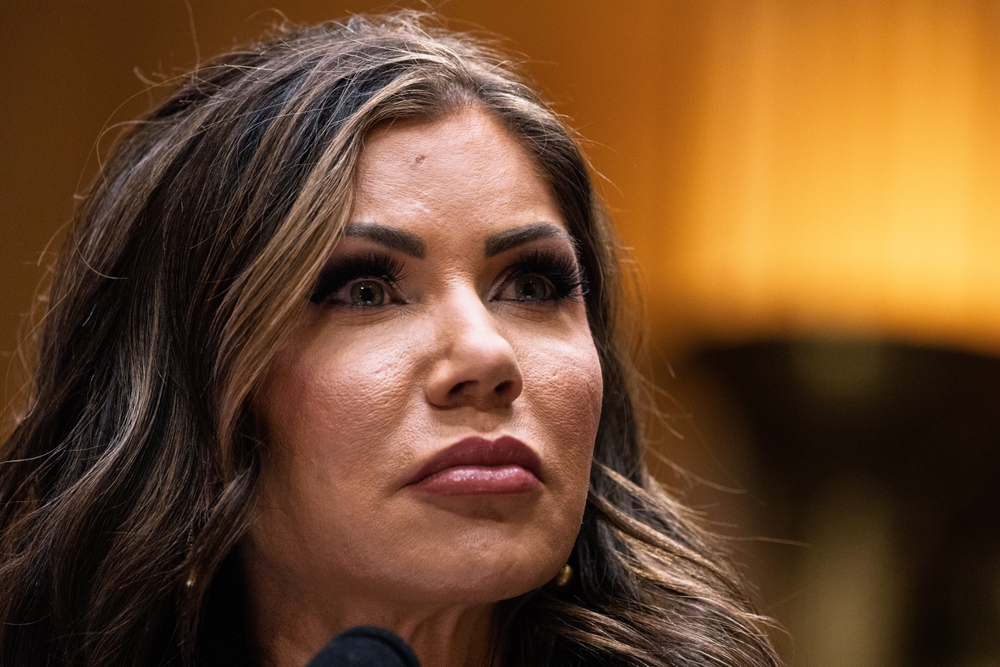
Noem is no longer governor of South Dakota. A Republican, Noem was South Dakota’s lone congressperson from 2011 to 2019 and governor from 2019 to 2025. She was Homeland Security secretary before being fired in March by President Trump amid criticism of her handling of the administration’s immigration crackdown and disaster response. A message left for Noem seeking comment through NovaRed Mining, a Canadian firm she recently joined in a “strategic advisory role,” received no response. No public statement from Noem on the case has emerged.
The question of accountability landed almost immediately on the desk of South Dakota’s current attorney general. South Dakota Attorney General Marty Jackley said at a late March news conference that the decision to commute Milk’s life sentence was strictly Noem’s. “It is fairly often that you see law enforcement oppose commutations,” Jackley remarked, without commenting further on Noem’s decision. That single observation, delivered without elaboration, sits in the record like a door left deliberately ajar. Whether law enforcement had in fact opposed this particular commutation, and what that opposition looked like, remains unknown.
The state Department of Corrections’ Division of Parole Services has tightened its supervision of people on parole since Wendel’s death. That is the institutional response, so far: an administrative adjustment that arrives, as these adjustments often do, after the fact.
The Tragedy Inside the Tragedy
McKenna Wendel’s presence at the 2024 parole hearing is something that’s difficult to sit with. A 13-year-old girl who had been raised by her grandparents, who attended powwows, who loved animals, stood before a board and advocated for the man who is now charged in her death. He had a profile of rehabilitation. He had a narrative. He had a future – and then he came home, and his niece died.
The legal presumption of innocence applies here, as it must. Milk has been charged, not convicted. No lawyer had been listed in court records for either Milk or Rogness as of June 18, 2026. The investigation, Sioux Falls Police Chief Jon Thum confirmed at the news conference, is ongoing. “Regardless of the announcements, we still have our investigation that we’re looking at,” Thum said.
But the charges, drawn from federal court records, describe something that, if proven true, means a child was betrayed by someone who was supposed to be family. A child who had even spoken up for him.
Read More: Hegseth Said “No Vaccines for Troops” then 160 US Troops got Sick with Flu
The Commutation Debate It Will Reopen

Cases like this tend to generate two reflexive reactions. The first is that the commutation was a mistake, that it proves the system should be more restrictive. The second is that one case, however horrific, shouldn’t define policy for everyone. Both reactions are understandable. Neither gets at the harder truth underneath.
Commutation as a tool is morally neutral. It has freed people who were genuinely wrongly sentenced and given others a second chance who went on to live productive lives. It has also, in cases like this one, produced outcomes that no board or governor could have predicted or intended. That gap between what a person is inside a prison and what they do once outside it is not a flaw in the theory of rehabilitation – it’s a known and irreducible uncertainty built into the entire enterprise.
The harder problem here is the opacity of how the decision was made. Milk’s commutation documents were sealed. The stated reasoning never went beyond a single boilerplate paragraph. When accountability for a commutation requires knowing why it was granted, and that reasoning is locked away, there is no public record to examine. Noem has moved on. Jackley gestured at opposition from law enforcement without naming it. The governor who signed the order is no longer in office and is not commenting.
McKenna Wendel’s grandparents, who raised her and who sat with her at powwows and who heard her advocate for the man now charged in her death, are somewhere in South Dakota. Her obituary says she had a vibrant personality and a zest for life. She loved animals. “She loved the singing and the beautiful sounds of the drums.”
When the System Has No One Left to Answer

The commutation process in South Dakota, as in most states, places the final decision entirely in one person’s hands. A board can unanimously recommend release, as it did with Milk, and the governor signs. A board can have reservations, and a governor can still sign. The process runs through the executive office with limited transparency and, as this case shows, no shared accountability when things go wrong.
That isn’t unique to South Dakota or to Noem. Governors across the country exercise clemency with varying degrees of public documentation, and the records are often sealed or incomplete. When a decision turns catastrophic, the elected official who made it can simply say nothing. There is no legal structure that compels a different response.
None of that means executive clemency itself is broken. People who have served decades for crimes they committed at 19 have, in many documented cases, genuinely changed. The parole system exists precisely because prisons are not only for punishment but also, in theory, for rehabilitation. Milk’s record inside the system was, by all accounts, real. The board’s unanimous recommendation was not frivolous.
What this case does mean is that when the decision-making is sealed and the accountability is scattered, a 14-year-old girl can die and the person who opened the door can say nothing, join a Canadian mining firm, and carry on. Some patterns in criminal justice don’t break along ideological lines – they break along the line between what gets documented and what doesn’t. McKenna Wendel’s death sits at that line, in the space between a family’s trust, a justice system built on faith in second chances, and a political process that doesn’t always require anyone to answer for what comes after the papers are signed.
AI Disclaimer: This article was created with the assistance of AI tools and reviewed by a human editor.