
Walt Disney has been dead for nearly 60 years, and the myths about him just keep multiplying. Some of them are flattering. Some are damning. A remarkable number have been circulating since before the 1970s, passed from generation to generation like folklore, growing stranger with every retelling. Most people who believe them have never paused to check whether any of it is actually true.
That matters, because the false stories often crowd out the genuinely interesting ones. The real history of Disney – the man, his studio, and his parks – is strange and fascinating enough without the embellishments. A piece of paper with a child actor’s name found on his desk. A skeleton borrowed from a university medical department. A famous quote that he never actually said. Tunnels that aren’t technically underground. The truth, in nearly every case, is more interesting than the legend replacing it.
What follows is a thorough look at these Disney myths debunked – where they came from, why they stuck, and what actually happened.
1. Walt Disney Was Cryogenically Frozen

This is the granddaddy of all Disney myths. The story goes that after his death in 1966, Walt had his body cryogenically frozen so he could be revived once science caught up. Some versions say it was just his head. Some say the remains are stored beneath Pirates of the Caribbean at Disneyland.
Walt Disney died on December 15, 1966, from complications of lung cancer. A private funeral was held the next day, and on December 17, his body was cremated and interred at Forest Lawn Memorial Park in Glendale, California. You can visit the gravesite. His own daughter, Diane, wrote in 1972: “There is absolutely no truth to the rumor that my father, Walt Disney, wished to be frozen. I doubt that my father had ever heard of cryonics.”
According to a 2013 Mental Floss report, the myth likely originated with Bob Nelson, president of the Cryonics Society of California, who in 1972 gave an interview to the Los Angeles Times and mentioned Walt Disney. Nelson did say Walt wasn’t frozen and even stated, “They had him cremated. I personally have seen his ashes” – but he also speculated that Disney had wanted to be frozen, noting that Walt Disney Studios had called him before Walt’s death to ask elaborate questions about the cryonics process. Nelson’s sensational speculation accidentally launched a myth that has persisted for decades.
2. Walt’s Last Words Were “Kurt Russell”
A piece of paper found on Walt’s desk after his death had the name “Kurt Russell” written on it. From that single fact, a legend grew: that “Kurt Russell” were Disney’s dying words, the final utterance of one of the most celebrated entertainers in American history.
D23, Disney’s official fan club publication, addressed this directly: the claim that “Kurt Russell” was the last thing Walt Disney said is a myth. Kurt Russell is a Disney Legend who personally worked on classic Disney films including Follow Me, Boys! and The Computer Wore Tennis Shoes. The myth began after a piece of paper with his name was found in Walt’s office after he died. But it was not his last words – he was simply being considered for another film project. Worth noting: the name on that paper was even misspelled, written as “Kirt Russell,” which gives a sense of how casually it was jotted. A work note, not a deathbed declaration.
3. Walt Said “If You Can Dream It, You Can Do It”
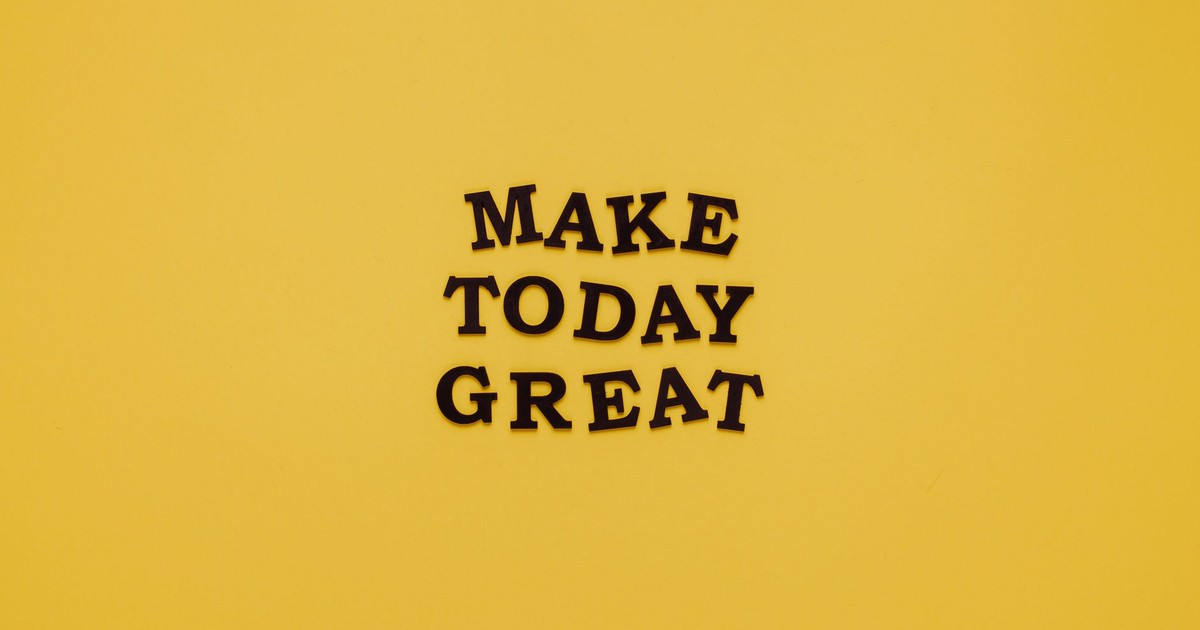
Few quotes are more closely associated with Walt Disney than this one. It appears on merchandise, motivational posters, and countless graduation speeches. The only problem is that Walt Disney never said it.
AllEars.net confirmed in 2025 that the phrase was written by Imagineer Tom Fitzgerald specifically for the Horizons attraction at Epcot, where it appeared as dialogue in the ride and in painted graphics. Fitzgerald spent 40 years with Imagineering and was clear about the authorship: “I am very familiar with that line because I wrote it.” The attraction opened in 1983 – seventeen years after Walt died. After Horizons closed, the phrase was largely forgotten until it was incorrectly attributed to Walt Disney in a 2007 DVD series called The Science of Imagineering, and the misattribution stuck. It’s a great line. It just isn’t his.
4. Walt Disney Was Anti-Semitic
This one is more complicated than a simple true/false, and it deserves a careful answer. The belief has been widespread for decades, spoofed in pop culture, and repeated as established fact – but the actual evidence is considerably thinner than the reputation suggests.
Legendary storyman and concept artist Joe Grant, who was Jewish and worked closely with Walt for decades, said: “As far as I’m concerned, there was no evidence of anti-Semitism. I think the whole idea should be put to rest and buried deep.” Walt Disney was also made Man of the Year by the Beverly Hills Lodge of B’nai B’rith, the oldest continuously operating Jewish service organization, which actively fights anti-Semitism worldwide. Colleagues who worked with him most closely, including many who were Jewish, consistently said they saw no evidence of anti-Semitic views.
That said, the organization Disney helped found, the Motion Picture Alliance, allegedly had many privately anti-Semitic members. While there is no verified proof that Disney himself held anti-Semitic views, some historians argue he was complicit based on the company he kept. The historical record is genuinely complicated – but the flat assertion that Walt Disney was anti-Semitic is not supported by the evidence his colleagues left behind.
5. The Haunted Mansion Singing Bust Is Walt Disney
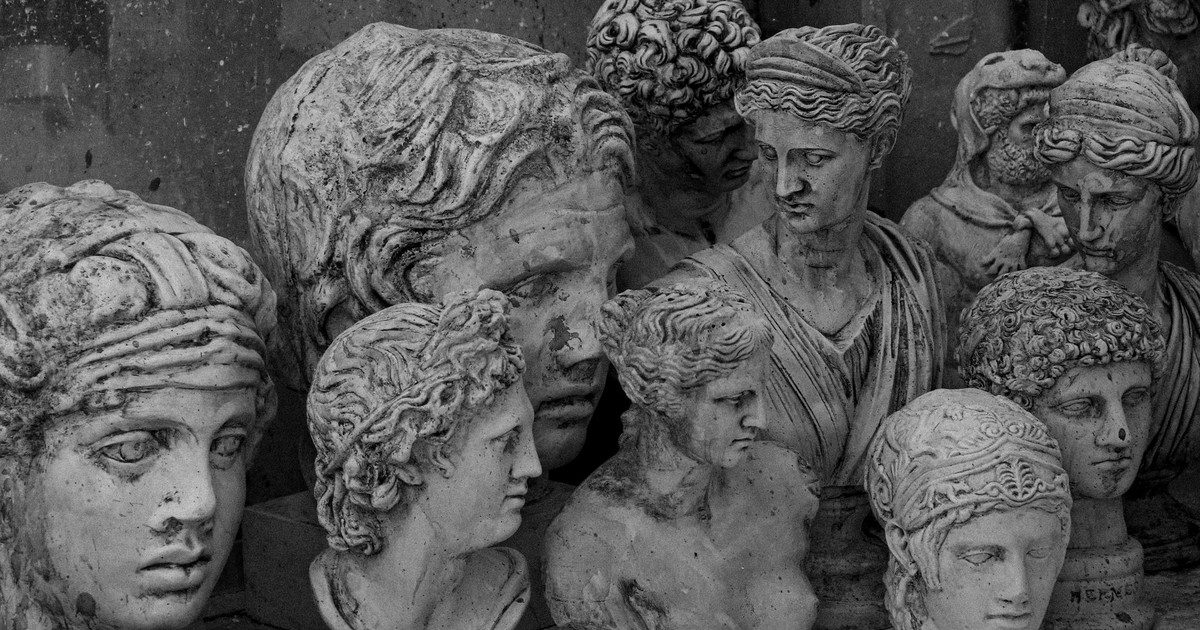
The five singing busts in the Haunted Mansion’s graveyard have fascinated visitors for decades. One mustachioed figure whose head has dramatically broken from his neck looks, to many guests, unmistakably like Walt himself.
It isn’t. According to Snopes, the broken bust depicts Thurl Ravenscroft, the Mellomen bass singer whose deep voice anchors “Grim Grinning Ghosts” – and who bears a slight facial resemblance to Walt Disney, including a similar style of mustache. The confusion is understandable. What makes it stick is that Ravenscroft wasn’t credited for his Haunted Mansion work for years, which left visitors guessing about those singing faces. Ravenscroft also voiced Tony the Tiger and contributed to dozens of Disney films and park attractions across five decades – one of the most-heard voices in Disney history, often the least recognized name attached to it.
6. The Pirates of the Caribbean Ride Has No Real Human Remains
This one runs exactly backward. Most people assume the skeletons throughout the Pirates of the Caribbean ride are props. For most of them, that’s now true. At opening, it wasn’t.
When the Disneyland version of Pirates of the Caribbean opened in 1967, real human skeletons were used as props in the cavern scenes, provided by the UCLA Medical Center. Over the years, as sensibilities shifted, the real remains were replaced with artificial props. However, the skull and crossbones on the Captain’s bed in the Captain’s Quarter scene are reported to still be original. The theme park skeleton story isn’t a myth – it’s an awkward truth most people dismiss as one.
7. Magic Kingdom Has a Massive Underground City
The story of “an entire underground city beneath Disney World” circulates constantly. The reality is more interesting, and also more technically accurate than “underground city” suggests.
There is not an entire underground city located beneath Magic Kingdom – but Magic Kingdom was constructed on top of a series of tunnels and utility rooms. Nicknamed the “Utilidors,” this series of passageways and rooms were designed to transport cast members throughout the parks without ruining any illusions for guests. Crucially, these rooms are not underground and they are not a basement. The Utilidors are built at ground level, with the remainder of Magic Kingdom having been constructed on top of them. What Walt felt ruined the magic at Disneyland was cast members needing to walk across the park in costume – someone from Frontierland dressed as a cowboy walking through Tomorrowland. The Utilidors solved that problem architecturally.
8. Cinderella Castle Can Be Dismantled During a Hurricane
A surprisingly popular belief holds that Cinderella Castle at Walt Disney World is designed to be taken apart in sections when a major hurricane approaches – six pieces, according to some versions of the story.
Some people believe the castle comes apart in six easy pieces during a hurricane, but that is not possible given the way it is built. It’s made of 600 tons of steel, stands almost 190 feet tall, and is not going anywhere. It was designed to handle a high Category 3 or Category 4 hurricane. The rumor may have started because several Disney resort buildings are designed with weather resilience in mind, and someone conflated hurricane preparation with castle disassembly.
9. Walt Had a Secret Apartment in Cinderella Castle

Walt Disney had a famous apartment above the fire station at Disneyland in California – a real, documented space where he would watch guests enjoy the park. It’s natural to assume he had something similar planned for his Florida project. He didn’t.
The rumor that the suite inside Cinderella Castle was supposed to be Walt’s personal apartment when visiting the park is false. The designs for Cinderella Castle were not even completed until after Walt’s death. Walt Disney had passed away before construction of Walt Disney World began, and there were no construction plans regarding an apartment located within the castle. The Cinderella Castle Suite that exists today was created decades later as a prize and VIP accommodation, not as a tribute to any original plan.
10. Disneyland’s Opening Day Was a Triumph
July 17, 1955. Walt Disney’s dream comes to life in Anaheim, California, in front of cheering crowds and a television audience of 70 million. A perfect beginning for a perfect place. Except that it wasn’t.
When Disneyland opened for the first time in 1955, it was a total disaster. The day – nicknamed “Black Sunday” by Disney staff – was plagued by counterfeit tickets that let in roughly twice the expected number of visitors. Rides broke down. The Mark Twain riverboat nearly capsized from overcrowding. A gas leak shut down Fantasyland. A plumbers’ strike had forced Disney to choose between working drinking fountains and working restrooms, and he’d chosen restrooms, meaning guests in the California summer heat had nowhere to get water. The opening was so chaotic that Disney considered it one of the worst days of his life.
11. Walt Disney Founded His Company Alone
Walt Disney is such a dominant figure in his own story that the contributions of others – including his brother – often disappear entirely from the popular version of events.
Disney has been around since 1923. What started under the name Disney Brothers Cartoon Studio was an animation studio run by brothers Walt and Roy Oliver Disney. Roy Disney handled the business and financial side of the operation throughout his brother’s life, secured funding that made films like Snow White possible, and after Walt’s death personally oversaw the completion of Walt Disney World, which opened in 1971. Roy died just two months after it opened. The park is as much his legacy as Walt’s, even though his name rarely appears on it.
12. Mickey Mouse Was Always Called Mickey
The story of how Mickey Mouse got his name is one of the most widely repeated in Disney history – and one of the most frequently garbled. The character who became Mickey was originally named Mortimer by Walt.
Walt sketched the character and wrote “Mortimer Mouse” above the drawing, then took it home and showed his wife Lily. She told him he needed a cuter name than Mortimer and suggested Mickey. Walt agreed. Lily Disney’s contribution to one of the most recognized names in entertainment history is almost never mentioned. Mortimer Mouse did eventually appear in Disney cartoons – as a pompous rival to Mickey himself.
13. Walt Disney Drew Mickey Mouse

This is one of the most persistent myths about Walt’s personal role in the creation of his most famous character. The truth slightly complicates the story.
The original Mickey Mouse character was largely the creation of animator Ub Iwerks, Walt’s close collaborator, who designed the character’s final look and animated the landmark 1928 short Steamboat Willie. Walt provided Mickey’s voice in the early years and was the creative driving force behind the character’s personality and direction, but the drawing was Iwerks’s work. Walt was a creative visionary and a showman. He was not, primarily, a draughtsman.
14. Snow White Was Called “Disney’s Folly”
The story goes that Hollywood insiders mocked Walt’s plan to make a feature-length animated film, calling it “Disney’s Folly” in the press before it came out. The film then became a massive hit and Walt had the last laugh.
The nickname was real, and the skepticism was genuine – feature-length animation was untested territory in 1937, and many in the industry did think it was a reckless gamble. What the myth softens is how close the film came to actually failing. Disney ran out of money during production and had to show incomplete footage to Bank of America to secure a loan to finish it. Snow White and the Seven Dwarfs did become a historic success, but it was also, genuinely, a financially precarious bet that could have destroyed the studio.
15. The “It’s a Small World” Ride Was Always Part of Disneyland
Many visitors assume the beloved – or depending on your tolerance for the song, beloved-in-theory – ride was purpose-built for Disneyland from the beginning. It wasn’t conceived for a Disney park at all.
“It’s a Small World” was originally created for the 1964 World’s Fair in New York, commissioned by UNICEF to celebrate international goodwill. The Sherman Brothers wrote the iconic song specifically to be sung by children from different countries simultaneously in different languages, which meant it needed to work at any tempo. After the fair closed, Disney moved the attraction to Disneyland in 1966. It arrived as a transplant, not a native.
16. Walt Disney Was Fired From His First Job for Lacking Creativity
The myth here is pointed: Walt Disney, of all people, was once told he lacked imagination and shown the door. It makes for a satisfying underdog story.
Disney was indeed let go from a job at the Kansas City Star newspaper in 1919, where he had worked as a cartoonist. But the circumstances are murkier than the clean “fired for lacking creativity” version suggests. There is no verified record that his editor told him he lacked imagination – this detail appears in various retellings without a traceable source. What is clear is that Disney’s early career was genuinely difficult, including a failed animation company in Kansas City called Laugh-O-Gram Studio that went bankrupt in 1923 before he headed to California.
17. Disney Went Bankrupt Before Building Disneyland

The idea that Walt Disney was completely broke and built Disneyland from nothing is a compelling rags-to-riches narrative. The reality is both less dramatic and more instructive.
Disney never personally declared bankruptcy. The Laugh-O-Gram Studio he ran in Kansas City did fail in the early 1920s, and funding for Disneyland was genuinely difficult to secure – no bank wanted to finance a theme park. Disney borrowed against his own life insurance policy, sold a vacation home, and eventually brought in television network ABC as a co-investor, agreeing to produce a weekly TV show in exchange for funding and a guarantee against losses. The park was built on tight money and creative financing, not from nothing.
18. There Are No Real Deaths on Disney Property
The idea that Disney aggressively suppresses or hides any deaths that occur on its property – either through legal maneuvering or by technically declaring people dead at local hospitals – is one of the most persistent park conspiracy theories.
Deaths have occurred at Disney parks, and the company has faced lawsuits as a result. Several people have died on attractions over the decades. The more specific version of the myth – that Disney employees are instructed never to declare a guest dead on property, so no one ever “officially” dies at Disney – appears to trace back to the policy of calling emergency services and transporting guests to hospitals quickly, which is standard practice at any large venue, not a cover-up unique to Disney.
19. Walt Disney Was an FBI Informant Who Reported on His Own Employees
Walt Disney did cooperate with the FBI and with the House Un-American Activities Committee during the Red Scare era of the late 1940s. This is documented and not disputed. But the characterization of him as an active, ongoing FBI informant reporting on employees is more complicated.
Disney produced four laudatory segments on the FBI for the original Mickey Mouse Club television show, but the relationship soured when the bureau decided there would be no further cooperation on future projects. Documents relating to these productions make up the bulk of Walt’s FBI files and do not show any precise information Walt may have been asked to give to the FBI. Walt did name names before HUAC, including identifying people he believed were Communists during the 1941 animators’ strike. That is a genuine and uncomfortable part of his record. The “ongoing secret informant” framing is an overstatement of what the documents show.
20. The 1941 Animators’ Strike Was About Communism
Walt Disney publicly framed the 1941 animators’ strike at his studio as Communist agitation. He named names before HUAC and blamed outside radicals for stirring up his employees. That framing has stuck in parts of the popular retelling.
The animators’ strike happened in 1941, and the causes were substantially more practical: disparities in pay, chaotic management, and increasing tension from the company’s escalating debt all contributed to a hostile work environment. Animators on early Disney films had often worked extremely long hours under difficult conditions, and many had never received on-screen credits. The labor grievances were real and specific. The Communist framing was, at least in part, a way to delegitimize a genuine workplace dispute.
21. Disneyland’s Main Street Clocks Are Set to the Time of Walt Disney’s Death
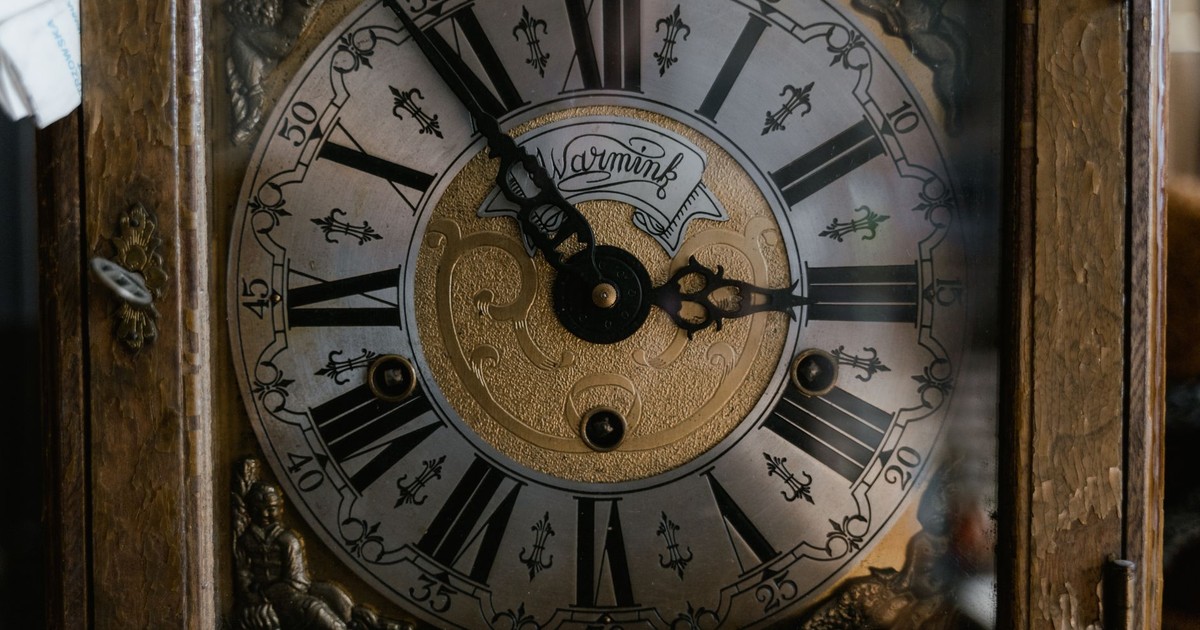
A long-running rumor holds that the clocks visible on Main Street U.S.A. at various Disney parks are permanently set to the moment Walt Disney died, as a tribute to him.
The clock was installed in 1996 and has never been a working clock. There have been various different times set on it and many rumors about the significance of those times, including the popular idea that it was set to the time of Disney’s death. All of those rumors are false, according to the official Disney parks blog. The times have never had any significance. The clocks on Main Street are set to different times at different parks, and there is no consistent “death time” among them.
22. Walt Disney Hated Children
There is a version of Walt Disney that circulates in cynical retellings – the gruff, difficult private man who built an empire for children but personally couldn’t stand them. It makes for a satisfying irony.
There is no serious documented evidence that Disney disliked children. His interest in childhood nostalgia and in creating experiences for young audiences appears, by all accounts, to have been genuine. He had two daughters. He regularly interacted with children at his parks and studios. The “hated children” story likely grew from his reputation as a demanding and sometimes intimidating boss – that severity applied to his employees, not to his audience.
23. Walt Disney Designed Epcot as a Real City Where People Would Live
Walt Disney’s original vision for EPCOT is frequently mischaracterized. The myth is that he wanted to build a futuristic city where 20,000 people would actually live and work – a real urban experiment. That part is accurate. What the myth omits is the nature of the control involved.
Disney’s original EPCOT (Experimental Prototype Community of Tomorrow) was not meant to be a self-governing democratic community. Residents would have been company employees, not citizens in any traditional sense. There would have been no elected government. The community would have been entirely managed by the Walt Disney Company. Disney genuinely believed in the vision, but it was as much a corporate experiment as a humanitarian one. The EPCOT that eventually opened in 1982, sixteen years after Walt’s death, abandoned the residential concept entirely.
24. Donald Duck Was Banned in Finland for Not Wearing Pants
The story that Donald Duck was banned in Finland because he doesn’t wear pants has circulated for years – but it is not true. The myth appears to have originated from a 1977 decision by a youth council in Helsinki to stop buying Disney comics for public libraries, citing costs and what they considered commercialization of childhood. That specific decision was misrepresented and amplified over decades into a pants-based ban that never happened. Donald Duck remains enormously popular in Finland and across Scandinavia, where Disney comics have historically outsold most other comic publications.
25. The Haunted Mansion’s Preview Scared a Man to Death
The Haunted Mansion opened in 1969, and there is a story that an earlier version of the ride was so terrifying that a man invited to preview the attraction suffered a heart attack and died. According to the legend, Disney ordered the ride toned down to prevent anyone else from being scared to death. There is no verified record of this occurring. The Haunted Mansion did go through significant creative reworking before it opened – Walt Disney himself had been involved in planning it before his death – but there is no documentation of a fatal preview, and Disney parks historians have found no supporting evidence for the claim.
26. Relatives Have Spread Human Ashes on Haunted Mansion and Other Rides

This one feels like a myth but is, in fact, documented.
Guests have been known to spread ashes of loved ones inside the Haunted Mansion attraction, and it happens more frequently than most people would think. Cast members have stated that when this occurs, the ride is closed while custodial staff are called to clean. People have also tried to spread loved ones’ ashes on Pirates of the Caribbean, Splash Mountain, and many other locations across Walt Disney World. Park management treats these incidents seriously. What seems like an urban legend is, by multiple cast member accounts, an ongoing reality.
27. Subliminal Sexual Messages Were Deliberately Hidden in Disney Films
The idea that Disney animators deliberately hid sexual imagery and messages in classic films has been a persistent rumor since at least the 1990s, with specific scenes in The Little Mermaid, Aladdin, and The Lion King cited most often.
Most of the claimed images turn out to be coincidental shapes in backgrounds, shadows that resemble something only if you’re already looking for it, or in some cases deliberate mischief by individual animators during the long, tedious process of hand-drawing thousands of frames – rather than any company policy. The word “SEX” allegedly visible in the dust cloud in The Lion King, for example, was confirmed by a Disney spokesperson to actually spell “SFX,” a nod to the special effects team. The individual animator prank probably did occur in a few isolated cases. The coordinated conspiracy did not.
28. Walt Disney Created the Academy Honorary Award for Shirley Temple
The story goes that Walt Disney personally designed or championed the special Academy Award given to Shirley Temple in 1935 – a full-size Oscar accompanied by seven miniature ones, in a nod to Snow White. This gets the timeline wrong.
The honorary Academy Award presented to Shirley Temple was given in 1935, two years before Snow White and the Seven Dwarfs was released in 1937. The association with Snow White and the seven dwarfs is a retroactive confusion. Walt Disney did receive his own special Academy Award in 1938 for Snow White – one full-size Oscar and seven miniature ones – but that was his award, not Temple’s, and the two events are routinely scrambled together in the retelling.
29. The Disney “Vault” Was a Consumer Protection Measure
Disney’s practice of periodically withdrawing classic films from sale – the “Disney Vault” – has often been described as a way of preserving the magic for future generations, keeping films special by limiting their availability.
The vault was a business strategy, not a preservation gesture. By restricting home video availability of titles like The Lion King, Beauty and the Beast, and Bambi to specific limited windows, Disney created artificial scarcity that drove up demand and justified premium pricing when re-releases occurred. The films also required minimal ongoing investment while out of print. With the launch of Disney+ in 2019, the vault concept was largely abandoned – nearly everything became available simultaneously, which suggests the “preserving the magic” rationale was always more marketing than philosophy.
30. Walt Disney Built Disneyland Entirely According to His Own Vision

The founding myth of Disneyland places Walt as a solitary genius who conjured the park from pure imagination – the story of a man who, reportedly frustrated by the lack of a clean, safe place to take his daughters on weekends, designed and built an entirely new kind of entertainment venue from scratch.
The daughters-at-a-park story is real: Disney did cite this frustration as an inspiration. But Disneyland was built by a large, talented team of designers and engineers, many of them animators and set designers from his studio who became the first generation of “Imagineers.” The park also drew heavily from existing models, including the clean, pedestrian-friendly Tivoli Gardens in Copenhagen, which Disney visited and studied in 1951. The vision was genuinely his. The creation was genuinely collaborative. Those two things can both be true at once.
Read More: One Cranky Mom Wants Disney To Ban Childless Adults
The Myths That Tell the Truest Story
What’s worth noticing about this list isn’t any single myth – it’s the pattern. The false stories about Walt Disney tend to fall into two categories: ones that make him seem magical and ones that make him seem monstrous. He didn’t freeze himself for immortality. He probably wasn’t secretly anti-Semitic. His last words weren’t a cryptic message. He didn’t build a secret apartment in a castle. The man who existed between those poles – complicated, demanding, genuinely visionary, financially reckless, capable of cruelty and capable of warmth – is harder to summarize in a single dramatic claim, which is probably why the myths keep winning.
The real history doesn’t require embellishment. Disneyland nearly collapsed on its opening day. The studio bet everything on an animated film and almost ran out of money before finishing it. Roy Disney, who made most of it financially possible, died two months after the Florida park he’d fought to complete finally opened. The myths flatten all of that into a story about genius and destiny. What was actually there was messier, more precarious, and honestly more interesting.
AI Disclaimer: This article was created with the assistance of AI tools and reviewed by a human editor.