

For most of the last half-century, the conversation about where Americans retire has started and ended in the same place. Florida meant sunshine, no state income tax, a vast infrastructure built around older adults, and the kind of warm-weather retirement that generations of Americans had been promised since they got their first real job. Then something started shifting. Not slowly. Quickly enough that the numbers from 2025 landed like a genuine surprise.
South Carolina led the nation in net gains among retirement-age movers, adding 5,427 residents aged 65 and older last year, making it the fastest-growing retirement destination in the nation and overtaking well-established Florida. That’s not a rounding error or a statistical fluke. It represents a real, measurable realignment of where older Americans are choosing to spend the years they’ve been planning for since their forties.
What’s driving it isn’t one thing. It’s the convergence of several pressures at once: a Florida that has gotten more expensive and more complicated to insure, a Palmetto State that has invested in its cities and healthcare infrastructure, and a generation of retirees who are doing more homework than their parents did before signing a lease or making an offer. The story of South Carolina’s rise is really the story of what retirees in 2025 and 2026 actually want, which turns out to be somewhat different from what the retirement industry spent decades assuming they wanted.
Florida’s Hidden Costs Changed the Calculation
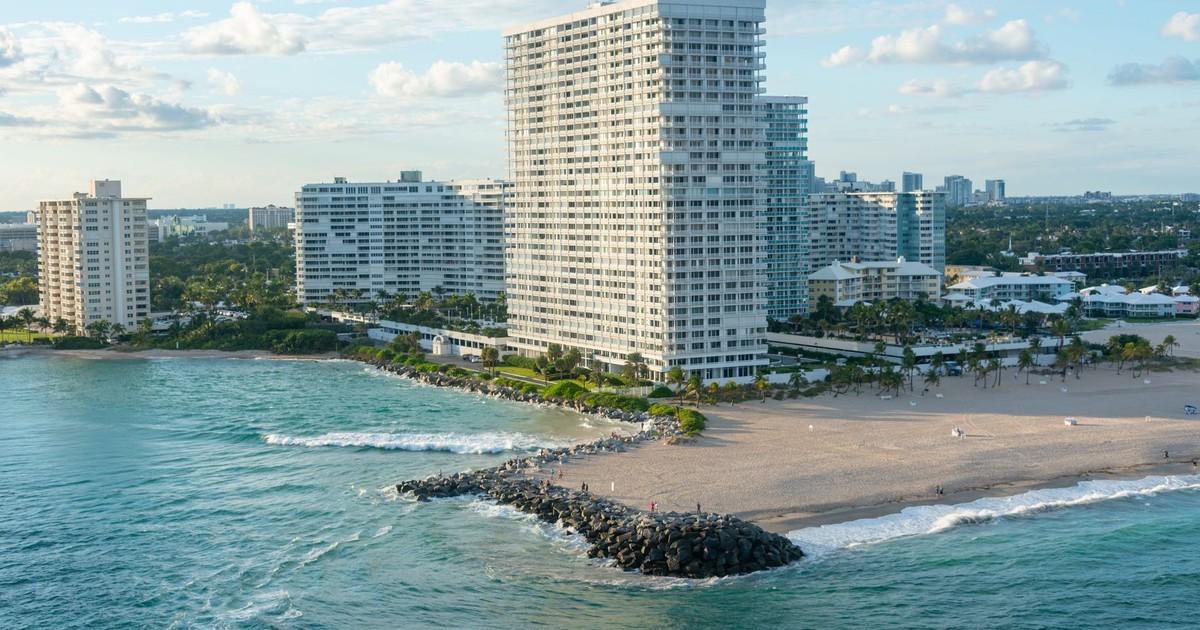
Florida didn’t fall out of favor with retirees so much as it got crowded and expensive in ways that are genuinely hard to plan around. Florida recorded the highest total inbound moves among residents 65 and older in 2025, at 45,696, but also saw 44,881 outbound moves, resulting in a net gain of just 815. That near-zero net figure, for a state that has dominated retirement migration for decades, tells you something important about the gap between Florida’s reputation and its current reality.
Part of the issue is insurance. Florida’s average annual cost of home insurance hit $8,292 in 2025, an 18% increase over 2024, according to Insurify’s 2026 Insuring the American Homeowner Report, with costs rising more than 14% since 2023. In 2024, many insurers saw roughly 300,000 claims following Hurricanes Helene and Milton, and those losses drove Florida’s average annual home insurance cost up by $1,252 in 2025. For someone on a fixed income who moved to Florida specifically to lower their monthly costs, that trajectory is genuinely disorienting. The math that made Florida attractive twenty years ago doesn’t hold the same way it once did.
Retirees are gravitating toward places that deliver a similar climate at a lower cost, with fewer risks tied to hurricanes and rising premiums. South Carolina, sitting just up the coast with a warmer climate than the Mid-Atlantic states, a long stretch of accessible beaches, and a significantly lower insurance exposure in its inland and non-coastal markets, was well positioned to catch that migration.
Why South Carolina, Specifically

The state’s appeal to retirees isn’t a recent marketing push. It’s structural. South Carolina’s cost of living runs 8 to 14 percent below the national average in most areas outside the coastal resort markets. That’s the kind of gap that makes a genuine difference on a fixed income over a decade of retirement.
Housing remains one of the clearest advantages. Greenville, in the state’s Upstate region, is a revitalized mid-size city with median home prices around $310,000 and a cost of living roughly 9 percent below the national average, while Aiken, the historic equestrian community in the western part of the state, is one of the most affordable retirement cities in the South, with median home prices around $255,000. For a retiree arriving from New York or California with equity from a sold home, those numbers represent serious purchasing power. Myrtle Beach offers the most accessible coastal retirement option in the state, with median home prices around $270,000 and more than 60 golf courses nearby, while Columbia, the state capital, sits at a remarkable $195,000 median for a capital city, with the University of South Carolina anchoring cultural life.
The tax picture adds another layer. South Carolina does not tax Social Security benefits, though federal taxes may apply on a portion of those benefits depending on the recipient’s provisional income. Property taxes are low, and the homestead exemption can reduce taxes on the first $50,000 of a primary residence’s value for retirees aged 65 and older who have lived in the state for a full year. There’s no state estate or inheritance tax. The state does carry an income tax, unlike Florida, with a top marginal rate that has been stepping down in recent years and sits around 6 percent on income above roughly $17,800. That’s a real difference from zero, and retirees weighing the two states should factor it in. But for the majority of households whose primary income is Social Security combined with modest IRA withdrawals, South Carolina’s lower overall cost of living helps fixed incomes stretch further. South Carolina also has the eighth-lowest personal healthcare expenses per capita across all 50 states, at $8,766.
Where the Movers Are Coming From

Many of the older Americans moving to South Carolina in 2025 came from nearby and high-cost states, including North Carolina at 2,014 people, Florida at 1,862, New York at 1,010, Georgia at 982, and Pennsylvania at 729. That geographic pattern matters. These aren’t retirees making a dramatic cross-country leap. Many are moving within a familiar regional orbit, chasing lower costs or better weather or proximity to family, while staying close enough to where they’ve lived that the move doesn’t feel like a complete reinvention.
Of the approximately 14,000 adults aged 65 and older who moved to South Carolina last year, more than 1 in 8 were Florida transplants. That figure is striking. People who already made the move to a warm-weather retirement state are now moving again, choosing South Carolina as the second act rather than staying put.
The broader national picture confirms this isn’t an isolated trend. From 2004 to 2024, the share of Americans aged 65 and above surged from 12.4 percent to 18 percent, according to the U.S. Census Bureau. That means the pool of people making retirement relocation decisions is larger than it has ever been, and a higher absolute number of people shifting preferences toward a single state produces a dramatic result in the data.
The Cities That Are Actually Drawing People

South Carolina’s appeal isn’t uniform across the state. It’s concentrated in a handful of distinct markets that each offer a different version of retirement life.
Charleston has long had the architecture, the food scene, and the coastal identity that make it immediately recognizable to anyone who has visited. It’s no longer a hidden gem, and prices in the Charleston area reflect that. But for retirees with the budget for it, the combination of walkable neighborhoods, a strong arts and dining culture, and access to the barrier island beaches puts it in a category few American cities can match. South Carolina’s healthcare is anchored by strong academic systems. MUSC Health-University Medical Center in Charleston is nationally ranked in one adult specialty and six pediatric specialties, according to U.S. News Best Hospitals, making it the state’s flagship academic medical center.
Hilton Head Island draws a demographic that has been retiring there since the 1980s, and Sun City Hilton Head remains one of the largest active adult communities in the country. Bluffton and Hilton Head Island are upscale resort communities where median home prices exceed $490,000, with premium amenity costs to match. That’s the premium tier of the South Carolina market: more expensive than the national average, but still significantly cheaper than comparable coastal living in California or the Northeast.
For retirees who want genuine affordability without sacrificing quality of life, the inland options are where the value really concentrates. Greenville, specifically, has emerged as the kind of city that surprises people who don’t know it. A downtown that was rebuilt from scratch over the past two decades, a waterfall park at its center, a Main Street with independent restaurants and boutiques. Prisma Health, a not-for-profit system and the largest healthcare network in South Carolina, anchors Greenville’s medical infrastructure with a full-scale teaching hospital rated high-performing across cardiology, cancer care, and multiple surgical specialties. Set against the foothills of the Blue Ridge Mountains, Greenville blends small-town character with city amenities, and 15.1 percent of its residents are already aged 65 and older. That senior population density matters practically: it means the services, the social infrastructure, and the community organizations that make retirement actually livable are already there.
Who Else Is Gaining Ground

South Carolina’s emergence as the fastest-growing retirement destination doesn’t mean the broader migration picture has consolidated around a single state. The 2025 data shows a clear Southern and Southwestern tilt worth understanding in full.
Texas followed South Carolina with the second-largest net gain of retirement-age adults, at 5,156, with the largest share of arrivals coming from California at 2,874, followed by Florida at 2,048 and Ohio at 1,714. Texas’s appeal is a familiar one: no state income tax, major medical centers in Houston and other large metros, and a cost of living that still undercuts coastal states meaningfully even as it has risen.
At the city level, Las Vegas attracted the highest number of retirement-age movers of any single city in 2025, drawing 7,854 people aged 65 and older. Las Vegas in particular has evolved its identity considerably over the past decade. The combination of Nevada’s zero income tax, genuinely affordable housing by Sun Belt standards, and a healthcare infrastructure that has grown to serve a large and older permanent population has made it one of the most consistent draws for retirees from California especially.
North Carolina and Tennessee also rank high, each attracting more than 3,000 retirees in 2025, while Arizona and Idaho are seeing notable inflows, and Alabama, Wisconsin, and Georgia round out the middle of the pack. The pattern across all of these states is consistent: affordability, a tolerable or warm climate, proximity to family in the South and Midwest, and access to credible healthcare.
What the Numbers Are Actually Measuring
It’s worth being precise about what “fastest-growing” means in this context, because the distinction matters practically. South Carolina’s result represents the strongest net growth among all states, positioning it as one of the fastest-rising retirement destinations in the country. Net migration, the number of people moving in minus the number moving out, is a more accurate measure of a state’s genuine appeal than raw arrivals. Florida’s enormous total inbound numbers looked impressive until you factored in how many people were simultaneously leaving. South Carolina’s net figure held up.
Between July 1, 2024, and July 1, 2025, South Carolina’s population grew at a rate of 1.5 percent, faster than any other state in the country, according to the South Carolina Department of Employment and Workforce, citing U.S. Census Bureau data. Overall, just over 2.1 million Americans aged 65 and older relocated in 2025, according to the annual report from HireAHelper. That’s not a rounding error in the national movement patterns; it’s a permanent restructuring of where older Americans choose to live, and the states on the receiving end of that migration are going to look substantially different in ten years because of it.
Read More: 8 Warm Weather Cities for Retirees That Are Way Better Than Florida
What Retirees Are Actually Weighing

The retirement calculus has genuinely changed. Not because Florida became a bad state, but because a generation of retirees is entering this chapter with more information, more skepticism about received wisdom, and a clearer sense of what their fixed income can and can’t absorb. They’ve watched neighbors deal with insurance bills that rose sharply over just a few years. They’ve run the numbers on what selling a house in New Jersey or Illinois or California buys in a state like South Carolina. They’re weighing healthcare access alongside golf courses.
South Carolina’s rise as America’s fastest-growing retirement destination isn’t really about South Carolina selling itself better. It’s about what happens when a state with legitimate structural advantages, lower costs, a Social Security tax exemption, strong academic medical infrastructure, and a range of markets from budget-friendly inland cities to resort-level coastal communities, starts to benefit from the overflow of a neighbor whose costs have outrun its draw. The data from 2025 also tells a secondary story: retirees are increasingly willing to move twice, treating their first retirement relocation as a draft rather than a final answer. The people arriving in Greenville and Bluffton from Florida already know what they didn’t want. South Carolina, for now, is what they found instead.
AI Disclaimer: This article was created with the assistance of AI tools and reviewed by a human editor.