
Every American president since Jimmy Carter has promised, in one form or another, to prevent Iran from becoming a nuclear power. Forty-six years of sanctions, assassinations, sabotage, and on-again off-again diplomacy later, the United States chose a different tool. The result hasn’t looked much like victory.
Three and a half months after U.S. and Israeli forces launched Operation Epic Fury on February 28, 2026, the picture is not what the architects of that operation promised. Both the United States and Iran will claim victory, but both have lost in important ways. The regime is still standing. Iran’s nuclear knowledge hasn’t been erased. The Strait of Hormuz, through which a fifth of the world’s oil once flowed freely, became a choke point that no amount of American airpower could pry back open. And the ceasefire announced in April, brokered by Pakistan and immediately strained by a failed round of talks in Islamabad, has produced not peace but a frozen conflict surrounded by unanswered questions.
What Washington set out to achieve was, at minimum, the permanent destruction of Iran’s nuclear and missile programs. What it actually produced is a shattered diplomatic framework, an emboldened successor regime in Tehran, a global oil shock of historic proportions, and a window of strategic vulnerability that rivals in Moscow and Beijing have moved quickly to exploit. The America Iran war is the story of what happens when military ambition outstrips strategic clarity, and when the tools chosen were never adequate for what was actually wanted.
How the War Began – and Why Diplomacy Wasn’t Enough to Stop It
The confrontation came after years of rising tension over Iran’s nuclear program, its ballistic missiles, and its military reach across the Middle East. Attempts to renegotiate a nuclear deal, following the collapse of the Joint Comprehensive Plan of Action, were unsuccessful in both 2025 and 2026.
Iran’s posture was in a weakened state after years of sanctions, recent destabilizing protests, damage inflicted during the Twelve-Day War with Israel in June 2025, and the diminished position of Iran’s regional allies during the Israel-Hamas War. Given that weakened position, the United States and Israel calculated that they had a greater opportunity to advance their objectives through military means than by diplomatic ones.
That calculation would prove costly. The attacks followed the failure of indirect negotiations in February 2026 on a new agreement to curtail Iran’s nuclear program. The mediating Omani foreign minister had stated significant progress, with Iran willing to make concessions, but President Trump said he was “not thrilled” with the talks. The strikes included the assassination of Supreme Leader Ali Khamenei, as well as Ali Larijani, a key figure in those negotiations. On March 6, Trump stated that only Iran’s “unconditional surrender” would be acceptable and threatened to attack Iranian energy infrastructure and bridges if a deal was not reached, setting deadlines of March 21, then March 23, then April 7. None of those deadlines produced surrender. Instead, they produced escalation.
The Strait Closes – and the World Pays for It
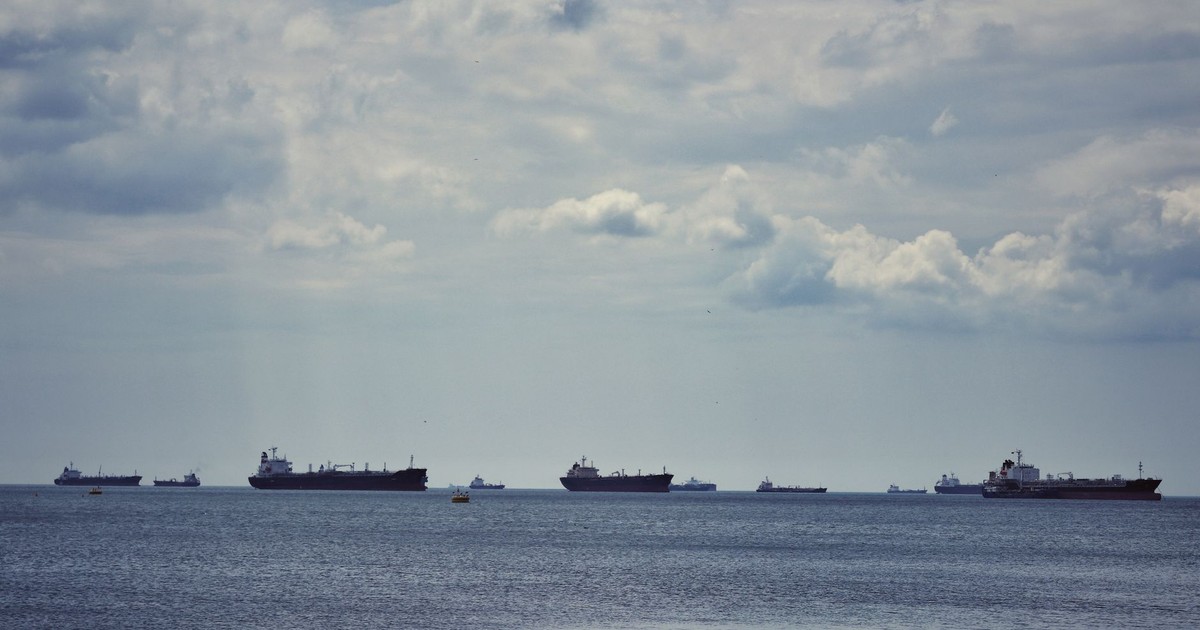
Iran responded to the strikes with missile and drone attacks against Israel, U.S. military bases in the region, and U.S.-allied countries in the Middle East, and by closing the Strait of Hormuz, disrupting global trade. It was a move that Pentagon war games had long considered but that no one had a clean answer for. Around 20% of the world’s oil trade passes through the strait each year. Before the conflict, around 3,000 vessels used the strait each month.
World Trade Organization data shows a 95% reduction in ships carrying crude oil to and from Persian Gulf ports and a 99% reduction in ships carrying LNG since the conflict began. This pushed up global prices, benefiting both Russia and, in the short term, Iran.
Following the closure of the Strait of Hormuz on March 4, 2026, Brent Crude surged past $120 per barrel, and QatarEnergy was forced to declare force majeure on all exports. The International Energy Agency characterized the disruption as “the largest supply disruption in the history of the global oil market.” The Federal Reserve Bank of Dallas has quantified the conflict as producing between two and three times the oil supply disruption of 1973 and 1990 combined, depending on how diverted oil is counted.
The UAE’s state-owned oil company estimates that full flows through Hormuz will not resume until 2027, even if a deal is reached quickly. The economic damage, in other words, is already locked in. The question is only how much longer it compounds.
The Regime That Wouldn’t Fall
The war’s central premise – that a decapitated and bombarded Iran would either surrender, collapse, or welcome a new political order – has not held up. After some 40 days of devastating warfare, thousands of casualties, the loss of the Islamic Republic’s senior leadership and its top commanders, and the destruction of a substantial portion of its military hardware, a fragile ceasefire finally took hold. But although Iran absorbed multiple blows, it managed to preserve and reconstitute itself, selecting a new Supreme Leader in Ayatollah Seyyed Mojtaba Khamenei, replacing fallen commanders, and mobilizing grassroots support.
Even after the killing of Ayatollah Ali Khamenei, U.S. intelligence suggests that the regime is not at risk of collapse. Elite cohesion remains intact, the security apparatus, particularly the Islamic Revolutionary Guards Corps, remains loyal, and the Iranian opposition is divided.
Despite its unpopularity, the Islamic Republic will not collapse easily. Attacks on regime targets risk gutting state authority and undermining its control, opening the possibility of heavy violence directed against civilians in a grim struggle to reassert authority. Washington knew this was the likely outcome, or should have. A country of 90 million people, with a security state built up over four decades, does not fold under airstrikes. At the end of this conflict, the Iranian government will retain the knowledge, and likely some of the key materials, necessary to develop and build nuclear weapons, and perhaps a greater political motivation to do so. Tehran may now see nuclear weapons as essential, an outcome the war has paradoxically incentivized.
The Costs No One Planned For
The damage hasn’t stayed inside the Middle East. The conflict has created strategic space for Russia to regain initiative in Ukraine. As U.S. military attention, intelligence bandwidth, and munitions have been partially diverted to the Middle East, Western focus and political urgency around Ukraine have weakened, allowing Russia to intensify operations and shape the battlefield on more favorable terms. Higher global energy prices are also boosting Russia’s war economy. Russia could accrue between $45 billion and $151 billion in additional budget revenues in 2026, revenues that directly underwrite its operations in Ukraine.
The Gulf states had opposed the war from legitimate concerns about their exposure, the United States’ capacity to defend them, and the risks of protracted instability. Their influence could not overcome Israel’s determination. The war has validated all of those concerns. Iranian missiles and drones paralyzed aspects of life in the Gulf, hit critical infrastructure, and disrupted maritime traffic. America proved unable to defend the Gulf states as well as they had expected.
The war has now passed its 100th day and shows no signs of abating. High expenditure of key munitions in Operation Epic Fury has created a window of vulnerability until inventories return to pre-war levels. That is the kind of detail that doesn’t appear in press briefings about military success.
A Deal That Raises More Questions Than It Answers
As of mid-June 2026, the U.S. and Iran say they have reached an agreement that will take effect imminently, with President Trump saying the Strait of Hormuz will reopen upon signing. According to Iran’s Mehr News Agency, the reported 14-point draft agreement envisages a final settlement on nuclear issues within 60 days.
But the fine print matters enormously here. Almost immediately after details of the framework began emerging, comparisons were made to the Joint Comprehensive Plan of Action, the nuclear agreement negotiated during the Obama administration and finalized in 2015. Supporters of the new framework argue that preventing Iran from developing or obtaining nuclear weapons represents a broader and more ambitious objective than simply limiting enrichment activities. Critics note that broad objectives are only meaningful if enforceable mechanisms accompany them.
Significant questions remain over the Strait of Hormuz, Iran’s nuclear and ballistic missile program, and U.S. sanctions. Israeli Prime Minister Benjamin Netanyahu said that despite the conditional ceasefire, “we still have goals to complete,” and that these would be completed either through diplomacy or by fighting. That is not the language of a conflict drawing to a close.
Read More: Trump Biographer Says ‘Demented’ President Will Go Down as ‘Worst in History’
What Victory Actually Looks Like Here
The current war is a logical continuation of the June 2025 Twelve-Day War, in which Israel, followed by the United States, took out much of Iran’s nuclear assets and air defenses. Trump declared the obliteration of the nuclear program at the time, but the outcome was strategically inconclusive. It was inconclusive then. It is inconclusive now. A pattern like that eventually has to be named for what it is.
The original goals were clear: regime change or unconditional surrender, the permanent destruction of Iran’s nuclear and ballistic missile capability, and a reordered Middle East operating under American primacy. The objective went far beyond behavioral change; it was nothing less than the collapse of the regime or Iran’s forced integration into a regional order under American leadership. None of that happened. What happened instead is a battered but intact Iranian state with a new supreme leader who watched his family killed by American and Israeli strikes, a global energy market that may not stabilize until 2027, a U.S. munitions inventory that needs replenishing, and a nuclear negotiation reset to zero that must now begin in a far more hostile atmosphere than the one that existed on February 27, 2026.
The agreement announced this week may reopen the Strait. It may hold for 60 days, or it may fracture on the same sticking points – uranium stockpiles, enrichment infrastructure, sanctions relief, Lebanon – that have derailed every previous attempt. What it has not done, and cannot do, is undo the strategic logic that brought two sides to war while they were still talking peace. Some of these ambitions go back further than any single administration. Washington has sought to reshape Iran’s political order since 1979. What the 2026 America Iran war demonstrated is that the tools it chose – airstrikes without ground forces, decapitation without a successor plan, deadlines without diplomatic cover – were never going to be enough for what it actually wanted. Naming that is not defeatism. It’s just where the real accounting starts.
AI Disclaimer: This article was created with the assistance of AI tools and reviewed by a human editor.