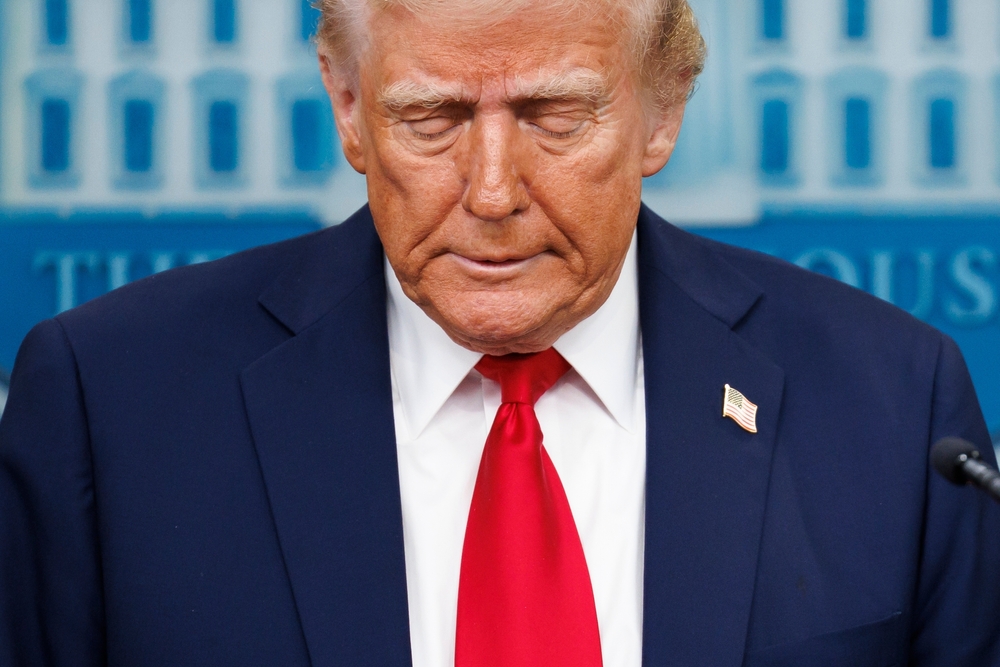

Tony Schwartz, Donald Trump’s former co-author of The Art of the Deal, called the president “demented” and “self-destructive” in a blunt interview on MSNBC on June 11, 2026, and predicted Trump will be remembered as the worst president in American history. That assessment carries a particular weight. Schwartz isn’t a political opponent who came to his view by watching cable news. He is the man who essentially invented the public version of Donald Trump – the one that sold millions of books and made a real estate developer into a national myth.
While writing The Art of the Deal in 1986-87, Schwartz shadowed Trump for nearly 18 months, spending long periods with him in Trump’s office and residence. He watched how the man actually operated, how he talked, how he made decisions, what he cared about and what he didn’t. When Schwartz says something about Trump’s psychology, he’s drawing on a well that most commentators can’t reach.
Schwartz has since said he feels “a deep sense of remorse” for presenting Trump in a way that brought him wider attention and made him more appealing than he actually is. That regret has shaped years of public commentary. The June 11 interview on MSNBC was his most direct yet.
What Schwartz Actually Said
Speaking to host Ari Melber, Schwartz framed Trump’s latest political maneuvers as the behavior of a man driven less by strategy than by compulsion. The immediate trigger for the conversation was Trump’s recent claim that he “loves” inflation – a remark that landed badly with voters already feeling squeezed and one that is threatening to damage his own Republican Party ahead of the November midterms.
Schwartz’s response wasn’t a measured political critique. It was blunter than that. “It’s demented. I mean, it’s so self-destructive,” Schwartz said. He then built an argument around the image of addiction, describing Trump as someone who functions like a “black hole” – a person who consumes approval and validation without ever being satisfied by it.
In Schwartz’s telling, Trump’s political rise created a high that could not be sustained, and his return to the White House may have looked triumphant at first, but the momentum has not lasted. The re-election, in his view, was the peak – and the peak passed fast. Trump has built a political identity around escalation, provocation, and constant reinforcement, but the same habits that delivered power are now, in Schwartz’s view, undermining it.
What comes after the high, Schwartz suggested, is not stability but desperation – a person who has to keep raising the stakes because there’s no other way he knows how to feel the original rush. The remark about loving inflation fits that pattern exactly. It wasn’t strategy. It was someone swinging at attention because swinging at attention is all he’s ever known how to do.
The conclusion Schwartz reached was unambiguous: “He’s going to go down as the worst president in the history of this country,” said Schwartz, the founder of consulting firm the Energy Project. It’s worth being clear about what Schwartz is and isn’t offering here: this is the personal judgment of someone with extraordinary proximity to Trump, not a historian’s systematic verdict. That doesn’t make it dismissible – it makes it a particular and pointed kind of testimony.
Not the Only Voice Making This Case

Schwartz’s assessment sits alongside a growing chorus from the people who have spent the most time studying Trump at close range. Michael Wolff, whose access to Trump’s first White House produced the bestselling Fire and Fury, has been tracking the second term with equal intensity – and arriving at similarly dark conclusions.
On an episode of the Inside Trump’s Head podcast, Wolff said that whether Trump follows through on his threat to destroy “a whole civilization” – a reference to his rhetoric around Iran – or ends up pulling back, he still won’t know how to deal with what comes after. Wolff told co-host Joanna Coles, “I think this situation is the worst situation he has gotten himself into,” adding: “On a tipping point scale, this is very much, very clearly – I think indisputably – the beginning of the end.”
In a more recent episode, Wolff said, “I think there’s a very good chance that it just ends all of a sudden. No warning, no preparation. He falls.” Wolff never clarified exactly what “falls” meant – whether he was describing something physical, political, or something broader. That vagueness is worth flagging: “He falls” is a vivid phrase, but it’s a prediction without a defined target, and should be read as an expression of Wolff’s instinct rather than a forecast with clear parameters.
Two men who have spent more time studying Donald Trump than virtually anyone else in public life are arriving at the same destination by different routes. Schwartz knew Trump before anyone was paying attention. Wolff watched him govern during the first term. Neither is a partisan politician running for something. Both have skin in the game of credibility – if they’re consistently wrong, their careers are the cost.
The Numbers Behind the Verdict
The assessments from Schwartz and Wolff don’t exist in a vacuum. The polling data in 2026 paints a consistent picture of an administration losing altitude fast. Their commentary is subjective and experiential – what the numbers add is a separate, measurable layer of evidence pointing in the same direction.
Trump’s job approval, which stood above 50% when he took office for his second term, has fallen to around 40%, while public disapproval has risen by 13 points – from 44% to 57%. The Brookings Institution noted in April 2026 that key indicators now point to substantial Democratic gains in November, including a new majority in the House, with wider opportunities in the Senate.
An April 2026 survey from Emerson College Polling of likely voters found Democrats with a 10-point advantage on the generic congressional ballot, leading Republicans 50% to 40%. Trump holds a 40% job approval rating and 56% disapproval among likely voters in that survey. The independent voter numbers are particularly striking: every president who triggered a wave midterm loss saw independent approval fall below 40% before Election Day, and Trump’s 34% independent approval puts him well into wave territory, now below the 36% level that preceded Democrats’ 41-seat gain in 2018.
Schwartz said he expects Trump’s worst period is still ahead of him, not behind him. “I think people really – maybe this is my hope – are underestimating how big this blue wave is going to be,” he said. “I think it’s going to be bigger.”
The Irony at the Center of All This

The thing that gives Schwartz’s commentary its edge isn’t just that he knew Trump personally. It’s that he helped create the version of Trump that the public fell in love with. The book became a massive hit that propelled Trump into a new realm of celebrity and told readers of Trump’s shrewd business instincts and deal-making prowess, while downplaying his negative personality traits. The character that filled arenas, that dominated the Republican primary, that won two presidential elections – a significant part of that image traces back to words Schwartz wrote in 1987.
Schwartz has since committed to accepting no further royalties from sales of the book and donated $85,000 to pro-immigration organizations. That kind of gesture suggests something more than a change of political opinion – it suggests a man who has concluded that the thing he built was genuinely harmful and is trying, in whatever way he can, to address that.
When Schwartz calls Trump’s behavior “demented,” he isn’t reaching for a clinical diagnosis. He’s using the word the way a person uses it when they’ve watched someone they once knew do something so far outside rational self-interest that no other word fits. You love inflation? When inflation is what’s most threatening your party’s hold on Congress? That isn’t strategy. That isn’t bravado. It’s something else.
Read More: Trump’s Tariffs Could Cost the Average Household $700 More in 2026
The Weight of the Verdict
Presidential reputations are funny things. They almost never settle during a presidency. Harry Truman left office with approval ratings in the low 20s; he ended up in the top tier of most historical rankings. George W. Bush was handed a legacy-defining moment after September 11 and spent the following years watching it corrode. History has a habit of reaching conclusions that feel premature while they’re forming.
That said, what Schwartz and Wolff are describing isn’t a normal case of contemporaries being too hard on a president whose legacy hasn’t matured yet. They’re identifying something specific: a person whose operating system is fundamentally incompatible with the job of governing, someone whose need for escalation keeps producing outcomes that undermine the very power he craves. The “black hole” metaphor Schwartz used isn’t colorful rhetoric. It’s a description of a closed system – one where everything goes in and nothing comes back out in a form that helps anyone.
The midterms will offer voters their own verdict. Schwartz’s prediction may prove right; it may prove too harsh; history may eventually produce a more complicated accounting. But the man who spent 18 months at Trump’s elbow, who built the literary legend that helped put him in the White House twice, who has spent years since trying to warn anyone who would listen – that man is not hedging anymore. He’s done hedging.
AI Disclaimer: This article was created with the assistance of AI tools and reviewed by a human editor.