The last thing the Easter Egg Roll lawn was built for was children hunting for colored eggs in April sunshine. On June 14, 2026, it held a 92-foot steel structure called “The Claw,” a professional octagon cage, 4,300 seats of VIP seating, corporate branding for Crypto.com, Truth Social, and Trump Coins, and two championship bouts that didn’t finish until after midnight. The occasion was officially the Trump America 250 celebration – a night marking the nation’s semi-quincentennial and, less officially, the president’s 80th birthday. The coincidence of those two dates was not lost on anyone watching.
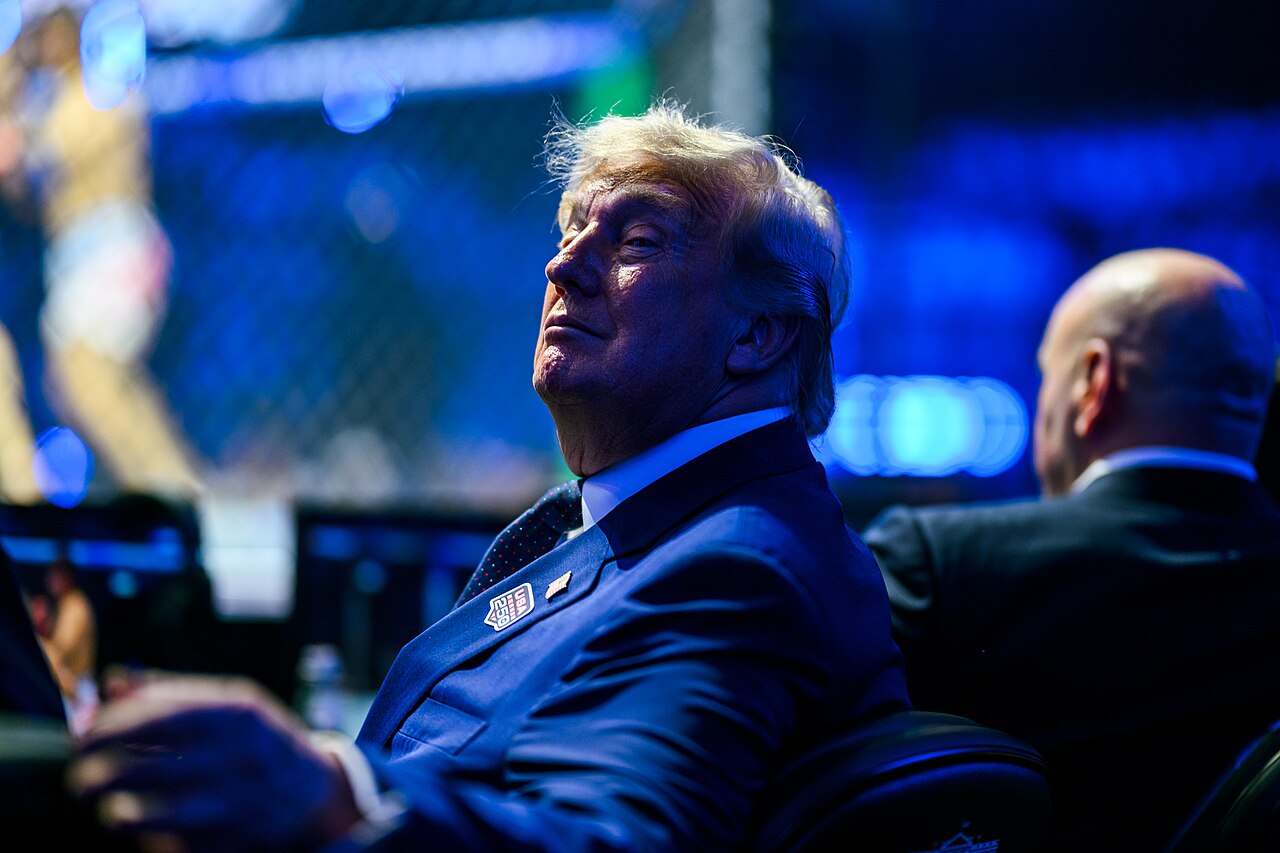
Trump’s walk to the octagon was his shortest yet, from the Oval Office to the South Lawn cage for the event billed as UFC Freedom 250, a mixed martial arts show timed to both his 80th birthday and the nation’s 250th anniversary. The image of a sitting president strolling ringside at his own White House – not as a guest of honor at an event, but as its primary attraction – said something that no press release could walk back.
Trump has been a fan of cage fighting for more than 25 years, rooting on bouts and congratulating winners at UFC events from Florida to New York to New Jersey. But there is a specific kind of statement made when the venue is the South Lawn, when the entire apparatus of the American presidency is mobilized not for a state occasion but for a pay-per-view card, and when the night ends with the new lightweight champion climbing the cage and shaking the president’s hand. That statement is about the nature of the man, and it is not subtle.
What Actually Happened on the South Lawn
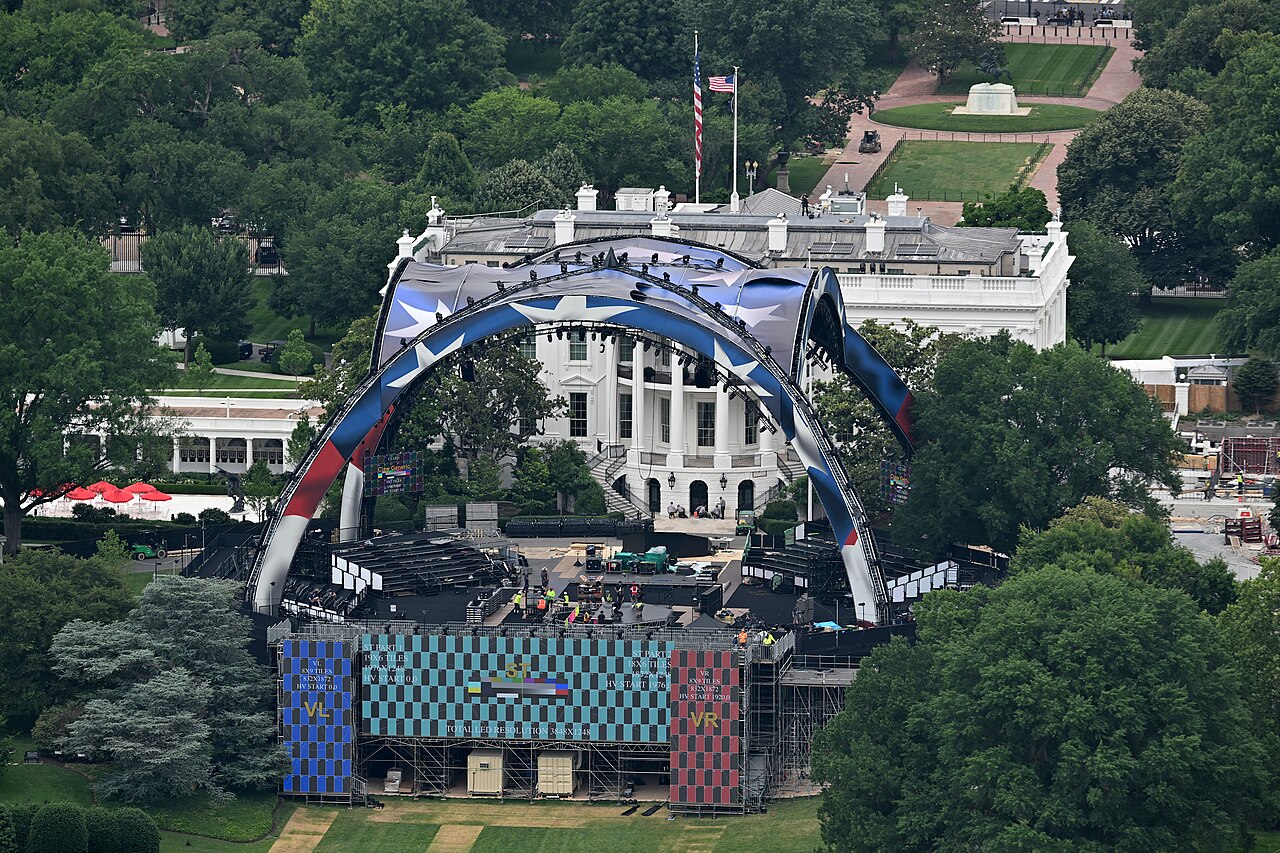
Trump and UFC president Dana White arrived at a 30-foot cage where 14 fighters competed underneath the 92-foot “Claw” structure, set up just steps away from the Oval Office. The event featured musical guests, aerial displays, and a seven-fight card, officially planned to celebrate America’s 250th anniversary.
The card ended after midnight with an upset victory by American Justin Gaethje over Ilia Topuria, giving Gaethje the lightweight title while handing Topuria the first loss of his career. Topuria had already won two divisions while staying undefeated, but Gaethje hurt the champion so badly that after the fourth round, Topuria’s corner stopped the fight rather than send him out for a fifth. Gaethje celebrated by climbing to the top of the octagon cage and backflipping, then shaking President Trump’s hand.
The next morning, Trump posted on Truth Social that “the UFC at the White House last night was incredible,” describing the fighters as “outstanding” and calling the event “one of the most exciting days in the History of our fabled White House.”
The fight drew scrutiny given the emphasis Trump placed on it while grappling with other major issues, including a struggling economy and the effort to finalize a deal to end the U.S. war on Iran. Just hours before the main card began, Trump said that an agreement with Iran was “now complete,” though it wasn’t expected to be formally signed until Friday. In other words: a potential end to a war was announced as a warm-up act.
The Commercial Architecture Underneath the Patriotism
Leading brands underwrote the $60 million event, which transformed the presidential grounds into a commercial venue featuring prominent octagon branding and VIP access. Crypto.com served as the primary co-presenting partner, offering athletes a $1 million bonus pool paid in Cronos digital currency. During the pre-fight walk, ads for Trump Coins, Truth Social, and World Liberty Financial – the Trump family’s crypto coin – served as event sponsors.
The financial relationships knotted around this event are worth spelling out. The arrangement followed a $7.7 billion rights agreement between TKO Group and Paramount Skydance, whose recent merger the Trump administration formally approved. President Trump holds between $15,000 and $50,000 in TKO Group Holdings stock, according to government records. UFC CEO Dana White donated $1 million to a pro-Trump super PAC. One of the event’s sponsors donated $35 million to MAGA, Inc.
The legal complaint filed against the event argued it was less about the America 250 celebration and more about the UFC brand and Trump’s birthday, noting his reported $50,000 investment in TKO Group Holdings as evidence of a conflict of interest. Senator Andy Kim of New Jersey put it more directly. “This isn’t a celebration of America 250,” Kim wrote on X. “This is corruption on full display on the White House lawn. Trump owns shares in both UFC and Paramount.”
The Lawsuit, the Judge, and the Precedent
A lawsuit was filed by the Public Integrity Project in the District of Columbia federal court to stop the event, because the two federal agencies that organized it did not get congressional approval before construction began. The lawsuit contended the administration improperly approved the privately run sporting event on government property, bypassing federal rules and regulations. Plaintiffs also argued the event violated National Park Service regulations that generally prohibit sporting events on federal parkland.
A judge rejected the motion to block the fight, writing that it was not clear the Virginia residents’ interests outweighed the money and time people had contributed to the event. The practical reality was that by the time the legal challenge arrived, “The Claw” was already built. The courts tend not to unmake a done thing, and the administration knew it. Justice Department lawyers argued the challenge was filed too late, after months of planning and construction of a structure on the South Lawn.
The legal outcome was less important than the template it established. A private commercial sports event, underwritten by corporate sponsors and involving presidential financial conflicts, was held on the grounds of the White House with a court’s blessing – because the construction was complete before anyone successfully challenged it.
When the G7 Moved for a Cage Fight
The most revealing detail of the entire episode did not happen at the White House. It happened in France. The annual G7 summit, which brings together leaders from Canada, France, Germany, Italy, Japan, the UK and the U.S., was originally scheduled for June 14-16 in Évian-les-Bains. After Trump announced a UFC fight at the White House on June 14 – his 80th birthday – Paris changed the summit’s dates to avoid conflicting with the event. The G7 summit was rescheduled to June 15-17.
A White House official said the summit was rescheduled to “accommodate” Trump’s schedule. “As the leader of the free world, our partners believed that President Trump’s attendance at the G7 Summit was essential. They kindly shifted dates to accommodate the US President’s schedule,” the official said.
Seven of the world’s most powerful nations rearranged a summit that shapes global trade, security, and diplomatic policy. Because of a birthday party that featured a cage fight. That is not spin or framing. That is what happened.
The America 250 branding – the invocation of 250 years of independence, of founding ideals, of national history – sat on top of all this like a tablecloth over a poker table. Tied to the anniversary, Trump also announced plans to host a rally on the National Mall and scheduled an IndyCar race on the streets of D.C., along with various building projects the president kept bringing up at unrelated official events. The celebration of America’s founding was always going to be a production. The question was whose.
The Rally That Followed the Fight
The morning after the event, Trump announced on Truth Social that the July 4 celebrations at the Lincoln Memorial and Washington Monument, marking the 250th anniversary of the Declaration of Independence, would be a “Trump rally.” He said more than 300 military musicians and ceremonial performers would play patriotic music, along with selections from his personal playlist.
Rolling Stone noted that what should be a communal celebration of 250 years of shared history had been “reduced to another episode of the never-ending Trump Show.” That observation is not particularly partisan. The country’s 250th birthday is genuinely one of the most significant civic milestones in American history. What the administration has built around it is a year-long series of events where the president is the recurring centerpiece rather than the occasion.
According to the White House’s own Freedom 250 page, more than a million people are expected to gather on the National Mall for a full day of programming anchored by keynote remarks from President Trump. The founders get a mention. The president gets the keynote.
What the Public Actually Thought

A Reuters/Ipsos poll found that just 16% of Americans said it was appropriate for Trump to hold the UFC event at the White House. Some 46% said it was inappropriate, and the rest didn’t offer an opinion. Only 31% of Republicans considered it appropriate – a small share given that eight in 10 Republicans approve of Trump’s overall performance. The survey covered 4,531 U.S. adults.
That last number is the one that sticks. Even among the coalition that sent Trump back to the White House and broadly approves of his presidency, fewer than one in three thought this was a good idea. The instinct that the South Lawn might be for something other than a commercial fight card was not a partisan reaction. It was a near-universal one.
For supporters of the event, this misses the point. White House chief of staff Susie Wiles wrote that competition “reminds us of the qualities that keep America strong, like determination and perseverance, and the belief that anything is possible with hard work.” The case for UFC Freedom 250 was that it projected strength, celebrated American sport, and gave the public something to cheer. On those narrow terms, the fight delivered. Justin Gaethje is the lightweight champion. The fireworks went off over the Washington Monument. The crowd chanted.
Read More: 5 U.S.-Made Products That Might Actually Get Cheaper With Tariffs
What This Actually Tells Us
Here is what the Trump America 250 cage fight wasn’t: an aberration. It was a continuation, executed at a scale that only a presidential birthday could justify.
Trump has spent his political career collapsing the distance between the office and the man. Not in the populist way politicians usually mean when they say they’re “just like you,” but in a more specific sense: the institutions, the occasions, the spaces around him are consistently reshaped to reflect his preferences, his businesses, his relationships, and his entertainment instincts. The White House South Lawn is now a venue that has hosted a cage fight sponsored by his own social media platform and a crypto coin his family profits from. The G7 rescheduled its dates. A federal judge let it proceed because the arena was already up.
The America 250 celebration was always going to be large. It was always going to be political, as every presidential administration shapes national commemorations. The particular shape this one took – the commercial entanglements, the birthday branding, the conflicts of interest detailed in a federal lawsuit, the survey results showing two-thirds of his own party uncomfortable with it – tells you something specific about how this presidency understands the relationship between the public trust and the private interest. Some of these conflicts aren’t new, and some of them aren’t going to be resolved by naming them. But the 250th anniversary of the Declaration of Independence will be remembered in part for what surrounded it, and the surrounding was remarkable.
AI Disclaimer: This article was created with the assistance of AI tools and reviewed by a human editor.