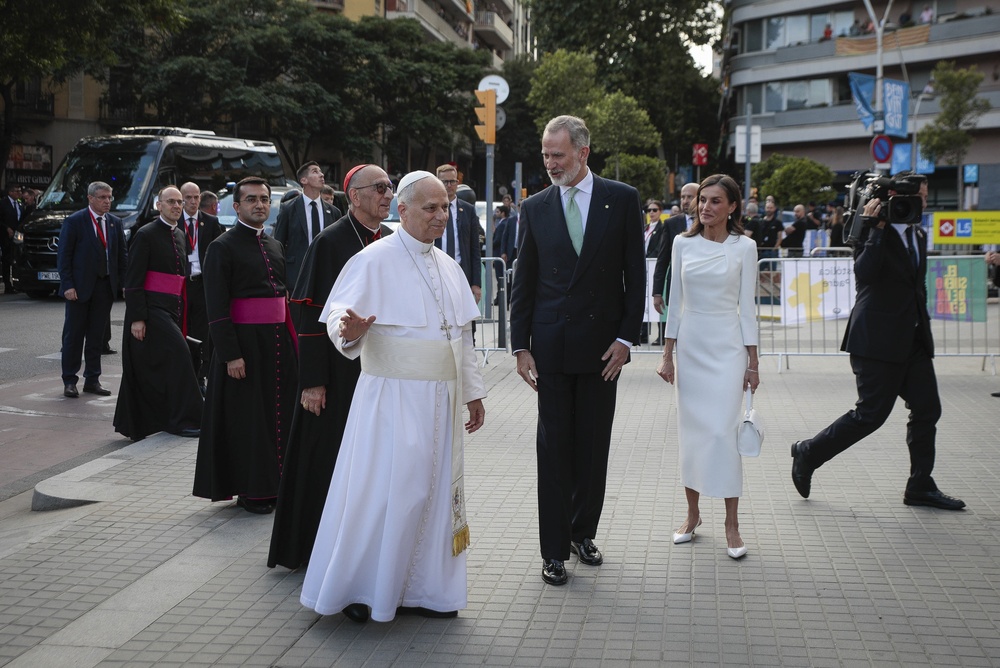

The dress code that applies to women meeting the pope is one of the most consistently enforced protocols in diplomatic life. Long black gown, long sleeves, high neckline, black mantilla. It applies to presidents, prime ministers, queens, and first ladies arriving from every corner of the world. The color signals deference, a deliberate stepping-down in the presence of the Church’s spiritual leader. Departing from it means photographs with captions that follow you for decades.
The Vatican’s dress expectations for papal audiences have their roots in centuries of Catholic court protocol, and the color black has always carried a specific symbolic weight in that context. Wearing white before the pope has historically been the pontiff’s prerogative alone, associated with purity and liturgical joy. For anyone else, arriving in white would read as a claim to equivalence with the man seated across from you. And yet there is a defined group of women for whom that equivalence, or something very close to it, is precisely what the Vatican has chosen to acknowledge.
The tradition has its own French name, its own centuries-long lineage, and its own surprisingly exacting eligibility rules. The Catholic Church has not opened it to every devout queen. It does not flow from personal piety alone, nor from the depth of a country’s Catholic population, nor even from a monarch’s personal relationship with a given pope. The criteria run much closer to history than to faith.
Why Black in the First Place?
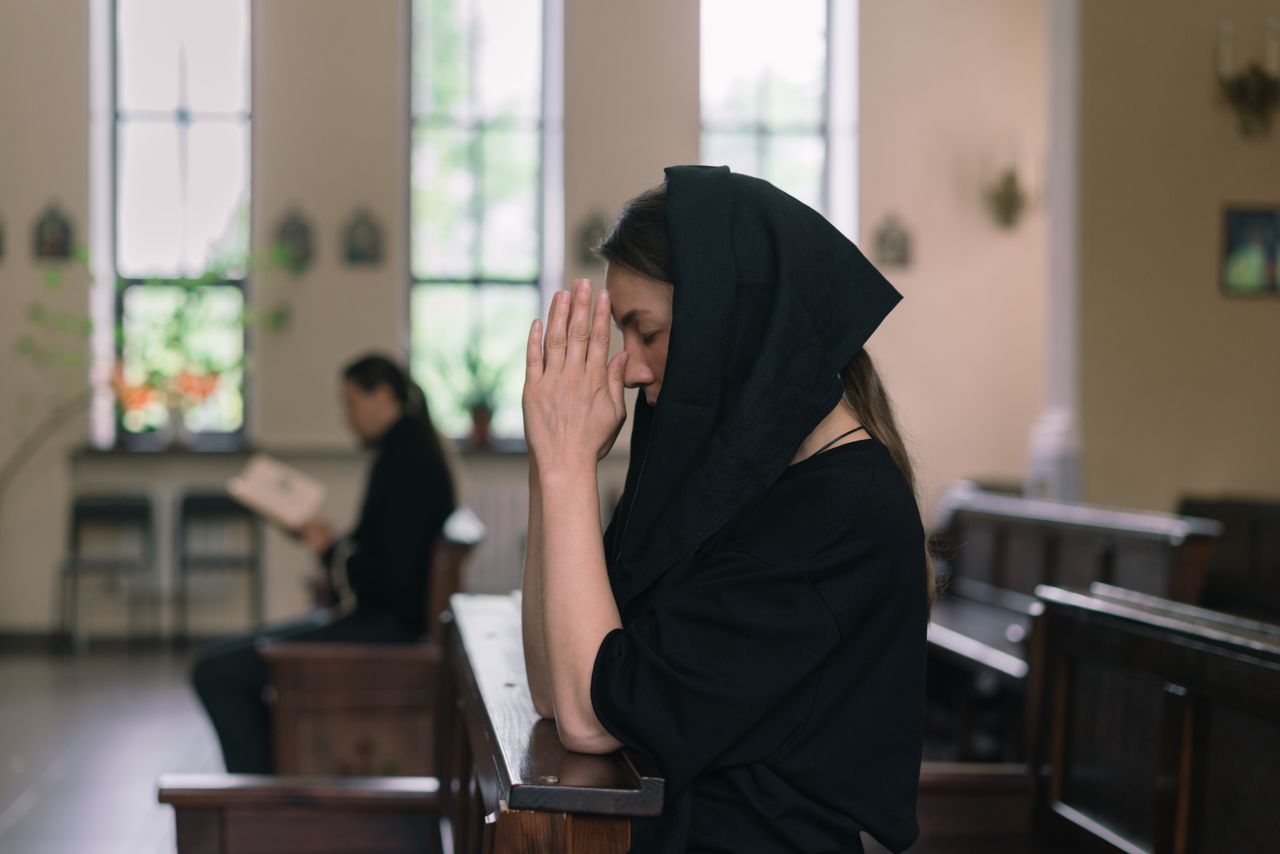
Protocol for papal audiences has traditionally required that women wear long black gowns with a black mantilla, with the color signifying virtues of piety and humility. It is a visual language: a way of stepping down rather than up in the presence of the Church’s spiritual leader. The general Vatican dress code mandates that all non-eligible visitors, including other royals, heads of state, and dignitaries, wear black attire, typically a long-sleeved black dress with a black mantilla, to convey humility and respect toward the pope.
White has historically been reserved for the pope himself and for certain liturgical celebrations. For everyone else, wearing it to a papal audience carries an implication the Vatican has no interest in endorsing, unless that endorsement is precisely what it intends. Since the 1980s, the dress code has become less rigid for general visitors and for some heads of state in informal settings. But for the seven women who hold the privilège du blanc, the tradition runs in the opposite direction: it is more carefully observed, not less.
1. Queen Sofía of Spain
Few women have exercised the privilège du blanc as often, or across as many pontificates, as Queen Sofía. The emeritus queen of Spain has met with the last five popes, from Paul VI to Francis. Five decades of papal audiences, five different men sitting in the chair of St. Peter, and through all of them, the same white dress, the same white mantilla.
Spain’s eligibility for the privilege rests on deep historical roots. The specific historical relationship between a royal house and the Church is part of the calculation, and Spain’s ties to Catholicism run far back, as do those of Belgium and Luxembourg. The Spanish crown and the papacy have been bound together in formal religious alliance for centuries, which is precisely why the privilege transferred cleanly from Sofía to her daughter-in-law when the throne changed hands.
2. Queen Letizia of Spain
The privilege passed to Letizia when she became queen of Spain in 2014, and during her visit with the pope a few months after the proclamation, the newly crowned monarch wore white. It was both a protocol requirement and a statement of continuity, a new queen stepping into a tradition that predates her marriage by centuries.
Queen Letizia exercised the privilege at the inaugural Mass of Pope Leo XIV, alongside Queen Mathilde, Grand Duchess Maria Teresa, and Princess Charlene. In photographs from that morning, the women in white stood out against a crowd of black-clad world leaders, instantly recognizable as holding something the others didn’t.
3. Queen Paola of Belgium
Belgium’s queens can also wear white: the emeritus queen, Paola, and the current queen, Mathilde. Queen Paola, who became queen consort of Belgium in 1993, is the senior of the two in terms of how long the privilege has been in her hands, and she has exercised it across multiple papal meetings over the decades.
The Belgian royal family’s standing with the Vatican traces back through the country’s history as a deeply Catholic nation. The connection isn’t merely personal or spiritual – it’s constitutional and historical, which is why the privilege extends to both the reigning queen and her predecessor. Two women from the same royal house holding the same rare Vatican honor at the same time is unusual enough to stand on its own.
4. Queen Mathilde of Belgium
Pope Francis met with King Philippe and Queen Mathilde of the Belgians at Laeken Castle on September 27, 2024, during his trip to the country. Queen Mathilde, as a Catholic queen, holds the privilège du blanc, meaning she is one of only a few women in the world who can wear white, rather than the customary black, when meeting the pope for an official private audience at the Vatican.
The privilege is tied to the institution, not just the individual. It isn’t a personal honor granted by a pope to a woman he admires – it flows through the royal house, through the marriage, through the country’s centuries-long alignment with Rome. Mathilde holds it because of who she married and where she reigns, as much as because of her own faith. When Paola eventually passes from the picture, the tradition continues seamlessly through Mathilde.
5. Grand Duchess Maria Teresa of Luxembourg
Grand Duchess Maria Teresa has been one of the most visible users of the privilège du blanc over the years. She has frequently exercised the privilege for papal audiences, funerals, inaugurations, and masses, and like Queen Sofía, has often worn a long gown and veil, though she has worn less formal outfits in recent years.
The papal privilege is currently granted only to Catholic royalty from Spain, Luxembourg, Belgium, and Monaco, as well as the House of Savoy. The privilege is not available to Catholic queens from other countries, no matter how devout they personally are. Geography, or more precisely the specific historical relationship between a royal house and the Church, is part of the calculation.
6. Princess Charlene of Monaco
Princess Charlene’s right to wear white is a more recent development than the others on this list. When she married Prince Albert II of Monaco in 2011, it wasn’t immediately clear whether she would enjoy the privilege. Monaco is a Catholic principality, but the granting of the privilege to its princess required formal confirmation from the Vatican.
For the first time in Monégasque history on 12 January 2013, Charlene used the privilege in an audience with Pope Benedict XVI. The Holy See Press Office later issued a press release declaring: “in accordance with prescribed ceremonial of the Vatican for Catholic sovereigns, the princess of Monaco was allowed to dress in white.”
White attire is not required for these women. Queens and princesses who have the “privilege of white” have sometimes preferred not to use this prerogative, choosing to dress in black out of reverence for the Holy Father. The privilège du blanc is permission, not instruction.
7. Princess Marina of Savoy (Naples)
The seventh woman on the list is less well known than the reigning queens and princesses, but her presence is historically significant. Princess Marina is a member of the House of Savoy, the dynasty that ruled Italy as a unified kingdom from 1861 until the end of the monarchy in 1946. She is currently among the seven royal women who enjoy the privilège du blanc: Queen Sofía and Queen Letizia of Spain; Queen Mathilde and Queen Paola of Belgium; Grand Duchess Maria Teresa of Luxembourg; Princess Charlene of Monaco; and Princess Marina of Savoy.
Her place on the list runs through the House of Savoy’s deep institutional ties with the Catholic Church, connections that predate modern Italy and run through centuries of Italian unification politics. Though Italy is no longer a monarchy, the Vatican’s recognition of those historical bonds persists in the form of this protocol.
A notable recent development: Grand Duchess Stéphanie of Luxembourg exercised her right for the first time when she and her husband, Grand Duke Guillaume, visited Vatican City on January 23 and met with Pope Leo XIV. Stéphanie wore a white gown with a white lace covering. Stéphanie became Grand Duchess in October 2020, when Guillaume succeeded his father. As the wife of the reigning monarch of Luxembourg, she gained the right to the privilège du blanc, though she had not previously worn white in a papal audience until this visit. The privilege, in other words, is still gaining new holders.
The Women Who Don’t Qualify – and Why
The eligibility rules are precise enough that being a Catholic queen simply isn’t sufficient. Queen Máxima of the Netherlands was raised as a Roman Catholic and remains one, but her husband, King Willem-Alexander, is Protestant, as are his family and their children, which forecloses her eligibility entirely. At Pope Leo XIV’s inaugural Mass in May 2025, the contrast was visible: queens in white on one side of the front row, Máxima in black among them, her faith unchanged but her eligibility foreclosed by her marriage.
Queen Masenate Mohato Seeiso of Lesotho and the Princess of Liechtenstein are both Catholic but have not been granted the honor by the Vatican. Their countries, however Catholic in population and tradition, don’t carry the specific historical relationship with the Holy See that Spain, Belgium, Luxembourg, and Monaco do.
Queen Camilla chose a black silk dress by Fiona Clare and a matching mantilla by Philip Treacy during a state visit with King Charles in October. The privilège du blanc extends only to royal women who are members of the Catholic Church, which rules out the Anglican queen consort entirely.
Read More: The Real Story of Mary, Mother of Jesus, Is Not What We Were Taught
The Weight of White
The privilège du blanc is worth understanding beyond the fashion angle because of what it tells you about how the Vatican maintains its own hierarchy alongside the world’s political hierarchies. Every president and prime minister stands before the pope in black. Every queen consort whose country didn’t forge the right kind of alliance with Rome centuries ago stands in black too. The seven women in white aren’t just dressed differently – they are being acknowledged as members of a very specific club, one defined not by personal piety or current politics but by history.
The tradition remains in effect despite papal protocol having changed over the years. Dress codes for papal audiences have loosened considerably since the mid-20th century. Heads of state wear what they wear. The rigid old requirements have softened. And yet this one has held. The reason isn’t really about clothing at all – it’s a piece of institutional memory, a way the Church acknowledges which royal houses it considers its own, encoded in the color of a dress and the drape of a mantilla. Some of that history is diplomatic, some of it is devotional, and some of it goes back so far that the reasoning has been absorbed into ceremony itself. The seven women who wear white before the pope carry all of it with them, whether they think about it that way or not.
AI Disclaimer: This article was created with the assistance of AI tools and reviewed by a human editor.