

The word “dangerous” has never been applied evenly. Throughout recorded history, it got attached to women who commanded armies, controlled empires, ran the seas, or simply refused to disappear when powerful men wanted them to. Some earned the label through genuinely ruthless acts. Others earned it by being too smart, too ambitious, or too difficult to control in a world that wasn’t built for women like them.
Almost every woman on this list has been subject to serious reappraisal. Their reputations were often built by enemies, rivals, and men with strong reasons to make sure posterity remembered them as threats rather than leaders. Centuries after they lived, historians still argue over which ones were genuinely dangerous and which ones were made to look that way.
These ten women, drawn from across the centuries and from every corner of the globe, each left a mark on history that their own societies struggled to contain. Some seized power. Some survived it. A few did both.
1. Cleopatra VII (69 – 30 BC)
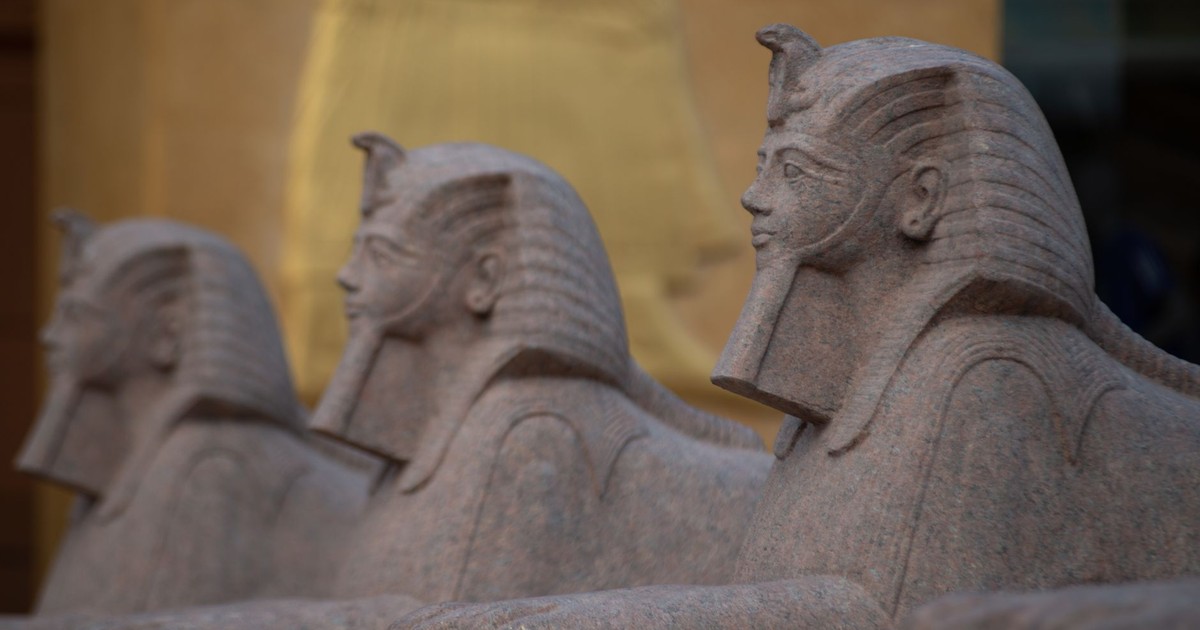
The last pharaoh of the Ptolemaic Kingdom of Egypt was a well-educated, savvy politician and diplomat who spoke nine languages and constantly had to negotiate tensions with Rome. Modern portrayals tend to reduce her to her relationships with Julius Caesar and Mark Antony, which is a little like summarizing Napoleon’s career by noting he once had a cold at Waterloo. The political brain was the point.
These women first accessed their power through men – fathers, husbands, brothers and sons. But they stayed in power, sometimes for decades, through a mix of ambition, intelligence, political savvy, generosity, guile and, in some cases, a ruthless and bloody drive for power. Cleopatra fits this pattern precisely. She was involved in the removal of her own brother from co-rulership, allied herself strategically with the most powerful men in the Roman world, and kept Egypt independent for years when Rome was swallowing everything in its path.
Her danger to Rome wasn’t romantic. It was geopolitical. Egypt was the largest supplier of grain to Rome, making political stability there a matter of vital concern to the empire. A sovereign queen who controlled that supply and held her own against two of Rome’s most formidable generals was a genuine threat to Roman dominance. Cleopatra was thirty-nine when she died in 30 BC, having been a queen for twenty-two years. Egypt became a Roman province within months of her death. That’s how much of Egypt’s independence she personally held together.
2. Boudicca (died AD 60/61)

Queen Boudicca of the ancient British Iceni tribe became a leader for her people and a legendary figure and cultural symbol through revolt, violence and war. When her husband Prasutagus died, the Romans annexed his kingdom, humiliated his family, and plundered the chief tribesmen. What followed was one of the most serious military crises Rome ever faced on British soil.
With the Roman provincial governor Suetonius Paulinus leading a military campaign in Wales, Boudicca raised a rebellion throughout East Anglia. The insurgents burned Camulodunum, Verulamium, and the trading centre of Londinium, along with several military posts.
The Romans had assumed that humiliating Boudicca would break her. Researchers who have studied the records concluded the case against her was built on flimsy foundations – but for Boudicca herself, the Roman response had the opposite effect. She united multiple tribes under a single banner and came close to driving Rome out of Britain entirely. Boudicca’s fate after the crushing defeat of her army is unclear: Tacitus claims she poisoned herself, while Dio states she died of illness. Either way, her campaign forced Rome to fundamentally reconsider how it governed the island. That’s not a minor footnote. That’s a legacy.
3. Wu Zetian (624 – 705 AD)
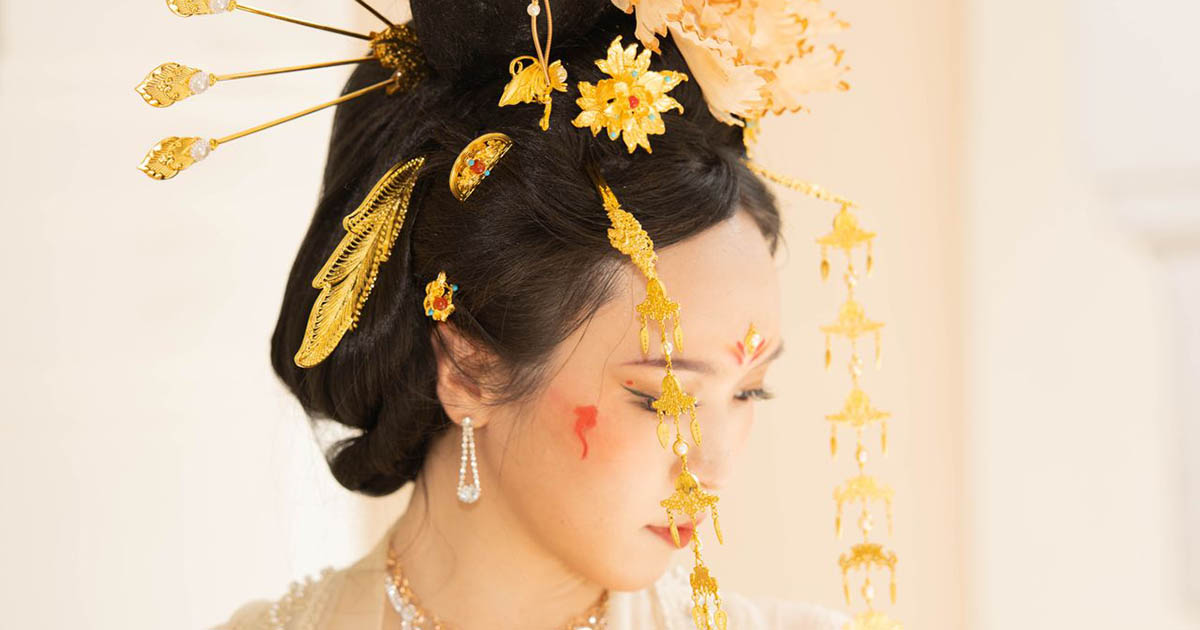
Wu Zetian first came to the imperial court as a concubine to Emperor Taizong, and when he died, married his ninth son and successor, Emperor Gaozong. Well-educated, charismatic and ambitious, she was more decisive and proactive than her husband and was considered the real power behind the throne. She would eventually stop pretending otherwise.
After her youngest son took the throne, she forced him to step down so she could reign alone. Wu Zetian had her secret police spy on her adversaries, planted false accusations of witchcraft, and exiled or executed those who spoke against her. Under her leadership, China expanded its territory by invading its neighbors, and its culture and economy thrived.
The accusations against her have always been worth reading carefully. She was a ruthless politician, however, there is no reason to believe that some of the wilder claims of cruelty are true. She was an efficient ruler, no more tyrannical than her male counterparts, and her reign was peaceful and prosperous. Her gender and her support of Buddhism made her an easy target for the Confucians who compiled China’s imperial chronicles. The only woman to rule China as emperor in her own right remains, centuries later, one of history’s most argued-over figures.
4. Agrippina the Younger (15 – 59 AD)
Agrippina the Younger, a Roman empress from the Julio-Claudian dynasty, was known for her political influence and ambition. She strategically manipulated Roman state affairs to ensure her son Nero’s succession to the throne. Described as ruthless and domineering, her tactics allowed her to maintain control and power.
She was the sister of Emperor Caligula, the wife of Emperor Claudius, and the mother of Emperor Nero. In an era when Roman women held no formal political power, Agrippina managed to be the most politically influential person in Rome across three successive reigns. She reportedly had coins minted with her own image alongside Claudius, an almost unprecedented public assertion of co-rule.
Modern historians give her a bit of a break, noting that powerful women were seen as a threat in Rome and so she might have been treated unfairly by her biographers, who saw her as the stereotypical Evil Woman. Whether the ancient sources overstated her ruthlessness or not, the basic fact of her career is extraordinary: a woman who never held an official title nonetheless shaped the Roman Empire for decades. She later fell out of favor with Nero and was killed. Even that ending is disputed – ancient sources disagree on almost every detail.
5. Elizabeth I of England (1533 – 1603)
Elizabeth inherited a throne her own father had declared her unfit to hold, survived a childhood that included imprisonment in the Tower of London, and went on to reign for 44 years over one of England’s most politically turbulent periods. Her “danger” was the particular kind that comes from being a woman who refuses to be managed.
She never married, which by itself was an act of radical defiance in a world that defined a ruling queen’s primary job as producing heirs. Her government and foreign advisors spent decades trying to pressure, cajole, and outmaneuver her into choosing a husband. She outmaneuvered them all. The Spanish Armada’s defeat in 1588 – widely seen as the defining moment of her reign – was not just a military victory. It was proof that a woman could command a nation’s war effort and win. She is probably the figure on this list least likely to be called dangerous and most likely to be called formidable, but in the 16th century, those words meant the same thing.
6. Mary Queen of Scots (1542 – 1587)
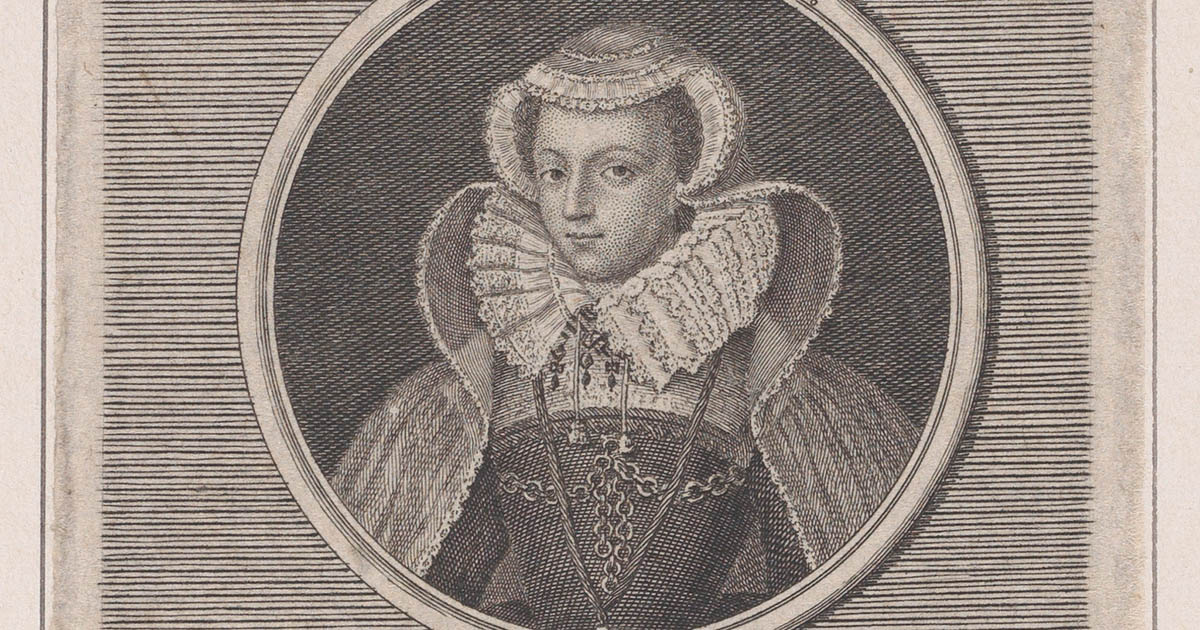
Mary’s life has attracted more drama per decade than almost any other historical figure, which makes it easy to miss the genuinely remarkable political story underneath it. She became Queen of Scotland when she was six days old. She was Queen of France briefly through her first marriage. She then returned to Scotland to rule in her own right, which went badly in ways that are still argued about.
She was eventually forced to abdicate and fled to England, where she spent the next 19 years under house arrest as a guest-prisoner of her cousin, Elizabeth I. The reason Elizabeth kept her alive for so long rather than simply executing her is a window into just how threatening Mary remained even in captivity: she was a Catholic with a strong claim to the English throne, which made her a permanent rallying point for anyone who wanted to replace Elizabeth. In 1587, after evidence emerged of a plot against Elizabeth’s life in which Mary was allegedly involved, Elizabeth finally signed the death warrant.
Whether Mary was genuinely dangerous or simply a woman whose very existence was a threat regardless of her actions is a question historians have never fully resolved.
7. Elizabeth Báthory (1560 – 1614)
Báthory was born into prominent Protestant nobility in Hungary. Her family controlled Transylvania, and her uncle, Stephen Báthory, was king of Poland. She was, by birth and marriage, one of the most powerful women in Central Europe. Despite the accusations against her, Elizabeth was also known for her intelligence and education, being fluent in multiple languages and well-versed in literature and politics.
Elizabeth Báthory was a Hungarian countess accused of crimes against young women in the 16th and 17th centuries. While historical documents seem to support the accusations against her, modern research indicates that Báthory, a powerful woman, might have been the target of politically motivated slander that allowed relatives to appropriate her lands.
On December 30, 1609, Elizabeth Báthory and her servants were arrested. The servants, accused of aiding her, were put on trial in 1611; three were executed. Báthory, though never tried, was confined to Castle Čachtice, reportedly kept in a bricked-in room. There she died in 1614 at age 54. The full truth of her case remains genuinely unresolved. She was a wealthy widow with powerful enemies, and her imprisonment conveniently solved several political and financial problems for the people who arranged it. That doesn’t make the accounts against her false. It just means they can’t be read as straightforwardly as they often are.
8. Mata Hari (1876 – 1917)
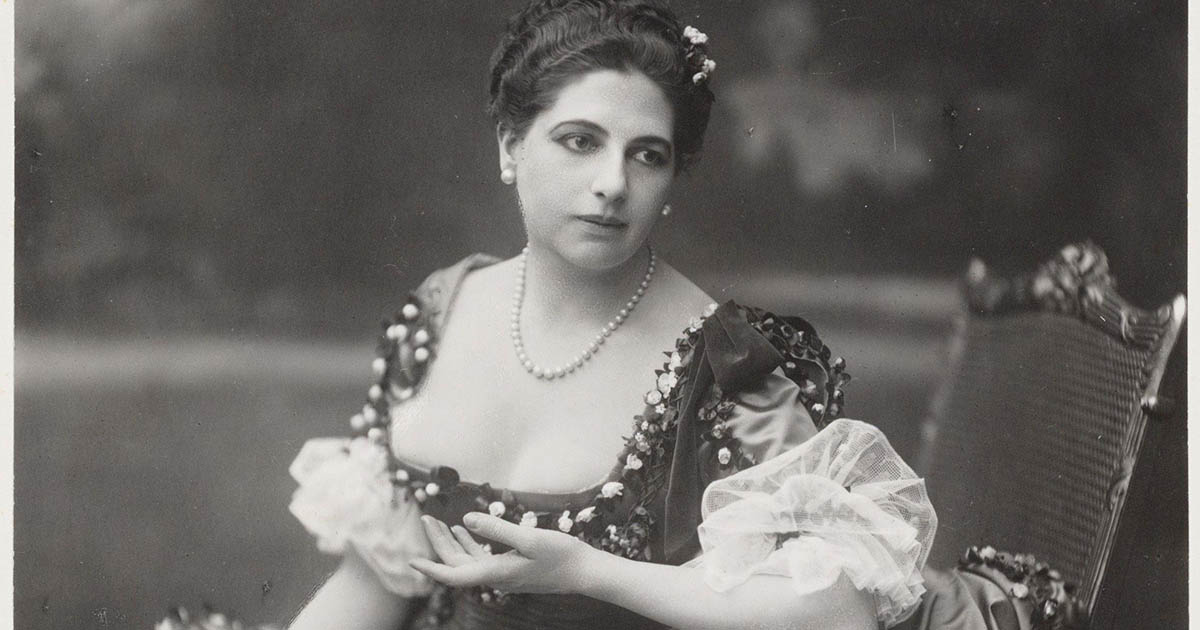
Born Margaretha Zelle in the Netherlands, she reinvented herself in Paris as Mata Hari, an “Eastern” dancer draped provocatively in veils and jewels, cultivating an image of mystery and sensuality that captivated Europe. She was performing a persona, and she performed it so convincingly that it eventually became impossible to separate from the person underneath.
Mata Hari lived a life wrapped in mystery, glamour, and suspicion. As a dancer and courtesan during World War I, she moved in elite circles, gaining access to powerful men and sensitive information. Accused of being a double agent, she was ultimately executed for espionage by the French. Whether she was truly guilty or simply a convenient scapegoat remains debated.
By 1917, France was reeling from catastrophic losses on the Western Front. Morale was collapsing, and mutinies were spreading through the ranks. The government desperately needed to demonstrate that it was rooting out traitors and protecting national security. A foreign-born, liberated woman who socialized with officers from multiple nations fit the profile of a spy so neatly that it may have been enough on its own to seal her fate. She was shot by firing squad in October 1917. The documents from her trial were sealed for several decades, but many of the researchers who have since studied them have concluded that the case against her was flimsy – most of the prosecution’s evidence was circumstantial, and her defense attorney was prevented from introducing witnesses.
9. Ching Shih (c.1775 – 1844)
The fearsome female pirate Ching Shih lived and pillaged during China’s Qing Dynasty and is considered to have been the most successful pirate in history. Born into poverty before becoming a concubine, she was plucked out of relative obscurity by Cheng I, a notorious pirate who operated in the South China Sea.
After her husband’s death in 1807, she didn’t mourn the fleet away. She took it. As head of the Red Flag Fleet, she commanded over 1,800 pirate ships and an estimated 80,000 pirates. In comparison, Blackbeard commanded four ships and 300 pirates within the same century. She ran what amounted to a maritime government: taxes collected, trade regulated, strict codes of conduct enforced across her entire operation.
The Red Flag Fleet under Ching Shih’s rule went undefeated, despite attempts by Qing dynasty officials, the Portuguese navy, and the East India Company to vanquish it. After three years of notoriety on the high seas, Ching Shih finally retired in 1810 by accepting an offer of amnesty from the Chinese government. She died in 1844, at the age of 69. The pirates who came before her – men like Blackbeard, Bartholomew Roberts, Henry Morgan – are far better known in the Western world. Not one of them built anything close to what she built, and not one of them retired on their own terms.
10. Bonnie Parker (1910 – 1934)
Bonnie Parker was 19 when she met Clyde Barrow. By the time the pair were ambushed and killed by law enforcement in Louisiana in May 1934, they had spent two years as the most wanted criminals in America and the most written-about people in the country’s newspapers. The crimes were real: robberies, car thefts, run-ins that turned lethal. But the cultural phenomenon that Bonnie became went far beyond any criminal ledger.
She wrote poetry. She sent it to newspapers. She was photographed with guns and cigars and a wide, unafraid grin, and the images landed at a moment when millions of Americans were watching banks foreclose on their homes and had complicated feelings about outlaws. The Depression turned Bonnie and Clyde into folk anti-heroes almost against everyone’s wishes, including the law’s. More than just a criminal, she became a cultural icon whose story captured the public’s imagination, blending rebellion, romance, and defiance.
What made her particularly unsettling to contemporary authorities wasn’t just that a woman was participating in the crimes. It was that she seemed to be enjoying it – or at least was willing to be seen that way. Her danger wasn’t only in her actions, but in her image. She represented a refusal to accept the limitations placed on her, and that made her both captivating and unsettling to the society watching.
Read More: The Real Story of Mary, Mother of Jesus, Is Not What We Were Taught
The Complicated Weight of That Word

Run the list back through and you’ll notice something. Almost every woman here has been subject to reappraisal. The historical record on Báthory was almost certainly shaped by her enemies. Wu Zetian’s cruelty was almost certainly exaggerated by the scholars who disapproved of her. Mata Hari was arguably convicted on evidence that wouldn’t survive a careful afternoon in a courtroom. Even Boudicca’s story comes filtered through the Roman writers who were, to put it gently, not neutral parties.
That doesn’t mean these women were all misunderstood innocents. Some of them were genuinely formidable and genuinely ruthless, and the two things aren’t mutually exclusive. The label “dangerous” has always told you at least as much about the person applying it as about the woman receiving it. Powerful women have been threatening to their societies since long before any of the ten on this list were born – not because of what they did, but because of what they proved was possible. Some of these patterns go back further than any individual life does. That’s usually where the more honest conversation starts.