

The number everyone keeps quoting is $1.87 trillion. That’s how much Americans collectively owe in student loan debt right now. It’s a number so large it barely registers until you zoom in to the individual level: 47% of bachelor’s degree recipients from the class of 2024 left school with student loan debt, carrying an average of $29,560 in federal and private loans. That’s the starting line. Before the first paycheck, before the first rent payment, before anything.
For a long time, the math still seemed to work out. Get the degree, get the job, pay off the debt, build the life. But the calculation has stopped adding up for a growing number of Americans, and the evidence is turning up in enrollment patterns. According to the National Student Clearinghouse, fall 2025 undergraduate enrollment grew 2.0%, but that growth is concentrated almost entirely in community colleges and certificate programs rather than four-year degree programs, with analysts pointing to rising tuition costs and a growing preference for trades paying $50,000 or more without any debt as key drivers of where students are redirecting.
That preference isn’t just a rejection of college. It’s an embrace of something else. Apprenticeships, certifications, trade programs, and licenses are building genuine careers for people who want to start earning now rather than graduating into debt later. The jobs waiting on the other side aren’t backup plans. Some of them are among the fastest-growing and best-compensated in the country.
Why the Shift Is Happening Now

Americans owe $1.87 trillion in federal and private student loan debt as of the first quarter of 2026, up 3.3% from the same period in 2025, according to LendingTree’s 2026 data. The delinquency picture is worse. A full 10.34% of student loans are 90 days or more delinquent as of early 2026, up from 7.74% a year earlier and 6.16% during the pandemic.
The ripple effects reach well beyond the loan balance itself. Among Millennials, 83% with student loan debt have delayed major investments like buying a home or starting a business, and 72% have made employment decisions based on their debt burden. That’s not a personal finance problem. That’s a structural life delay, measured in years.
Against that backdrop, union apprenticeships and earn-while-you-learn models have become genuinely attractive alternatives to college, and employers are competing hard to fill the gap. More than 439,000 skilled trades positions currently sit unfilled across the country, and that shortage is pushing wages upward. The following are the careers Americans are actively choosing instead of a four-year degree.
Electrician

The demand for electricians has less to do with economic cycles than it does with the physical world’s need for power. Electricians stay near the top of every in-demand trades list because nearly every major trend depends on electrical work, from new construction and renovations to data centers, grid upgrades, and facility expansions.
The Bureau of Labor Statistics projects electrician employment growth of 9% from 2024 to 2034, with roughly 81,000 openings per year on average. The median annual salary sits at $62,350, with the top 10% of earners clearing $106,030. Entry typically comes through a four-to-five year apprenticeship that pays while you learn, so a person starting at 18 can be a licensed journeyman electrician before their former classmates have finished paying off their undergraduate degree.
Data centers, EV manufacturing plants, and industrial facilities are actively competing for industrial electricians, and specialists in PLCs (programmable logic controllers, the computers that run industrial equipment) or high-voltage systems can clear six figures within five to seven years.
HVAC Technician
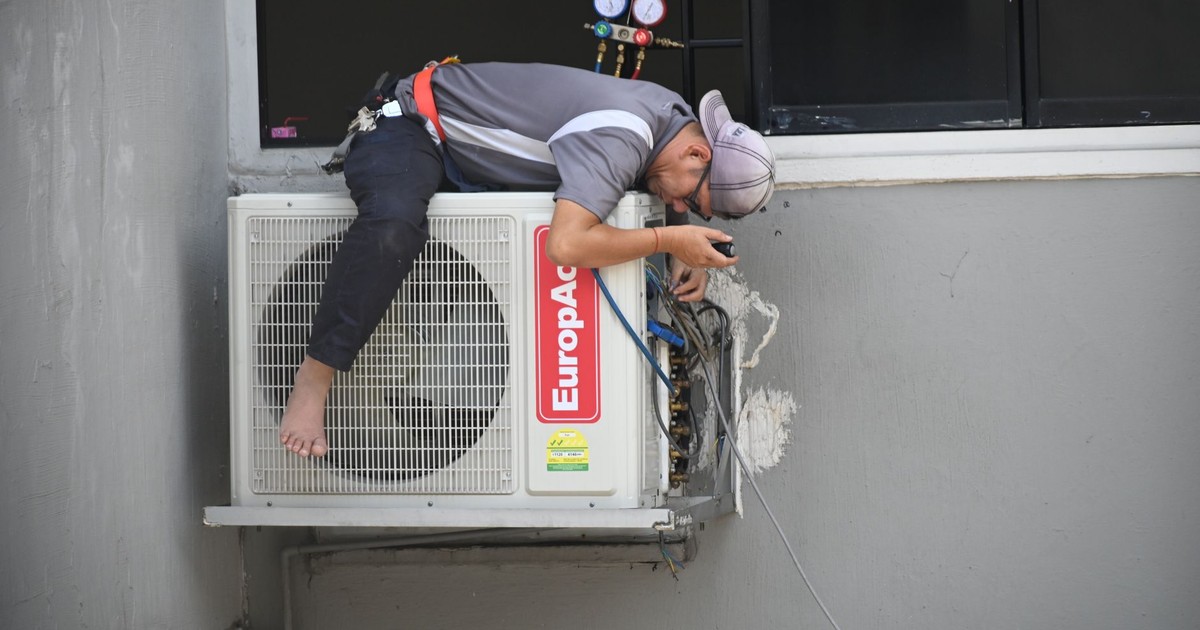
HVAC is a durable career path because heating and cooling are not optional in most buildings, and systems constantly need maintenance, repair, and replacement. The job exists in every climate, every season, and in every kind of structure from single-family homes to hospital complexes.
Demand is accelerating with extreme weather events and the rapid build-out of AI infrastructure, both of which require intensive climate control. Commercial HVAC technicians earn substantially more than residential ones. The median salary for HVAC technicians sits at around $59,000, but technicians with EPA refrigerant handling certifications regularly earn $70,000 or more. The broader HVAC market is projected to hit $38 billion by 2030, with smart thermostat and smart HVAC demand accelerating under new EPA refrigerant rules.
Training programs typically run seven to eleven months, meaning someone can be working and earning within a year of starting, without carrying a dollar of college debt.
Elevator and Escalator Installer and Repairer

This is the job most people overlook, and it’s the highest-paying trade on the list by a significant margin. BLS May 2025 data puts elevator and escalator mechanics at a median salary of $109,910, with the top 10% clearing $158,890 a year, all through apprenticeships or short technical programs with no college degree required.
Urban growth means a steady pipeline of high-rises, escalators, and aging systems requiring repair, and unions like the International Union of Elevator Constructors (IUEC) offer paid four-to-five year apprenticeships with no tuition, job security, and pensions. The work requires both electrical and hands-on mechanical expertise, which is part of why it pays so well, but the path to it remains fully accessible without a four-year degree.
Electrical Power-Line Installer and Repairer

Electrical power-line installer and repairer is one of the highest-compensated jobs without a college degree in the country. BLS May 2025 data puts the median for electrical lineworkers at $95,320, with job growth projected at 7% over 2024 levels. Clean power initiatives and the surge in EV adoption are both contributing factors.
This is physically demanding work that involves operating at height in variable weather conditions, which is reflected in the pay. Entry is typically through a lineworker apprenticeship run through utilities or the International Brotherhood of Electrical Workers (IBEW), and skilled trades apprenticeships provide a structured path that pays from day one.
Plumber, Pipefitter, and Steamfitter

Plumbing is one of the few careers immune to automation, outsourcing, and economic downturns. Pipes burst in recessions. Buildings need water in any economy. The BLS projects plumbers, pipefitters, and steamfitters to grow 4% from 2024 to 2034, with about 44,000 openings per year on average.
The median annual salary for plumbers is $62,970, with the top 10% earning over $105,150. Master plumbers with their own businesses routinely exceed that. The entry path is a four-to-five year apprenticeship through the United Association of Plumbers and Pipefitters, which covers the full cost of training while paying wages throughout.
Wind Turbine Technician

Wind turbine technician is the fastest-growing job in the United States by any measure. The BLS projects 60% job growth over the next decade, the highest rate of any occupation it tracks. The offshore wind industry is expanding rapidly along the Atlantic coast with major projects in New York, Massachusetts, New Jersey, and Virginia, and wind techs are in genuine shortage across wind-strong states like Texas, Iowa, and Kansas.
Entry typically requires completing a 12-to-18 month wind tech certificate program at a community or technical college, after which graduates apply directly to employers like GE Vernova, Vestas, Siemens Gamesa, or NextEra Energy. Entry-level salaries run $55,000 to $70,000, with strong advancement potential as the sector continues its expansion. The main caveat is practical: comfort with heights is a genuine requirement, not a preference. Turbines are serviced 200 to 300 feet in the air.
Solar Photovoltaic Installer

Solar PV installer combines one of the shortest training timelines on this list with one of the strongest growth projections. The BLS lists solar photovoltaic installers as one of the fastest-growing occupations, with a 2024 median pay of $51,860 and a training timeline accessible to new entrants. The BLS projects 42% job growth for solar installers through 2034, with about 28,600 jobs in the sector currently.
Solar installer roles feed adjacent opportunities including electrical apprenticeship hours, solar operations and maintenance, battery storage support, and commissioning work, which means a person who starts installing panels at 19 has a realistic path into the broader electrical and energy storage trades within a few years.
Aircraft and Avionics Mechanic

Aircraft and avionics mechanics install, inspect, and repair the systems that keep aircraft flight-ready. Most airlines don’t require a college degree, but they do require FAA certification, which involves completing airline-provided training and passing exams.
The median annual salary for aircraft and avionics mechanics sits at $79,140. Training through an FAA-approved aviation maintenance school typically takes 18 to 24 months. The work is technically demanding, detail-oriented, and carries genuine responsibility, and the compensation reflects that. For someone with strong aptitude for precision work who doesn’t want to spend four years in a classroom, this is one of the highest-earning short-training options available.
Commercial Truck Driver (CDL-A)

Commercial truck drivers with a Class A CDL (commercial driver’s license, the license that covers large combination vehicles like tractor-trailers) remain essential to every corner of the American economy. CDL-A training programs run eight to ten weeks, making it one of the fastest entry points on this list.
Wholesale and manufacturing sales, which overlaps with driver sales representative routes, carries a median annual salary of $74,100. Experienced long-haul CDL-A drivers frequently earn in that range and above, with owner-operators who drive their own rigs earning significantly more. The trade-off is time away from home, which is a real factor for anyone with young children or other caregiving responsibilities, but the earning curve is fast and the barrier to entry is genuinely low.
Welder

Welding sits at the intersection of manufacturing, construction, aerospace, oil and gas, and infrastructure. It’s one of the fastest trades to enter, with certificate programs available at community and vocational colleges in six to twelve months. Earning potential depends heavily on specialization: a structural welder working on bridges or high-rises earns far more than someone doing light manufacturing work.
Salaries vary by specialization, union affiliation, and experience level, and licensed tradespeople with additional certifications or business ownership can exceed $100,000 annually. Underwater welders and pipeline welders are among the highest-paid workers in any trade, though those specializations require years of additional experience and certification.
Read More: Little Known Careers That Pay Well (And No One Applies For)
What the Numbers Don’t Say

For most of the last three decades, the cultural default was clear: college first, career second. Trades were presented as the fallback option, the path for people who weren’t academically inclined or didn’t have other options. That framing was classist, and rising education costs combined with a decade of workforce shortages have exposed just how thin the argument always was.
None of the jobs on this list are easy, and none of them are passive. An electrician spends their career pulling wire through tight spaces in new construction, troubleshooting live panels, and managing the liability that comes with licensed work. A wind turbine technician climbs 280 feet in winter. A plumber gets called at midnight when a pipe bursts. The training takes real commitment and the work continues to demand it for the length of a career.
But someone who starts a four-year electrical apprenticeship at 22 finishes at 26 as a licensed journeyman, debt-free, earning a salary competitive with most college graduates, and with a decade of compounding retirement savings ahead compared to someone still paying down $40,000 in student loans. The jobs without a college degree that attract the most attention right now aren’t the ones paying the least. They’re the ones where the gap between what you owe and what you earn is essentially zero from the first day of work. That gap, more than any individual salary figure, is what’s pulling people in.
AI Disclaimer: This article was created with the assistance of AI tools and reviewed by a human editor.