

Most people, when asked to name a high-paying career, reach for the same tired shortlist: doctor, lawyer, software engineer, and finance. It’s the list everyone was handed in high school, and nobody has questioned it since. But there’s a parallel world of little-known careers that pay well, and the reason no one talks about them isn’t that they’re secret. It’s just that they don’t have a PR department. They don’t show up in college guidance brochures. They don’t trend on LinkedIn. They sit quietly in the corners of the labor market, paying six-figure salaries to a small group of people who happened to stumble across them.
If you’ve ever felt like the conventional career ladder was the only one in the building, this list is worth your time. These aren’t gimmicky, one-in-a-million outliers. They’re occupations with verified salary data, real hiring pipelines, and in several cases, more open positions than there are qualified people to fill them. Some require no college degree at all. Others need a certification you can earn in under a year. The one thing they all share is that most people have never seriously considered them, and that low competition is a significant part of why the pay stays so high.
The High-Paying Jobs Most People Don’t Know About
1. Underwater Welder
If you ask someone to picture a welder, they probably imagine a workshop and a face shield. They don’t imagine the bottom of the ocean. Underwater welders work in one of the most demanding physical environments on earth, maintaining and constructing pipelines, offshore platforms, ship hulls, and subsea infrastructure. The work is skilled, physically taxing, and genuinely risky, which is precisely why it pays so well.
According to Salary.com data as of October 2025, the average salary for an underwater welder in the United States is $57,182 per year, or approximately $27 per hour. That’s the starting point. Experienced commercial diving welders can earn between $80,000 and over $150,000 annually, with saturation divers, those who work at extreme depths in pressurized habitats, commanding even higher pay.
Getting there typically involves training as a commercial diver first, then adding welding certification. It’s a combination that takes roughly two to three years of serious training, but it produces one of the most genuinely unusual and well-paying jobs in any skilled trade. The pool of people qualified to do this work is small by design, and industry demand from offshore energy and marine construction isn’t going away.
2. Hazardous Materials Removal Worker
This is one of those overlooked high-salary jobs that most people never encounter because the job itself is designed to be invisible. Hazmat workers remove asbestos, lead, radioactive waste, and other dangerous substances from buildings, soil, and water. The work is essential, regulated, and deeply unglamorous, which is exactly why there’s never a flood of applicants.
According to the U.S. Bureau of Labor Statistics, the median annual wage for hazardous materials removal workers was $48,490 as of May 2024. Employment is projected to grow 1 percent from 2024 to 2034, a slower rate than average, but the consistently small applicant pool means well-paying jobs that are always hiring persist in this field, particularly in regions with aging infrastructure and active environmental remediation projects.
Entry typically requires certification rather than a four-year degree. OSHA-regulated training and hazmat-specific credentials are the gatekeepers here, not a university admissions office.

3. Blimp Pilot
This one tends to get a reaction. Most people didn’t know blimp pilots existed as a distinct profession, let alone a lucrative one. But blimps and airships serve a real and ongoing commercial function: aerial advertising, broadcast coverage of major sporting events, and surveillance applications. The fleet is small, the number of licensed pilots is tiny, and the pay reflects that scarcity.
As of April 2026, ZipRecruiter reports the average annual pay for a blimp pilot in the United States is $130,916, or approximately $62.94 per hour. Most blimp pilot salaries fall between $100,000 at the 25th percentile and $155,000 at the 75th percentile, with top earners reaching $175,000 annually.
Becoming one requires a commercial pilot’s license, a lighter-than-air rating, and enough flight hours to satisfy FAA requirements, but there’s no reason this career needs to be a mystery. It’s one of the more striking examples of careers with little competition and good salaries, hidden simply because no one thinks to look.
4. Voice Actor
Voice acting is one of those careers that sounds too good to be true until you look at the actual numbers. Audiobooks, animated series, video games, corporate training videos, documentary narration, radio ads, and AI voice-model work all require human voices, and the demand has grown steadily as content production has scaled.
According to ZipRecruiter data from April 2026, the average annual pay for a voice actor in the United States is $100,198 a year. Glassdoor puts the average at $85,315 per year, with top earners at the 90th percentile reporting up to $151,138.
The range is wide because the field rewards specialization. The complexity and range of a project play a significant role, with work like creating multiple character voices and dynamic emotional range for an audiobook demanding considerably more skill than recording a short commercial tagline. For those who build a specialty, whether in character voice work, technical narration, or long-form audiobook performance, this is a hidden gem career that’s fully accessible from a home recording setup and requires zero college debt to enter.
5. Nuclear Reactor Operator
This may be the highest-paying production job most people have never considered applying for. Nuclear reactor operators control and monitor the equipment that generates power in nuclear plants: reactors, turbines, generators, and cooling systems. They respond to abnormalities, execute emergency procedures, and keep one of the most complex energy systems ever built running safely.
The average salary for a nuclear reactor operator in the United States was $108,673 as of March 2026, with most falling between $101,345 and $115,559 annually, according to Salary.com. For context, BLS wage data from April 2025 identified nuclear power reactor operators as the highest-paid production occupation in the country, with a mean wage of $122,830.
The path in doesn’t require a traditional four-year degree. Nuclear power plant operators typically receive formal technical training and must then pass a licensing exam administered by the U.S. Nuclear Regulatory Commission (NRC). Once licensed, they’re authorized to directly control equipment that affects the power of the reactor. It’s a rigorous process, but the ongoing low competition in this field is partly because most people rule it out before they’ve ever looked at the requirements.
6. Elevator and Escalator Installer and Repairer
There are roughly 1.1 million elevators in the United States. Every one of them needs to be installed, maintained, and eventually repaired, and every one of those tasks needs to be done by a licensed mechanic. This is a trade that sits at the intersection of electrical work, hydraulics, and computer systems, and it pays accordingly.
The median annual wage for elevator and escalator installers and repairers was $106,580 in May 2024, according to the Bureau of Labor Statistics. That figure is more than double the national median across all occupations. Employment in the field is projected to grow 5 percent from 2024 to 2034, faster than the average for all occupations.
Nearly all elevator mechanics learn the trade through an apprenticeship, and most states require workers to be licensed. The apprenticeship typically takes four to five years and combines classroom instruction with paid on-the-job training, meaning workers earn a salary while they learn. The catch, such as it is, is that getting into an apprenticeship is competitive, with aptitude tests and interviews filtering applicants. But for anyone willing to go through the process, this is a careers-with-little-competition-and-good-salaries scenario that’s entirely available without a university degree.
7. Wind Turbine Technician
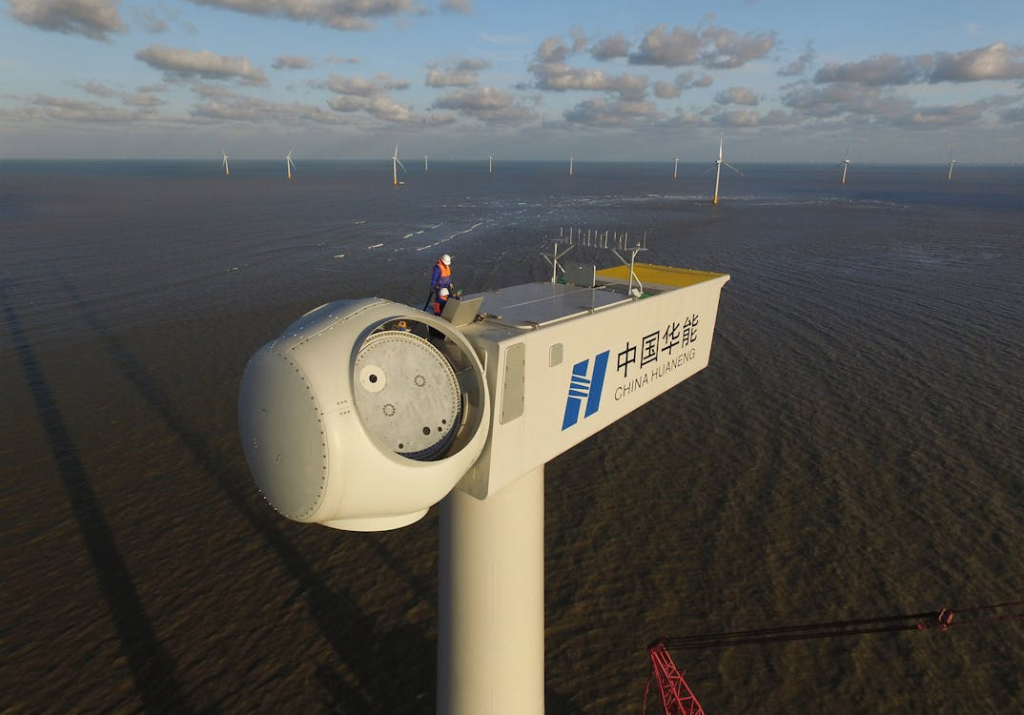
The fastest-growing occupation in the American economy is also one of the least discussed at career fairs. Wind turbine technicians maintain, inspect, and repair wind turbines, climbing towers that can rise over 200 feet, working in the nacelle at the top, and troubleshooting systems that blend mechanical, electrical, and hydraulic components.
The median annual wage for wind turbine technicians was $62,580 in May 2024, according to the BLS. With over five years of experience, technicians can expect to earn $70,000 to $90,000 annually, with highly specialized or lead roles potentially exceeding $100,000, especially in offshore wind. More compelling than the current salary is the trajectory: employment of wind turbine technicians is projected to grow 50 percent from 2024 to 2034, with about 2,300 openings projected each year.
A postsecondary nondegree certificate is typically all that’s needed to enter the field. Several community colleges and technical schools offer programs that can be completed in under a year. For anyone looking for well-paying jobs that are always hiring in a field with genuine long-term security, this one belongs on the short list.
8. Forensic Accountant
Forensic accountants are the people who follow the money when something has gone wrong. They investigate financial fraud, support litigation, work with law enforcement agencies, assist insurance companies with claims analysis, and appear in court as expert witnesses. The work requires the same analytical skills as traditional accounting but applies them to genuinely high-stakes situations.
According to Glassdoor data from April 2026, the average salary for a forensic accountant in the United States is $104,741 per year, with top earners at the 90th percentile reporting up to $165,524. The Association of Certified Fraud Examiners found that CFE-certified professionals earned 32% more than non-certified colleagues in 2024.
Forensic accountants commonly work for insurance companies, banks, government agencies, and police forces, and some operate independent practices. Unlike many careers on this list, this one does typically require a degree in accounting, but it’s a field within accounting that most accounting graduates never explore. The combination of financial expertise and investigative work attracts a narrower pool of applicants, which keeps salaries well above standard accounting roles.
What Jobs Pay Well But Are Easy to Get Into?
That’s a question worth addressing directly, because it’s the wrong frame slightly. A better question is: what jobs pay well with minimal gatekeeping? The answer from this list is elevator mechanics and wind turbine technicians, both of which can be entered through an apprenticeship or a short technical certificate. Hazmat removal and underwater welding are accessible through targeted certification programs. Voice acting requires no formal credentials at all, just skill, equipment, and a willingness to build a portfolio.
None of these careers requires four years of debt-financed education. They do require training, commitment, and in several cases a tolerance for physical or technical work that most people prefer to avoid. That discomfort, rather than any real barrier to entry, is what keeps the competition low and the wages high.
What Careers Are in High Demand but with a low supply of Workers?
Wind turbine technicians are the clearest example right now. A 50 percent growth projection over the next decade, combined with a relatively small existing workforce of around 13,600 workers, means the field is structurally undersupplied. Elevator mechanics face a similar situation: the construction industry broadly is facing a workforce crunch, and elevator installation is no exception, with labor shortages extending project timelines as recently as March 2026. Nuclear reactor operators, underwater welders, and hazmat specialists all work in fields where the combination of specialized training requirements and unglamorous working conditions keeps the talent pool smaller than demand would otherwise justify.
The Bottom Line on Little-Known Careers That Pay Well
The gap between what these careers pay and how many people pursue them is not an accident. These are underrated careers with good pay that exist in the places most people never look, because they fall outside the familiar narrative of what a successful professional career is supposed to look like.
What the data shows is that the highest paying jobs no one talks about are often the ones that require specific skills, some tolerance for unusual working conditions, or the willingness to follow a non-traditional path into the field. The reward for doing that is not just a strong salary. It’s a career with genuine job security, low competition from other applicants, and in several cases, the satisfaction of doing work that is visibly essential to the world around you.
If any of the careers on this list sparked genuine curiosity, the next step is simple: find the licensing body or apprenticeship program, look at entry requirements, and talk to someone who already does the work. Most of these fields have small, tight-knit professional communities and are far more accessible than they appear from the outside. The information was always there. The only thing missing was someone putting it in front of you.
A.I. Disclaimer: This article was created with AI assistance and edited by a human for accuracy and clarity.