

The conventional wisdom on midterm elections runs something like this: the party in the White House loses ground, the opposition raises money, enthusiasm surges among the angry, and by November the president’s party takes a beating. Rinse and repeat. Except the 2026 US midterms are shaping up to be more complicated, more structurally peculiar, and potentially more consequential than the tidy story most people expect. What happens in November is already rewriting the starting conditions for 2028 in ways that nobody has fully mapped out yet.
The first thing to understand is that this isn’t a normal midterm. Republicans are defending a House majority so thin it barely qualifies as one, and the structural forces arrayed against them are about as unfavorable as they can get without being catastrophic. Democrats need to flip just five seats to take the House. That’s not a high bar. And yet the redistricting battles currently underway may be in the process of quietly rerouting what should be a clear Democratic path.
Then there’s the Senate, where the math looks entirely different, and where the most dramatic individual races of the cycle are hiding in plain sight. And somewhere underneath all of it, 2028 is already being negotiated, with candidates circling, donors organizing, and early-state polling already sketching out a race that won’t officially begin until after November.
The House: History and Headwinds
The historical pattern is stark: the president’s party loses an average of 27 House seats in midterm elections, a pattern that has held in 37 of the past 40 midterm cycles, driven by differential turnout, voter dissatisfaction with the party in power, and voters’ recurring impulse to install a check on whoever holds the presidency. For a Republican Party holding a majority of roughly two seats, that average is not a number they want to be looking at.
The polling environment makes it worse. The April 2026 Emerson College Polling national survey of likely voters found Democrats with a 10-point advantage on the generic congressional ballot, leading Republicans 50% to 40%. Emerson’s executive director Spencer Kimball attributed the Democratic strength to gains among Hispanic voters, women, and independents, with independents breaking for Democrats by 19 points. President Trump’s job approval in the same survey sat at 40%, with 56% disapproving.
That approval number matters enormously. Presidents below 45% approval have historically lost an average of 37 House seats. Trump currently sits at approximately 39%.
At this same point in the 2018 cycle, Silver Bulletin’s generic ballot tracker showed a virtually identical Democratic advantage, and Democrats went on to pick up 40 seats in the House. The comparison is uncomfortable for Republicans, though not quite as clean as it sounds, for one significant reason.
The Redistricting Wild Card

The mid-decade congressional redistricting war started by Texas is ongoing, and Republicans have benefited from a Supreme Court decision in Louisiana v. Callais that undermined the Voting Rights Act’s role in protecting minority representation. In Southern states like Tennessee, Alabama, Louisiana, and Mississippi, several Black Democratic incumbents face being gerrymandered out of their majority-Black districts.
With dismal approval ratings and historical winds blowing against Republicans, Trump pressured GOP-led states to redraw congressional maps mid-decade to help preserve the party’s narrow majority, sparking a redistricting arms race as Democratic-run states followed suit to offset some of those potential gains. Virginia, for instance, approved a new map that could have allowed Democrats to gain up to four House seats currently held by Republicans. But the Virginia Supreme Court struck it down, handing those gains back to the GOP.
According to CNN’s redistricting tracker, Republicans may have drawn as many as 15 to 17 new winnable districts for themselves, while Democrats drew five, all in California. Under those conditions, Democrats could now effectively need to flip more than 10 seats rather than the three they would have needed before the redistricting wave. The net effect is two competing forces running in opposite directions simultaneously. National political conditions are as favorable to Democrats as they’ve been since 2018. But the actual map of competitive districts has been narrowed by legal and legislative maneuvering, creating a situation where a party can lead by 7 to 10 points nationally and still fall short of a majority. Whether redistricting eats enough into that to keep Republicans in control is the question the House race hinges on.
The Senate: Different Math, Different Stakes
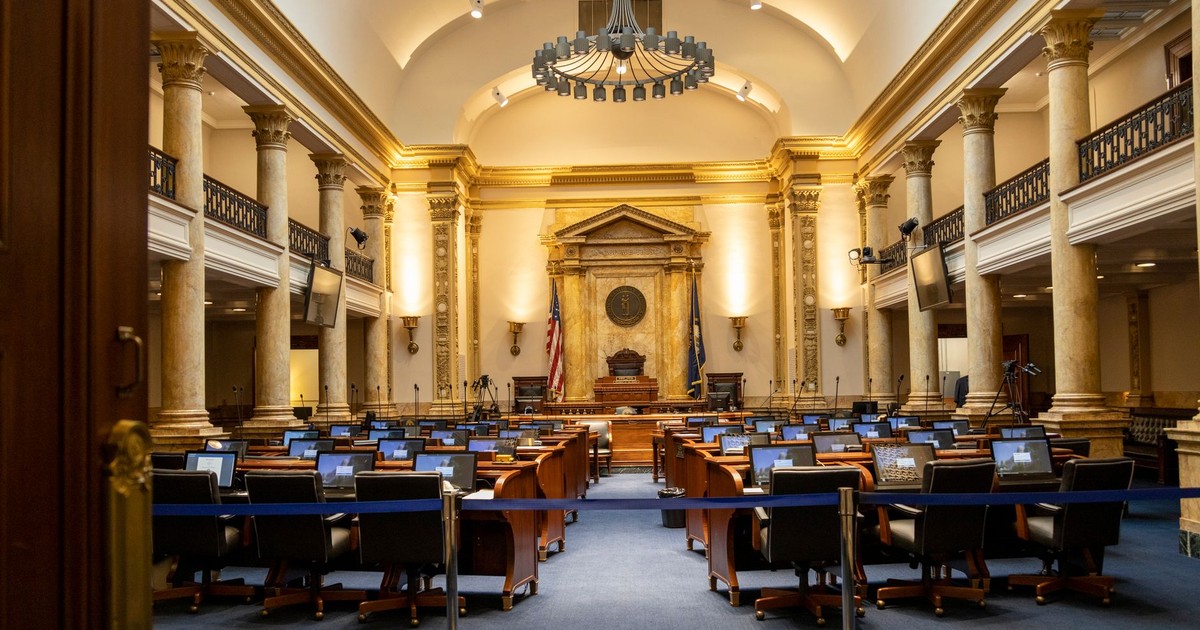
The Senate is where US midterms election predictions get genuinely counterintuitive. Democrats need to flip four seats to win a majority, a larger target than the House, and on a map that makes it structurally harder.
Of the 34 Senate seats on the 2026 ballot, Democrats and independents caucusing with them defend 23, while Republicans defend just 11. That map is considered favorable for Republicans. In an environment where Democrats are looking at large gains, they still have to defend far more seats than they’re attacking.
According to analysis from the Brookings Institution, Democrats have a serious chance of flipping Republican-held seats in North Carolina, Maine, Alaska, and Ohio, while Iowa and Texas are no longer regarded as sure bets for Republicans.
On the defensive side, Georgia Senator Jon Ossoff is up for re-election and could be vulnerable after a narrow victory six years ago, while Michigan is a target as well, especially after Senator Gary Peters announced his retirement. Democrats need to hold both of those while simultaneously picking up four seats on Republican turf. That’s a tall order, even in a good environment.
Maine is the race that political watchers are watching most closely. Democrats face an internal question about whether establishment-backed Governor Janet Mills or progressive Graham Platner, an oyster farmer and combat veteran, represents the better chance against incumbent Susan Collins. Some in the party worry Platner’s past controversial social media posts could jeopardize the seat, while others on the left see Mills, who would be the oldest freshman senator ever elected, as unlikely to excite base voters.
As of May 2026, eleven senators, four Democrats and seven Republicans, have announced they will not seek reelection, the most in a single election cycle since 1996, when 13 senators did not run again. Open seats change the calculus. When incumbents aren’t on the ballot, decades of personal goodwill and local brand identity disappear, and national conditions flood in to fill the space.
The Economy Is Doing the Damage

Trump’s economic numbers are where the political damage has been most concentrated. Compared to April 2025, disapproval of Trump’s handling of the economy increased by seven points to 56%, disapproval on foreign policy rose eight points to 54%, and disapproval of immigration policy increased nine points to 53%. A year ago, immigration was a relative strength. Now it’s nearly as underwater as everything else.
Trump’s decision to attack Iran, which led to a wider and longer war than anticipated, has compounded the public’s sense that presidential priorities are not aligned with theirs. For the first time since 2010, Democrats are more trusted than Republicans to handle the economy, a reversal that would have seemed implausible at almost any point in the past decade.
In six special elections for the House conducted between 2025 and 2026, the swing toward Democratic candidates averaged about 15 points, while Democratic gubernatorial candidates in New Jersey and Virginia averaged a 14-point swing. Special elections are imperfect predictors of general elections, turnout is lower, local factors are amplified, and the energized base dominates. But swings of that size don’t usually reverse entirely by November.
2028: The Race That’s Already Running
This year’s midterms will not only shape the final two years of Donald Trump’s presidency. A series of races will either preserve Republican majorities in Congress or give Democrats control of either the US House or Senate. Along the way, the 2026 results will determine what politics after Trump might start to look like, with 2028 being the first national election in 16 years without Trump’s name on the ballot.
On the Republican side, the 2028 field has already taken shape, even if no one has announced. JD Vance leads the Republican primary field, and he led the CPAC straw poll with 61% support, solidifying his position as the top Republican primary contender early in the cycle. Marco Rubio has stated he would not enter the 2028 presidential race if Vance were to run, reinforcing the idea that Vance is the likely Republican nominee.
The Democratic picture is considerably messier, which is often how Democratic primaries begin. California Governor Gavin Newsom has signaled serious interest and has been described by rival Democratic operatives as the early frontrunner. But early New Hampshire primary polling tells a more complicated story.
A February 2026 survey from the University of New Hampshire Survey Center found Pete Buttigieg, Gavin Newsom, and Alexandria Ocasio-Cortez leading among likely Democratic primary voters, while Vance holds a considerable lead over all prospective rivals for the 2028 Republican nomination. Among likely Democratic primary voters in New Hampshire, Buttigieg is the most popular potential candidate, with 81% holding a favorable opinion of him, and he leads the Democratic field with 20% support, ahead of Newsom and Ocasio-Cortez at 15% each. On the Republican side, Vance commands 53% support, with Nikki Haley a distant second at 9%.
Alexandria Ocasio-Cortez has also topped some Democratic primary polls, though she has said she is not ruling out a 2028 run while generating mixed reactions among moderate voters. Kamala Harris, meanwhile, opted not to run for California governor in 2026, leaving open the possibility of another presidential bid. During her book tour, she told the Associated Press she had not decided whether to run. Whether her 2028 decision comes before or after November will itself send a signal about how Democrats read the midterm results.
Read More: Trump’s approval hits a record low on his 500th day back in office
What the Forecasters Keep Getting Wrong
The pattern that keeps tripping up US midterms election predictions, cycle after cycle, is the assumption that structural indicators translate cleanly into seats. They don’t. The 2022 midterms were supposed to be a Republican wave; they weren’t. The 2018 midterms overperformed expectations in the House but underperformed them in the Senate. The national environment sets the ceiling, but the map, the candidates, the redistricting fights, and the turnout machine determine what actually happens.
Democratic voters are expressing higher enthusiasm than Republicans and independents for 2026, with 47% of Democrats saying they are more enthusiastic about voting than usual, compared with 34% of Republicans. Enthusiasm gaps matter in midterms, where turnout differentials often determine close races more than persuasion does. But enthusiasm measured in May doesn’t always survive intact to November.
The redistricting war is the single variable most likely to scramble the conventional forecast. Democrats could win the national environment by a significant margin and still find the map won’t give them enough districts where that margin is relevant. Republicans drew themselves far more new winnable seats than Democrats did, and the Supreme Court’s gutting of Voting Rights Act protections handed them additional openings in the South that weren’t in play six months ago.
The Senate is where the cycle’s most instructive test will play out. Key indicators now point to substantial Democratic gains in November, including a new majority in the House, while regaining control of the Senate remains at best an even-money bet. A House gain without a Senate majority is a partial win, with real consequences for investigations and legislation, but without the clean narrative either party would prefer heading into 2028.
What November Is Really Deciding

What November produces will set the terms for everything that follows. A Democratic House majority opens up committee investigations, subpoena power, and a unified opposition message heading into 2028. A Republican hold in both chambers, even by narrower margins, validates the redistricting strategy and gives Trump’s party more latitude in his final two years.
For the 2028 field, the midterm results are a sorting mechanism. If Democrats win the House, Newsom’s “stepping into the void” framing becomes more urgent, because there’s a party with momentum that needs a presidential candidate to channel it. If Republicans hold, Vance’s path to the nomination gets smoother because there’s less pressure on the party to re-examine its direction.
JD Vance has acknowledged giving consideration to running for president in 2028, saying he wants to focus on winning the midterms first. In May 2026, Vance travelled to early primary state Iowa to support a vulnerable Republican congressman, an activity that looked a lot like groundwork for a campaign that doesn’t yet officially exist.
Midterm elections have a way of being both decisive and ambiguous at the same time. The structural case for significant Democratic gains in November is about as strong as it gets without being airtight. The redistricting case for a narrower playing field is also real. Both things are true simultaneously, which is why anyone offering a confident prediction right now is probably telling you more about their priors than about the data.
AI Disclaimer: This article was created with the assistance of AI tools and reviewed by a human editor.