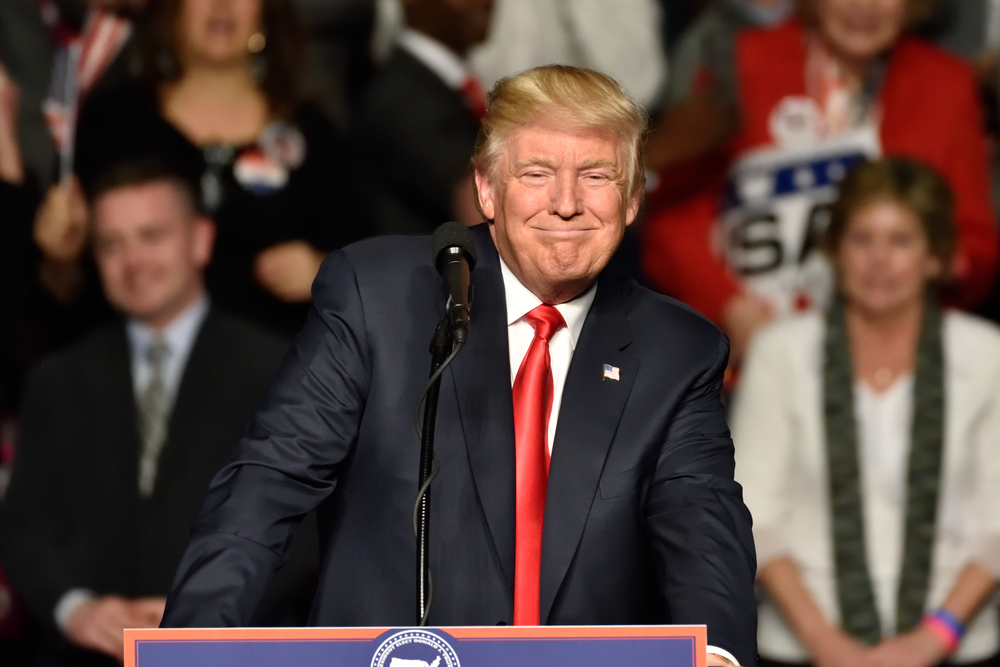

The number 35 has become a recurring, unwelcome fixture in the Trump White House. Not in policy, not in legislation, but in polling. On the 500th day of his second term, June 5, 2026, the president’s approval rating sits at 35 percent. That figure is not just another data point in a bad week. It is a record.
What makes it stranger still is that Trump returned to the White House in January 2025 on the back of a genuine mandate, with an economy that was his calling card and a coalition that had just handed him a second term. Sixteen months later, the floor has dropped out.
The descent has not been a sudden cliff. It has been a long, winding slide, with each dip finding a new bottom, each new poll arriving with a figure that would have seemed improbable at the inauguration.
How the Trump Approval Rating Got Here
A record-high 61 percent of Americans disapprove of how Trump is handling his job as president, according to the May 29 to June 1 Economist/YouGov poll. Just 35 percent approve, while the net job approval of -26 is tied for the lowest Trump has received in either term. The poll surveyed 1,604 U.S. adult citizens, selected from YouGov’s opt-in panel and weighted by gender, age, race, education, geographic region, 2024 presidential vote, voter registration, and party identification – with a margin of error of ±3.5 percent.
The rating is lower than any approval rating Biden received during his presidency. The Economist noted Trump “this week became the most unpopular president since our poll started in 2009,” with 59 percent of respondents saying they disapprove. That includes every rough stretch of the Obama years, every low point of the Biden presidency, and every turbulent chapter of Trump’s own first term. Nothing in 17 years of this particular survey has looked quite like this.
Trump’s approval rating is slipping across the political spectrum. Among Republicans, his net approval stands at 61 percent, down 30 points since January 2025 and the lowest level of his second term, though still above the low of 53 percent recorded during his first term in late 2017. Erosion within your own coalition is a different kind of problem than opposition disapproval. You can write off Democrats. You cannot as easily write off a 30-point slide among your own voters.
The Iran War and the Gas Pump
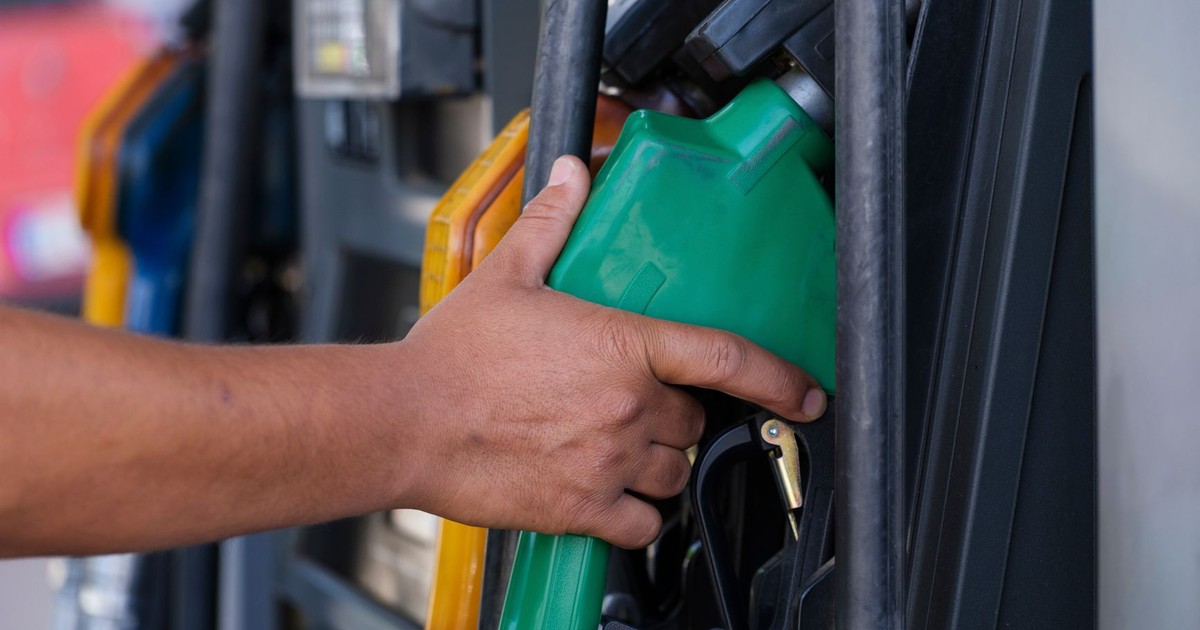
The commencement of Operation Epic Fury against Iran on February 28 accelerated a decline that was already underway, and it brought a specific, daily-felt consequence to millions of households: the price of gas. By Memorial Day weekend, gas prices had reached a four-year high, with the national average at $4.56 per gallon, up $1.38 from the same time last year and close to what drivers were paying in May 2022. According to AAA, the prolonged closure of the Strait of Hormuz is keeping pump prices elevated as the summer travel season gets underway.
A $1.50-a-gallon jump affects everyone who drives to work, fills up on the way to school pickup, or runs a small business with a fleet. It is not abstract economic anxiety. It is a number people read on a sign every time they pull off the highway.
The NPR/PBS News/Marist poll conducted April 27 through April 30, 2026, among 1,322 adults via phone, text, and online, with a margin of error of ±3.1 percentage points, found that more than six in ten Americans blame Trump for the increase in gas prices, and Democratic congressional candidates now maintain a healthy lead against Republicans on the generic congressional ballot question. Specifically, 63 percent of residents nationally place a great deal or good amount of blame on President Trump – including 89 percent of Democrats, 32 percent of Republicans, and 63 percent of independents.
Meanwhile, 64 percent of Americans disapprove of how Trump is handling the situation in Iran, up from 48 percent in January. Only 29 percent approve, down from 34 percent in January. Trump began his second term with positive net approval on the economy and on inflation. Both numbers have now inverted. Inflation was the issue that helped elect him. It is the issue most reliably dragging him down.
The Independents Problem
No number in recent polling is more politically consequential than what is happening with independent voters. Only 21 percent of independents approve of Trump’s job performance, while 71 percent disapprove – a -50 net approval and a record low among independents for either of his terms. At this point in Trump’s first term, he had a -3 net job approval among independents.
A -3 to a -50 shift is not a polling fluctuation. It is a collapse. Trump’s approval among independents has fallen so low that the closest first-term comparison is not to independents at all, but to how Democrats viewed Trump at the very start of his first term. Independent approval below 40 percent has historically preceded wave midterm losses, and at 21 percent Trump is well into territory that should concern every Republican running in a competitive district this November.
The CNBC All-America Economic Survey of 1,000 voters nationwide, conducted in April 2026, found that Trump saw significant deterioration in his economic approval from important constituencies: approval among independents and Latinos each fell by 9 points, and dropped by 7 points for white Americans without a college degree. Republican support on the economy declined by 8 points overall, though it remains high at 77 percent. Most of that decline occurred among non-MAGA Republicans, whose approval fell to 55 percent from 69 percent in the prior quarter. MAGA support came in at 92 percent, down just 3 points.
Key parts of the coalition that elected the president in 2024, including Latinos, young men, and independents, are deeply negative on the Iran war, while white non-college voters are split. These were groups Trump worked hard to win or improve his margin with in 2024. They are not following him through this stretch.
What the White House Says
The administration has not gone silent on the polling. White House spokesman Kush Desai told reporters that “President Trump has always been clear about temporary disruptions as a result of Iran’s attempts to subvert the free flow of energy,” adding that the administration has “never lost focus on implementing the President’s proven economic agenda on the home front” and predicting that as policies take effect and “the Iranian terror threat is neutralized, Americans will again see cooling inflation, gas prices at multi-year lows, and accelerated economic growth.”
The framing is consistent with the posture Trump held during his first term whenever numbers dipped: the pain is temporary, the destination is worth it, and history will vindicate the decisions. Whether that argument lands with voters by November is a different question. Trump’s efforts to secure the southern border retain a 51 percent to 46 percent majority approval – the only issue with positive net approval among those measured in the CNBC survey. The MAGA base has held. But elections, particularly midterms, are not won by the base alone.
The November Calculation

Trump’s broader unpopularity could ultimately shape his influence in November races. While he continues to have sway in Republican primaries, recently securing the ousting of opponents like Kentucky Rep. Thomas Massie and Louisiana Rep. Bill Cassidy and advancing Ken Paxton’s candidacy in the Texas Senate race, the structural numbers for his party are moving in one direction.
Forty-nine percent of Americans say the price of gas is going up a lot where they live, and another 23 percent say it’s going up a little. Overall, 72 percent say gas prices are rising, and this marks the tenth consecutive Economist/YouGov poll dating back to mid-March in which at least two-thirds of Americans have said prices are rising. Sustained economic pain with no visible end date is exactly the kind of condition that converts soft disapproval into hard midterm votes.
Jay Campbell, a partner at Hart Research, the Democratic pollster for the CNBC survey, said he believed it would be difficult for the president’s numbers to bounce back in time to help Republicans for the midterms. “It’s hard to imagine a set of policies that could be proposed and implemented between now and Election Day that would have a material enough impact on the American people that they would say, ‘Actually this guy is doing pretty good with the economy,'” Campbell said.
Democrats hold a meaningful advantage on the congressional ballot, and frustration with the opposition party has not translated into enthusiasm for it, which makes turnout patterns rather than pure polling averages the critical variable heading into autumn. Low satisfaction with Democrats is a real thing in the data. It just does not appear to be counteracting the intensity of dissatisfaction with the party in power.
Read More: Is Donald Trump Is the Most Corrupt President in US History?
Where This Actually Lands
A record-high 61 percent of Americans disapprove of how Trump is handling his job, according to the most recent Economist/YouGov poll. Just 35 percent approve. The intensity gap matters as much as the headline number. Strong disapproval translates to turnout. Soft approval often doesn’t.
The White House’s bet is that the Iran war ends, gas prices fall, and the economic story shifts before November. That is a plausible scenario. As of late May, the national average had dropped 12 cents to $4.42 per gallon, with crude oil prices declining amid reports of peace talks with Iran, though the fragile situation could cause prices to spike again if a ceasefire deal isn’t reached. Betting on an international conflict to resolve on a political timeline is a specific kind of optimism, and the data right now does not suggest American voters are sharing it.
The economy that got Trump elected on the promise of cheaper prices is the same economy that is now, by every measure in every credible poll, the primary reason his trump approval rating has hit a record low on his 500th day back in office. Inflation was his calling card in 2024. The voters who handed him the election on that issue are now the ones registering their frustration, poll after poll, in numbers that suggest the coalition that gave him a second term is not currently willing to give him a pass for what that second term has cost them at the pump.
AI Disclaimer: This article was created with the assistance of AI tools and reviewed by a human editor.