

The question isn’t whether a job exists in a given state. It’s whether that state’s labor market is structured in a way that rewards people who learned on the job rather than in a lecture hall. That’s a different question, and the answer varies enormously depending on which industries dominate, what the labor supply looks like, and how far a paycheck actually goes after rent.
Not every state plays this the same way. Some have industries that need workers who came up through apprenticeships and employer training rather than universities. Others have labor markets tight enough to push wages up regardless of credentials. A few have cost-of-living conditions so favorable that a $50,000 salary carries the spending power of $70,000. The gap between picking the right state and the wrong one can add up to tens of thousands of dollars over a decade, before you even factor in job security and advancement.
These states consistently offer the best conditions for jobs without a college degree, based on current labor market data, wage trends, and sector growth projections.
Texas: Scale and Sector Breadth

Texas has high demand for workers who gain their qualifications through licensing or employer-provided training rather than a four-year degree, and the expansion of the Dallas-Fort Worth metro has created urgent need for electricians, plumbers, drivers, construction workers, and technicians. But the metro growth story is only half of it. Texas also offers significant opportunities in oil, manufacturing, construction, and warehousing, a breadth of sectors that means a non-degree worker isn’t betting on one industry staying healthy.
The sheer size of the state works in workers’ favor. According to the BLS, Texas had 847,600 covered establishments and nearly 14 million jobs as of Q1 2025, with employment growing 1.2% year-on-year and average weekly wages of $1,587, among the higher figures in the South. That’s a labor market large enough to absorb workers across a wide range of skill levels, and active enough that vacancies stay open.
For someone willing to get a commercial driver’s license, complete an HVAC certification, or go through a plumbing apprenticeship, Texas has some of the deepest employer networks in the country. The downside is that urban Texas is no longer cheap. Someone earning $45,000 in Dallas or Austin will feel that budget in ways that didn’t apply ten years ago.
Tennessee: Three Cities, One Workforce Shortage

Nashville, Knoxville, and Chattanooga are all pulling workers into a state that was already short of them. The best job opportunities in Tennessee are concentrated in automotive manufacturing, warehousing, construction, hospitality, and healthcare. Healthcare and hospitality both have entry points that don’t require degrees but do offer paths to supervisory and specialist roles over time.
Tennessee has been one of the consistent beneficiaries of corporate relocations and manufacturing investments over the past decade, and the downstream effect is a sustained appetite for skilled and semi-skilled workers. The state has no income tax, which translates directly to more take-home pay on the same gross salary. It’s a detail that doesn’t show up in headline wage comparisons but matters considerably to someone earning $55,000 a year.
Workers in the broader Southeast have real options, but Tennessee’s combination of no income tax, multiple strong employment cities, and sector diversity makes it a standout.
Ohio: Manufacturing Without the Coastal Price Tag
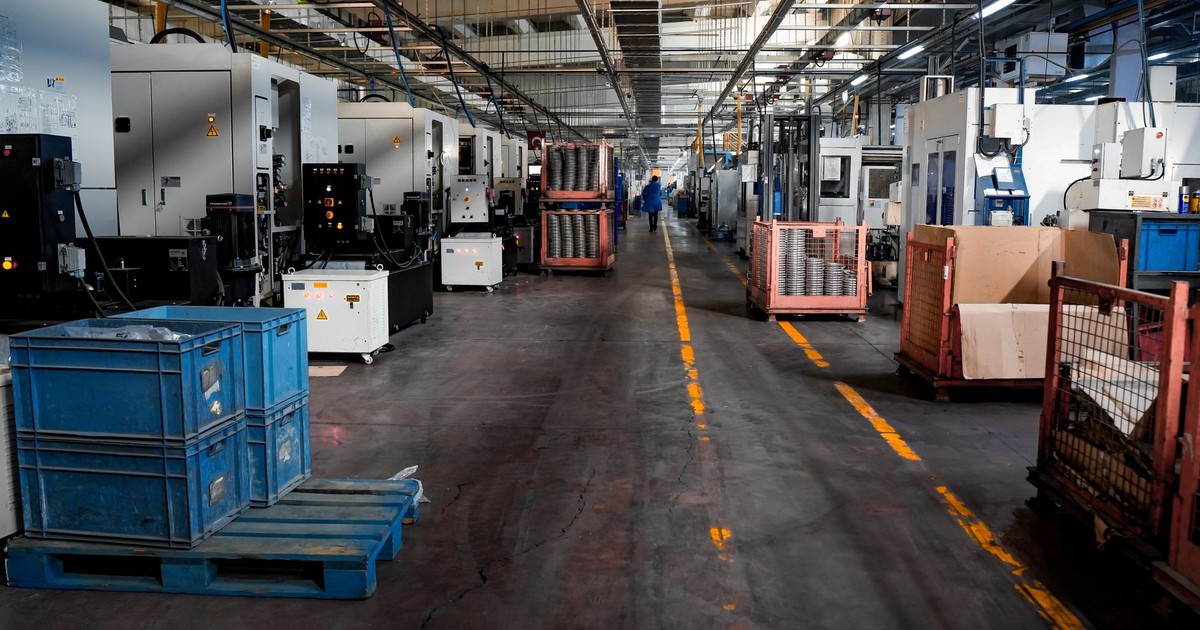
Ohio’s strongest sectors remain manufacturing, logistics, warehousing, skilled trades, and healthcare, and the state’s low cost of living makes that income go further than it would in most industrial states. That combination is less common than it sounds. Most states with a strong industrial base tend to be expensive.
Ohio’s need for thousands of workers in manufacturing is a sector where years of experience and trade certifications translate to steady wage progression. A machinist who starts at $20 an hour can reach $30+ within five years in Ohio, and that income stretches further there than in a comparable role in Washington or California.
The state also has a dense community college network directly tied to employer pipelines, which matters for workers who want to formalize skills they’ve already developed on the job. Certificates in welding, machining, and healthcare support are widely available and often employer-sponsored.
Indiana: Automotive and Advanced Manufacturing

Indiana’s manufacturing base spans automotive, logistics, life sciences production, and advanced manufacturing, where workers can find employment as machinists, welders, maintenance technicians, licensed professional drivers, or warehouse supervisors. The state’s low cost of living means that even the lower end of those wage ranges covers a reasonable life.
Indiana has been adding manufacturing capacity in electric vehicle components and battery technology, which creates a different kind of demand from traditional auto assembly. Significant investment in electric vehicles has led to a spike in demand for technicians across the Midwest, and Indiana sits at the center of that shift. Workers who can combine traditional skills with familiarity with newer systems are in particularly high demand.
For workers early in their careers, Indiana offers something worth noting: the ability to advance without a degree faster than you can in many other states, because the industries that dominate the economy have always been structured around on-the-job training and apprenticeship rather than academic credentials.
Michigan: Reinvention as an Advantage
Michigan’s expanding vehicle fleet and advanced manufacturing base are creating openings for mechanics, machine operators, welders, maintenance technicians, and production workers, with the EV transition driving especially strong demand for technicians with crossover skills.
Michigan has spent the better part of the last fifteen years moving away from a reliance on traditional auto manufacturing toward a broader advanced manufacturing economy. For non-degree workers, that shift has created an interesting moment: employers are actively building apprenticeship and certification pipelines because academic institutions aren’t producing specific technical workers fast enough. Employers are paying for training in ways they simply didn’t a decade ago when the workforce was more abundant.
Detroit-area wages for skilled trades have risen considerably, and the state’s investment in workforce development programs means real entry points exist for workers who haven’t previously been in manufacturing. A completed employer-sponsored training program is often more valuable than any credential a person could hold going in.
Georgia: Logistics as a Growth Engine
Georgia’s proximity to Atlanta’s Hartsfield-Jackson airport, combined with roads, rail connections, and the Port of Savannah, makes the state one of the country’s most active logistics corridors. Truck driving, warehousing, aviation support, construction, and port operations all need workers, and none of those roles require a college degree.
Logistics is one of the more dependable sectors for non-degree workers because the work can’t be offshored and automation hasn’t eliminated the human requirement for roles involving physical movement, equipment operation, or time-sensitive delivery. According to the BLS Occupational Outlook Handbook, employment of logisticians is projected to grow 17% from 2024 to 2034, well above the average for all occupations. Georgia sits at the intersection of several of the country’s most active freight corridors, which means those openings will keep appearing.
Atlanta is not a cheap city, but Georgia’s overall cost of living varies more than its largest city suggests. Workers who settle in mid-sized cities like Savannah, Augusta, or Columbus will find wages more competitive relative to their expenses.
Wyoming: The Energy State Advantage
Wyoming has the highest concentration of construction and extraction occupations in the country, at 9.1% of total employment. For a state with a small population, that concentration creates a labor market that consistently pushes wages up for anyone in those sectors.
Data from United Way of the National Capital Area, drawing on BLS and Bureau of Economic Analysis figures, shows that in Wyoming, high school diploma earners bring in 65% of what bachelor’s degree holders make, one of the strongest ratios in the country. The same data shows Arizona led the nation in wage growth for high school graduates with a 12.29% increase in a single year (2022 to 2023), while North Carolina posted 9.05% growth over the same period, putting both states among the top five nationally. These figures reflect labor markets where credentials matter less than physical capability, specific certifications, and sector experience.
The trade-offs with Wyoming are real: the winters are harsh, the population is small, and the options outside energy and construction are limited. But for workers in those specific fields, the pay-to-cost ratio is hard to beat. Workers in oil and gas, mining, and heavy construction can reach six-figure incomes with trade certifications and a few years of experience.
Arizona: Fastest Wage Growth in the Nation
As noted above, Arizona posted the fastest wage growth in the nation for high school graduates, at 12.29% in a single year. That kind of increase doesn’t happen by accident. Arizona has been absorbing significant population growth, which drives sustained demand across construction, healthcare support, transportation, and home services.
Phoenix specifically has become a major hub for semiconductor manufacturing, data center construction, and logistics, all of which require non-degree workers in large numbers. Workers who enter construction or manufacturing trades there now are entering a market where labor is still being absorbed, which is generally the best time to negotiate starting wages and advancement terms.
Wisconsin: Stability and Healthcare

Manufacturing and maintenance jobs offer greater stability than office work in Wisconsin, where workers are also needed in food production, skilled trades, transportation, and healthcare. Wisconsin doesn’t have the explosive growth numbers of Arizona or the scale of Texas, but it offers consistent, year-on-year demand rather than boom-and-bust patterns.
The state has a strong network of technical colleges with direct ties to employer pipelines. Getting a two-year technical certificate in Wisconsin is genuinely different from doing the same in a state where those colleges operate in isolation from the industries doing the hiring.
North Carolina: Southeast Growth, Without Florida’s Cost

North Carolina needs workers in construction, healthcare, manufacturing, warehousing, and skilled trades, with electricians, HVAC workers, plumbers, equipment operators, and maintenance technicians among the most sought-after roles. The Raleigh-Durham-Charlotte triangle has absorbed enormous corporate relocation and population growth over the past decade, and the infrastructure and housing needs that come with that growth translate directly into sustained demand for trade workers.
As the wage data above reflects, North Carolina posted 9.05% growth in median wages for high school diploma holders in a single year, ranking fifth nationally. That growth points to a labor market that hasn’t yet fully supplied the workers its expanding economy needs.
Read More: 10 Effortless Daily Habits That Gradually Make You Much Smarter With Money
Where Location Leaves Money on the Table

The states that often get held up as the best-paying for non-degree workers – Washington, California, and Massachusetts – do pay higher absolute wages. But those figures come with a catch that tends to get underemphasized: the cost of living in those cities frequently absorbs most or all of the wage premium. In practice, $58,000 in Tennessee or Indiana can go further than $72,000 in coastal Washington.
The states that consistently deliver the best combination of available jobs without a college degree, growing wages, and a cost of living that doesn’t immediately neutralize those wages are largely in the middle of the country and the Southeast. They don’t dominate salary headlines because their wages look modest in absolute terms. That’s exactly why they’re worth looking at.
The BLS projects that heavy and tractor-trailer truck driving alone will account for about 237,600 job openings per year, on average, from 2024 to 2034, making it one of the most reliably available roles in the country. That opening exists across most states on this list, which says something important: the best state to look for work isn’t always the one with the highest advertised salary. It’s the one where the job you want is actually available, the employer will train you for it, and the number on your paycheck still means something when the rent comes due.
Some of the best careers in trades and logistics come down to timing: getting in while a regional market is still absorbing workers rather than arriving after wages have flattened. The states here are worth checking not just for what they’re paying now, but for where the work is still growing into.
AI Disclaimer: This article was created with the assistance of AI tools and reviewed by a human editor.