

The same country hosting the biggest soccer tournament in history is also running one of the most restrictive immigration regimes it has seen in decades. That collision between welcome and restriction has been building since January 2025, and with the 2026 FIFA World Cup kicking off on June 11, it is now impossible to ignore.
Since taking office, the Trump administration has constructed a layered system of entry bans, visa restrictions, and processing freezes that now touches nationals from 75 countries. Each layer was built at a different moment and targets different visa categories. Keeping them separate matters, because “the travel ban” is not one thing. It is at least three, stacked on top of each other.
The restrictions started with an executive order in January 2025. Then came a formal proclamation in June 2025 targeting 19 countries. A significant expansion in December 2025 brought the total to 39 countries. Then, in January 2026, a separate freeze on immigrant visa processing added dozens more nations to the list. Each action has its own list of countries, its own set of exceptions, and its own legal footing.
The First Wave: The June 2025 Proclamation and Its 19 Countries
The first formal travel ban proclamation was signed on June 4, 2025, with restrictions taking effect from June 9, 2025. It covered 19 countries and drew a distinction between two categories of restriction. According to the Congressional Research Service, both proclamations differentiate between countries whose nationals are subject to “full suspension,” barring entry of immigrants and nonimmigrants, and those subject to “partial suspension,” barring entry of immigrants as well as certain classes of nonimmigrants.
The twelve countries under a total entry ban in that first proclamation were Afghanistan, Burma, Chad, Republic of the Congo, Equatorial Guinea, Eritrea, Haiti, Iran, Libya, Somalia, Sudan, and Yemen. The remaining seven faced partial restrictions, covering tourist and certain other nonimmigrant visa categories. The proclamation’s stated policy goal was protecting U.S. citizens from foreign nationals “who intend to commit terrorist attacks, threaten our national security and public safety, incite hate crimes, or otherwise” cause harm, with the administration also citing foreign policy goals, counterterrorism, visa overstay rates, and countries’ cooperation with accepting back removable nationals.
The December 2025 Expansion: 39 Countries

On December 16, 2025, President Trump issued a revised and expanded proclamation that fully or partially bars visa issuance for nationals of 39 countries. This new travel ban took effect at 12:01 a.m. ET on January 1, 2026.
The countries under full suspension, where entry of immigrants and nonimmigrants is completely barred, are: Afghanistan, Burkina Faso, Burma, Chad, Republic of the Congo, Equatorial Guinea, Eritrea, Haiti, Iran, Laos, Libya, Mali, Niger, Sierra Leone, Somalia, South Sudan, Sudan, Syria, and Yemen.
Under the partial suspension, the entry of nationals of 20 countries is restricted on tourist, student, and certain other nonimmigrant visas, including Angola, Antigua and Barbuda, Benin, Burundi, Côte d’Ivoire, Cuba, Dominica, Gabon, The Gambia, Malawi, and Mauritania, along with Nigeria, Senegal, Tanzania, Tonga, Zambia, and Zimbabwe. Turkmenistan sits as an outlier: it is subject to a partial ban that suspends immigrant entry, but not any class of nonimmigrant, making it the sole exception to the general partial ban rule.
Among the reasons cited for specific countries’ inclusion: a lack of cooperation on accepting repatriations is mentioned for five countries; a lack of a competent or cooperative central government for issuing passports or sharing information in three cases; and a nexus to terrorism in four cases. Unlike the June proclamation, the December one also includes countries such as Antigua and Barbuda and Dominica on the basis of their citizenship-by-investment programs, which the administration notes pose security screening risks.
Individuals from the affected countries who were already holding valid visas may continue to use those visas for travel to the United States, and the proclamation expressly states that existing visas will not be revoked.
The Third Layer: The 75-Country Immigrant Visa Freeze
The ban on 39 countries gets most of the attention, but a third action added tens of millions more people to the restricted list. On January 14, 2026, the Trump administration announced it would indefinitely freeze visa processing for people coming from 75 countries. The U.S. State Department directed consular officers to refuse visas under existing law while the department reassesses screening and vetting procedures.
This freeze is different in character from the travel ban. It targets only immigrant visas, the category that leads to permanent residence, not tourist or business travel. The policy does not affect tourist or business visas. The department said the freeze would “remain active until the U.S. can ensure that new immigrants will not extract wealth from the American people.”
The 75 countries affected by this immigrant visa freeze, effective January 21, 2026, include: Afghanistan, Albania, Algeria, Antigua and Barbuda, Armenia, Azerbaijan, Bahamas, Bangladesh, Barbados, Belarus, Belize, Bhutan, Bosnia and Herzegovina, Brazil, Burma, Cambodia, Cameroon, Cape Verde, Colombia, Côte d’Ivoire, Cuba, Democratic Republic of the Congo, Dominica, Egypt, Eritrea, Ethiopia, Fiji, The Gambia, Georgia, Ghana, Grenada, Guatemala, Guinea, and Haiti, as well as Iran, Iraq, Jamaica, Jordan, Kazakhstan, Kosovo, Kuwait, Kyrgyzstan, Laos, Lebanon, Liberia, Libya, Moldova, Mongolia, Montenegro, Morocco, Nicaragua, Nigeria, North Macedonia, Nepal, Pakistan, Papua New Guinea, Republic of the Congo, Russia, Rwanda, Senegal, Sierra Leone, Somalia, South Sudan, St. Kitts and Nevis, St. Lucia, St. Vincent and the Grenadines, Sudan, Syria, Tanzania, Thailand, Togo, Tunisia, Turkmenistan, Uganda, Uruguay, Uzbekistan, Venezuela, Yemen, and Zambia.
Most immigrants who are not U.S. citizens are already ineligible for federal public benefits, and green card holders are ineligible for five years. A federal lawsuit filed in February 2026 argued the policy “attempted to eviscerate decades of settled immigration law” and that it imposes a nationality-based ban that strips families of the process guaranteed by law.
Trump Travel Ban Countries and the World Cup Collision
The timing of all of this lands hardest around the 2026 FIFA World Cup, which the United States is co-hosting alongside Canada and Mexico, with 78 of 104 matches played on American soil. Four of the countries on the banned list – Haiti, Senegal, Côte d’Ivoire, and Iran – have qualified for the World Cup.
The ban creates a clear split between the teams and their supporters. According to the American Immigration Council, athletes, coaches, persons performing a necessary support role, and immediate relatives traveling to the World Cup are exempt from the policy. But fans are a different matter entirely. A State Department cable confirmed that “only a small subset of travelers for the World Cup, Olympics and Paralympics, and other major sporting events will qualify for the exception.”
Iran and Haiti are under the full travel ban, while Côte d’Ivoire and Senegal are under the partial ban. For fans from Iran and Haiti, the barrier is essentially absolute. B-2 tourist visas, which is how most fans would attend the World Cup, are prohibited in each case.
Haiti qualified for the tournament for the first time since 1974, without being able to play a home match or even train inside their own country, given the gang violence that has made the island largely ungovernable. Due to the travel ban, most fans from the island will not be able to watch their team play in the U.S. The Trump administration also ordered an end to Temporary Protected Status for Haitians, and 340,000 Haitians currently living in the country were set to lose legal protection and work authorization by February 3, 2026.
Iran’s situation carries additional complications. Secretary of State Marco Rubio stated that Iranian players are welcome as long as they have not served in the Islamic Revolutionary Guard Corps. Iran’s participation in the World Cup remained uncertain for months, caught between the exemptions written into an executive proclamation and the U.S.-Iran conflict. FIFA President Gianni Infantino said in May 2026 that Iran will participate, though the uncertainty lingered far longer than it should have for a team that earned its place.
The Visa Bond: An Extra Barrier on Top of Everything Else
Beyond the formal travel ban, the administration added another layer that directly affects World Cup-qualified nations. As of April 2, 2026, the State Department implemented an expansion of its Visa Bond Program, requiring citizens from 50 countries to pay a bond of up to $15,000 before traveling to the U.S. temporarily for business or pleasure. Five of those countries have qualified for the World Cup: Algeria, Cape Verde, Ivory Coast, Senegal, and Tunisia.
Under pressure from FIFA and growing concern about tournament attendance, the administration partially relented. According to ESPN, the Trump administration suspended the bond requirement for foreign visitors who are confirmed FIFA World Cup ticket holders. Citizens from those five countries who purchased tickets from FIFA and registered through the FIFA PASS priority appointment system by April 15 are now exempt from the visa bond requirement.
The wider picture of what the restrictions are doing to tournament attendance is less encouraging for the administration’s own economic pitch. Reports have pointed to hotel bookings for the soccer tournament running far below initial projections, with international travelers deterred by lengthy visa wait times and increased fees.
The Exceptions – and How Narrow They Are
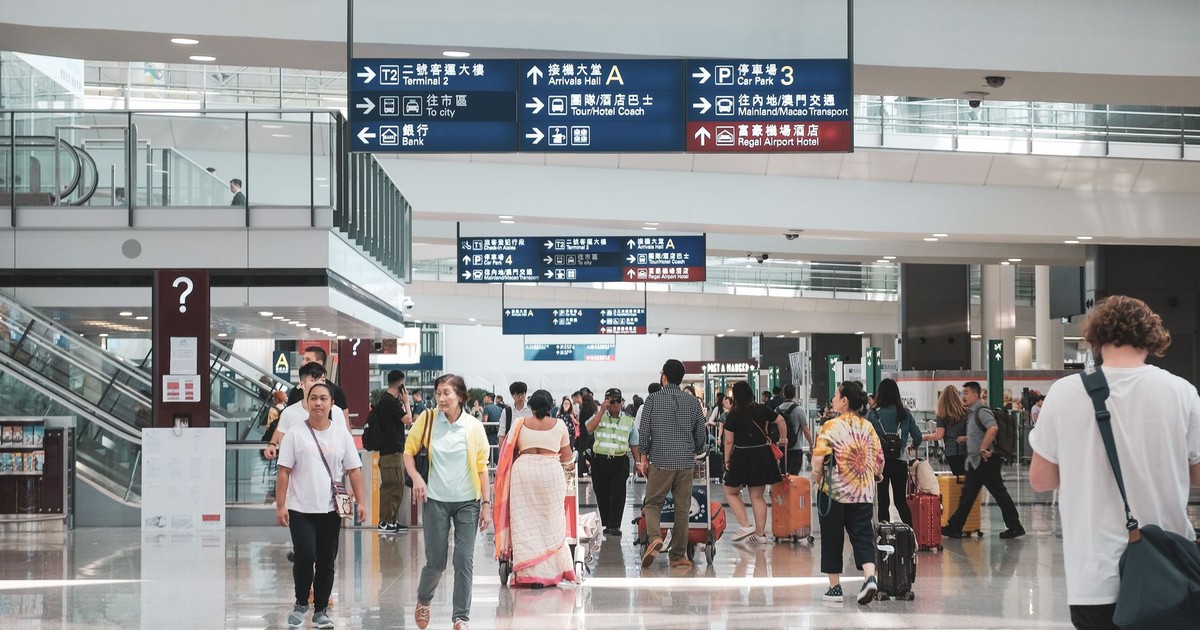
The formal exemptions built into Presidential Proclamation 10998 cover several categories. These include athletes, coaches, persons performing a necessary support role, and their immediate relatives traveling for the World Cup, Olympics, or other major sporting events. Foreign diplomats and officials traveling on certain visa classifications are also exempt, as are applicants for Special Immigrant Visas for certain U.S. government employees, and those whose travel is deemed to serve the U.S. national interest.
The practical difficulty is that the national interest exception comes with almost no defined pathway. The proclamation does not specify a form or procedure for requesting consideration of a case-by-case national interest exception, and the agencies have not issued guidance on that. The ban applies only to nationals of the affected countries who were outside the United States on January 1, 2026, and do not hold a valid visa on that date. Those currently holding valid visas may continue to use them.
There is also a broader consideration for anyone inside the United States with uncertain immigration status. The tournament is taking place against the backdrop of the Trump administration’s aggressive immigration enforcement in major cities. Federal officials have conducted large-scale operations in Los Angeles, a World Cup host city, along with Chicago, Charlotte, New Orleans, and the Twin Cities, arresting both immigrants and U.S. citizens. FIFA President Gianni Infantino is reportedly considering asking President Trump for a moratorium on ICE raids during the month-long tournament.
The Broader Diplomatic Friction
The friction between the stated welcome of the World Cup and the reality of who can attend has not gone unnoticed internationally. Amnesty International and dozens of U.S. civil and human rights groups issued a “World Cup travel advisory” warning travelers about the climate in the U.S. The policy has been attacked by Democrats and civil rights organizations as discriminatory, with Human Rights First describing it as “racist” and “a sweeping act of collective punishment.”
The administration has not given any ground on the core restrictions for fans. While the policy allows for some exceptions, including those that “would serve the U.S. national interest,” a State Department spokesman said those would be “quite rare,” adding: “A visa is a privilege. Visas are not a right.” When the bans were announced, the administration said nationals from the named countries “have been involved with crimes that include murder, terrorism, embezzling public funds, human smuggling, human trafficking, and other criminal activity.”
FIFA, navigating a close relationship with the president that has included Infantino presenting Trump with the inaugural FIFA Peace Prize at the World Cup draw in December 2025, has largely avoided direct confrontation. A spokesman for the organization pointed out that FIFA worked with the Trump administration to create an expedited visa interview process for ticket holders. Who ultimately receives a visa, however, is a different question: “The U.S. government determines who gets a visa and who is admitted. FIFA is not involved in host country immigration processes.”
Read More: Us, Mexico, and Canada Implement Ebola Travel Guidelines Before 2026 World Cup
What This Adds Up To
By the time the World Cup kicks off, the United States will be hosting the largest sporting event in history while operating one of its most restrictive immigration regimes in decades. The layers are worth keeping clear: 19 countries under a complete visa freeze from June 2025; expanded to 39 countries as of January 2026, with 19 under a full ban and 20 under a partial one; and then 75 countries under a separate immigrant visa processing halt. The categories affect different visa types, but together they represent a fundamental reshaping of who can come to America and on what terms.
The World Cup collision is not incidental. It has put a human face on what are, in normal times, abstract policy questions. A fan in Dakar who has followed Senegal’s national team to Qatar is now weighing visa restrictions and appointment wait times against flights and match schedules. A Haitian American in New York watches their team prepare for a historic tournament debut on home soil, knowing that relatives back in Port-au-Prince cannot get on a plane to come. An Iranian player’s participation in the tournament was itself uncertain for months, caught between the exemptions written into an executive proclamation and a conflict that made everything more complicated.
The bans are not going anywhere before the final whistle blows on July 19. For the nations on this list, the gap between being welcomed to compete and being welcomed as a people is about as wide as it has ever been. That is the thing the official exemptions, the FIFA press releases, and the expedited appointment systems cannot quite paper over.
AI Disclaimer: This article was created with the assistance of AI tools and reviewed by a human editor.