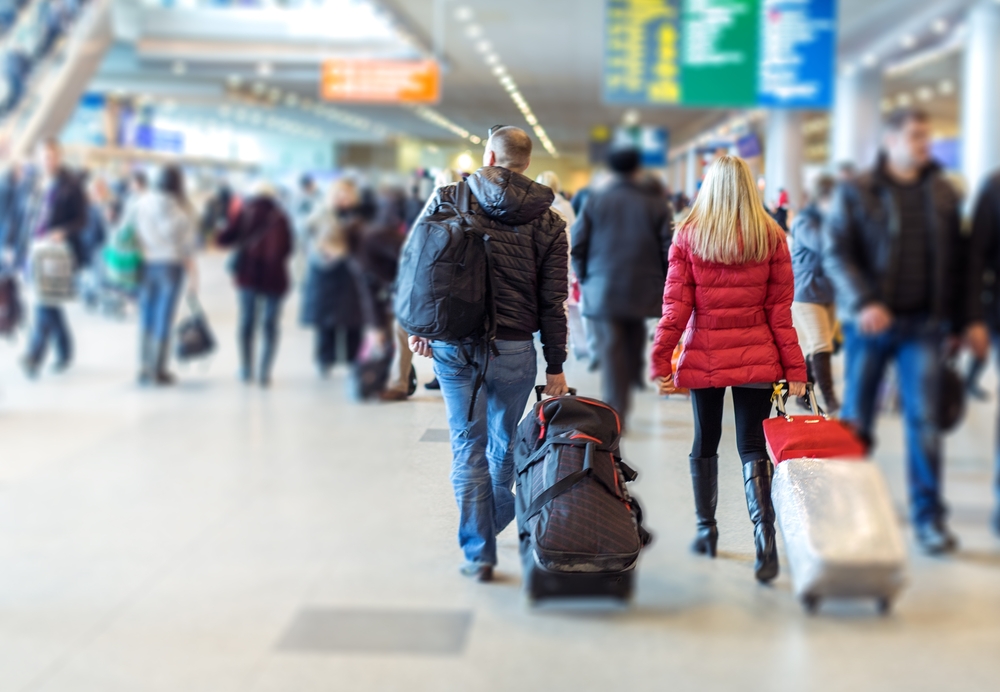

The world’s biggest soccer tournament kicks off in North America in a matter of weeks, and three countries are working through a problem nobody on the tournament planning committee anticipated: an active Ebola outbreak in central Africa that has now crossed international borders and forced a public health response unlike anything seen at a major sporting event in modern memory.
The 2026 FIFA World Cup, spread across host cities in the United States, Mexico, and Canada, is expected to draw millions of fans, athletes, support staff, and tourists from virtually every country on the planet. That kind of convergence is everything a public health system fears during an active outbreak of a hemorrhagic fever. And so, within days of a formal international emergency declaration, all three host nations moved together.
What has unfolded since mid-May 2026 is a layered, fast-moving, and in some quarters deeply contested set of ebola travel measures that range from airport screening protocols to outright entry bans, 21-day quarantine requirements, and the unprecedented rerouting of international flights. Here is what is actually happening, what it means if you are traveling to or from an affected region, and why not everyone in the global health community thinks these measures are the right call.
The Outbreak That Started Everything
On May 15, 2026, the Ministry of Health of the Democratic Republic of the Congo confirmed an outbreak of Ebola disease in Ituri Province in northeastern DRC. The strain is not the one most people remember from news coverage of previous outbreaks. The current outbreak involves Bundibugyo virus disease, a type of Ebola caused by infection with the Bundibugyo virus. The Bundibugyo species was first identified in Uganda in 2007 and has historically been associated with somewhat lower case fatality rates than other Ebola strains, though previous outbreaks have had mortality rates of approximately 25 to 50 percent. Critically, no vaccines or specific treatments have been approved to prevent or treat it.
The outbreak in DRC has been confirmed in Ituri, Nord-Kivu, and Sud-Kivu provinces. Cases related to the DRC outbreak have also been reported in Uganda’s capital of Kampala. The pace of spread alarmed health authorities rapidly. By late May, the WHO estimated 750 suspected cases and 177 suspected deaths, and added that the “real scale of the outbreak is likely far larger.” Then on May 28, DRC authorities revised their tally, with Congolese officials revising the count to 906 suspected cases after removing non-cases and reclassifying others.
The World Health Organization declared a public health emergency of international concern on May 17, following the Ebola outbreak in Congo and neighboring Uganda after more than 300 suspected cases and 88 deaths. That declaration triggered a cascade of government responses across the globe, with North America moving faster than most.
What the US Put in Place
The American response came in stages, each one adding a new layer to the restrictions already in effect. On May 18, 2026, the CDC and DHS announced enhanced travel screening, entry restrictions, and public health measures to prevent Ebola disease from entering the United States amid ongoing outbreaks in East and Central Africa.
Under a CDC Order effective May 18, 2026, certain non-U.S. citizens who were in DRC, South Sudan, or Uganda within the past 21 days are temporarily prohibited from entering the United States. That ban was then extended. As of May 22, HHS issued an interim final rule that applies the same entry suspension to U.S. lawful permanent residents, meaning green card holders who had been in DRC, Uganda, or South Sudan within the last 21 days are also prevented from entering the country. The suspension is temporary and currently set to remain in effect for 30 days while the CDC completes a public health risk assessment.
For Americans who have been in the affected countries and are returning home, a separate set of rules applies. U.S. citizens and nationals may still enter but will undergo enhanced public health screening. They are not just waved through the nearest airport, either. Affected air passengers from DRC, South Sudan, and Uganda have their air travel rerouted to arrive at Washington Dulles International Airport, Atlanta Hartsfield-Jackson International Airport, George Bush Intercontinental Airport, or John F. Kennedy International Airport.
The screening process itself is more thorough than a temperature check at the gate. Travelers complete a brief questionnaire about their travel history and symptoms. CDC staff observe them for signs of illness and take temperatures using non-contact thermometers. Those without symptoms but who have been in the affected countries in the past 21 days are given information on monitoring their health and what to do if symptoms appear. If something flags during that initial check, travelers with fever or other symptoms that could be Ebola receive additional evaluation by a CDC public health officer, and if the assessment suggests a traveler may be sick, they are transferred to a hospital for further medical evaluation and isolation.
The CDC has also been seeking volunteers from its own workforce to go to domestic airports and help screen for Ebola as the outbreak in DRC and Uganda intensifies. That internal call for CDCReady Responders signals just how fast the agency has been scaling up an operation it did not have fully staffed when the outbreak was first declared.
South Sudan has not reported any cases to date, but it is included in these efforts due to its shared borders with affected countries. That inclusion would become one of the most contentious points in the weeks that followed.
Canada’s Harder Line
Canada has prohibited residents from DRC, Uganda, and South Sudan from entering the country for 90 days, effective Wednesday, May 28, 2026. Canadian citizens, permanent residents, and other foreign nationals who have visited affected areas recently and show no symptoms must undergo a 21-day quarantine starting Saturday, May 30, according to Canada’s Public Health Agency.
Canada’s Health Minister Marjorie Michel was unusually candid about the motivation. She confirmed in a news conference that the decision to temporarily ban residents of South Sudan, Uganda, and the DRC was not based on advice from public health officials. She said the move was taken due to considerations over Canada hosting the FIFA World Cup this summer to reduce the risk of spreading the Ebolavirus. That level of directness drew attention from health policy analysts who had been watching governments justify similar moves in purely epidemiological terms.
Mexico’s Airport-Focused Approach
Mexico took a different route, leaning more heavily on screening than on outright prohibition. Mexico’s Health Secretary David Kershenovich announced stricter Ebola screening measures at airports, urging the public to avoid travel to DRC and requesting arrivals from that country to observe a 21-day quarantine. These enhanced screening protocols are being implemented at all major Mexican airports serving World Cup host cities.
The overall posture across all three countries was made official in a joint statement from the US, Mexico, and Canada, which described the measures as a “coordinated approach” designed to protect citizens and “the millions of visitors, fans, athletes, and tourists” expected for the World Cup, “while maintaining travel and commerce across our borders.” No further details of the specific planned measures or a timeline were provided in that statement.
The Congolese Team’s Situation
The human dimension of all this became vivid when the question arose of whether the Democratic Republic of Congo’s own national soccer team could make it to the tournament at all. Andrew Giuliani, the executive director of the White House Task Force on the FIFA World Cup, told ESPN that Congo’s national soccer team should isolate for 21 days in Belgium, where it is currently training, to ensure smooth entry into the U.S. for its upcoming matches in Houston and Atlanta.
FIFA said in a statement that it continues to work with the three host country governments, including the U.S. Department of State, CDC and Department of Homeland Security, Mexico’s Secretariat of Health, and the Public Health Agency of Canada, as well as with the World Health Organization, to ensure a safe and secure tournament. Whether that assurance translated to a clear pathway for the Congolese squad was still unresolved at the time of writing.
The Pushback from Global Health Experts
Not everyone agrees these measures are the right tool for this particular moment. The pushback has come from some of the most prominent voices in global infectious disease response.
Speaking to reporters in Kinshasa upon his arrival to witness the outbreak response firsthand, WHO Director-General Tedros Adhanom Ghebreyesus was direct: “There are ways to manage workers and to manage cases without having a strong, restricted travel ban and we don’t encourage that as WHO.” He also urged countries that had imposed bans and border closures to reconsider, saying such measures “discourage the transparency that saves lives.”
The criticism from Africa CDC was sharper. Dr. Jean Kaseya, head of the Africa Centres for Disease Control and Prevention, called the international travel restrictions “unacceptable,” warning they will have a detrimental effect on the economies of affected countries. His argument is not just ethical. Such measures, Africa CDC stated, can create fear, damage economies, discourage transparency, complicate humanitarian and health operations, and divert movement toward informal and unmonitored routes, potentially increasing public health risks rather than reducing them.
The economic stakes are real. During the last large Ebola outbreak in 2018, West Africa lost $53 billion, or 12 percent of its GDP. Kaseya has drawn a direct line between the current restrictions and that precedent.
The scientific community’s concern extends beyond economics. Infectious disease epidemiologist Jessica Malaty Rivera told ABC News that while a movement ban could delay some of the first imported cases, such measures “don’t prevent outbreaks.” Colleagues have pointed out that “history repeatedly shows that travel bans are often more politically appealing than epidemiologically effective,” noting that travel restrictions during the H1N1 influenza pandemic did not stop global spread because infected patients had already traveled internationally before bans were implemented.
Public health specialists also note that Ebola requires contact with a symptomatic person’s body fluids and is not an airborne disease, making it less likely to spread on an airplane or lead to a global pandemic.
The US government has pushed back firmly on the criticism. A spokesperson for the Department of Health and Human Services said suggestions that the measures “are inconsistent with public health best practices are completely wrong and misguided,” adding that “HHS is taking targeted, evidence-based steps rooted in long-standing protocol and expertise.”
The Funding Gap Nobody Is Talking About Enough

Underneath the travel measure debate sits a problem that will outlast the World Cup. Stopping an Ebola outbreak at its source requires money, personnel, and sustained international commitment. Right now, all three are in question.
Jean Kaseya said a vaccine and treatment for Bundibugyo were expected by the end of 2026, but warned that international funding pledges had collapsed from nearly $500 million to about $290 million in the space of just four days. Africa CDC has set the cost of its continental response plan at $318.97 million over six months, from June through November 2026. Of that total, $264.97 million will be allocated to direct response in the DRC and Uganda, covering treatment centers, surveillance, testing, infection prevention, and community outreach, with the remaining $54 million aimed at strengthening preparedness in 10 high-risk African countries.
The US has committed significant funds, with the Department of State’s assistance commitment exceeding $162 million, enabling implementing organizations to expand the ongoing response in Africa. But the broader international picture is less clear, and the gap between what has been pledged and what has been delivered is considerable.
Read More: Donald Trump Is Following Notorious Dictator’s Playbook With World Cup, Expert Warns
What This Means If You Are Traveling
The practical reality depends almost entirely on where you are coming from. If you have been in DRC, Uganda, or South Sudan in the 21 days before your planned travel to North America, the situation is significantly more complicated than it was in April.
For travelers from the rest of the world heading to World Cup host cities, the CDC’s current assessment is that no cases of Ebola disease have been confirmed in the United States because of this outbreak, and the overall risk to American travelers remains low. Travelers from non-affected countries should proceed normally but can expect enhanced health screening at North American airports and border crossings. Carrying vaccination records and being prepared for health questionnaires is sensible preparation.
For anyone who has traveled to the affected regions and develops any symptoms afterward, the guidance from health officials is unambiguous. Anyone who has traveled to the affected regions should seek immediate medical treatment if they develop symptoms, including fever, vomiting, and unexplained bleeding. Monitoring for Ebola symptoms for 21 days after leaving affected countries is recommended for all returning travelers.
The 21-day window matters because of the virus’s biology. The incubation period for Bundibugyo virus disease ranges from 2 to 21 days after exposure. Someone can board a plane feeling completely healthy and develop symptoms days later. That is the core challenge that airport screening, however thorough, cannot fully solve on its own.
The Bigger Picture
The ebola travel measures put in place by the US, Mexico, and Canada are, on one level, exactly what you would expect: large-scale international events create large-scale public health pressure, and governments respond with the most visible tools available. Travel restrictions are visible. They look decisive. They signal that something is being done.
What they cannot do is stop an outbreak that is still outpacing contact-tracing teams on the ground in Ituri Province. The delay in detecting the outbreak means responders are, in the WHO’s own words, “playing catch-up with a very fast-moving epidemic,” with the epidemic currently outpacing the response. Screening returning travelers at four American airports does not change what is happening in Bunia.
That tension, between the protective measures that feel necessary to host nations and the investment in source containment that global health experts say is actually necessary, is the one worth watching as the World Cup draws closer. The Bundibugyo strain has no licensed vaccine and no approved treatment. The funding gap is real. The communities in eastern DRC who have set fire to Ebola treatment tents out of fear and mistrust are a reminder that outbreak containment is never just a logistics problem.
Where This Leaves Everyone
The tournament will begin. The fans will arrive. Screening lines will form at Dulles and Hartsfield-Jackson. And somewhere in the gap between those airport checkpoints and the overwhelmed treatment units in Ituri Province, the real test of this coordinated response will play out.
The honest answer to whether these measures will work is that nobody knows yet. Travel bans and screening protocols can buy time. They can reduce the statistical likelihood of an imported case arriving undetected. What they cannot do is substitute for the harder work: funding the treatment centers, building community trust in places where those centers have been attacked, and sustaining the international political will long after the World Cup closes and the cameras move on. The funding gap at Africa CDC is not a footnote. It is the story underneath the story. And right now it is not getting nearly enough attention.
Disclaimer: This information is not intended to be a substitute for professional medical advice, diagnosis, or treatment and is for information only. Always seek the advice of your physician or another qualified health provider with any questions about your medical condition and/or current medication. Do not disregard professional medical advice or delay seeking advice or treatment because of something you have read here.
AI Disclaimer: This article was created with the assistance of AI tools and reviewed by a human editor.