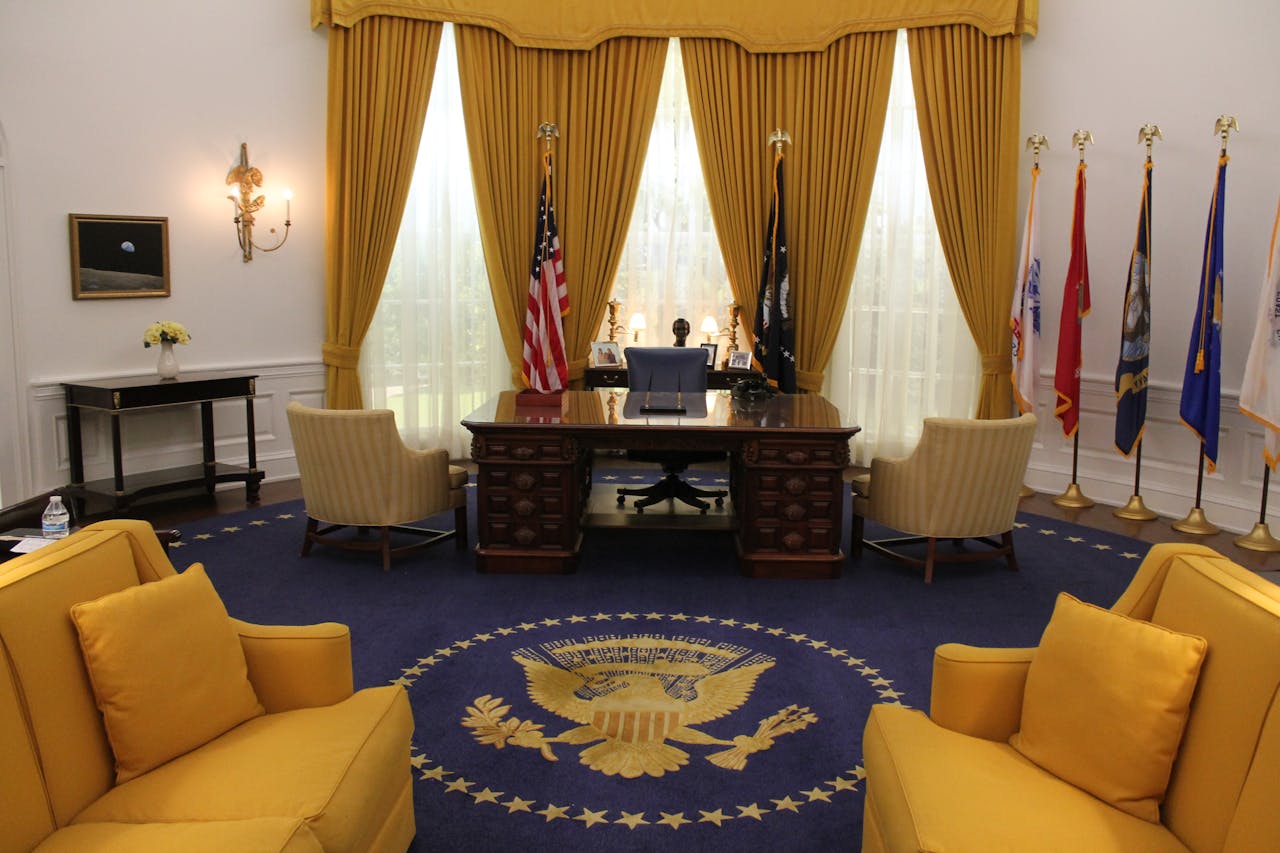

For a man whose brand has always been omnipresence, the rallies, the press gaggles, the Truth Social posts at 2 a.m., going dark for a week is not routine. It’s a story. And when the White House is forced to put out a statement pushing back on speculation about the president’s health, the story gets considerably larger.
That’s exactly what happened this week. Donald Trump, who turns 80 this month, had not appeared publicly for seven days following a Cabinet meeting, before resurfacing in the Oval Office on Wednesday afternoon to announce an executive order. The silence itself would have raised eyebrows regardless of timing. But it came immediately after a high-profile medical visit, at a moment when independent voices, journalists, political opponents, and medical professionals, were already asking pointed questions about the oldest person ever to hold the American presidency.
By Wednesday morning, the White House was fielding press inquiries about the president’s whereabouts and health. The prolonged absence, which began a day after Trump visited the hospital for his fourth medical evaluation in just over a year, had prompted renewed scrutiny. And the scrutiny was not gentle.
The Timeline: What Actually Happened
Trump’s last confirmed public appearance before the speculation began was during a Cabinet meeting on May 27. Since then, he largely stayed away from public events, with only a pre-recorded interview released during the period.
The day before that Cabinet meeting, on May 26, Trump spent more than three hours at Walter Reed National Military Medical Center for what the White House described as preventive medical and dental checkups. The back-to-back sequence, a lengthy hospital visit, then a Cabinet meeting, then seven days out of public view, is what fed the information vacuum.
Before Wednesday, Trump had not made a public appearance in a week, aside from a brief sighting on Sunday when he returned to the White House from his golf club in Sterling, Virginia. That snapshot, caught by the White House press pool, did little to dampen speculation. A president glimpsed stepping out of a motorcade is not the same as a president who is visibly, demonstrably at the wheel.
A fact-check by Lead Stories confirmed five instances of Trump being seen in public in the eight days ending June 3, 2026, including his participation in a Cabinet meeting on May 27 that the White House press pool covered. Trump also pre-recorded an interview with the New York Post on June 2, 2026, published online the following day. The claim that he had not been seen for eight consecutive days was not accurate. What is accurate is that, by any reasonable standard, the week represented a notable reduction in Trump’s normally relentless public presence.
The White House Response
When the questions mounted loud enough that they could no longer be absorbed by silence, the White House struck back. White House spokesman Davis Ingle told the Daily Mail on Wednesday, before the president’s afternoon Oval Office announcement: “President Trump just participated in a 45-minute wide-ranging interview yesterday, and he will be holding open press events tomorrow and Friday.” “Anyone using the President’s schedule to push left-wing conspiracies is a grade-A moron.”
The statement was characteristic: sharp, dismissive, contemptuous of the premise. It also arrived at the same time Trump was reappearing in person. The White House addressed mounting speculation over Trump’s week-long trump disappearance explanation, and the president reappeared on Wednesday afternoon, ending a silence that began shortly after his latest medical examination.
Questions had also intensified after Dr. Mehmet Oz, now serving in a senior health role within the administration, addressed Trump’s repeated checkups during a White House briefing. When asked why the president continued undergoing medical evaluations despite claims that he was in excellent health, Oz reportedly described the visits as routine, later suggesting Trump simply liked receiving positive test results and wanted to ensure everything remained on track. The framing, that he keeps going back because he aces the tests, left many observers cold as an explanation for preventive medicine.
The Online Reaction and Pattern of Absence

California Governor Gavin Newsom stoked the rumor mill on Wednesday, writing on X: “WHY HASN’T THE CAMERA-LOVING PRESIDENT BEEN IN FRONT OF A CAMERA FOR DAYS??? ESPECIALLY RIGHT AFTER HIS ‘PERFECT’ PHYSICAL.” Independent journalist Aaron Rupar noted Wednesday morning that “it has now been one week since he has appeared publicly for anything besides a pre-taped interview.” The mounting speculation appears to have forced the White House to address the president’s vanishing act.
Searches for “Trump stroke” and “Trump missing” surged on Google, reminiscent of the health rumors that swirled amid the president’s four-day absence from public view last September, when searches for “Is Trump dead?” and “Trump dead” skyrocketed. The pattern is consistent enough to notice. This was not the first time a short gap in public appearances produced a wave of viral speculation and forced a White House clarification.
Social media users began poring over the president’s diary, posting screenshots and amateur timelines claiming he vanishes from view at the start of almost every month. None of those theories has been supported by official documentation. Trump has historically maintained a far more public schedule than many recent presidents, making even short absences more noticeable. It’s that constant visibility that makes any gap newsworthy, and when a gap appears, the internet fills it fast.
The Walter Reed Physical: What the Report Said and Didn’t Say
The medical examination at the center of the timeline was Trump’s most extensively documented in recent memory. According to a report from CNBC, Dr. Sean Barbabella’s findings, released the Friday after the examination, showed Trump underwent a CT scan and other heart imaging, along with cancer screenings and other preventive assessments carried out by 22 specialists. Trump said after the three-hour visit that everything checked out “PERFECTLY.”
The president’s vitals, examinations, and lab results all appeared normal. A 3D scan of his heart showed no abnormalities. The report also noted he scored 30 out of 30 on a cognitive assessment. That cognitive test, the Montreal Cognitive Assessment (MoCA), is a 10-minute screening exam designed to detect early signs of dementia or Alzheimer’s disease. Trump has now scored a perfect 30 on each occasion it has been administered.
The report was also candid about some less flattering findings. Trump weighed in at 238 pounds, up 14 pounds from an exam in April 2025. His doctors gave him guidance on his diet, physical activity, and weight loss. With a 6-foot-3 frame, Trump has a body mass index of 29.7; an index of 30 is considered clinically obese.
In his memo, Barbabella, who previously diagnosed Trump with chronic venous insufficiency (a condition in which the veins in the legs have difficulty returning blood to the heart), noted swelling in the president’s lower leg “with improvement from last year,” and attributed bruising on Trump’s hands to “minor soft tissue irritation related to frequent handshaking.”
Not everyone in the medical community accepted the report at face value. Texas vascular surgeon William Shutze, speaking to The Wall Street Journal, offered a pointed assessment: “That report is almost too good to be true for somebody of his age,” Shutze remarked.
On April 30, 2026, a statement signed by 36 physicians and mental health professionals, including neurologists, psychiatrists, and geriatricians affiliated with Harvard, Columbia, Tufts, and George Washington University, was entered into the Congressional Record by Democratic senators. The statement declared Trump “mentally unfit” to serve and cited what the signatories described as “marked deterioration in cognitive functioning,” disorganized speech, and impaired judgment. Those signatories acknowledged they have not examined Trump. A signed letter from clinicians who have never conducted an examination carries professional weight, but it is not a clinical finding in any formal sense.
The frequency of Trump’s medical checkups is not uncommon for someone his age, according to S. Jay Olshansky of the University of Illinois-Chicago, who has studied the health and longevity of past presidents. It is part of a strategy to catch problems while they’re still treatable, Olshansky has noted. He has also argued that the public deserves to see more than White House medical summaries that may be subject to editorial discretion, and that full, unredacted records should be made public.
Presidential Health Transparency: A Persistent Problem
The debate over how much the public is entitled to know about a sitting president’s health is not new, and it is not unique to Trump. There is no law requiring presidents to disclose their full health records, and the degree of transparency has varied by administration.
For more than a decade, Trump, his doctors, and his aides have frequently issued terse, vague, or rosy statements about the president’s fitness and health conditions. The pattern has been consistent enough that individual reports are now evaluated not just for what they say, but for what they conspicuously omit. The president was seen earlier this year with a neck rash, which Barbabella had previously said was being treated with a “very common” medicated cream. Barbabella did not say what the skin condition was or what medication Trump was taking, and the dermatology section of the report made no mention of the rash.
The weight trajectory, the leg swelling discrepancy, the omitted neck rash, and questions about aspirin dosage represent legitimate open questions that the public record does not fully resolve. These are not fringe concerns generated solely by political opponents. They are the questions medical professionals and health journalists have put directly to the administration, and for which complete answers have not been provided.
By May 2026, multiple polls showed a majority of Americans did not believe Trump was mentally fit to be president. Concerns have continued throughout his second term, with both Trump insiders and outside critics directly discussing supposed health risks and their future impacts, up to and including presidential succession by Vice President JD Vance.
Administration officials have not suggested that the president is unable to perform his responsibilities, nor have they announced any emergency or medical situation. What they have done, repeatedly, is respond to questions about health and absence with blunt deflection and political counter-attacks. Whether that posture reassures the public or inflames it appears to be a question the administration has already decided not to ask.
The Fact-Check Gap
One dimension of this episode that deserves direct attention is the gap between the viral claim and the verified record. The claim that Trump had not been seen in eight consecutive days was false. In the eight days preceding June 3, 2026, the president was seen by White House press pool reporters on multiple days. Trump also pre-recorded an interview with the New York Post on June 2.
The verified record is also, however, incomplete in ways that matter. Press pool sightings of a president leaving a building do not constitute an extended public engagement. A pre-taped interview released without a live appearance offers no real-time verification of demeanor, speech, or physical condition. No evidence has emerged suggesting the president is dealing with a new health issue. That’s the accurate baseline. It is also precisely the kind of statement that leaves a vacuum, because “no evidence has emerged” is different from “we can account for where the president has been and can confirm he is well.”
Social media users questioned whether Trump’s absence could be linked to an undisclosed medical issue, including speculation about a possible stroke. No evidence has been presented to support those claims. The stroke rumors in particular spread rapidly and without foundation. But rumors of that speed and scale don’t emerge from nothing. They fill the space that opaque official communications leave open.
Read More: Doctors Respond to Trump’s Claims of ‘Extreme Intelligence’ After Cognitive Test
What This Actually Means
The events of this week follow a template that has now repeated itself multiple times. Trump is absent from public view for several days. Online searches spike. Political opponents amplify the uncertainty. The White House responds with a combative statement. The president resurfaces. The cycle resets.
What’s notable about this particular episode is how it crystallized several overlapping tensions at once. This was Trump’s fourth publicly disclosed medical exam since he returned to office for a second term, coming as he tries to project strength ahead of midterm elections. The back-to-back scheduling of a Walter Reed visit, a Cabinet meeting, and then a week-long reduction in public appearances produced a narrative that the administration struggled to control, regardless of whether the underlying facts warranted alarm.
In modern politics, how things look often matters almost as much as how things are. A president who built his public identity on constant visibility has suddenly become difficult to see, and that alone creates a vacuum quickly filled by rumors, theories, and political debate.
The administration’s position is clear: the White House has maintained that the president remains healthy and engaged in official duties, even if he has recently been spending less time in front of the cameras. The public’s ability to independently evaluate that claim remains, as it has throughout this presidency, constrained by the administration’s own choices about what to disclose.
Trump turns 80 next month and was the oldest person elected U.S. president. His immediate predecessor, Joe Biden, was 82 when he left office, dropping out of the 2024 presidential race amid widespread concerns that he was too old for the job. Age and the transparency questions surrounding it are not going away. The question is whether the administration will continue to treat those questions as political attacks to be deflected, or as legitimate public interest that comes with the territory of holding the highest office in the country.
For now, Trump is back at his desk. The White House has said its piece. The questions remain exactly where they were before Wednesday afternoon.
AI Disclaimer: This article was created with the assistance of AI tools and reviewed by a human editor.