

If you’ve spent any time near retirement planning, you’ve probably assumed the sunny, warm South had your golden years covered. Low taxes in Texas, cheap real estate in Arkansas, year-round beach access in Florida – the Sun Belt narrative has been selling itself for decades. The data tells a more complicated story.
The gap between retirement reputation and retirement reality has never been wider, and for many Americans making this decision right now, the stakes are real. A record 4.2 million Americans will turn 65 in 2025, and every one of them will eventually have to answer the question that no brochure can fully answer: where should I actually spend the next 25 to 30 years of my life?
A major study set out to answer that question with real data, not marketing copy – and the results upended most of what the retirement industry has long assumed. The states traditionally considered dream destinations ended up clustered near the bottom of the list. Six of the 10 worst states to retire are in the South. Eight are in the Sun Belt. And several of the best states to retire in barely see the sun at all.
How the Rankings Were Built

To rank the best and worst states for retirees, Bankrate compared all 50 states across 15 data points spanning eight categories: affordability, weather, safety, health care, taxes, arts and entertainment, people of a similar age, and miscellaneous/other. Each category was weighted according to responses from a public opinion poll that asked respondents what they considered most important when choosing a place to retire. The survey was administered to 2,260 U.S. adults between May 14 and 16, 2025 by YouGov Plc.
Affordability leads with the highest weight at 28 percent, followed by weather at 18 percent, neighborhood safety at 17 percent, health care at 16 percent, and local taxes at 9 percent. Arts, entertainment, and recreation account for 7 percent, having people of similar age nearby at 3 percent, and other factors – such as walkability, community well-being, air pollution, and water quality – make up the remaining 2 percent.
Weather, the category that has driven retirement migration for generations, is only the second most important factor. Affordability outweighs it by a significant margin. Safety and health care together carry almost as much weight as weather does alone. For Sun Belt states that have leaned hard on climate while quietly accumulating problems in every other category retirees care about, that weighting lands like a verdict.
Stephen Kates, Bankrate’s certified financial planner and financial analyst, notes that “retirees and pre-retirees should take notice of these rankings because we looked beyond the typical categories to look closely at important lifestyle and risk factors for residents of various states. There is more to being a resident than just the number of sunny days and taxes.”
The 10 Worst States to Retire Starting with #1 Worst: Louisiana (Ranked 50th Overall)
Louisiana came in as the worst-ranked state for retirees, finishing in the bottom third of all the study’s main categories, including 48th for crime. No single catastrophic failure – just a consistent underperformance in everything retirees said they cared about most.
Louisiana’s violent crime rate in 2024 was about 45 percent higher than the national average, according to USAFacts data. On weather – a category where warm Southern states are supposed to excel – Louisiana ranked No. 39, a mediocre result that reflects the Gulf Coast’s real climate risk profile rather than the postcard version.
Louisiana was ranked the worst state to retire, and a key factor in that ranking is that it’s among the most expensive states for home insurance. Louisiana household income sits 25 percent below the national median, but home insurance premiums run more than double the national average – a combination that makes the affordability problem far worse than it appears on the surface.
#2 Worst: Texas (Ranked 49th Overall)
Texas is the state that retirement myth has perhaps protected the most. No income tax, warm weather, low cost of living – the pitch writes itself. The reality is considerably less appealing.
On affordability, the most heavily weighted category, Texas ranked 42nd. On weather – which should be a natural advantage – Texas ranked 47th, due to hurricanes and tornadoes more than offsetting a 13th-place rank in total sunshine hours. Strong sunshine doesn’t mean much when the same region generates catastrophic insurance costs.
On health care, the Commonwealth Fund’s 2025 Scorecard on State Health System Performance ranked Texas dead last, 50th out of 50 states. Oklahoma and Arkansas, two other states on this list, also placed in the bottom five of that same ranking. Texas has world-class hospitals in Houston and Dallas. The problem is that a large portion of the state’s population lives in rural areas with shrinking access to any of them.
As Bankrate notes, “Texas did well in the taxes category (7th), but that was a notable outlier when compared to the state’s other categories.” A good tax ranking cannot rescue a state that scores poorly on affordability, health care, weather risk, and safety all at once.
#3 Worst: Oklahoma (Ranked 48th Overall)
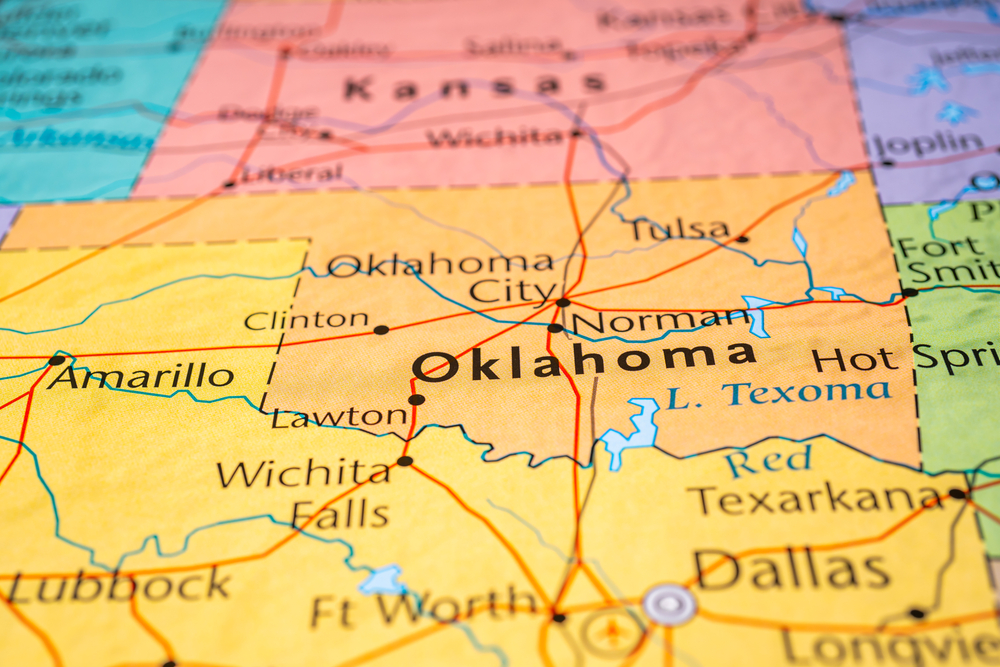
Oklahoma came in as the third worst place to retire, with poor rankings across nearly every category. Its one standout was weather, where it ranked 13th, driven largely by sunshine. But affordability (45th), people of a similar age (44th), arts (46th), health care (41st), and safety (37th) all pulled it down.
The insurance problem here is acute. Oklahoma’s average home insurance premiums are among the highest in the nation, running more than double the national average. Sitting at the center of Tornado Alley generates insurance costs that hit retirees on fixed incomes particularly hard – and that cost only trends one direction.
Sunshine without safety, affordability, or health care access doesn’t add up to a good retirement.
#4 Worst: Arkansas (Ranked 47th Overall)
Arkansas did well in the weather category (9th) but performed poorly in safety (46th), health care (42nd), and arts and entertainment (48th). Violent crime rates are among the nation’s highest.
For retirees who will depend heavily on health care over the coming decades, the health care picture carries serious weight. The Commonwealth Fund’s 2025 Scorecard placed Arkansas 48th nationally for health care system performance, with particular problems in premature deaths from treatable causes (ranked 50th) and infant mortality (ranked 49th). While those metrics may seem less relevant to retirees, they signal the underlying state of a health system in a way that hits every age group.
Arkansas is the fourth worst state to retire in. As Bankrate notes, “In particular, Arkansas ranked fourth-worst in the violent crimes metric that formed part of the safety category.”
#5 Worst: Alabama (Ranked ~46th Overall)
Alabama ranked especially low in the health care and arts categories, making it the sixth worst state to retire in according to Bankrate’s rankings. It also fared poorly in the weather and taxes categories.
For retirees entering their 70s and 80s, limited access to medical professionals and lower overall health outcomes are not an inconvenience – they’re a daily reality. Alabama has only 12.2 primary care physicians for every 10,000 residents, and the state ranks among the worst nationally for successful health care interventions.
Bankrate also ranked Alabama poorly in the arts, based on limited access to arts and entertainment venues. That may sound secondary, but the research connecting arts engagement with social connection and mental health outcomes in older adults is well established – and it makes the arts ranking more consequential than it first appears.
#6 Worst: Nebraska (Ranked 46th Overall)
Nebraska is the surprise entry on this list. Unlike most of its neighbors in the bottom 10, it doesn’t fail across the board. It fails in one category, and that category happens to be the most heavily weighted one.
Nebraska ranked 49th in affordability, and the main driver is home insurance. According to Bankrate’s home insurance data, Nebraska currently has the most expensive average homeowners insurance premiums in the country, at $6,587 per year. Nebraska, Louisiana, Florida, Oklahoma, and Kansas round out the five most expensive states for home insurance – and all five appear on this worst-states-to-retire list.
In other key areas Nebraska is closer to the middle: health care (20th), safety (23rd), and taxes (24th), though it slips to 32nd in weather. Without the insurance-driven affordability problem, Nebraska would have landed much higher overall. That one metric was enough to bury an otherwise average state.
#7 Worst: New Mexico (Ranked 42nd Overall)
Although New Mexico earned the No. 2 spot for weather, it came in last for safety, putting its overall ranking at No. 42. Beautiful skies and a catastrophic crime rate make for a difficult trade-off.
New Mexico struggles with the highest crime rate in the country and a near-bottom quality-of-life score. Retirees face challenges in both health care access and community safety. A state can have perfect weather 300 days a year, but if retirees don’t feel safe walking their neighborhoods or can’t access adequate medical care, the weather advantage disappears quickly.
#8 Worst: Florida (Ranked 41st Overall)

No state on this list will surprise more people than Florida. It has been the retirement default for so long that questioning it feels almost contrarian. But the data is consistent, and the trend is clear.
As Kates explains, “Unlike more common retirement rankings by state, Florida didn’t land very high on our list. Coming in at number 41, Florida ranks strongly on taxes and abundance of other retirees. However, it ranks poorly for health care, home insurance costs and natural disasters, which create significant cost disadvantages for retirees.”
Florida’s average home insurance policy runs $5,695 per year as of July 2025, making it the third most expensive state in the country for home coverage. When a retired couple pays that just to insure their home, the “no income tax” advantage starts to look considerably thinner.
Florida’s tax-friendliness and large retiree community are genuine strengths. They’re just not strong enough to compensate for poor health care rankings, rising insurance costs, and the persistent financial pressure of living in a hurricane-prone state.
#9 Worst: California (Ranked 43rd Overall)
Preferable climates come at a high cost. California ranked No. 1 for weather, but No. 46 for affordability and No. 48 for local taxes, putting it at No. 43 overall.
California’s housing and living costs are among the highest in the nation, and it carries the highest state income tax rate of any state, up to 12.3 percent. Wildfire, earthquake, and air-quality risks bear down on retirees, compounding insurance costs in much the same way hurricanes do in the Gulf states.
The case for retiring in California has always rested on the weather. For most retirees on fixed incomes, the best weather in America isn’t worth the worst tax burden, a near-worst affordability ranking, and rapidly escalating natural disaster risk.
#10 Worst: New York (Ranked Near the Bottom for Affordability)
New York places near the bottom with the worst economic strength, where 14.3 percent of seniors live in poverty and nearly 1 in 5 work past retirement age. That figure alone captures what retirement in a very high-cost state does to people who didn’t plan around those costs from the beginning.
New York carries one of the heaviest tax burdens of any state and faces serious issues with expensive housing and overall affordability. Despite its cultural appeal, many retirees find it hard to maintain financial security, especially outside major metro areas where health care access and safety are also concerns.
What the Winners Have in Common
The flip side of this list is just as striking. Bankrate’s study revealed that New Hampshire is the best state for retirees in 2025, followed by Maine, Wyoming, Vermont, and Idaho.
The top-10 list is dominated by four New England states – New Hampshire, Maine, Rhode Island, and Vermont – alongside three Western states: Utah, Wyoming, and Idaho. None of these are known for warm winters. All of them scored well on safety, health care, and affordability – the categories retirees said they actually prioritized.
The 2025 results flip the standard script by placing four New England states in the top five, challenging the traditional notion that warmer climates are always best for retirees. The findings show a clear preference for safety, health care, agreeable taxes, and active communities over sunshine.
For anyone currently planning where to spend retirement – especially if the planning includes growing retirement savings strategically – that shift is worth taking seriously. The states that look attractive on a weather map are often the same ones extracting the most money from retirees through insurance premiums, inadequate health care infrastructure, and crime that erodes quality of life.
The “Go-Low-Go-No Go” Reality

One of the more useful ideas to emerge from Bankrate’s research is the way Kates thinks about retirement not as a single location decision but as a series of evolving choices. As people live longer and may be retired longer, it’s wise to think about retirement in phases. “It’s a lot more than just putting a pin on the map and saying, ‘This is the place,'” Kates says. “If you’re going to live in retirement for 25 or 30 years, there’s going to be phases of that. And how you figure that out is extremely relevant.”
Kates calls these the “go, low-go, and no-go” phases of retirement, alluding to the idea that as you get older, you’ll likely want or need to slow down. A state that works at 65 – good outdoor access, active social scene, mild climate – may not work at 80, when health care proximity and neighborhood safety matter far more than hiking trails.
That reframe matters when reading a list like this one. Florida might be a fine place for the first decade of retirement, particularly if you’re near good hospitals and can absorb the insurance costs. The question is whether it still makes sense in year 20, when health care access becomes the dominant factor and you’re paying $5,700 a year to insure a house in a state that’s still contending with a volatile insurance market.
Ultimately, the best place to retire will depend on personal preferences. Retiring in Louisiana or Oklahoma may look challenging based on these metrics, but if that’s where your family lives and you want to be close to them, it may be worth planning ahead and figuring out how to live well there, despite the potential drawbacks. Rankings are tools, not verdicts.
Read More: 13 Affordable Beach Towns Where Retirees Are Moving Instead of Florida
What to Check Before You Book the Moving Truck

The single most important takeaway from this data is that home insurance has become a retirement variable most people aren’t adequately factoring in. Nationally, home insurance rates have gone up more than 9 percent – about $209 per year – from July 2023 to July 2025, according to Bankrate’s analysis. In the worst-affected states, that increase runs well over $500 in just two years, for homeowners who haven’t filed a single claim.
Seven of the 10 worst states for retirement are in regions where catastrophic weather events aren’t rare anomalies but annual probabilities. Hurricanes in Louisiana, Florida, and Texas. Tornadoes in Oklahoma, Arkansas, and Nebraska. Wildfires in California. Each of these events pushes insurance costs higher and eventually drives insurers out of the market, leaving homeowners with fewer options and higher prices. For someone on a fixed income, that’s not a lifestyle inconvenience – it’s a direct threat to the entire retirement plan.
Health care ranking should sit near the center of any retirement location decision, not at the edges. The states that rank worst for health care on this list aren’t ranked that way because of bureaucratic data problems. They’re ranked that way because rural hospitals are closing, doctor availability is declining, and the gap between what Medicare covers and what care actually costs is growing fastest in the states with the fewest competitive health care markets.
Choosing where to retire based primarily on tax friendliness or sunshine, while setting aside where you’ll be able to get a specialist appointment at 79, is one of the more consequential planning mistakes a retiree can make. The good news is that it’s entirely avoidable – as long as you’re looking at the right numbers before you start packing.
AI Disclaimer: This article was created with the assistance of AI tools and reviewed by a human editor.