
The presidency is not a job that comes with unlimited authority. Every president eventually runs into the same set of hard stops – places where the Constitution, Congress, or the courts simply say no, regardless of how forcefully a White House pushes. Most of the time those limits are academic. They get tested politely, at the margins, and everyone moves on.
Then comes a president who treats every limit as a starting point for negotiation. You read the headlines, you see an executive order targeting something you assumed was settled law, and you find yourself genuinely asking: can he actually do that? The answer, more often than the administration’s press releases would suggest, is no.
What follows is a clear-eyed breakdown of the specific things Trump cannot legally do in office – not theoretical off-limits territory, but documented powers that courts, constitutional scholars, and the text of the Constitution itself have already ruled are simply not his to claim.
1. Serve a Third Term
Trump’s relationship with the Twenty-Second Amendment has been one of the more unusual subplots of his second term. He has floated the idea of a third term in interviews, done nothing to discourage supporters who take it seriously, and in May 2026 said “when I get out of office in, let’s say, eight or nine years from now” – as if the question were already settled.
It isn’t. A coterie of Trump loyalists is in the early phase of a campaign to rewrite the Constitution so he can serve another term – an idea Trump has done nothing to discourage. But as NBC News reported, the Constitution is clear on that point: he’s not eligible. Under the 22nd Amendment, no one may be elected president more than twice. That rules out Trump.
Amending the Constitution to abolish the two-term limit would be exceedingly difficult, requiring either a two-thirds vote of Congress or two-thirds of the states agreeing to call a constitutional convention to propose changes. Either route would then require ratification from three-quarters of the states. Short of that, no executive order, no legal argument, and no amount of political momentum changes anything. The amendment is not a suggestion.
2. End Birthright Citizenship by Executive Order

On his first day back in office, Trump signed an executive order attempting to strip automatic citizenship from children born in the United States to parents who lack permanent legal status. It made for dramatic headlines. It did not make for good law.
The case was filed by the American Civil Liberties Union and partner organizations on behalf of groups with members whose babies born on U.S. soil would be denied citizenship under the order. The lawsuit charges the Trump administration with flouting the Constitution’s dictates, congressional intent, and longstanding Supreme Court precedent.
The 14th Amendment was ratified in 1868, overturning the Dred Scott decision that denied Black Americans the rights and protections of U.S. citizenship. In 1898, the U.S. Supreme Court confirmed in United States v. Wong Kim Ark that children born in the United States to immigrant parents were entitled to U.S. citizenship, and the principle has remained an undisturbed constitutional bedrock for over a century. As the ACLU’s lawsuit made plain, rewriting that by executive fiat isn’t a stretch of presidential power – it’s a different category of act entirely. Every federal court that reviewed the order blocked it. The Supreme Court heard oral arguments in Trump v. Barbara in April 2026, with a decision expected by late June or early July.
3. Withhold Congressionally Approved Funding

Congress passes a budget. The president signs it into law. That money is then appropriated – meaning legally committed to specific purposes. The president does not get to decide, after the fact, that he disagrees with those purposes and simply refuse to spend it.
The governing road map of Project 2025 recommended that the president ignore settled legal precedent and seize control over the federal budget via impoundment. Impoundment, which is “illegal under federal law, refers to the executive branch’s refusal to spend appropriated monies per Congress’ directives.” Almost immediately after inauguration, the Trump administration, aided by DOGE, began unilaterally slashing hundreds of billions of dollars of appropriated funds while dismantling wide swaths of departments and agencies.
The Center for American Progress found that in a rare moment of pushback from a Republican senator, Appropriations Committee Chair Susan Collins joined her committee counterpart Sen. Patty Murray to accuse “President Trump of illegally refusing to spend $2.9 billion approved by Congress.” The president can propose a budget. He can advocate for cuts through the legislative process. What he cannot do is act as a one-person override on money that Congress has already lawfully committed.
4. Control Independent Federal Agencies

The Federal Election Commission, the Federal Reserve, the National Labor Relations Board – these agencies were deliberately designed by Congress to operate outside direct presidential control. Their independence isn’t an administrative quirk; Congress built them that way specifically to prevent political interference in the functions they oversee.
According to the Campaign Legal Center, on February 18, 2025, Trump signed an executive order purporting to give the president veto power over decisions made at independent agencies like the Federal Election Commission. Congress designed these agencies to be independent from the executive office, and attempting to place their decision-making underneath presidential authority is illegal. Campaign Legal Center filed a legal brief in the Democratic National Committee’s lawsuit against the Trump administration challenging the constitutionality of this order.
The broader principle the courts have long recognized is this: when Congress explicitly limits the president’s removal power over agency officials, that limit stands. A president can disagree with an independent agency’s decision. He can nominate new commissioners when vacancies arise. Issuing an order declaring that those agencies now report directly to him is a different matter.
5. Fire Inspectors General Without Notice

Inspectors general are the internal watchdogs of the federal government. They sit inside agencies and conduct independent investigations into waste, fraud, and abuse – answerable not to the agency heads they oversee, but to Congress. An inspector general who can be fired by the people they’re supposed to be watching isn’t an inspector general in any meaningful sense.
In January 2025, Trump announced the immediate firing of at least 17 inspectors general across the federal government. These are ethics enforcers who conduct independent investigations to ensure that public officials are not engaging in corrupt behavior at taxpayer expense. The immediate firings were illegal: the president can only remove inspectors general after providing 30-day notice to Congress. The requirement exists precisely because Congress recognized that an unchecked presidential removal power over IGs would gut the oversight function entirely. Firing them without notice doesn’t just break a procedural rule. It removes the mechanism Congress put in place to keep the executive branch honest.
6. Dictate the Contents of the Federal Voter Registration Form

Elections in the United States are administered primarily at the state level, and the federal voter registration process is governed by statute – not presidential preference. Congress writes those rules, not the White House.
Two key parts of President Donald Trump’s March 2025 executive order on elections have been successfully and permanently halted. The president acted beyond his legal authority by unconstitutionally trying to mandate new voter registration requirements, direct an independent agency to make drastic changes to our elections, and disenfranchise military and overseas voters. Campaign Legal Center, on behalf of a pro-voter coalition, successfully argued in front of a U.S. District Court that it is illegal for the president to set voting rules, direct the Elections Assistance Commission to change federal election rules, or require military and overseas voters to provide burdensome documentation when registering to vote or requesting an absentee ballot.
On January 30, 2026, a federal court permanently struck down a second part of Trump’s anti-voter executive order targeting military and overseas voters. Two separate courts, two permanent rulings, the same basic answer: the president does not control the machinery of voter registration.
7. Override the Constitution Through Executive Order

This one sounds obvious, but the Trump administration has pushed it further than any modern presidency. In a recent interview, Trump responded to a question about whether he had to uphold the Constitution with “I don’t know.” That answer prompted genuine alarm among constitutional scholars – and for good reason.
The Constitution was designed to limit presidential power, not expand it without bound. It does not give a president the authority to violate the Constitution itself, create or change congressional statutes, or override Supreme Court decisions – no matter what an executive order says.
Some administration representatives have implied that executive orders carry the force of law and that officials must follow them even in preference to statutes. That view has no support in the Constitution. An executive order is a directive to the executive branch about how to carry out existing law. It is not a mechanism for creating new law, rewriting old law, or neutralizing constitutional protections. When a president treats it as any of those things, courts have been saying so – and doing something about it – throughout this term.
8. Ignore Federal Court Orders

By mid-July 2025, legal analysts had documented Trump defying judges and courts in roughly one third of all cases against his administration – actions described by legal experts as without modern precedent for any presidency. Defying a court order is not a gray area. It is contempt.
In the first months of the second Trump administration, at least 39 separate judges appointed by five different presidents – including Trump himself – ruled against the administration’s overreaching actions, variously issuing temporary restraining orders and preliminary injunctions preventing the administration from ending birthright citizenship, targeting political opponents, and freezing funding Congress had approved.
The separation of powers means the judiciary has the authority to tell the executive branch it has acted illegally – and the executive branch is obligated to comply. There is no Article II provision allowing a president to decide which court orders he finds acceptable. When the Supreme Court ruled in 2025 that the administration must release nearly $2 billion in foreign assistance funds that had been unlawfully frozen, that ruling was binding. Compliance wasn’t optional.
9. Make Laws Unilaterally
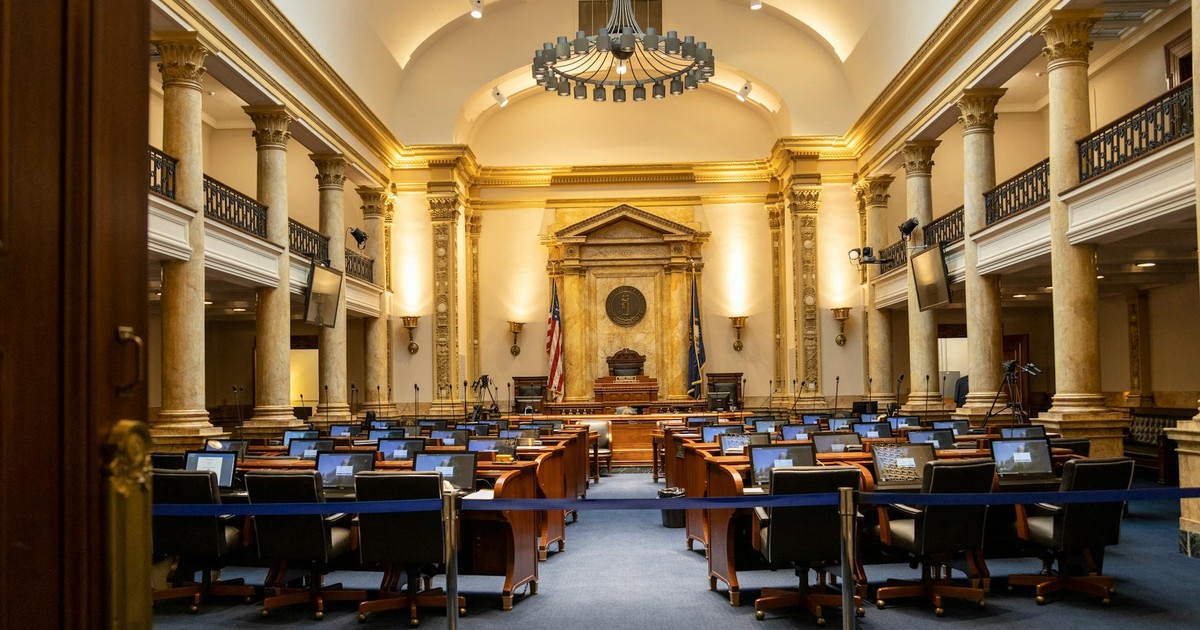
The power to legislate belongs to Congress. Article I of the Constitution is unambiguous on this point, and no subsequent amendment has changed it. The president can propose legislation, advocate for it, sign it into law once passed, or veto it. Skipping those steps and declaring a law by executive order is not within the grant.
An executive order can direct an agency to change a regulation, but the agency still has to follow the law when it does so. Under the Administrative Procedure Act, most new regulations require a public notice-and-comment process. The agency must publish the proposed rule in the Federal Register, give the public a chance to submit written comments, and explain the basis for its final decision. A president cannot use an executive order to skip these steps. This creates a practical check on presidential power that often goes unnoticed: even when a president announces a dramatic policy shift by executive order, the actual implementation through agency regulations can take months or years and must survive public scrutiny along the way.
The administration has at times behaved as though executive orders are interchangeable with legislation. They’re not. An executive order that contradicts a statute is illegal. An executive order that creates new legal obligations on private citizens without congressional backing is illegal. The pen is powerful, but its power runs out at the edge of existing law.
10. Pardon Himself for Federal Crimes

No president has ever pardoned themselves. The question of whether one legally could has never been tested in court, but the legal consensus – and the plain reading of the pardon clause – leans heavily toward no. The pardon power in Article II grants the president authority to pardon “Offenses against the United States.” What it does not do is exempt the president from the rule of law himself.
The argument against self-pardon is rooted in a foundational legal principle dating back to English common law: no person can be a judge in their own case. A self-pardon would require the president to exercise judicial authority over himself – something the separation of powers explicitly prohibits. The Department of Justice’s own Office of Legal Counsel concluded in 1974 that a president cannot pardon themselves, noting that such an act would be inconsistent with the constitutional design.
Trump has never been shy about testing the limits of the pardon power. On his first day back in office, he granted clemency to all January 6 defendants – including those who violently attacked police officers – and his pardons have disproportionately favored political allies and the well-connected. Pardoning others, however controversial, is within the constitutional grant. Pardoning himself is a different matter entirely, and one the courts would be unlikely to allow to stand.
What the Walls Actually Hold

What makes this moment different isn’t that a president has tested the limits of his power – every president does, and the system was built expecting that. What’s different is the scale, the explicitness, and the stated belief that the administration can act with impunity when it comes to constitutional constraint. That’s not a political characterization. It’s a description of positions the administration has taken in its own words and its own court filings.
The courts have largely held. The birthright citizenship order is blocked. The spending freezes were ruled illegal. The voter registration changes were struck down permanently. The inspector general firings violated federal law. The constitutional architecture, tested hard and repeatedly, has done most of what it was designed to do. What remains an open question is whether sustained, coordinated pressure to normalize the idea that a president can simply ignore court orders – or treat executive orders as equivalent to legislation – will eventually wear down the institutions doing the pushing back.
That’s not a question with a clean answer. But knowing exactly where the legal lines sit, and recognizing when they’re being crossed, is not a small thing. The Constitution was designed to be inconvenient for presidents who want more than it gives them. That inconvenience is the point.
AI Disclaimer: This article was created with the assistance of AI tools and reviewed by a human editor.