The women doing it don’t always call it activism. Some call it entertainment. Others call it catharsis. A few, more pointedly, call it justice. But whatever name you attach to the growing trend of women using fake conservative personas to extract money, confrontations with uncomfortable facts, and the occasional genuine moment of self-reflection from MAGA-aligned men online, the results are the same: a subset of politically certain men is getting a crash course in things nobody in their media bubble was ever going to tell them.
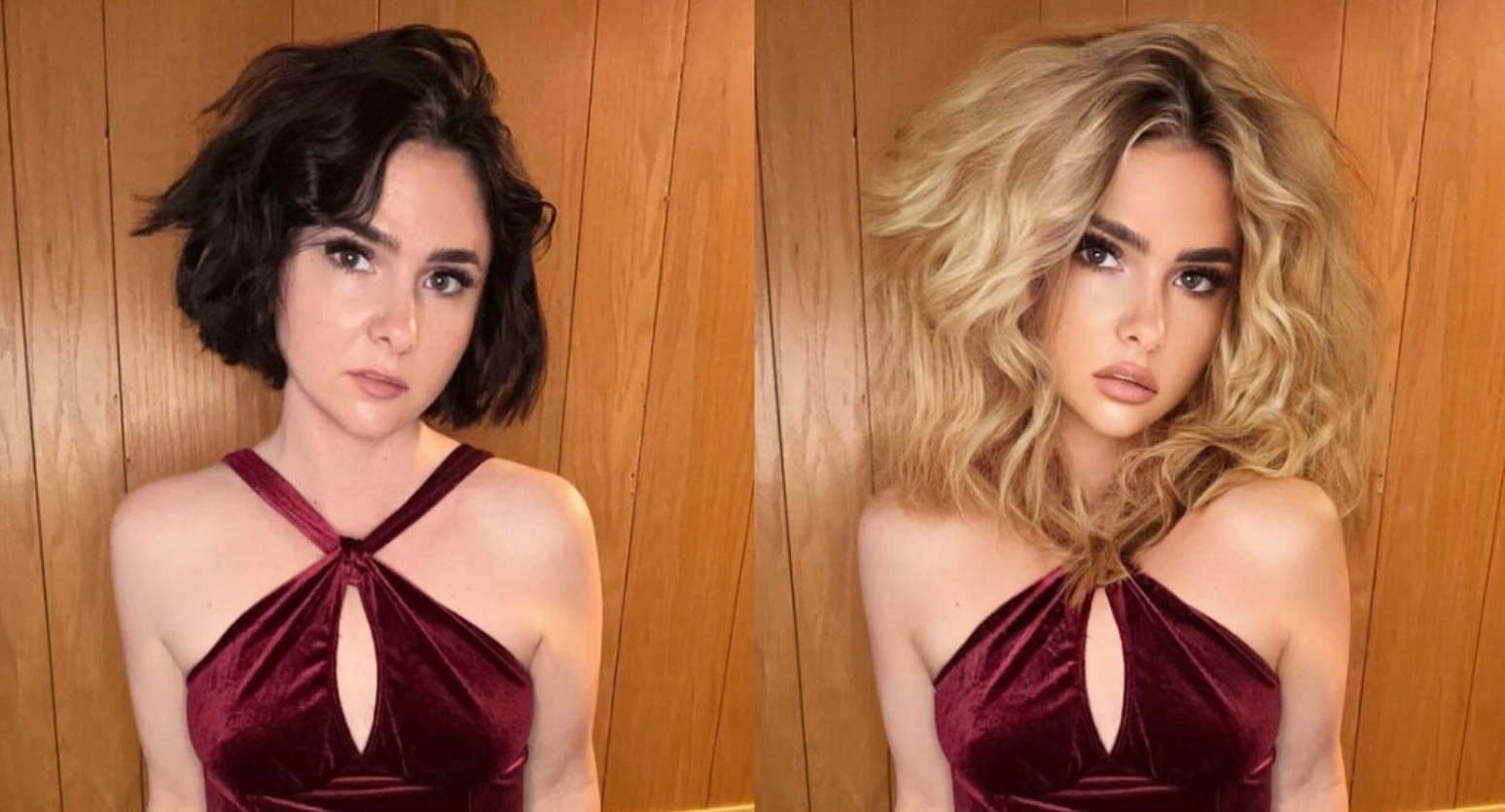
It started, as many strange internet phenomena do, with one person doing something absurd for reasons that made a certain kind of sense. Brooke Teegarden, a writer and content creator in Green Bay, Wisconsin, sits at her laptop wearing a blond filter and conservative cosplay attire, preparing to teach a 60-year-old MAGA man that the people allegedly abducting children in Minnesota are not, in fact, ISIS. Her approach is part theater, part fact-check, part something harder to name. But she is not alone, and the phenomenon she represents has grown considerably messier and more complicated than any single viral video can capture.
What’s happened across several overlapping corners of the internet amounts to a kind of informal stress test of MAGA identity – one that is revealing fault lines around misinformation, loneliness, financial vulnerability, and the gap between what conservative men say they believe about themselves and what their behavior online suggests. Here are the hard truths being forced into the open.
1. The Misinformation Goes Deeper Than Anyone Is Admitting
Teegarden, who posts as @theletsnotdate, is one of a growing number of women using the specific texture of MAGA masculinity against itself by exploiting political humiliation dynamics online. The men she targets are generally older, white, Christian, and conservative, and they carry two things into every conversation: a desperation to be desired and a set of beliefs propped up entirely by false information. She uses both.
The mechanics of what Teegarden does are worth understanding in some detail because they reveal something more significant than the tactic itself. Her tactics vary. She maintains multiple profiles, including a filtered, blond version of herself she describes as a “satirical right-wing persona” that she uses to enter conversations she wouldn’t otherwise be invited into. She starts with sympathy, asks questions, and sends selfies when she starts to lose them with facts.
When facts replace fiction inside a space where these men feel safe, what Teegarden keeps running into is that the misinformation runs deep – not one wrong story, but entire alternative fact architectures stacked on top of each other. Men aren’t just wrong about one story; they’re operating inside entire alternative fact architectures. The “scam,” from their perspective, is that an attractive woman agreed with them. The real reveal is how much was built on nothing.
2. The Loneliness Is Real – And Being Exploited
Teegarden says she targets the type of man who harmed her – middle-aged conservative men who publicly perpetuate the idea that it’s acceptable to treat women and girls as property. But even she acknowledges something human underneath the politics. When she talks to them, she says she is not doing it from some detached political distance: “I am doing it because I do not want them to harm other girls.”
The loneliness of many of these men is not a secret. Research shows a trend that young men and women are growing apart politically, and many are unwilling to cross the ideological divide when dating. What is less discussed is the way that loneliness becomes a tool in the scammer’s kit, regardless of whether the scammer is a feminist activist using filters or a student in India using artificial intelligence.
Given the polarized political climate, research from the Tufts Public Opinion Lab found that over the past four years, 10% more young men have identified as Republicans while young women have moved left – meaning that for conservative men looking for a partner of the opposite sex, the available dating pool is genuinely shrinking. And a shrinking pool means more desperation, more willingness to believe someone online who seems to share your worldview, and more vulnerability to anyone who knows how to perform that worldview convincingly.
3. AI Has Made the Whole Thing Industrialized
If Teegarden represents the handcrafted version of this phenomenon, the “Emily Hart” case represents what happens when it scales. A medical student from India who goes by “Sam” said he created the AI persona Emily Hart as a way to make money for schooling expenses. What he built was startlingly effective.
Looking to earn extra money and save for a planned move to the US, Sam searched for ways to make income online and landed on the idea of an AI influencer while scrolling Instagram. Using Google Gemini’s Nano Banana Pro, he built the character and began posting images of her in bikinis. When the content gained little traction, he turned to Gemini for advice. The chatbot told him that creating a generic “hot girl” meant competing with a million other accounts, then landed on the “MAGA/conservative niche” and called it a “cheat code,” noting that “the conservative audience (especially older men in the U.S.) often has higher disposable income and is more loyal.”
By sharing provocative content depicting a scantily clad Hart as a die-hard MAGA supporter, Sam racked up millions of social media views and made thousands of dollars selling anti-woke apparel and content subscriptions. “Every reel I posted was getting three million views, five million views, 10 million views. The algorithm loved it,” as reported by Moneywise. In February 2026, about a year after it launched, @emily_hart.nurse was banned on Instagram for fraudulent activity. The content had been almost entirely AI-generated from the start. Nobody had bothered to check.
The men following Emily Hart weren’t in love with a woman; they were in love with a reflection of their own beliefs presented in an attractive package. That’s a vulnerability that has nothing to do with intelligence and everything to do with what happens when an identity becomes a closed loop.
4. The Financial Exploitation Has a Much Bigger Face
The Emily Hart situation and the Teegarden-style findom operations are, in a broader sense, practice runs for something far more significant. The Trump Mobile T1 phone was initially announced in June 2025 by Donald Trump Jr. and Eric Trump, pitched as a MAGA-friendly alternative to liberal-coded brands like Apple or Samsung, boasting that it would be an Android device “Made in the USA” retailing for $500 with monthly fees of $47.45.
The promises dissolved almost immediately. Within days of the June 2025 launch, claims that the phone would be domestically produced were quietly removed from the website. Trump Mobile had launched with “MADE IN THE USA” as a banner headline. By February 2026, executives confirmed the phone would not be manufactured in the US, with final assembly of roughly the last ten components occurring in Miami while bulk production happened overseas.
Trump Mobile continued selling wireless service plans at around $47 per month, with users reporting billing irregularities and difficulty securing refunds. The T1 phone itself, the venture’s headline product, remained entirely absent. It missed implied or announced launch windows in August, September, and December 2025, then a projected mid-March 2026 T-Mobile certification deadline. The April 2026 website redesign removed the release date entirely, rather than replacing it with a new one.
The pattern of missed deadlines and eroding marketing claims escalated into a formal regulatory matter by January 2026, when lawmakers noted that Trump Mobile had been selling refurbished iPhones largely manufactured in China while claiming the products were “brought to life right here in the USA.” Senator Elizabeth Warren’s office asked the FTC to respond on whether Trump Mobile’s conduct constituted deceptive practices. The hard truth this forces into view is an uncomfortable one: the same instinct that makes a man trust an AI influencer because she wears a MAGA hat makes him trust a phone company because it bears a familiar name.
5. Conservative Women Aren’t Impressed Either
The conversation about MAGA men and their dating difficulties tends to get framed around liberal women refusing to date them. But what men want in relationships often gets discussed without acknowledging that the problem isn’t always ideological mismatch – it’s something more basic. Washington Post reporting on D.C.’s conservative dating scene found conservative women arriving in the capital with firm standards: love the Lord, attend church regularly, and be able to “provide and protect, emotionally, physically, spiritually, all of those things.” The optimism that a second Trump term would yield a bounty of eligible GOP bachelors is now bumping up against the reality that these men aren’t bringing the standards that even the women most suited to them are hoping for.
Research suggests that political ideologies go hand in hand with romantic compatibility, and that 77% of currently married and cohabitating partners in the U.S. are with someone of the same political party. But political alignment doesn’t automatically produce a good partner, and the women who share these men’s values are increasingly clear-eyed about what they’re actually being offered.
Modern conservatism of the sort that attracts young men is often premised on being bitterly angry at women, and it is quite rational for women to conclude that men holding these beliefs will be less capable of stable, loving relationships. Surveys show that “manosphere beliefs” specifically are a dating dealbreaker for an overwhelming majority of women. That’s not a liberal rejection. It’s a human one.
Read More: Women’s Biggest Dealbreakers in Men, According to Research
What’s Actually Being Revealed Here
The “scam” framing is useful because it’s accurate enough to stick, but it misses the more significant point. What’s being exposed across all of these stories – the findom operations, the AI influencer, the Trump phone, the dating data – is not a vulnerability unique to conservatives. It’s a vulnerability unique to any identity that has become so sealed off from contradiction that it can no longer defend itself against a well-dressed lie.
When a person’s entire sense of self is tied to a political tribe, and that tribe’s media ecosystem actively filters out disconfirming information, the result is not strength. The result is a very particular kind of fragility. It’s the fragility of someone who has stopped stress-testing their own beliefs because the people around them stopped doing it too. The women with the blond filters and the student with the Gemini account and the phone company with the gold casing all found the same crack in the same wall. They just walked through it for different reasons.
None of this resolves easily. The men in these stories don’t, for the most part, emerge transformed. Tom from Wisconsin is probably still worried about ISIS kidnappings in Minnesota. The followers of Emily Hart have moved on to the next account. The Trump phone buyers are still waiting. But the cracks are there, and the hard truths don’t un-exist just because no one wants to look at them directly. That’s usually how it works.
AI Disclaimer: This article was created with the assistance of AI tools and reviewed by a human editor.