
Most people don’t retire where they always imagined. They retire where the math works. And right now, for a growing number of Americans, the math works best somewhere south of the Mason-Dixon Line.
The average Social Security monthly check for retired workers reached $2,081 in April 2026, according to Kiplinger. That figure sounds reasonable until you factor in rent, groceries, utilities, and healthcare in most American cities. In Seattle, Denver, or Boston, $2,081 covers the rent – if you’re lucky – and not much else. But in the right Southern city? It covers a full month of comfortable living, with money to spare.
Retirees have been migrating to Southern states in growing numbers, seeking the best combination of price, comfort, and care. The reasons aren’t complicated. Lower taxes, lower housing costs, warm weather for most of the year, and the particular pace of life the South does better than anywhere else. The hard part is knowing which cities actually deliver on that promise and which ones just look good on paper. These 13 do both.
1. Knoxville, Tennessee
Knoxville doesn’t always top the lists, which is exactly why it should be near the top of yours. With a cost-of-living index of 86.4, roughly 14% lower than the nationwide average, Knoxville is the most affordable major Tennessee city to live in. Housing costs run about 20% below the national average at around $953 per month for a single person, and food expenses land about 17% below average at $331 monthly for an individual.
Tennessee sweetens the deal considerably on the tax side. Tennessee deserves a special mention for retirees: it levies zero state income tax on wages or retirement income, and the old Hall Tax on investment income was fully repealed in 2021. What you draw down from savings, dividends, or a pension – the state doesn’t touch it. For anyone living on a fixed income, that’s not a small thing.
The lifestyle upside is real, too. From museums to nightlife to fine dining, Knoxville offers considerable bang for the buck. The Great Smoky Mountains are less than an hour away. The University of Tennessee brings a level of energy and cultural programming that smaller cities simply can’t match. Knoxville is consistently ranked among the best places for renters to retire, with quality hospitals and doctors, plenty of green space, and retiree-friendly amenities.
2. Chattanooga, Tennessee
An hour southwest of Knoxville and very much its own thing, Chattanooga has quietly become one of the most livable cities in the South. It’s the third-most affordable city in Tennessee with a cost-of-living index of 88.6 – and it’s nicknamed “Scenic City” for the surrounding mountains, making it a favorite of outdoor enthusiasts.
Healthcare facilities in Chattanooga are well-regarded for their care of older adults. That matters more as you age than most people admit when they’re doing their retirement math. A city can check every box on affordability and still let you down badly if getting decent medical care means a ninety-minute drive.
The Tennessee Valley Authority has its roots here, but modern Chattanooga is known for something else entirely: family-friendly attractions and outdoor activities abound, and the city also claims the world’s fastest publicly available internet broadband service. That last part matters if you plan to video-call the grandkids, stream shows from the porch, or run any kind of part-time freelance work in retirement.
3. Huntsville, Alabama
Huntsville has a reputation as a tech and aerospace hub, which means it has the infrastructure of a city twice its size. Huntsville is drawing retirees from expensive coastal markets – including aerospace professionals from California who can sell a $650,000 condo and buy a 2,200-square-foot home in Madison County for around $285,000 cash. That kind of equity conversion changes retirement entirely.
Alabama’s tax treatment of retirees is notably generous. The state earned its spot as the third-most affordable state for retirees in part by having the second-lowest property tax rate in the country, at just 0.38%, according to RetirementLiving.com. Social Security benefits are fully exempt from state tax in Alabama, which – for someone whose primary income is a monthly check from the SSA – is the difference between stretching a budget and actually living.
The city’s investment in research, technology, and healthcare has produced a medical infrastructure that outperforms most comparably sized Southern cities. And the cost of a restaurant meal, a round of golf, or a day trip to the Tennessee River is still priced for regular people, not transplants who sold a Bay Area condo.
4. Birmingham, Alabama
Alabama’s largest city often gets overlooked in favor of flashier Southern destinations, and that’s precisely what keeps it affordable. The South dominates retirement affordability rankings, with three states – Arkansas, Mississippi, and Alabama – making the top five for affordability. Birmingham sits right in the heart of that picture.
For the average retiree in Alabama to live comfortably, the state requires an income of about $55,258 per year, with annual expenses for those 65 and older coming out to about $46,049 – which works out to roughly $3,837 per month. At the low end of that range, a careful retiree living alone can stay well under $1,500 a month, particularly if they own their home outright or rent outside the downtown core.
Birmingham has invested heavily in its Southside and Five Points South neighborhoods over the last decade, and it shows. There’s a walkable restaurant scene, a strong medical center ecosystem anchored by the University of Alabama at Birmingham, and green space that catches newcomers off guard. The reputation has lagged the reality here, which works entirely in a retiree’s favor.
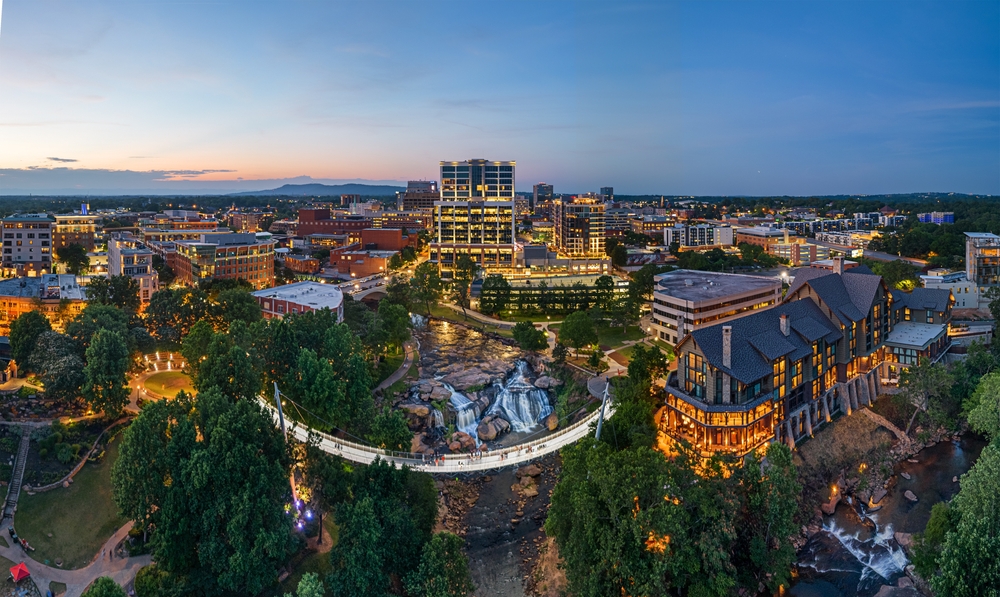
5. Greenville, South Carolina
Greenville is the city that keeps showing up in retirement conversations, and for good reason. Greenville is a primary reason South Carolina draws so many retirees. The downtown is walkable, the Blue Ridge Mountains are an hour away, and the cost of living runs well below the national average – you get Southern weather without paying South Beach prices, according to MoneyTalksNews.
South Carolina offers significant tax advantages for retirees: there’s no tax on Social Security income, ensuring more of your benefits stay in your account, and the state also offers deductions on other retirement income alongside low property taxes. With a cost of living about 6% below the national average, South Carolina is one of the most affordable states for retirees overall.
Greenville’s cost-of-living index score of around 85 to 95 generally offers meaningful savings without sacrificing major amenities – a range that lets a retiree on Social Security alone cover monthly essentials without white-knuckling the budget. The Swamp Rabbit Trail running through the city’s center is free. The farmers market is genuinely affordable. And the summers, while warm, are nowhere near as brutal as coastal Florida.
6. Spartanburg, South Carolina
Forty-five minutes west of Greenville, Spartanburg sits in the same advantageous tax and cost-of-living environment but without the “it’s been discovered” price creep that’s starting to affect its neighbor. Housing here remains notably cheaper than Greenville proper, and the city has undergone a genuine revitalization that’s brought new restaurants, a renovated arts scene, and a renewed sense of purpose to its downtown.
Spartanburg benefits from all the statewide advantages: no Social Security tax, low property taxes, and healthcare costs that come in well below the coastal norm. The Spartanburg Regional Medical Center anchors the healthcare picture here, and the city is close enough to Greenville and Charlotte that specialist care is never far away. For retirees who want the South Carolina tax advantages but aren’t willing to pay Greenville rents, Spartanburg is the answer nobody’s talking about yet.
7. Fayetteville, Arkansas
Arkansas doesn’t get the same marketing budget as Tennessee or Florida, which is why Fayetteville remains genuinely under the radar. The Fayetteville metro area – which includes Springdale, Rogers, and Bentonville – offers low costs alongside real attractions: the Ozark Mountains for outdoor recreation, and the downtown area around the University of Arkansas providing restaurants, shops, and a lively music and arts scene including the Walton Arts Center.
Arkansas flies under almost everyone’s radar, which is why it works. Fayetteville sits in the Ozarks with a low crime rate and a cost of living well below the national average, and the state offers partial exemptions on retirement income. You won’t get ocean breezes, but you’ll get rolling hills, four seasons, and a dollar that stretches twice as far as it does in Tampa. Property taxes in Arkansas are especially affordable at just 0.57%, one of the lowest rates in the country, and it makes a real difference if you own your home outright.
The proximity to Bentonville – home to the Crystal Bridges Museum of American Art, which offers free general admission – means cultural programming that rivals cities ten times the size.
Read More: Retirees are raving about charming town so affordable that social security is all they need
8. Augusta, Georgia
Augusta is best known for the Masters golf tournament every April, but the city operates well below its own tourist profile for the remaining eleven months. Augusta is a particularly appealing retirement destination with its low living costs and generous tax breaks for seniors. Revitalization efforts have been pushing hard in recent years to expand the area’s appeal beyond the annual Masters golf tournament.
For the 2026 Best Places to Retire rankings, U.S. News & World Report analyzed 859 cities to find the best places to retire, basing its cheapest-places ranking on median gross rent and annual housing costs for mortgage-paying homeowners. Augusta consistently scores well on that measure. The median sale price for a home in West Augusta sits around $200,000, making it a very affordable place to live. At that price point, a retiree who owns outright or makes a modest mortgage payment can allocate far more of a monthly Social Security check toward healthcare, food, and actually enjoying themselves.
Georgia offers retirees a low cost of living, favorable tax policies, and diverse landscapes – from beaches to mountains – with plenty of opportunities for leisure activities. Augusta adds access to the Medical College of Georgia and AU Health, which is a meaningful healthcare asset for a retiree city. Golf course access, for those who want it, is abundant and affordable at a local level – not just during Masters week.
9. Tupelo, Mississippi
Mississippi doesn’t make many “charming” lists, but Tupelo is the exception. The birthplace of Elvis Presley sits in the northeastern corner of the state and has a walkable downtown, genuinely warm community culture, and costs that make almost every other city on this list look expensive by comparison.
Mississippi’s taxes rank among the top 20 for affordability, with a property tax rate of 0.74% that is at least half that of 15 states, and a state income tax just slightly higher than Arkansas at 4.70%. The median sale price for a home in Tupelo sits around $248,245, and Mississippi doesn’t tax Social Security benefits, retirement account withdrawals, or pensions. For a retiree whose income is purely Social Security plus modest withdrawals, Mississippi’s tax structure is about as close to a free pass as exists in American retirement law. The tradeoff is that Mississippi’s poverty rates and some infrastructure limitations are real – but for a retiree who owns their home and has healthcare covered through Medicare, the day-to-day quality of life in Tupelo is genuinely good.
10. Pensacola, Florida
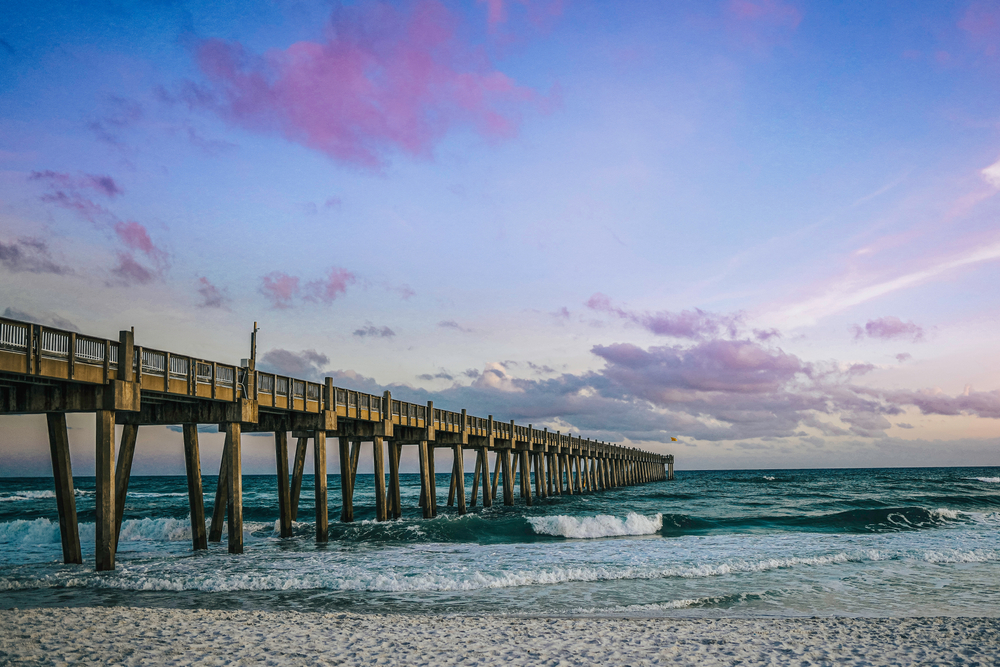
Florida’s insurance crisis has made large parts of the state an affordability trap. Pensacola is the exception. Far enough west to sit in a lower hurricane-risk zone, close enough to the Gulf to deliver white-sand beaches and warm winters, and still carrying Florida’s most powerful retiree advantage: no state income tax.
Florida is one of the few states with no state income tax, allowing retirees to retain more of their Social Security benefits, pension payments, and other retirement income. In Pensacola specifically, housing costs run well below the Florida average, meaning retirees get the tax advantages without paying South Florida prices. You can find one-bedroom rentals under $1,100 a month and modest homes in established neighborhoods that haven’t crossed $200,000.
The Naval Air Station Pensacola and its associated veterans’ facilities mean the city has medical infrastructure built for a population with complex needs – a genuine asset for older residents. And the pace of life in Pensacola’s historic districts is exactly what a retiree from a high-pressure city came South to find.
11. Myrtle Beach, South Carolina
Myrtle Beach has a tourist reputation that can obscure how well it actually works as a place to live year-round. Myrtle Beach is the Florida alternative most retirees overlook – sixty miles of Atlantic coastline, roughly 100 golf courses, and a cost of living that makes Naples look absurd. South Carolina’s tax treatment of retirement income is favorable, and the hurricane risk, while real, is lower than peninsular Florida.
The year-round population dynamic means that outside of summer, you’re largely living in a quiet beach community where restaurants have tables available and parking isn’t a forty-minute project. South Carolina’s Social Security exemption and modest property taxes apply here just as in Greenville and Spartanburg, but you’re trading the mountains for the ocean. For retirees whose priority is a beach walk every morning, the math doesn’t get better than this.
The healthcare infrastructure around the Grand Strand Medical Center has expanded significantly in recent years, specifically because the retirement population in the area has grown. That’s not coincidence – it’s supply following demand, and it means the medical safety net here is considerably more robust than it was a decade ago.
12. Gainesville, Florida
Not every Florida retirement story ends with insurance sticker shock and overcrowding. Gainesville – home to the University of Florida – operates on an entirely different frequency from Miami, Tampa, or Fort Lauderdale. Gainesville is home to the University of Florida, which U.S. News & World Report ranked in a tie for seventh among all public colleges nationally. Retirees can attend to pursue additional education, and the city is one of the more affordable places for housing in Florida, with a median sale price of $258,000 – compared to the state’s median of $411,100.
The university presence keeps the arts calendar busy year-round, the restaurant scene surprisingly interesting, and the general energy younger and more varied than most retirement-heavy Florida towns. UF Health is an academic medical center with resources that smaller Florida cities simply don’t have.
Florida’s no-income-tax policy applies fully here, and Florida taxes no personal income, Social Security, retirement account withdrawals, or pensions. Gainesville’s position in north-central Florida means slightly cooler summers than the coasts and no sea-level flooding anxiety. For retirees who want a college-town pace with Florida tax advantages, it’s one of the state’s most underrated choices.
13. Lexington, Kentucky
Kentucky edges into this list from the upper South, and it earns its spot. Lexington sits in the heart of Bluegrass Country with a cost of living consistently below the national average, a genuine arts and restaurant culture built around the University of Kentucky, and horse country beauty that’s unlike anything else in the region.
Lexington specifically benefits from the UK HealthCare system, which is the state’s largest medical system and an important consideration for anyone managing chronic conditions or anticipating more frequent medical needs. Kentucky partially exempts retirement income from state taxes, including a $31,110 pension exclusion, which softens the impact of having a state income tax. Housing in Lexington remains well below the national median. A retiree coming from a coastal market and buying outright will find that their housing equity funds a genuinely comfortable lifestyle here.
What the $1,500 Number Actually Means
The $1,500 figure isn’t arbitrary. It reflects the bottom range of what a single retiree receiving a below-average Social Security check might have available after covering basic fixed costs. Of the 51.8 million people receiving Social Security retirement benefits, more than 17 million collect less than $2,000 per month, and nearly 7 million see less than $1,000. For those retirees, location isn’t a lifestyle preference – it’s a financial necessity.
The cities on this list work because they sit in states with favorable retirement tax treatment, housing markets that haven’t yet been priced by transplants from expensive coastal cities, and a basic quality of life – healthcare access, community, outdoor space, decent food – that makes a modest income feel like enough. That combination is rarer than it sounds. Most genuinely affordable places sacrifice something meaningful. These 13 cities don’t.
If you’re in that planning phase right now, the honest answer is that the cost-of-living index won’t tell you everything. Housing affordability remains one of the biggest drivers of moves among older Americans in recent surveys. The numbers matter, but so does spending a week in a place before you sign anything. Eat at the local grocery store. Drive the roads at 7am. Find out what the nearest ER looks like. The right city for your retirement isn’t the one that ranks best on a spreadsheet – it’s the one you can actually imagine waking up in, on a Tuesday, with nowhere you have to be.
One Last Thing Worth Saying
None of these cities will solve every problem retirement brings. A low cost of living doesn’t automatically mean a good life, and a $1,500 monthly budget in Tupelo or Shreveport still requires real planning, some luck on the healthcare front, and an honest accounting of what you actually need to feel comfortable.
But what these places do offer is room to breathe. When housing takes $750 instead of $2,200, and the state doesn’t carve a piece out of your Social Security check, and a decent dinner out costs $14 instead of $40, your monthly income stops feeling like a countdown to zero. It starts feeling like something you can actually build a life around.
The South has always had a particular talent for making a dollar go further without making you feel like you’re settling. These 14 cities are the proof of that – each in their own way, each with their own tradeoffs, and all of them worth the drive down to see for yourself.
And if you want to plan the financial side with the same care you’re bringing to the geography, it’s worth revisiting Why This 78-Year-Old Sold Everything and Hit the Road in a Van – because where you retire and how much you’ve saved are two sides of the same equation.
AI Disclaimer: This article was created with the assistance of AI tools and reviewed by a human editor.