

In the spring of 1974, a family in Jacksonville, Florida, came home from a walk in the woods carrying something none of them could explain. It was a metal ball, roughly the size of a bowling ball but almost impossibly heavy, gleaming and smooth and utterly out of place among the ash and scrub of a burned-over field. They set it down in the house, and then, apparently, it began to move.
What followed was one of the stranger episodes in Florida’s modern history: a story that drew in the U.S. Navy, a nationally recognized astronomer, a panel of scientists convened by the National Enquirer, and wire services that carried the news around the world. The Betz Sphere, as it came to be known, became a genuine media phenomenon in 1974, and it still generates curiosity more than fifty years later. The facts behind it, when you trace them carefully, are both more mundane and more interesting than most tellings suggest.
What the Betz Family Found on Fort George Island
On March 27, 1974, Antoine and Gerri Betz, along with their 21-year-old son Terry, were inspecting damage from a brush fire that had scorched part of their 88-acre property on Fort George Island, just east of Jacksonville. Fort George Island is a place with genuine historical depth, now a quiet state park, it holds Native American shell mounds, colonial ruins, and Spanish mission remains. Walking through the blackened terrain that afternoon, Terry spotted something that did not belong: a perfectly spherical metallic object, roughly 8 inches in diameter and weighing around 22 pounds, completely smooth and polished, save for a mysterious triangular symbol.
The family’s first instinct was reasonable enough given where they were standing. Their first thought was that the sphere had been a cannonball left from New World conquistadors. The problem was the object itself. It was spotlessly clean, showed no corrosion, and had a mirror-like sheen. Spanish-era weaponry, on the off chance any had been left in that area at all, would have been cast iron or stone, not stainless steel.
Terry, who was a pre-med student at the time, carried the sphere home. For a while, nobody in the Betz house thought much about it. Several days later, Terry was playing guitar in the room where the sphere sat. It seemed to react to the sound. It made a throbbing noise. Later, the sphere was noticed to roll on its own, stop on its own, and change direction. The family’s dog reportedly reacted to it with visible distress. Whatever the sphere was, the Betz family became convinced it was something far beyond an industrial artifact.
The Unexplained Metal Orb Florida Media Couldn’t Ignore
The family went to their local newspaper for answers, and the story took off immediately. According to WJCT reporter Lindsey Kilbride, within one or two weeks of making local headlines, it became a national story, with international publications picking it up as well. Reporters, UFO investigators, government officials, and curiosity-seekers descended on Fort George Island. One journalist from the St. Petersburg Times witnessed the sphere roll across the floor, stop abruptly, and reverse direction. A local photographer claimed his camera malfunctioned when he tried to document it. The spectacle generated exactly the kind of impossible-to-verify accumulation of anecdote that guaranteed the story would outlive any official finding.
The atmosphere mattered, too. The early 1970s were a peak period for UFO culture in the United States, fed by books, TV specials, and a general cultural appetite for the unexplained. Into that environment, a shiny, heavy, seemingly autonomous metal ball was practically catnip. Before the Navy ever looked at it, the sphere had already been framed by the coverage around it.
An early examiner was Carl Willson from Omega One, a holistic research institute in Baton Rouge, Louisiana, who traveled to the Betz home and determined that the sphere had a powerful magnetic field surrounding it and appeared to be transmitting a radio signal. That finding, reported through Gerri Betz to the St. Petersburg Times, intensified the media interest considerably and put pressure on official agencies to weigh in. NASA as well as the U.S. Marine Corps made contact with the Betz family to examine the ball for themselves. The queue of interested parties kept growing.
The U.S. Navy Analysis at Jacksonville Naval Air Station
Faced with competing requests from multiple agencies, the Betz family made a careful decision. Gerri Betz, who became the family’s spokesperson on sphere-related matters, negotiated a contract giving the U.S. Navy two weeks to inspect the orb at Naval Station Mayport, with a commitment to return it if it proved not to be government property. It was a pragmatic arrangement that reflected both Gerri’s business instincts and the family’s legitimate concern that the object might simply disappear into a government facility.
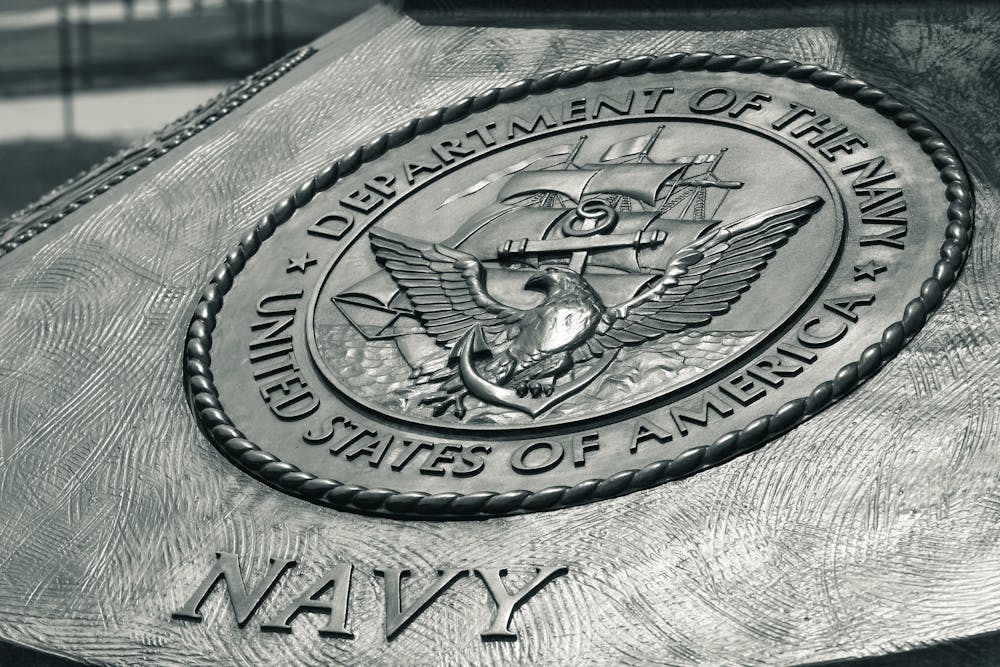
The sphere was brought to Naval Air Station Jacksonville for testing. The Navy confirmed it was not radioactive and posed no immediate threat, though they were unable to fully explain its reported behaviors. The initial X-ray attempts were a problem: the Navy spokesman told the St. Petersburg Times that the first machine simply wasn’t powerful enough to penetrate the steel. Subsequent tests with more powerful equipment eventually revealed the sphere’s internal structure.
What the Navy found inside was striking. Scientists determined the sphere was made of a high-quality stainless steel alloy designated magnetic ferrous alloy #431, and X-rays showed what appeared to be two or three smaller orbs suspended inside, resembling a gyroscopic mechanism. These inner components moved freely, but no one could determine their purpose. The shell itself was approximately half an inch thick.
In April 1974, United Press International reported that the U.S. Navy had concluded the sphere was “nothing more than a huge ball bearing used as a check valve in the piping system of some chemical plant.” The Navy spokesman’s statement to the press was clear: the ball was stainless steel, was not their property, and while they couldn’t determine what it was for, it was “certainly constructed on Earth.”
The sphere was returned to the Betz family as agreed.
Why the Betz Family Sphere 1974 Kept Attracting Scientists
The Navy’s conclusion did not close the case in the eyes of the scientific community or the press. Shortly after the story broke nationally, the National Enquirer was convening a panel of UFO investigators in New Orleans. Among the panel members was J. Allen Hynek, a Northwestern University astronomy professor and the best-known ufologist of the time. The Enquirer flew Terry Betz and the sphere to New Orleans so it could be examined by the panel. Hynek and his colleagues were unimpressed with the ball and agreed with the Navy that it was man-made.
The convergence of a credible astronomer and the U.S. Navy on the same conclusion should, by any reasonable standard, have resolved the essential question. But the Navy investigation and series of examinations that produced inconclusive or ambiguous secondary findings continued to fuel speculation. The strange internal structure visible on X-ray, the magnetic field, the reported sound emissions, none of these were fully and publicly explained in terms a general audience could follow, and the gap was filled by imagination.
The Navy’s explanation for the sphere’s famous autonomous rolling was similarly practical. A U.S. Navy representative noted that “I believe it’s because of the construction of the house. It’s old and has uneven stone floors. The ball is almost perfectly balanced, and it takes just a little indentation to make it move or change direction.” The sphere, in other words, was behaving exactly as a near-perfectly balanced object on an imperfect surface would behave.
The Navy Investigation Mystery Sphere: What the Steel Revealed
The most concrete piece of evidence connecting the Betz Sphere to an earthly origin came not from the Navy but from a Jacksonville businessperson who saw the news coverage and recognized what he was looking at. A 2012 analysis by Skeptoid linked the sphere to ball check valves produced by the Bell & Howell company, whose size, weight, and metallurgical composition matched those of the Betz sphere. Robert Edwards, president of a Jacksonville equipment supply company, told a reporter at the time that he had an identical stainless steel ball in stock, manufactured by Bell & Howell, measuring eight inches across and weighing over 21 pounds.
The question of how an industrial valve ball ended up in the burnt scrub of Fort George Island also has a plausible answer. Skeptoid noted coverage of New Mexico artist James Durling-Jones, who had been collecting scrap metal for sculptures and reported having driven through the Jacksonville area around Easter of 1971, at which time several ball check valves rolled off his vehicle’s rooftop luggage rack and were lost. Skeptoid concluded this was the sphere’s likely origin.
There is an appealing tidiness to that chain of events: an artist collects industrial scrap, a few heavy balls fall off a van near Jacksonville, one of them ends up resting in scrubland on Fort George Island for three years until a brush fire clears the vegetation around it, and a family walking the damage finds something they’ve never seen before and take it home. The sphere’s near-perfect balance and the house’s uneven floors do the rest.
The Bottom Line on the Betz Sphere
The Betz Sphere remains one of those cases where the official record is fairly clear and the mythology around it is considerably richer. The U.S. Navy’s analysis at Jacksonville Naval Air Station established that the object was a human-made stainless steel sphere, not radioactive, not government property, and almost certainly a type of industrial valve ball of the kind commercially available at the time. J. Allen Hynek, who had spent his career taking anomalous reports seriously, looked at it and reached the same conclusion.
What’s worth understanding about this story in 2026 is what it demonstrates about how mystery is manufactured. About a year and a half after the sphere became national news, the Betz family simply stopped talking about it. The press moved on. But the story had already achieved a kind of permanence, built from the accumulation of eyewitness accounts, ambiguous scientific findings presented without context, and a cultural moment that was primed to believe. The sphere itself, a beautiful, heavy, machined object sitting on an old stone floor, did exactly what physics would predict. The story around it did what human imagination almost always does: it filled the silence with something larger than the facts.
The Betz Sphere is not evidence of extraterrestrial technology. What it is, more interestingly, is a detailed record of how quickly an ordinary object can become extraordinary when the right conditions are in place: an evocative location, a family willing to talk, a press corps hungry for a story, and a scientific response that was technically correct but communicated poorly. The strange metal ball found in a Florida forest in 1974 was almost certainly a lost industrial component. The story it generated is something else entirely, and that story, at least, shows no signs of going anywhere.
Medical Disclaimer: This information is not intended to be a substitute for professional medical advice, diagnosis, or treatment and is for information only. Always seek the advice of your physician or another qualified health provider with any questions about your medical condition and/or current medication. Do not disregard professional medical advice or delay seeking advice because of something you have read here.
A.I. Disclaimer: This article was created with AI assistance and edited by a human for accuracy and clarity.