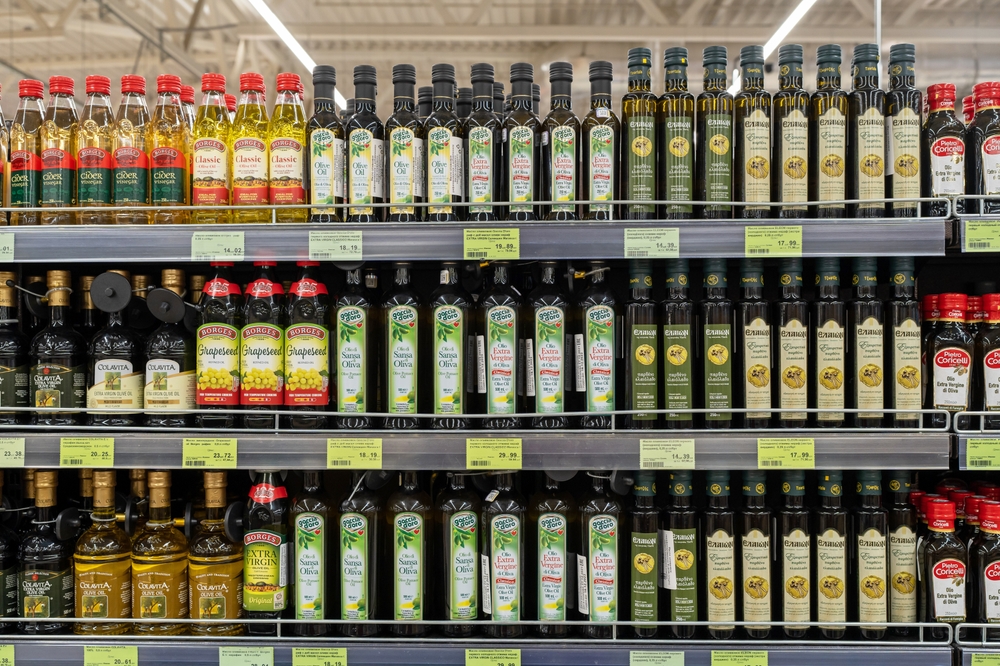

The Delish food team recently completed one of the most thorough olive oil taste tests the outlet has ever run, sampling dozens of brands with expert guidance from Chef Maria Loi, a Greek-American TV personality and one of the most respected voices on Greek cuisine in the United States. The goal was straightforward: find the best olive oil brands that actually deliver on flavor and value, no matter your cooking style or budget. From well-known supermarket staples to buzzy newcomers and single-origin estate oils, the team worked through a wide price spectrum to arrive at a curated shortlist of seven bottles that genuinely stood out.
A few terms are worth defining before going further. “Extra virgin olive oil,” often written as EVOO, is the highest quality grade of olive oil. It’s made from fresh olives that are pressed without heat or chemicals, which means the oil keeps its natural flavor compounds, antioxidants, and nutrients intact. Extra virgin olive oil is rich in antioxidants such as polyphenols, which are plant-based compounds linked to anti-inflammatory and potential cancer-fighting properties. “Single-origin” means the olives come from one specific region or farm, which tends to give the oil a more distinct, traceable flavor profile. And “terroir” (pronounced teh-RWAH) is a French word borrowed into food culture to describe how the climate, soil, and geography of a growing region influence flavor. You’ll see it come up when the experts talk about why certain oils taste the way they do.
Not all olive oils sold as extra virgin actually meet the standard. Not all olive oils are alike. If you want to work with the best possible product, the bare minimum is choosing a bottle labeled “extra virgin.” Other varieties, like pure olive oil, light olive oil, or simply “olive oil,” undergo additional processing that can negatively affect both flavor and nutritional quality. That’s the baseline. The Delish list goes much further than the baseline.
1. Terra Creta
This Greek oil is the one Chef Maria Loi calls out as a standout representation of her home country, and the tasting backs her up. While many brands blend oils from multiple producers and regions to create more consistent flavor, Terra Creta uses only one olive variety – Koroneiki – from a protected region on the island of Crete. According to Loi, this is one of the best olive oil representations from her native Greece. Because it’s single-origin and follows strict regulations, you can really taste the terroir of the seaside climate and its nutrient-dense soil. Loi compares the taste to artichokes, with a fresh, earthy flavor profile.
That comparison to artichokes might sound unusual for oil, but it’s actually a sign of high polyphenol content. Polyphenols are natural plant compounds – think of them as the oil’s nutritional fingerprint – and they’re responsible for that slightly bitter, peppery sensation that lingers in the back of your throat after a good extra virgin oil. The more of them present, the more likely the oil was harvested early, milled quickly, and handled with care. Terra Creta checks those boxes. It’s a finishing oil in the best sense – excellent drizzled over vegetables, fish, or warm bread where its flavor can actually register.
2. Frankies 457
This oil has a cult following among serious home cooks, and a taste test only makes it clearer why. Some of the favorite olive oils in this olive oil comparison come from a team of New York City chefs and restaurateurs. Frankies 457 partnered with Asaro, a multigenerational family olive business in Sicily, to produce their award-winning line of oils. The Brooklyn restaurant it’s named after has become synonymous with quality Italian-American cooking, and the oil reflects that identity completely.
Frankies 457 exclusively uses Nocellara del Belice olives, so the natural fruitiness really shines. The Nocellara del Belice variety is one of Sicily’s most prized olive cultivars – known for producing an oil that is rich, buttery, and distinctly fruity without tipping into harsh bitterness. It’s no surprise that the oil known to have made Brooklyn restaurant Frankies 457 famous made its way onto a best-of list. Frankies Extra Virgin Olive Oil is harvested, cold-pressed, and packaged right from Sicily, bottling authentic fruity, grassy, and bright flavors. Use it to finish roasted vegetables, drizzle over a salad, or dip a good crusty loaf into it. It has enough personality to be the centerpiece of the plate, not just a cooking medium. This is one of the top olive oil brands recommended by food experts who want genuine flavor over label hype.
3. Graza
Graza arrived in 2021 and immediately divided opinion. The squeeze bottle packaging felt gimmicky to some traditionalists, but the flavor has consistently won them over. Graza is a cult-favorite olive oil brand and pantry staple founded in 2021 by Andrew Benin and Allen Dushi. The brand packs its Drizzle and Sizzle extra virgin finishing and cooking oils in chef-inspired squeeze bottles and nitrogen-sealed refill cans.
The two-bottle system is actually one of the smarter ideas to come out of the premium olive oil space in years. Graza disrupted the olive oil market with a simple insight: people need different oils for different purposes. Their “Sizzle” EVOO is designed specifically for cooking, made from later-harvest Picual olives that yield a mellower flavor and higher smoke point than early-harvest oils. The “Drizzle” version, by contrast, is made from earlier-harvested olives that deliver a punchier, more complex flavor – perfect for finishing dishes, dipping, or pouring over a finished pasta. Graza’s Sizzle and Drizzle offerings both use Picual olives from Spain that lend a fruity and peppery flavor. And, of course, you can’t ignore the convenient squeeze bottle.
The New York Times ranked Graza’s “Sizzle” as its best all-around olive oil for 2025. Reviewers have commented on its delightfully grassy taste with hits of green apple and caramel. For an oil described as a cooking workhorse, that’s a remarkable flavor profile. If you’re deciding which olive oil brand tastes the best for everyday pan work, Graza Sizzle is a genuinely strong answer.
4. California Olive Ranch
California Olive Ranch is the kind of brand you can feel good about putting in your everyday rotation. It’s not a splurge oil. California Olive Ranch has a vast portfolio of olive oils that aren’t just from the Golden State. They have high-end reserve collections with single-origin olives and more affordable global blends. But their 100% California olive oil is the one you should buy. This olive oil is mid-range in terms of price, but it’s definitely worth the extra couple of dollars. California Olive Ranch’s 100% California blend is lightly floral, medium-bodied, and super versatile for any cooking project.
In May 2025, California Olive Ranch became the first EVOO retail brand to earn the Seed Oil Free Certified Seal. The company has several third-party certifications, including Certified Extra Virgin, Non-GMO Project Verified, USDA Organic, and Certified Regenerative. It has won over 260 awards at international tasting competitions. That’s a lot of hardware for a brand you can pick up at most grocery stores. If you want the best olive oil for cooking without overthinking it – sautéing vegetables, building a pasta sauce, whisking a vinaigrette – this bottle handles all of it well. It’s the dependable go-to that earns its place in the pantry simply by performing every single time you reach for it.
5. La Tourangelle
La Tourangelle is an artisan brand that operates out of California and produces its oils with a focus on organic and regenerative farming. It’s one of the more underrated entries on this list of top-rated extra virgin olive oil brands to buy, partly because it doesn’t shout as loudly as some of its competitors on social media. But the flavor speaks for itself.
While the “smooth” label certainly stands true, testers found this La Tourangelle flavor to be incredibly tasty, fruit-forward, and full of fragrant aromas that shine when paired with bread. La Tourangelle was effortlessly soaked up by testers’ bread and left a delicious, fresh taste that was pungent enough to go for seconds but not too overpowering. That balance – bold enough to notice, gentle enough not to dominate – is genuinely hard to achieve. Many oils that aim for fruitiness overshoot into bitterness. La Tourangelle stays in the pleasant middle. La Tourangelle is an artisanal California brand committed to organic and regenerative farming. It produces gourmet-quality oils with a smooth, fruity profile. It’s one of the best olive oils for cooking picks if you want something that transitions gracefully from the pan to the table.
6. Lucini
Not every dish needs a bold, assertive oil. Sometimes you want to cook something where the olive flavor steps back and lets the other ingredients carry the room. That’s where Lucini earns its place on this olive oil review shortlist.
Both its Argentinian and Italian everyday blends are mild, with a delicate, subtle olive taste. Lucini is super versatile for all-purpose cooking, especially in dishes where you want other flavors to shine. Think roasting chicken, making a simple tomato-based pasta sauce, or sautéing aromatics as the base for a soup. In those scenarios, an aggressively grassy or peppery oil can pull your dish in the wrong direction. Lucini stays in its lane, and that restraint is actually a feature. Lucini started in 1997 as a premium Italian olive oil brand emphasizing hand-picked olives milled in small local facilities. Today, the company operates under California Olive Ranch after a 2015 acquisition, but maintains its premium positioning.
That said, it’s worth understanding what Lucini is not suited for. It wouldn’t be the best choice to finish dishes, dip bread, or even make salad dressing. It’s simply too light to hold its own in those applications. Buy it alongside one of the bolder oils on this list, and use each one for what it does best.
7. Bertolli
Of all the oils on this list, Bertolli is the one that might prompt the most skepticism. It’s a mass-market brand, widely available, sold at every price point in most grocery stores, and – for some olive oil enthusiasts – carries a stigma. But the Delish taste test found something that many snobs wouldn’t expect.
A lot of supermarket olive oil brands can be disappointing, but even the olive oil snobs among us liked Bertolli. Its extra virgin olive oil is rich and full-bodied, adding a bold, fruity flavor to recipes. It’s easy to find, affordable, and a solid choice for cooking. The key is buying the right version. Whatever you do, make sure you buy their extra virgin olive oil. None of their other offerings are worth the money.
Bertolli is one of the world’s oldest olive oil brands, founded in Tuscany in 1865. For a brand operating at this scale, consistency matters more than complexity, and Bertolli delivers it. Many long-time buyers of Bertolli remark that they’ve never gotten a rancid or off-tasting bottle. Consistency is key, and while expert testers have found minor flavor defects on occasion, typical consumers largely report that, bottle after bottle, Bertolli tastes the same and is fresh. For everyday use – stir-frying, roasting, cooking eggs – it punches well above its price.
What Makes a High-Quality Olive Oil
Understanding what separates a great bottle from a mediocre one helps you make better choices even beyond this specific shortlist. There are a few things worth paying attention to at the store.
Harvest date is the single most useful indicator of freshness. Harvest dates give you the most useful information. To get the freshest oil, look for a harvest date within the past year. A “best by” date printed on the label tells you far less than a harvest date, because it doesn’t account for how long the oil sat in a warehouse before it arrived on the shelf.
Dark glass or tin packaging blocks light, which is one of the primary culprits in accelerating spoilage. Light degrades olive oil faster than almost anything else, which is why a bottle sitting on a sunny kitchen counter can turn flat and stale in just a few weeks. Keep it in a cool, dark cupboard and use it within a few months of opening. A bottle of unopened extra virgin olive oil will last for 18 to 24 months. Once opened, it’s best to use the olive oil within 3 months, or it can begin to oxidize – meaning the fats break down and the flavor deteriorates.
Color is less reliable than people assume. A deep green color can indicate freshness in some oils, but it can also be a function of the olive variety or processing method. Smell and taste are more honest. A good EVOO should smell grassy, fresh, and slightly fruity – like olives, green tomatoes, or fresh herbs. If it smells like old cooking fat or crayons, it’s rancid. Tasting it neat, either plain or on a small piece of plain bread, is still the most direct way to judge quality.
What Olive Oil Do Chefs Recommend?
That question comes up constantly, and the honest answer is: it depends on what the chef is doing. Professional kitchens often keep multiple bottles in rotation, not because they’re indecisive but because they understand that not all cooking tasks need the same oil. In general, robust olive oils are best used for cooking meat and seafood, in a marinade, or as a drizzle over bold flavors like peppers or garlic. For those who enjoy dipping bread in a great EVOO, a medium-intensity oil is the right choice.
Chefs who want to impress at the table tend to reach for single-origin oils with a clear sense of place – something like Terra Creta or Frankies 457 for finishing. For production cooking where flavor subtlety matters less than heat stability and budget, California Olive Ranch or Graza Sizzle tend to be the professional choice. The brand Corto has built a cult following among professional chefs across the US, with restaurants from NYC’s Don Angie to San Francisco’s Tony’s Pizza swearing by their oils – though it didn’t make this particular Delish shortlist.
The broader principle is this: you do not need to spend a fortune to cook well with olive oil. But you do need to make a few smart decisions. Choose extra virgin. Check the harvest date. Buy dark glass or tin. And match the oil’s intensity to the job at hand. Do those four things, and you’ll eat better immediately.
Why Extra Virgin Olive Oil Is Worth the Upgrade
The health case for EVOO is well-established. This style of eating can play a big role in preventing heart disease and stroke and reducing risk factors such as obesity, diabetes, high cholesterol, and high blood pressure. There is some evidence that a Mediterranean diet rich in virgin olive oil may help the body remove excess cholesterol from arteries and keep blood vessels open. Those benefits are most strongly linked to extra virgin oil specifically – not the refined versions that are labeled simply “olive oil” or “light.”
Extra virgin olive oil is the main source of fat in the Mediterranean diet. The Mediterranean diet can lower your risk of cardiovascular disease and many other chronic conditions, according to the Cleveland Clinic. These are not trivial claims – they are backed by decades of population studies and clinical research. That said, it’s worth being clear: the health benefits associated with olive oil come from consistent, daily use as part of a broader diet rich in vegetables, whole grains, and lean proteins. Pouring expensive oil over a poor-quality meal doesn’t undo the underlying pattern. Olive oil is a powerful ingredient, not a supplement.
For anyone cooking for a family that includes people with heart health concerns, the choice to upgrade from generic vegetable oil to a quality EVOO is one of the simplest, most evidence-backed dietary swaps available. It costs a few dollars more per bottle and changes the flavor of everything you cook for the better. That’s a genuinely good deal. Understanding common Italian dining mistakes – like drowning bread in olive oil or using it carelessly as a condiment – can also help you get more out of a quality bottle.
The Delish olive oil taste test confirmed what experienced cooks already know: the best olive oil brands are not necessarily the most expensive or the most Instagrammable. They’re the ones that match their quality to their intended purpose, taste genuinely fresh, and stand up under scrutiny from people who know what good oil should taste like. Whether you’re picking a workhorse bottle for weeknight cooking or treating yourself to something worth drizzling over a finished dish, the seven brands above give you a clear, tested starting point. Pick one that fits how you actually cook, buy the extra virgin version, and use it before it gets old. That’s really all it takes.
This article was created with the assistance of AI tools and reviewed by a human editor.