

Prayer is among the most universal and enduring practices of human spirituality. Across cultures and religious traditions, speaking to the divine is a means of expressing gratitude, seeking comfort, asking for guidance, and grounding oneself in something larger than the self. Among the various moments when prayer might occur, the quiet minutes before sleep hold special spiritual significance. In these moments, when the world’s noise fades and the body’s tension loosens, many find that talking to God while lying down can become deeply personal, transformative, and spiritually powerful.
In this article, we will explore the practice of bedtime prayer—what it involves, how it interacts with spiritual and emotional life, why many find it meaningful, and how talking to God while lying down can be a rich and authentic form of prayer. We will look at scriptural, historical, and practical dimensions, and consider how such prayers fit into the broader context of spiritual well-being.
The Nature of Bedtime Prayer
At its core, bedtime prayer is simply the act of bringing your heart and mind to God at the close of the day. It is not about formal rituals or specific postures; rather, it is a posture of honesty, reflection, and surrender. The bed does not diminish the value of prayer—what matters is the sincerity of the heart speaking to the divine presence.
Many believers wrestle with questions about prayer posture. Some wonder whether it matters if they are lying down, sitting, kneeling, or standing. Others feel guilt for praying in exhaustion or from a place of weakness, worried that such prayers are somehow less respectful or less valid. Yet scripture and tradition are clear that God listens to sincere prayers regardless of physical posture. What matters is the heart’s orientation toward God, not the position of the body.
This insight aligns with broader teachings across Christian traditions: prayer is ultimately about relationship, not performance. Genuine, heartfelt communication with God can occur in any moment, at any time, and in any position, as long as one comes with earnest intent and openness.
Spiritual and Emotional Dimensions of Bedtime Prayer

1. Reflection and Release
One of the central elements of bedtime prayer is the invitation to reflect on the day that has passed. Reflection is not merely thought; it is spiritual processing. At night, the mind often reviews the day’s events, successes, disappointments, regrets, and hopes. When we bring these things to God in prayer, two important spiritual movements take place:
- We acknowledge our dependence on God for every part of our life.
- We release the burdens we carry into God’s care.
Reflection in prayer provides a sacred space to articulate what we are grateful for, what we regret, and what weighs upon our spirit. This act of spiritual inventory cultivates humility and awareness. It allows us to place the day’s difficulties into a broader framework of faith rather than holding them alone in our hearts.
2. Peace and Rest
Prayer before sleep has long been associated with inner peace and restful heart posture. Spiritual traditions describe nighttime prayer as a form of surrender—letting go of control and entrusting oneself to the divine presence that watches over all things. According to one devotional tradition, nighttime prayer invites rest not only for the body but for the spirit, acknowledging that God’s care extends into the quiet and sometimes vulnerable hours of sleep.
In scriptures that speak to lying down and resting, we see a theme of divine trust: “When you lie down, you will not be afraid; when you lie down, your sleep will be sweet.” (Proverbs 3:24). Biblical imagery places rest and divine care in the same space, inviting believers to approach sleep not as a departure from awareness but as a continuation of spiritual trust.
3. Honesty and Vulnerability
In the stillness of bedtime, the guard of conscious exertion falls. We stop performing; we simply are. This setting can make prayer at the end of the day especially honest and open. There is no audience, no social performance, just an intimate moment between the heart and the divine.
When we pray from a place of vulnerability. Weary as we are, unsure of the future, carrying regrets, hopeful, but not fully content, our prayers often become deeper. Many spiritual practitioners report that these honest moments of prayer are among the most transformative. The vulnerability of prayer at bedtime becomes a bridge to deeper communion, not a barrier.
Historical and Scriptural Foundations
While bedtime prayer is a deeply personal practice, it is also grounded in a rich history of spiritual tradition and scriptural precedent. Across the Judeo-Christian story, nighttime has long been seen as a sacred space—a time when the noise of daily labor subsides and the heart becomes more receptive to divine presence. Scripture repeatedly depicts individuals encountering God in moments of rest, reflection, and transition between wakefulness and sleep. These accounts demonstrate that spiritual communication does not occur solely during formal rituals or designated prayer hours, but often unfolds during intimate, vulnerable moments when the mind is quiet and the soul is open.
From the Old Testament to the early Church, nighttime has served as a setting where revelation, comfort, and communion with God naturally arise. The biblical narrative treats the night not as an interruption of spiritual life, but as an active arena for divine encounter. This emphasis forms an important foundation for understanding why praying in bed or lying down is not merely acceptable but spiritually significant. It aligns with centuries of lived faith, theological reflection, and practical devotion.
Scriptural Examples
Scripture offers vivid accounts of individuals encountering God during the quiet thresholds of rest and reflection, illustrating how profound spiritual moments often unfold outside formal settings. In Genesis 28, Jacob lies down during his travels and enters a dream in which a ladder reaches from earth to heaven, alive with angelic movement. What begins as an ordinary moment of exhaustion becomes a life-altering encounter, one that confirms God’s promises and redirects Jacob’s future with renewed clarity. A similar dynamic appears in 1 Kings 3, where Solomon’s request for wisdom emerges not in a throne room or public ceremony, but in the stillness of sleep. God meets him in a dream and grants the discernment he seeks, underscoring how revelation can arise in the unguarded quiet of night rather than through dramatic, outward displays of piety.
The New Testament expands this theme by showing how prayer and divine response can surface even in moments of hardship rather than physical ease. In Acts 16, Paul and Silas pray and sing hymns while confined in a prison cell, their bodies wounded and their freedom stripped away. Their devotion, offered from a place of pain rather than comfort, precedes an earthquake that opens the prison doors and alters the course of the night. This episode demonstrates that spiritual connection is not dependent on ideal conditions; it thrives even when circumstances are harsh and unpredictable. Taken together, these accounts reveal that God’s presence often emerges in the quieter, less controlled spaces of human experience, making the end of the day — with its natural stillness and softened attention — a meaningful time for personal prayer.
Historical Prayer Practices
Across ancient Jewish tradition, prayer was interwoven with daily rhythms, including structured moments in the morning and evening. The recitation of the Shema before sleep has been a central practice for thousands of years. This prayer affirms God’s sovereignty and the believer’s trust, reinforcing that God guards and remains present even in the unconscious hours of rest. Ancient rabbis taught that ending the day with words of faith not only brought peace to the mind but spiritually protected the heart throughout the night. These teachings underscore that lying down is not an obstacle to prayer but the natural posture of nighttime devotion.
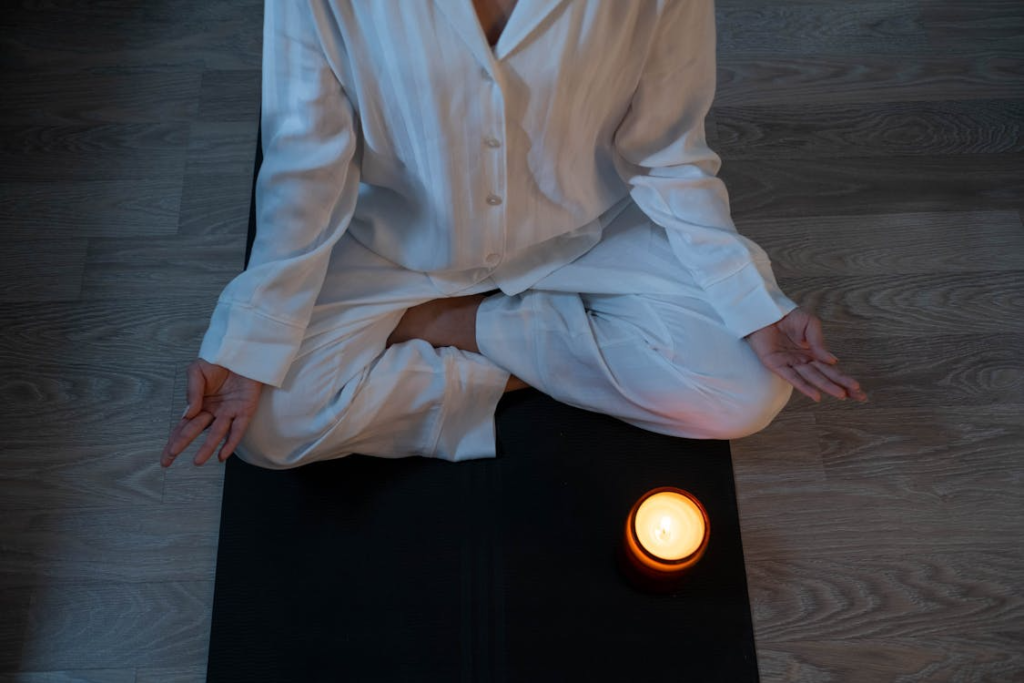
Early Christianity continued this theological momentum. By the 3rd and 4th centuries, monastic communities formalized nighttime prayer into what became known as Compline, the final liturgical prayer of the day. Compline was intentionally designed to be recited before lying down to sleep, often by candlelight, with themes of confession, gratitude, and trust in God’s protection.
The prayers acknowledged human fragility and the need for divine watchfulness, reinforcing the belief that sleep is a sacred surrender rather than a secular pause. Monks and nuns viewed bedtime prayer as the soul’s last conscious offering before entering the mystery of rest.
Beyond monastic life, early Christian households often ended the day with family prayer, Bible reading, and reflective conversation. The head of the household would commonly lead a prayer of thanksgiving for the day and petition for protection through the night. These domestic rituals reinforced the idea that bedtime was an intentional spiritual moment, not merely a practical necessity. Whether in formal liturgy or in private devotion, the practice of praying before sleep was embraced as a way to re-center the heart and entrust the night to God.
The history of nighttime prayer also includes stories of individuals who experienced significant spiritual encounters while resting. The visions of Jacob and Samuel, the dreams of Joseph, and the divine messages received by Solomon all highlight that God often speaks during moments of vulnerability, quiet, and stillness. Such events show that lying down is not a passive state but one in which the divine can reach the human heart in profound ways.
This demonstrates that bedtime prayer does not stand apart from tradition—it is deeply rooted in centuries of faith practice. Whether structured through liturgical patterns or shaped by personal conversation with God, praying at night reflects a long-standing belief that the end of the day is a sacred time for reflection, surrender, and renewal.
Read More: 15 Things People Get Totally Wrong About The Afterlife
The Practice of Praying In Bed
Praying in bed can become a grounding nightly ritual that invites peace, clarity, and emotional release before sleep. While prayer often holds religious meaning, the act of quiet reflection and intentional communication with something greater than oneself is universal. Anyone can practice it, no matter their belief system, spiritual background, or stage of life. What matters most is the posture of the heart and the willingness to slow down long enough to be present.
Begin by settling your body. Lie down or sit comfortably against your pillows and allow your breathing to steady. A calm physical state signals the mind that it is safe to soften, helping tension dissolve. If the day has been particularly stressful, take a few slow breaths and allow your exhale to lengthen; this simple step creates the internal space needed for deeper reflection.
Next, shift your attention inward. Let the noise of the day fade as you gently take inventory of your thoughts and emotions. Prayer in bed begins with honesty. There is no need to filter or rearrange your feelings. Simply acknowledge what is there—relief, gratitude, confusion, disappointment, hope, or anything in between. Naming your inner state quietly is itself an act of grounding.
From there, move into intentional expression. This may take the shape of traditional prayer, silent conversation with God, a higher power, or even the universe. For those not aligned with a religious framework, this moment can be a dialogue with your inner wisdom or a simple reflection practice. Express what you are thankful for, articulate what you need help with, or release something that has been weighing heavily on your heart. The purpose is connection—either spiritual or deeply personal.
After expressing what is within, allow space for stillness. This pause is important. It creates openness for comfort, insight, or a sense of emotional rest. Some may interpret this as listening for divine guidance, while others may experience it as intuitive clarity. In either case, the quiet is part of the process.
Finally, close your prayer with intention. This can be a simple statement of trust, a hope for tomorrow, or a commitment to let the day go. The act of ending with purpose signals the mind that it is time to transition into rest.
These steps form a peaceful nightly rhythm that supports emotional balance and spiritual grounding, offering comfort to anyone seeking calm at the end of the day.
The Transformative Impact of Bedtime Prayer

The Science of Nighttime Calm: Why Reflection Before Sleep Supports the Nervous System
Modern sleep science offers valuable insight into why praying in bed or quietly reflecting at the end of the day can significantly improve mental and emotional well-being. As bedtime approaches, the body naturally shifts into a state known as the parasympathetic response—often referred to as the “rest-and-digest” mode. This physiological shift slows the heart rate, reduces muscle tension, and lowers the stress hormones that accumulate during waking hours. When a person takes a moment to reflect, breathe deeply, or pray, this calming response becomes even more pronounced, creating a stable internal environment that promotes peaceful sleep.
Researchers have found that end-of-day reflection helps the brain process unresolved emotions and lingering thoughts more efficiently. The mind begins consolidating memories shortly before sleep, and taking time to acknowledge the day’s experiences provides a clearer mental pathway for the brain’s natural processing cycles. This reduces nighttime rumination, which is a common cause of insomnia and anxiety-related sleep disruptions. Reflection—whether in prayer, meditation, or simple mindful thought—acts as a signal to the nervous system that the day is ending and the mind is safe to let go.
Another neurological benefit is the activation of the prefrontal cortex, the area of the brain responsible for emotional regulation and meaning-making. When individuals engage in thoughtful reflection or speak to God about their concerns, this part of the brain helps categorize emotions, assign meaning to experiences, and shift attention away from stress triggers. The result is a smoother emotional transition into sleep, reducing cortisol levels and increasing the production of melatonin, the hormone that promotes rest.
Sleep studies also show that gratitude-focused reflection can elevate serotonin levels, which later convert into melatonin in the sleep cycle. This means that ending the day with a thankful heart—whether expressed through prayer or quiet contemplation—biologically supports more restorative sleep. In this way, the spiritual and scientific dimensions complement one another: reflection not only nurtures the soul but also stabilizes the nervous system in ways that encourage deep, peaceful rest.
This connection between spiritual practice and neurological calm highlights why praying in bed feels so naturally soothing. It aligns the mind, body, and spirit in a moment of unity, preparing the whole self to release tension, embrace stillness, and enter the restorative rhythms of sleep with clarity and peace.
Prayer Perceived as Position-less Presence
At the end of each day, when the body’s energy wanes and the stillness of night settles in, many find that lying down becomes not merely a physical act of rest but a spiritual posture of connection. Talking to God while lying down can be an authentic, meaningful, and spiritually rich practice. It invites reflection, peace, vulnerability, and surrender. Most importantly, it reminds us that prayer is about relationship, rather than ceremony or ritual.
Whether one prays with structured words, heartfelt conversation, or silent intention, the act of bringing one’s heart to God before sleep can transform spiritual lives incrementally, daily, faithfully. The bed becomes not just a place of rest, but a space for communion, trust, and spiritual presence.
As you consider your own practice, remember this: your prayers are heard not because of the position of your body, but because God listens to the whisper of your heart. May your nighttime conversations with the divine bring comfort, clarity, and peace as you lay down each day.
Read More: What Does the Bible Really Say About Cremation?
Disclaimer: This article was written by the author with the assistance of AI and reviewed by an editor for accuracy and clarity.. It offers spiritual insight and inspiration. It should not be viewed as a replacement for pastoral guidance, mental-health support, or medical expertise. Every person’s expression of faith is personal, and sincere prayer is valid across all traditions.