
Eight minutes into a flight is not enough time for most passengers to have finished their coffee. On Ryanair flight FR1879, departing Thessaloniki on the morning of July 10, 2026, it was enough time for a window to blow out of the side of the aircraft and a 61-year-old man to end up outside it, from the shoulders up, held in by a seatbelt and the grip of strangers.
The man’s wife grabbed his feet. Other passengers rushed from nearby seats to help hold him down. The cabin was losing pressure, oxygen masks were dangling from the ceiling, and the people in the rows closest to the breach were doing the only thing that made sense: holding on.
He survived. The flight turned around over North Macedonia and landed back in Thessaloniki shortly after takeoff. The passenger was taken to hospital, treated for neck and shoulder injuries and friction burns, and reported to be in stable condition. The burns came from being dragged through the opening. The seatbelt, and the people around him, are the reason he was there to be treated at all.
What Happened on Flight FR1879
The flight left Thessaloniki at 6:12 a.m. local time, bound for Memmingen in Germany, a 90-minute route operated by Ryanair’s subsidiary Malta Air. According to flight tracking site AirNav Radar, flight FR1879 took off at 05:57 local time and landed back on the same tarmac a short time later. Data showed that the plane was an 18-year-old Boeing 737-8AS and that it turned around at a height of about 16,000 feet.
A passenger who identified herself only as Christina described the moment to local radio. “Most people had fallen asleep, we had closed our eyes. We heard a sound, I’d describe it like a tire bursting, but very loud. We knew straight away we lost pressure because we lost altitude.” She said one passenger was partially sucked out of the window, with his whole head, neck, and shoulders pulled through the opening, before those seated near him pulled him back in.
A 61-year-old male passenger in the window seat was partially sucked out, according to a Greek doctor who treated the passenger on the tarmac once the plane safely landed. The doctor said the passenger’s wife was holding her husband’s feet to stop him from being completely sucked out of the aircraft. The passenger was later taken to hospital.
Ryanair confirmed the incident in a statement to CNN, saying: “A Ryanair flight from Thessaloniki to Memmingen on Friday morning (10 July) returned to Thessaloniki shortly after take-off when a passenger window dislodged inflight.” The aircraft landed normally and passengers returned to the terminal. A replacement aircraft was arranged and departed Thessaloniki at 9:53 local time.
The Cause: A Window Breach From Engine Debris
Oxygen masks were deployed inside the cabin after a piece of debris detached from one of the plane’s engines and struck the window, causing it to shatter, according to Greek media. A video posted on social media appeared to show an uncontained engine failure on the damaged Boeing 737, with fan blades missing. Such a failure occurs when internal components like fan blades shatter and breach the casing, sending debris flying.
When engine debris becomes a projectile at speed, it doesn’t need much to punch through a cabin window. A window breach on a pressurized airplane triggers an immediate and violent equalization: inside the aircraft, the cabin is held at a pressure equivalent to roughly 6,000 to 8,000 feet, while outside, at 15,000 to 20,000 feet, the pressure is far lower. Air rushes out toward the lower-pressure zone. Anything, or anyone, near that opening gets pulled with it.
In the Thessaloniki case, the seatbelt was on. One passenger reported: “The masks dropped and there was a strong smell. The head and shoulders of one passenger were outside the window. Fortunately, he hadn’t taken off his seatbelt.” That seatbelt very likely saved his life.
A Greek hospital official said the 61-year-old passenger was treated for neck and shoulder injuries and friction burns. The Serbian national who was partially sucked through the window was transferred to the AHEPA University General Hospital in Thessaloniki but did not face life-threatening injuries, the Serbian consulate said.
What Ryanair and Boeing Said
An investigation was launched by the Hellenic Air and Rail Safety Investigation Authority (HARSIA), which oversees aviation in Greece, according to a statement from Fraport Greece, which runs the airport in Thessaloniki. The United States National Transportation Safety Board announced Friday it will assist in the investigation.
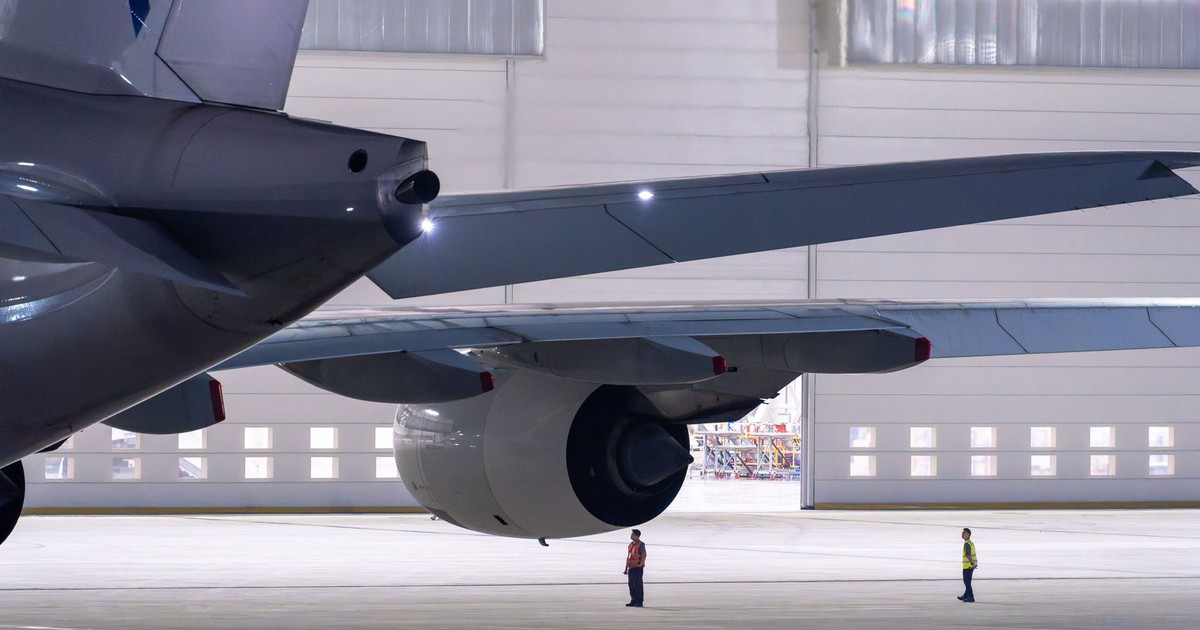
The NTSB said it was notified by the Aircraft Accident and Incident Investigation Committee of the Republic of North Macedonia that the Ryanair Boeing 737 flight turned back “due to a right engine issue and cabin decompression.” The U.S. safety board has appointed an accredited representative and is prepared to assist the investigation, along with advisers from the FAA, Boeing, and engine maker General Electric Aerospace.
Ryanair’s statement that a window “dislodged inflight” says almost nothing about how or why, and nothing at all about the engine debris that Greek media and industry sources attributed as the cause. The airline did not address the nature of the injuries incurred. For a carrier with roughly 600 aircraft flying over 3,500 routes, the institutional language was predictably tight. Boeing said in a statement: “We are aware of the incident involving flight FR1879 and are in contact with Ryanair.”
This Has Happened Before
Anyone who follows airline safety history will recognize the basic sequence: engine debris, window breach, emergency descent, emergency landing. It happened in the United States in 2018, and that time it ended in a death.
On April 17, 2018, Southwest Airlines Flight 1380 was climbing through 32,000 feet when its left engine failed. The fan blade failure caused the loss of parts of the engine inlet and fan cowling. Fragments of the cowling struck the fuselage and a cabin window, blowing out the window and causing a rapid depressurization. A passenger seated next to the window was killed, Jennifer Riordan, a 43-year-old mother of two from Albuquerque, New Mexico, the first passenger fatality on a U.S. airline in nearly a decade.
The NTSB determined the probable cause was a fatigue crack in the dovetail of a fan blade in the airplane’s left CFM International CFM56-7B engine, which resulted in failure of that blade. The new inspection interval was set at every 1,600 engine cycles following that investigation, and the NTSB issued seven safety recommendations, primarily aimed at the FAA and Boeing. The FAA issued a directive in 2023 requiring a Boeing fan cowl redesign by July 2028.
The outcome in 2026 was different. The man survived. Scott Hamilton, an aviation industry analyst, said that while such incidents are extremely rare, they have happened before. Both incidents involved a Boeing 737 variant with CFM56 engines. Both involved engine debris breaching a cabin window. Both involved a passenger being partially ejected, held back only by a seatbelt. Ryanair uses CFM56 engines from CFM International on all of its Boeing 737 NG models.
The Aircraft and Its Age
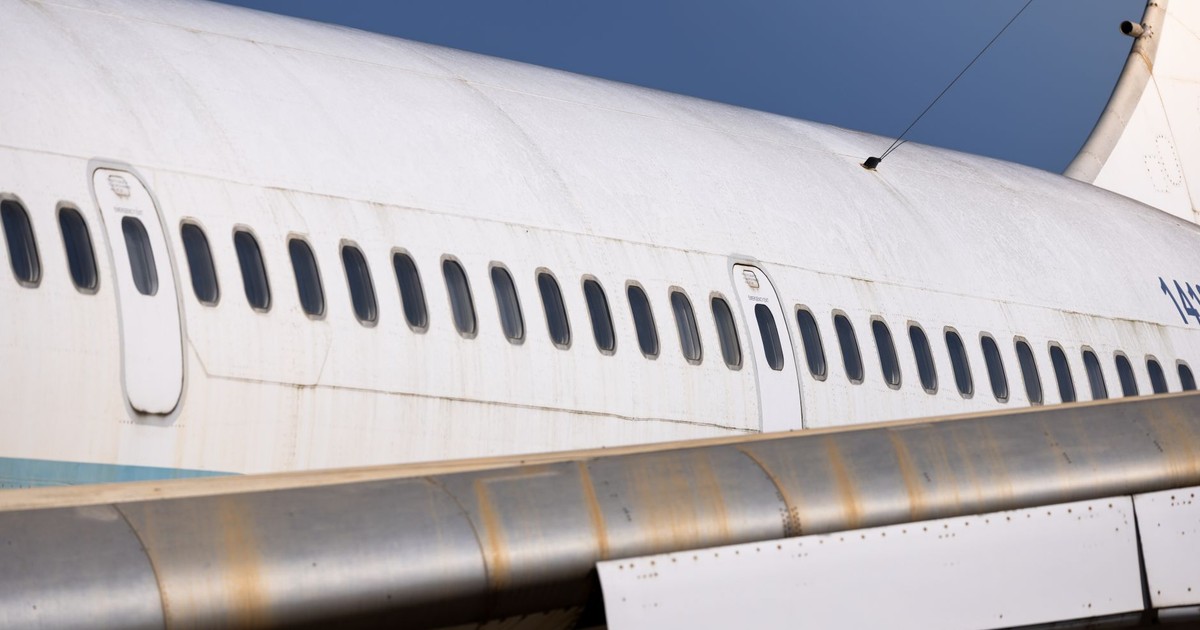
The Boeing 737-8AS that operated flight FR1879 was 18 years old at the time of the incident. That is not, by commercial aviation standards, ancient. Airlines regularly fly aircraft for 20 to 25 years, and well-maintained older frames are not inherently more dangerous. But maintenance cycles, component fatigue, and the inspection intervals for engine fan blades become critical precisely because aging parts can develop cracks that are invisible without ultrasonic testing.
In January 2024, the door plug of an Alaska Airlines Boeing 737 MAX 9 blew out shortly after takeoff, triggering rapid cabin decompression. According to the NTSB’s final report, the probable cause was a systemic failure of Boeing’s manufacturing process and ineffective oversight by the FAA. The in-flight separation was caused by four crucial bolts that were never reinstalled after being removed at the factory. No one was seriously injured, but the incident set off a broad review of the 737 MAX 9 fleet and reignited scrutiny of Boeing’s manufacturing processes.
The Thessaloniki incident involves a different variant, the 737-800, an older design, but it arrives while Boeing is already under a microscope. A door plug blowout in January 2024, a window breach in July 2026, both on Boeing aircraft, both involving partial depressurization events, both catching the attention of the NTSB. The pattern is not proof of a systemic problem. But it is the kind of pattern that regulators are paid to take seriously.
The Passengers Who Held On
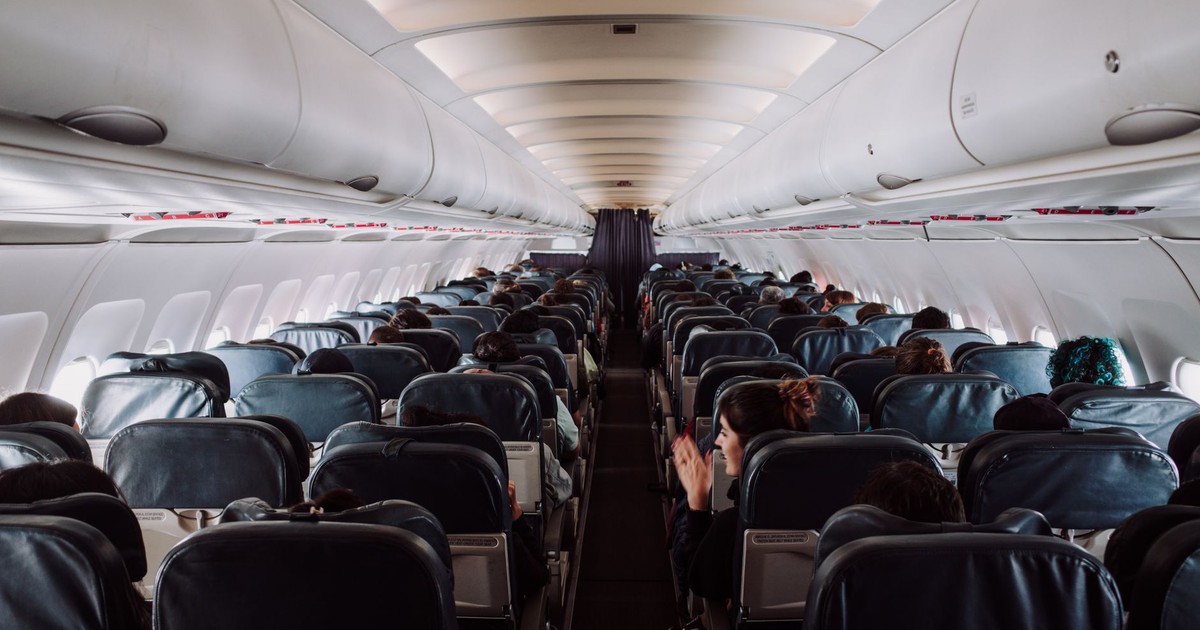
The investigation will produce reports, recommendations, and probably regulatory actions. The part that tends to get buried under the technical findings is what happened in the seconds after the window went out: ordinary passengers, most of them jolted awake, scrambled to hold a stranger in his seat while the cabin lost pressure and masks dropped from overhead.
One passenger told Thessaloniki radio that passengers panicked and screamed. “His whole head, neck, shoulders” were pulled out of the window, she said, before others managed to haul him back in. Another passenger on board told Radio Thessaloniki: “We were sitting a bit further back from where it happened, all we heard was a loud noise and then the oxygen masks dropped. The injured man was bleeding and initially fainted.”
Nobody was trained for that moment. Cabin crew are trained for emergency procedures, evacuations, and exits, not for physically restraining a person being pulled through a broken window at altitude. The passengers of flight FR1879 acted on instinct, in the dark, with a cabin that had just lost pressure. The improvised grip of a wife on her husband’s feet, and strangers grabbing hold alongside her, was what stood between a survivable incident and a fatality.
What Investigators Will Be Looking For
The HARSIA investigation, with NTSB assistance, will focus on several areas. First, what caused the engine failure that sent debris into the cabin window, whether it was a fan blade fracture similar to the 2018 Southwest incident, a cowling detachment, or a combination. Second, whether the window assembly on this specific aircraft had any prior damage, prior repairs, or inspection flags in its maintenance record. Third, whether the age of the aircraft is relevant to how the window failed.
Hamilton said that while it’s in the very early stages of the investigation, an initial focus will be to determine why the engine blade separated from the front fan. “Why did the blade go through the cowling, because the cowling is there to contain a blade in that situation,” Hamilton said. “Was there metal fatigue on the blade, or was there pre-existing undetected damage, or did something happen?”
The same plane had diverted back to Thessaloniki on a flight to Sarajevo on Thursday evening, also shortly after takeoff, according to flight data and a source, although it is unclear why. Whether that prior diversion is connected to the engine issue on Friday will be one of the first questions investigators try to answer.
Boeing’s simultaneous statement that it is “in contact with Ryanair” suggests the manufacturer is monitoring the investigation closely, as it would need to, given that the Alaska Airlines door plug scrutiny has not entirely resolved. The NTSB said it has appointed an accredited representative to assist, and that technical advisors are “standing by to assist” from the FAA, Boeing, and GE Aerospace, which together with Safran makes the CFM engines.
What Stays With You
Most people who fly regularly have sat in a window seat and felt the cold seeping through the pane at altitude, that thin disc of acrylic between the pressurized cabin and the air outside. The window you’re looking through isn’t just a porthole. It’s a structural element of a system holding roughly 14 pounds of pressure per square inch against a near-vacuum. When that system fails, the physics are not gentle.
The man on flight FR1879 is in hospital, being treated for neck and shoulder injuries and friction burns. His wife was on the same flight. Those burns came from being dragged through an opening in the side of an aircraft at altitude, held from falling only by a seatbelt and the hands of strangers. He is expected to recover.
Catastrophic events on commercial aircraft almost always begin with a single component failing in a way it wasn’t supposed to. An engine blade cracks. Debris travels faster than anyone planned for. A window that was certified and inspected isn’t there anymore. The redundancies in modern aircraft are real, and they work most of the time. This was one of the times they didn’t, and the outcome, a man alive in a Thessaloniki hospital, was closer than anyone on that flight would like to think about.
AI Disclaimer: This article was created with the assistance of AI tools and reviewed by a human editor.