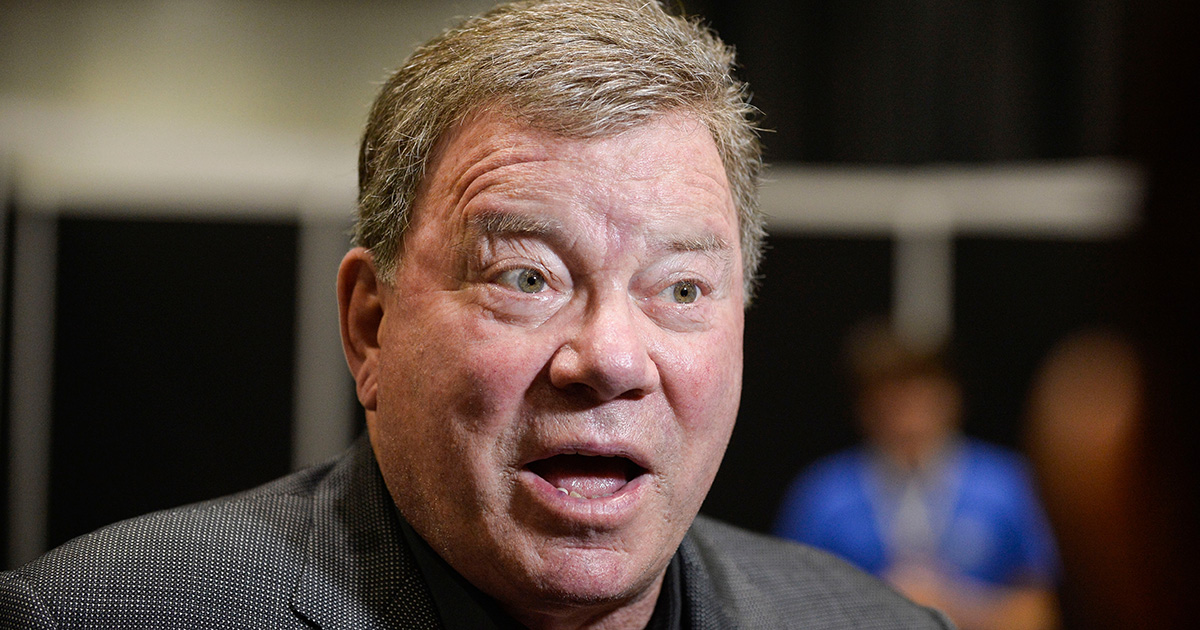
Festival organizers have announced that 95-year-old entertainment icon William Shatner will debut his newly assembled band on September 20 at Douglass Park, on the final day of Riot Fest 2026. Shatner will headline an actual set.
The William Shatner Black Sabbath cover story broke this week. Shatner has made a career out of doing things that take a minute to process. He flew to space at 90. He made a spoken-word album at 36. He turned Elton John’s “Rocket Man” into a piece of performance art before most people knew what performance art was.
The Band, the Album, and the Lineup
The Riot Fest appearance is timed with Shatner’s forthcoming album on Cleopatra Records, reported to include covers of Black Sabbath, Judas Priest, and Iron Maiden, in addition to several original tunes. The album still doesn’t have an official title or release date.
The band features guitarist and musical director Marcus Nand (Mike Tramp, Candice Night), bassist Phil Soussan (Ozzy Osbourne, Billy Idol), guitarist Britt Lightning (Vixen) and drummer Fred Aching (Kings of Thrash, Dead Groove, Fraxures). Phil Soussan wrote one of Ozzy Osbourne’s most commercially successful singles. Marcus Nand has spent years at the highest level of the hard rock world.
Among the songs announced for the album are covers of Judas Priest classics “You’ve Got Another Thing Comin'” (featuring Judas Priest frontman Rob Halford) and “Living After Midnight” (featuring drummer Mikkey Dee of Motörhead and Scorpions). Halford is as protective of that band’s legacy as anyone alive. His involvement signals that at least one person at the very top of the metal world took this seriously enough to say yes.
Mikkey Dee, the legendary drummer who served as Motörhead’s drummer from 1992 to 2015 before joining Scorpions, recently completed drum tracks for Shatner’s version of “Living After Midnight.”
Other featured drummers on the project include Dave Lombardo (Slayer, Misfits), Chris Adler (Megadeth), Vinny Appice (Black Sabbath), Carmine Appice (Vanilla Fudge, Cactus), Kenny Aronoff, Simon Wright (AC/DC, UFO), Bobby Rondinelli (Blue Öyster Cult, Quiet Riot), Matt Starr (Ace Frehley, Joe Lynn Turner) and Steve Zing (Danzig).
“William Shatner has spent a lifetime redefining expectations,” says Brian Perera, founder of Cleopatra Records. “This isn’t a novelty performance – it’s a real rock show featuring world-class musicians behind one of entertainment’s greatest icons.”
Where the Idea Actually Came From
The album’s origin traces back to Shatner’s sessions with metal band Nuclear Messiah on their upcoming Black Flame concept album, on which he lends his voice to an intro crafted with ex-Megadeth guitarist Chris Poland. “When Nuclear Messiah came to life, something clicked,” Shatner said. “It wasn’t just a track – it was a doorway. It made me want to go all the way in, bring in the best metal players I could find, and create something fearless.”
Shatner has previously collaborated with Zakk Wylde, Deep Purple’s Ritchie Blackmore, the MC5’s Wayne Kramer, punk icon Henry Rollins, Aimee Mann, Brad Paisley, Iggy Pop, the Eagles’ Joe Walsh, and Robert Randolph, among many others. He has been moving in and out of rock circles for decades. What’s new isn’t the company – it’s the volume.
He announced the album in February, describing the project as “a heavy metal extravaganza powered by a veritable army of metal stars, each one personally selected and hand-picked by Shatner.” He said: “Thirty-five metal virtuosos. Thunderous guitars. Chaos with purpose. Covers of legends like Black Sabbath, Iron Maiden, and Judas Priest – and a few originals forged in the same cosmic fire.”
The Riot Fest set on September 20 will be the first public glimpse of what the album sounds like live. The performance also promises to “reimagine songs from across Shatner’s musical catalog.”
A Musical History That Refuses to Be Embarrassing
His catalog begins with 1968’s “The Transformed Man,” the album that kicked off his music and spoken-word career. At the time it was received as somewhere between a curiosity and an embarrassment. “The Transformed Man” has since developed a genuine cult following, and Shatner’s version of “Lucy in the Sky with Diamonds” has generated more serious critical discussion than most artists produce across their whole careers.
Then there was the “Rocket Man” performance at the Science Fiction Film Awards in 1978. Shatner performed Elton John’s song as a dramatic monologue, cigarette in hand, staring into the middle distance. It was the kind of thing that’s either terrible or transcendent, and the answer depends on who you ask. It’s still being watched and argued about nearly 50 years later.
After a long gap, Shatner returned with “Has Been” in 2004, arranged by Ben Folds and featuring guest appearances from Henry Rollins, Adrian Belew, and others. The album was supposed to be easy to dismiss and turned out to be genuinely good. Critics who went in ready to file it under novelty found themselves writing about it seriously. The cover of Pulp’s “Common People” with Joe Jackson is the place to start.
He’s also previously recorded tracks with Joe Walsh, Zakk Wylde, Wayne Kramer, and fellow Riot Fest 2026 performer Iggy Pop. The pattern across all of it is the same: Shatner locates serious musicians, makes them take him seriously, and then does something that confounds whatever expectations anyone brought to the room.
The Man Who Looked at Space and Saw Death
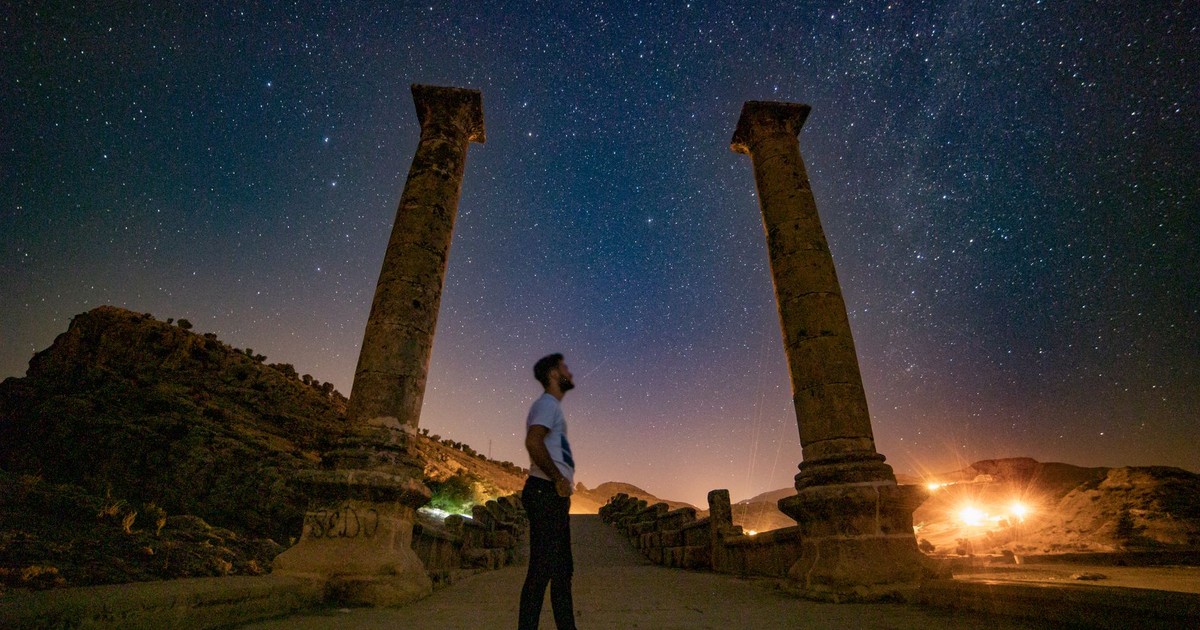
At 90, Shatner became the oldest person to fly into space, aboard Blue Origin’s New Shepard rocket near Van Horn, Texas in October 2021. Jeff Bezos was on-site. The entire suborbital journey lasted about ten minutes.
During the flight, the four passengers experienced weightlessness. The capsule topped out at an altitude of nearly 66 miles up, then fell back to Earth, landing under parachutes in the West Texas desert.
What Shatner brought back from those ten minutes wasn’t wonder. “But when I looked in the opposite direction, into space, there was no mystery, no majestic awe to behold … all I saw was death,” he wrote. “I saw a cold, dark, black emptiness.” The surprise grief Shatner felt is not uncommon among astronauts. It’s called the “Overview Effect,” what happens when a space traveler views the Earth and feels the overwhelming awareness of our planet’s fragility.
That’s not the reaction anyone expected from the man who played Captain Kirk for decades. Shatner looked out and saw the thinness of the blue line separating everything alive from everything that isn’t. He’s talked about it at length since. Metal, at its core, is one of the few musical forms that actually tries to reckon with darkness rather than decorate it.
What September 20 Will Actually Look Like
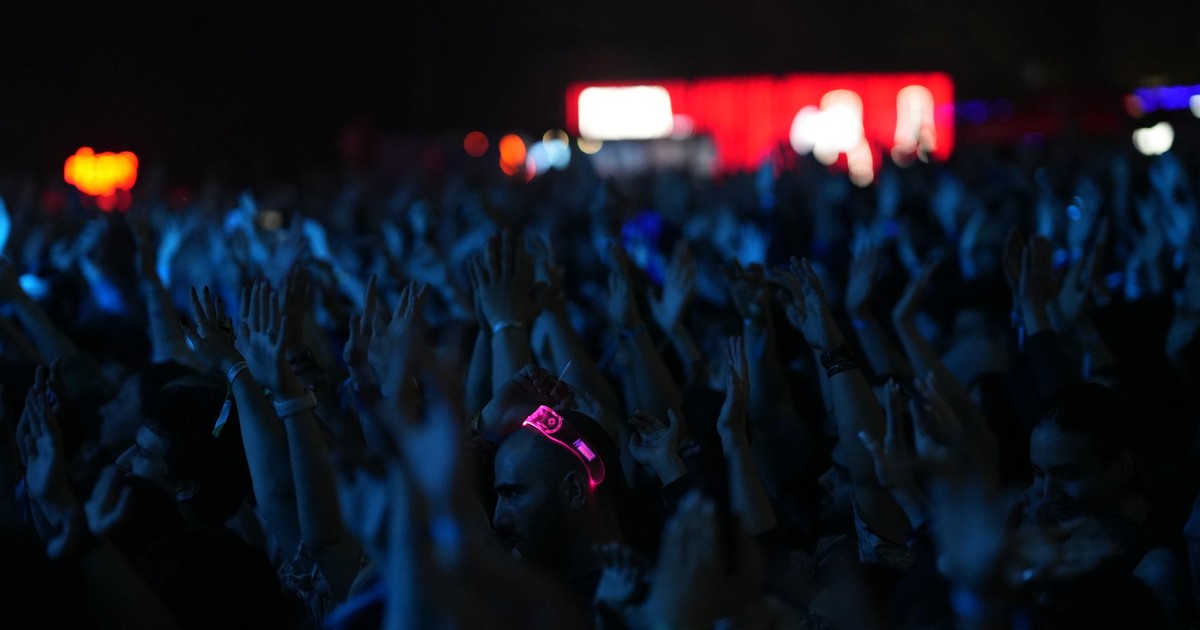
Riot Fest runs September 18-20 at Douglass Park in Chicago, with headliners including Tool, Twenty One Pilots, and Pierce the Veil, alongside Morrissey, Iggy Pop, Alanis Morissette, Patti Smith, the Pixies, Nas, Angine De Poitrine, and Rise Against. Shatner slots into it at the anarchic, boundary-ignoring end of that spectrum.
“I’ve always believed that music, like space, is about exploration,” Shatner said. “Riot Fest is exactly the kind of place where anything can happen. We’re bringing volume, intensity and a few surprises.”
The Riot Fest set will also reportedly pull from his back catalog, so anyone expecting a purely metal show should probably recalibrate. Shatner on stage with 35 musicians behind him, working through both metal covers and reimagined versions of songs from his full discography, is something that defies prediction.
Read More: Some People Are Just Realizing The Meaning Behind Rock Band AC/DC’s Name
Why This Matters
Most people who reach their mid-90s are managing, not expanding. Shatner is expanding. His description of the project doesn’t sound like someone chasing relevance. He already got Rob Halford, Mikkey Dee, and Dave Lombardo to say yes. He already booked a set at one of America’s largest rock festivals at an age when most entertainers are doing farewell tours.
Some people find their thing and stick to it. Shatner finds the next thing, and then the thing after that, and keeps going until the next thing turns out to be a Black Sabbath cover at Douglass Park in September.
Disclaimer: This information is not intended to be a substitute for professional medical advice, diagnosis, or treatment and is for information only. Always seek the advice of your physician or another qualified health provider with any questions about your medical condition and/or current medication. Do not disregard professional medical advice or delay seeking advice or treatment because of something you have read here.
AI Disclaimer: This article was created with the assistance of AI tools and reviewed by a human editor.