

The argument that shows up most reliably in long-term marriages isn’t about money or fidelity. It’s about who remembered to schedule the dentist appointment, who cleaned the bathroom without being asked, who noticed the last of the coffee was gone and replaced it. One person tracked it. One person didn’t. And when that pattern repeats itself across every domain of a shared life, year after year, something shifts – not dramatically, but steadily.
A husband who expects his wife to give up parts of herself may never once raise his voice. He may even believe he’s a good partner. The expectations don’t arrive as demands. They arrive as friction: a sigh when dinner isn’t ready, a sulk when she makes plans without him, a withdrawal when she brings something difficult to the table. She learns, without anyone ever saying it, what she is and isn’t allowed to be.
What makes this pattern so persistent is that it rarely looks like cruelty from the outside, and often doesn’t feel like cruelty from the inside. These are the expectations husbands have in marriage that no one ever wrote down, but almost everyone knows – shaped by cultural defaults, inherited scripts, and the accumulated weight of what goes unremarked versus what gets rewarded. Eight of them show up often enough, and cause enough damage, to be worth naming directly.
1. Her Career Ambitions
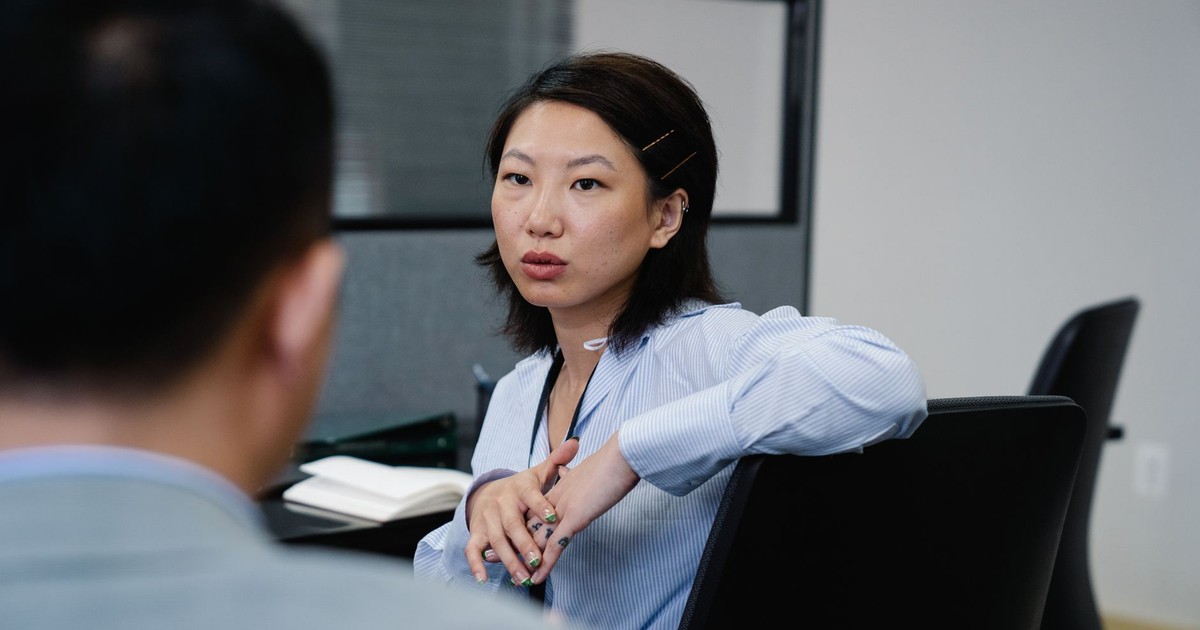
It doesn’t arrive as a demand. It arrives as friction – a comment about travel schedules, a complaint that dinner isn’t ready, a low-grade expectation that her promotion will somehow become less important when children enter the picture. But the effect is the same as a direct veto.
Women in different-gender relationships do more household labor than their partners, which is directly linked with lower relationship satisfaction – and mothers in different-gender couples bear a significantly greater household labor burden compared to any other group studied, according to a 2026 study published in SAGE journals. When the domestic load falls disproportionately on one person, the time and energy available for professional growth shrinks accordingly. Her ambition doesn’t disappear. It gets crowded out.
Women in these marriages don’t face overt prohibition. They face something more wearing: an accumulation of small obstacles that makes ambition feel selfish rather than normal. She can’t point to the moment she gave it up. She just looks back and realizes she did.
The practical marker is simple: does he treat her career as equally important as his own when there’s a conflict? Not in theory – in scheduling, in travel, in who takes the sick day when the kid has a fever.
2. Her Friendships and Social Life
Research on spousal role expectations has found that wives are often culturally expected to fill the role of caretaker and household manager, with these expectations shaped by gender role attitudes embedded in cultural and societal norms. Part of that script, whether stated or not, is being available. Always available. An evening out with friends becomes something a wife has to justify rather than simply plan.
The suspicion around a wife’s friendships is rarely about the friends themselves. It’s about control dressed as concern. She’s out too late. She talks too much about her marriage. Those women are a bad influence. The underlying expectation is that her primary social world should revolve around him – and that friendships which exist outside of him represent a kind of disloyalty.
Social connection is one of the strongest predictors of mental health and longevity in women. Friendships aren’t a luxury women should feel grateful to be allowed. A husband who treats his wife’s independent social life as a threat, or who sulks until she stays home, isn’t being attentive. He’s being isolating.
3. Her Emotional Honesty

Some men don’t want a wife. They want a mood regulator. They want someone who is always steady, never too heavy, never too angry, never too sad in a way that puts demands on them. The expectation isn’t announced – it’s enforced through withdrawal. She brings something difficult to the table, and he goes silent, leaves the room, or makes the discomfort so palpable that she learns to stop bringing things up.
Emotional labor – the act of suppressing or altering one’s feelings to enhance another person’s well-being – is predominantly performed by women, especially within intimate relationships, according to 2025 research published in the Archives of Sexual Behavior. The cost of this labor is chronic. A woman who has spent years managing her own emotional expression to protect her husband’s comfort doesn’t just lose the ability to speak freely. She often loses track of what she actually feels, because she has spent so long editing herself before she speaks.
Expecting a wife to be the emotional thermostat of the marriage – calm when he’s stressed, supportive when he’s struggling, but never too much herself – is rooted in the idea that her inner life matters less than his peace of mind. That’s not partnership. That’s a staffing arrangement.
4. Her Physical Autonomy
Expectations around a wife’s body are among the most normalized in marriage, and among the most damaging. They cover a wide range: what she weighs, how she dresses, whether she wants sex when he does, how quickly she returns to her pre-pregnancy body. They’re often delivered not as demands but as disappointment – which can be harder to name and harder to resist.
While couples across decades have consistently expressed a preference for sexual relationships in which both partners experience equal pleasure, a substantial disparity in sexual pleasure between women and men persists, especially in heterosexual relationships. This gap doesn’t exist in a vacuum. It exists in the same marriages where her desire and comfort are treated as secondary logistics – important in principle, inconvenient in practice.
A husband who expects physical access on his timeline, who makes her feel guilty for not wanting it, or who frames her body as something that exists for his benefit rather than as something she owns and inhabits, is operating from an expectation that most people wouldn’t state out loud because they know how it would sound. It sounds exactly as it is.
5. Her Right to an Equal Domestic Partnership

Women shoulder greater shares of both cognitive and physical housework than men, and prior research suggests expressions of gratitude within households actually reveal the underlying expectations that reproduce gender-traditional labor divisions, according to a 2026 study in the Journal of Marriage and Family. Even gratitude – something that sounds positive – can encode an expectation. When a husband thanks his wife for doing the laundry, the implicit frame is that laundry is her job and he’s grateful she did it. When he does it, no one thanks anyone. It was just Tuesday.
The mental load – the invisible work of remembering, planning, and coordinating – is the part that research keeps catching up to. On the days they do household activities, women spend an average of 2.7 hours on these activities, while men spend 2.3 hours, according to the Bureau of Labor Statistics 2024 American Time Use Survey – and that gap widens considerably for mothers and for the cognitive work that time diaries don’t fully capture.
A man who expects his wife to run the household in addition to whatever else she carries professionally and socially isn’t sharing a life with her. He’s employing her, unpaid, in her own home.
6. Her Cultural or Religious Identity
Marriage can be a slow erosion of the self, and nowhere is this more gradual than in identity. A wife who came into the marriage with her own religious traditions, cultural practices, or family customs sometimes finds, years in, that she’s celebrated his family’s holidays and quietly abandoned her own. Not because anyone demanded it. Because it was easier, because his preferences filled the available space, because her traditions were treated as optional while his were treated as default.
Spousal role expectations are shaped by gender role attitudes alongside cultural and societal norms, and when those expectations go unexamined, they tend to resolve in one direction: toward his background, his calendar, his defaults. The wife who arrives in the marriage with a different background and finds her own gradually absorbed rarely experiences one decisive moment of loss. She experiences a hundred small ones.
Respecting a wife’s cultural and religious identity isn’t a special accommodation. It’s the baseline of treating someone as a full person. A husband who expects his wife to assimilate into his cultural or family framework while hers gets set aside is asking her to become less of who she is in exchange for being accepted in his world.
7. Her Mental and Physical Health Needs

A wife who is exhausted, burned out, or struggling with her mental health is not being difficult. She is a person with a body and a mind that has limits. But in marriages where her needs are perpetually deprioritized, her health becomes the last item on a list that never gets shorter.
Research is direct about what this costs. Studies consistently show that wives invest more effort in accommodating marital expectations, resolving conflicts, and sustaining relational harmony than their husbands do – a pattern that aligns with evidence showing women are socialized to prioritize relationship maintenance and emotional labor within the family context. The problem isn’t that women are good at adapting. The problem is that adapting indefinitely, without reciprocity, depletes a person.
A husband who expects his wife to show up fully – as a partner, mother, professional, and emotional anchor – while treating her sleep, her doctor’s appointments, her therapy, and her downtime as negotiable isn’t managing competing demands. He is outsourcing his own functioning to her and calling it marriage.
8. Her Voice in Financial Decisions
Financial control is one of the clearest markers of power imbalance in a marriage, and one of the most socially acceptable. A husband who manages all the money, controls access to accounts, makes major purchases without consulting her, or dismisses her perspective on financial planning isn’t just keeping things organized. He is deciding, every day, that her input doesn’t count.
This can look like efficiency from the outside. He handles the finances, she handles the household – it’s “just how they divide things.” But when the division means she has no independent knowledge of what they own, what they owe, or what she’d have access to if the marriage ended, that’s not a division of labor. That’s financial dependency by design.
Women who have no financial independence, no knowledge of marital assets, and no access to money without their husband’s involvement are not in a partnership. They are in a dependency. And dependency, by definition, requires someone else’s permission to exist.
Read More: 10 Things You Should Never Have to Ask the Man Who Loves You
What Makes an Expectation Unreasonable

The word “expectation” is doing a lot of work in these conversations, and it’s worth being honest about what distinguishes an unreasonable one from a different one. Healthy marriages run on expectations all the time – that both partners will show up, contribute, stay faithful, be kind. Those are reasonable. What distinguishes the eight listed here is something specific: each one requires the wife to become smaller so the husband can remain comfortable.
A particular kind of husband would read this list and feel that he doesn’t apply to it, because he has never once made a demand. He’s right that he hasn’t made demands. But demands and expectations aren’t the same thing. Expectations live in what you reward and what you punish, in what you notice and what you ignore, in how you respond when she pushes back versus how you respond when she doesn’t.
A marriage in which a woman can bring her full self – her ambitions, her anger, her fatigue, her friendships, her traditions, her body, her voice about money – and still be met with love and respect isn’t a high bar. It’s the actual definition of the thing. Some of these patterns go back further than the marriage does, rooted in what both people were shown a marriage should look like long before they met each other. Naming that isn’t a solution. But it is usually where the real conversation has to start.
AI Disclaimer: This article was created with the assistance of AI tools and reviewed by a human editor.