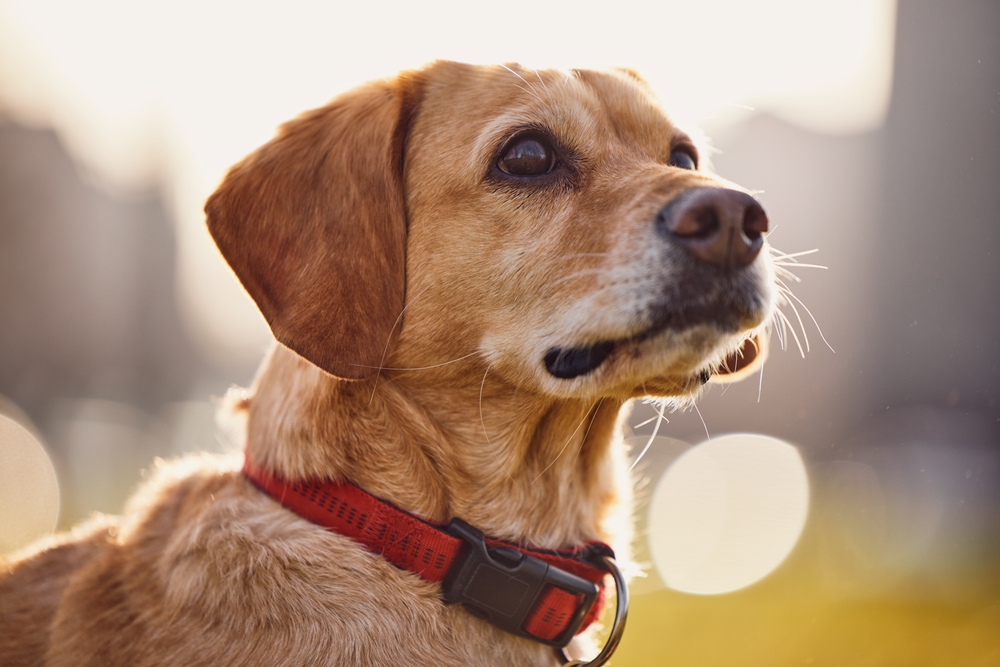

Most people see a red dog collar and assume it is just a style choice. Sometimes that is true. Plenty of owners pick red because it stands out, looks nice, or matches the dog’s leash or tags. But in many cases, a red collar, red leash, or red bandana is being used as a simple warning signal. The general message is usually the same: this dog may need space, may be reactive, or may not be comfortable being approached by strangers or other dogs. That does not automatically mean the dog is dangerous, and it does not mean every red collar carries this message. The important part is that the color can be used as a caution sign, and it is smart to treat it that way unless the owner tells you otherwise. Some dog organizations, pet publications, and training groups describe red as a color that often signals caution, while also noting that these color systems are not universal rules used in exactly the same way everywhere. That last part matters. A red collar is not an official legal code that works the same in every city or country. Still, enough owners use it as a warning that it is worth noticing before you rush over to greet a dog.
This kind of color cue exists because dogs cannot explain themselves in words, and owners often need fast ways to communicate with the public. A red collar or lead is one of the clearest visual signals a dog owner can use from a distance. It can mean the dog is fearful, uneasy around strangers, recovering from something, easily overstimulated, or simply not a dog that enjoys being approached. In some guidance, red is described more strongly as a warning color for dogs that may react badly if pushed too far. That is why the safest response is not to guess which version applies. The safest response is to slow down, keep your distance, and look to the owner for direction before doing anything. That simple pause can prevent a lot of stress for the dog and a lot of awkward or risky moments for everyone else. The red gear is not there to make the dog look dramatic. It is there to make other people think twice before assuming every dog wants attention. When people miss that signal, they often create exactly the kind of pressure the owner was trying to avoid in the first place.
Red does not always mean the same thing everywhere
One of the most important things to understand is that dog collar colors are not a single official system that every owner follows in exactly the same way. That is why it helps to think of a red dog collar as a caution clue, not a perfect translation. Some guides describe red as meaning the dog is reactive or needs space. Others frame it more generally as a signal to approach with care. Some owners use red for dogs that are anxious. Others use it for dogs that dislike greetings from unfamiliar dogs. Some may use it because the dog is recovering from illness, in training, or simply overwhelmed by busy environments. And yes, some owners pick red only because they like the color. That is why the smartest response is not to assume the worst or to assume the best. It is to treat the color as a sign to pause and ask. The same broader advice appears in sources discussing colored dog gear, where red is often linked with caution and space, but also described as part of a system that is not universal and may vary by region or by owner preference.
That lack of a universal rule does not make the signal useless. It actually makes respectful behavior even more important. If you see a red collar and the dog looks perfectly calm, that still does not cancel the message. Some dogs hold themselves together until someone crosses a line. Others are fine with their owner but not fine with unknown people leaning in, touching their head, or letting another dog rush into their face. A lot of bad interactions happen because someone assumes a wagging tail or a cute face means full permission to approach. The red collar can be a helpful reminder that appearances do not tell the whole story. Even a dog that looks sweet, quiet, or curious may have limits the public cannot see. The owner may already know that the dog startles easily, guards its space, panics around children, or reacts to other dogs on leash. So while the exact meaning of the color may vary, the respectful response stays pretty consistent. Do not assume. Do not rush over. And do not let your dog charge forward just because you think it will probably be fine.
Why do owners use red in the first place?
People usually put a red collar, lead, or bandana on a dog for a practical reason. They are trying to reduce bad interactions before they happen. Many dog owners know that strangers often approach without asking, especially if the dog is small, fluffy, young-looking, or unusually attractive. Children may run up. Adults may reach out a hand automatically. Other dog owners may assume a quick sniff is harmless. For a dog that is fearful, reactive, stressed, recovering, or simply not social, those moments can pile up fast. The red gear acts like a visual shortcut that says, please give this dog room. In many cases the goal is prevention, not drama. The owner is trying to avoid putting their dog in a situation where it feels trapped, pushed, or forced to react. Color-coded gear is often described this way, as a simple way to communicate a dog’s comfort level from a distance before anyone gets too close.
That matters because public dog etiquette is not always great. A lot of people still believe every dog wants to be greeted, touched, spoken to, or introduced to another dog. Many owners know that is not true, but strangers do not always wait long enough to find out. A red collar can help an owner avoid having to explain the same thing over and over in crowded places. It can also support training by giving the dog a little more personal space while it learns to handle busy environments. Some dogs may be adjusting after adoption. Some may be older, in pain, or easily startled. Some may be fine most of the time, but very uncomfortable with sudden closeness. Using red gear does not mean the owner is irresponsible or that the dog is automatically bad. In many cases it means the owner is being thoughtful and clear about the dog’s limits. That is a good thing. It shows they are trying to manage the dog honestly rather than pretending there is no issue and hoping everyone else figures it out.
What you should do if you see a red dog collar
The best response is simple. Slow down and give the dog space. Do not reach out. Do not crouch and make kissy noises. Do not let a child rush over. And do not assume your own dog should go say hello. If the owner wants interaction, they can invite it. If they do not, the red gear may be the only warning you get before the moment becomes stressful. This matters especially in parks, sidewalks, apartment buildings, and pet-friendly stores, where dogs often cross paths in tight spaces. A little distance can make a huge difference. With dogs that are sensitive, reactive, or easily overwhelmed, an extra few feet may be enough to keep the whole moment calm. Guidance around yellow ribbon and color-coded dog gear consistently points toward the same behavior: give the dog room and do not approach without permission. That same approach makes sense with red gear, especially because red is often used as the stronger caution color.
It also helps to ask before doing anything, even if the dog looks friendly. A simple “Is your dog okay with people?” or “Can my dog say hello?” is far better than assuming. And if the owner says no, that is the end of it. Do not take it personally. Do not insist that your dog is friendly or that you are good with animals. That kind of response puts pressure back on the owner and ignores the signal they were already trying to send. Respectful dog behavior in public is not only about controlling your own dog. It is also about accepting that other dogs may have different comfort levels. The red collar is useful because it gives you the chance to do the right thing before the dog shows discomfort more clearly. The whole point is to avoid reaching the moment where the dog feels it has to bark, lunge, freeze, or pull away. If you notice the red signal early and respond calmly, everyone has a much easier time.
Why this matters for children and other dog owners
Children are often the most likely to run toward a dog without thinking, especially if the dog is cute or standing still. That is why adults need to notice visual signals like a red collar before a child gets close enough to create a problem. A dog that feels cornered or startled may react quickly, even if it has seemed calm a second earlier. Teaching children to stop, look, and ask first is one of the simplest ways to avoid stressful situations. The same goes for adults who assume all dogs are public property the moment they appear on a sidewalk. They are not. A dog in public is still under the care of its owner, and that owner may be actively trying to manage fear, reactivity, recovery, or training. Red gear can be a useful first clue that this is not the dog to approach casually.
Other dog owners also need to take this seriously because dog-to-dog greetings are where a lot of avoidable tension happens. People sometimes see another dog and let their own dog pull toward it while saying something like, “He’s friendly.” But friendliness on one side does not solve discomfort on the other side. A dog wearing red may not want another dog in its face, especially on leash, where movement is limited, and tension builds quickly. Color-coded gear is often used to signal exactly that kind of issue: not safe for close greetings, not comfortable around other dogs, or simply needing more space. If you are walking your own dog and you notice a red collar or lead ahead, it is smart to cross the street, shorten the leash, or give a wide berth rather than trying to test what the color means. That is not fear. It is good handling. The owner is already giving you information. The respectful thing to do is use it.
Red is part of a bigger color language
Red is not the only color owners use to send a message. Yellow is probably the best-known example because of the Yellow Dog movement, which encourages people to give space to dogs wearing yellow ribbons, leashes, or similar gear. In many guides, yellow usually means the dog needs space, may be nervous, or should not be approached without permission. Red is often described as a stronger caution signal, especially for dogs that may react more sharply or are less tolerant of close contact. Green is sometimes used to suggest a dog is friendly or approachable, while blue may be used by some owners to show that a dog is in training. But again, these meanings are not perfectly standardized everywhere, which is why they work best as clues rather than exact definitions.
Still, even with that flexibility, the broader pattern is easy to understand. Bright, intentional dog gear colors are often meant to communicate something the public cannot know just by looking. That makes them worth noticing. A lot of dog stress comes from other people ignoring small signals until the dog has to give bigger ones. A color cue can interrupt that pattern. It gives strangers a chance to show respect before the dog is pushed too far. That is why even an imperfect color system can still be useful. It does not need to be official to be helpful. If the public understands that red often means caution, yellow often means space, and green often suggests friendliness, that already creates better public behavior than treating every dog exactly the same. The important part is not memorizing every possible color. It is noticeable that the owner may be trying to tell you something before you step closer.
The safest rule is still the simplest one
In the end, the red dog collar matters because it reminds people of a basic rule they should already be following: never assume a dog wants interaction just because you want it. Even if the collar is just a color choice, treating it as a caution sign causes very little harm. You give the dog space, ask permission, and move carefully. That is good public behavior anyway. But if the red gear is being used as a real warning, then noticing it can prevent a tense, embarrassing, or unsafe moment very quickly. That is why it is worth learning this signal even though it is not universal. It is one of those small pieces of dog etiquette that can make walks, parks, sidewalks, and shared spaces much easier for dogs and humans alike.
The easiest takeaway is this: if you see a dog in red, pause before you approach. Let the owner lead the interaction. Keep children and other dogs from rushing in. And remember that a collar can be more than decoration. Sometimes it is the owner’s quiet way of saying, ” This dog needs room, and I hope you notice before things get uncomfortable. That is not a message to ignore. It is one of the clearest chances you will get to show respect to a dog you do not know.
This article was created with the assistance of AI tools and reviewed by a human editor.