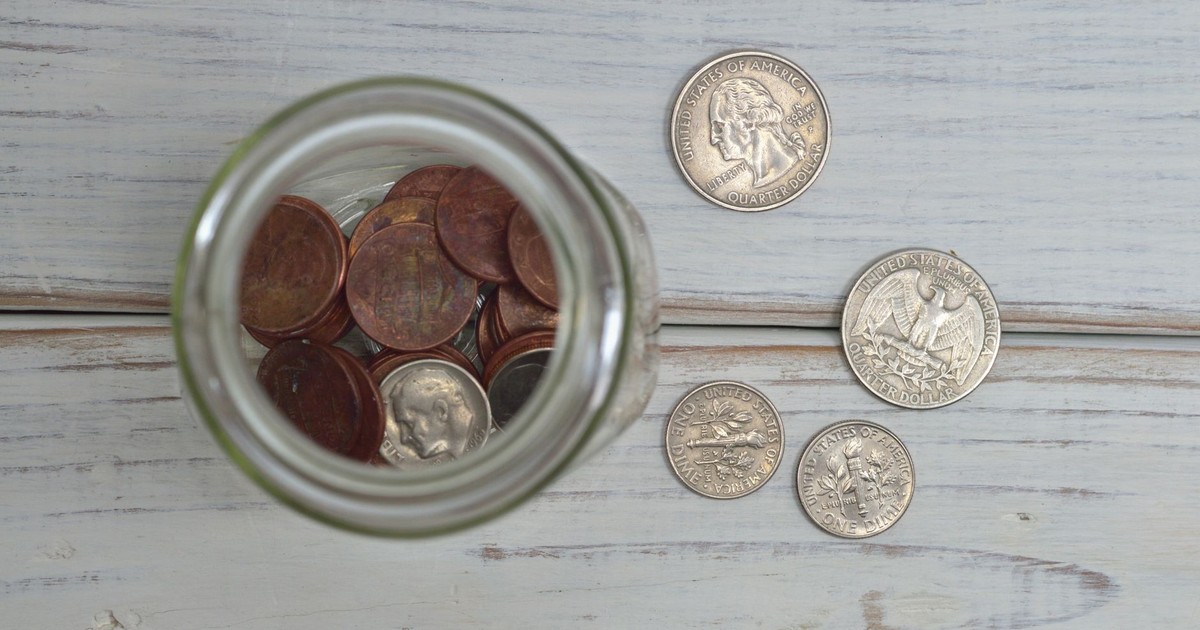

You probably have a few quarters sitting in a dish somewhere, change from a gas station, a coffee run, a laundromat. Most of them are worth exactly 25 cents. The Washington quarter series spans nearly a century of American minting history. Across that span, low mintages, metal transitions, die errors, and production blunders have produced dozens of coins worth dramatically more than their face value. Several are findable in ordinary circulation today.
Quarters cover pre-silver-era classics, key-date rarities, mid-century oddities, modern mint errors, and a few genuinely peculiar accidents that produced some of the most sought-after coins in the hobby. Some are worth a few hundred dollars in any grade. Others, in the right condition, have sold for more money than a used car.
The 12 quarters below cover the full range. Some require magnification to identify. Others you can spot with nothing more than a date and a mintmark.
1. 1932-D Washington Quarter
Both 1932 key dates were struck during the depths of the Great Depression, when coin production was significantly reduced. The Denver Mint struck 436,800 pieces and the San Francisco Mint struck 408,000, making them the only two Washington quarters with mintages under one million. Although the 1932-S has a slightly lower mintage, the 1932-D is considered rarer in Mint State because uncirculated examples of the 1932-S were saved at a slightly higher rate, giving the 1932-D the lowest MS-65 population of any Washington quarter.
In gem uncirculated condition (MS-65 or higher), specimens have sold for $3,000 to $10,000 and beyond. The spread between a well-worn example and a pristine one is enormous, which means condition matters more here than almost anywhere else in the Washington quarter series.
Silver quarters from 1932 to 1964 carry a solid value floor based on their silver content alone, with better dates and grades multiplying values significantly. On the 1932-D, that floor is practically irrelevant. The collector premium towers over the metal value at every grade level.
2. 1932-S Washington Quarter
The San Francisco Mint counterpart to the 1932-D is only marginally more common. Both were the first year of a design that is still in production today, and neither was saved in any meaningful quantity because nobody in 1932 was thinking about coin collecting.
The 1932-S commands values of $80 to $2,000 or more depending on grade. Circulated examples, the kind you might plausibly encounter, are worth well over face value at every condition level, which makes the 1932-S one of the few genuinely valuable quarters where even a worn coin puts real money in your pocket. Look for the “S” mintmark below the eagle on the reverse.
The 1932-D and 1932-S have consistently appreciated over time, especially in uncirculated condition. Long-time collectors treat both as near-certainties for future value growth, which keeps demand steady even when the broader coin market softens.
3. Any Silver Quarter Dated 1964 or Earlier
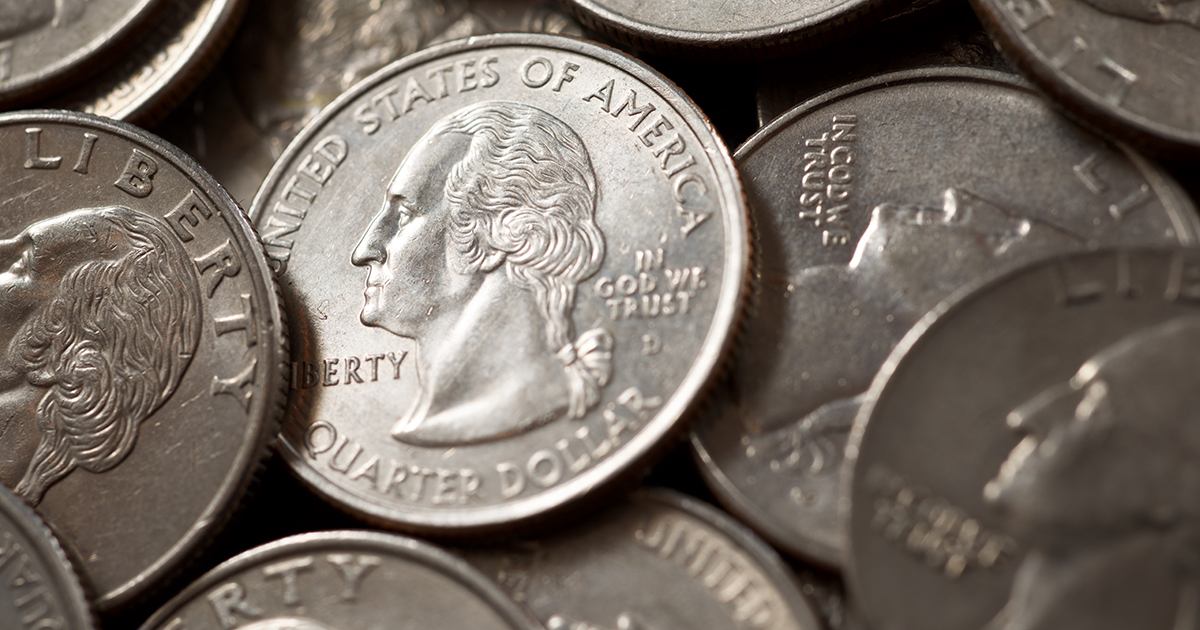
Every quarter struck from 1838 through 1964 contains 90% silver and 10% copper, a composition the U.S. Mint abandoned the following year when the rising price of silver made the coins worth more than their face value as metal. Even a heavily worn, common-date 1958 quarter sitting at the bottom of a drawer is worth more than 25 cents regardless of its collector grade. The quickest check is the date: 1964 and earlier means silver.
The dates within the silver era that carry the biggest collector premiums are the 1932-D and 1932-S (covered above), plus key dates like the 1942-D doubled die and the 1943-S doubled die obverse, where the die was physically doubled during manufacture, creating visible ghosting on the lettering and date. Washington quarters feature several spectacular doubled die varieties; these are among the most sought-after error coins in American numismatics, commanding substantial premiums from collectors and investors.
4. 1965 Silver Transitional Error Quarter
In 1965, the U.S. Mint made the switch from 90% silver to copper-nickel clad, but a small number of the new 1965-dated quarters were accidentally struck on leftover silver planchets from the previous year. These coins are called transitional errors, and authenticated examples are exceptionally scarce.
A 2026 guide from coins-value.com confirms that a 1965 date on a coin weighing 6.25 grams is “a major transitional error worth thousands.” The way to identify one is by weight: a standard clad quarter weighs 5.67 grams, while a silver planchet quarter weighs 6.25 grams. A kitchen scale won’t give you the precision you need, but a jeweler’s scale or a coin dealer’s setup will tell you in seconds.
Confirmed examples have sold for $5,000 to $16,800 at auction, with a PCGS-graded MS-62 example realizing $16,800 at Stack’s Bowers in December 2020. That range reflects just how few certified specimens exist and how dramatically the find defies what should have been a straightforward production year.
5. 1950-D/S and 1950-S/D Overmintmark Quarters
The overmintmark varieties of 1950 are a quirk of mid-century Mint practice. In that era, the Mint would sometimes reuse a die by punching a new mintmark over an existing one, creating a coin where, under magnification, two different mintmarks are stacked on top of each other. The 1950-D/S means a “D” was punched over an “S,” and the 1950-S/D reverses the order.
In circulated grades, both varieties sell for around $60 to $125 and up. Uncirculated examples are considerably scarcer; the 1950-D/S can reach $385 to $4,200 or more in Mint State, and the 1950-S/D ranges from $447 to $1,400 or more at MS grades. These aren’t coins that scream their identity from across a table; you need a loupe or a magnifying glass to see the buried mintmark beneath the dominant one. The 1950-D Over S is one of the more recognized overmintmark coins, with both Large and Small mintmark varieties that are comparably priced.
The 1950-S/D is the rarer of the two. Finding either requires patience and a good eye, but they do turn up in old collections and coin rolls, particularly from estates where someone hoarded rolls of silver quarters decades ago and nobody ever looked at them closely.
6. 1982-P and 1983-P Washington Quarters
These two were minted in large numbers, but almost nobody saved them in pristine condition. The 1982-P and 1983-P stand out as particularly scarce in uncirculated condition, the result of few collectors saving rolls during those years, and both coins were only included in mint sets, not distributed for general circulation.
In circulated condition, these quarters are essentially worth face value. An uncirculated example with sharp luster and clean surfaces becomes a serious find, because so few were preserved that way. For coins minted in huge numbers, top-grade examples can be genuinely hard to come by. If your coin has strong luster, few contact marks, and crisp details, it may be a candidate for professional grading.
These are the kinds of coins that reward people who sort through old mint sets rather than just the loose change at the bottom of a jar. If you have mint sets from the early 1980s, check the quarters before you trade them away.
7. 1970-S Proof Quarter Struck on a 1941 Canadian Planchet
The 1970-S proof quarter overstruck on a 1941 Canadian coin defies any standard explanation. Proof coins are struck under stringent quality controls at the San Francisco Assay Office, making the presence of a foreign coin on the press a near impossibility under normal conditions. The example known to collectors was originally discovered in a group of San Francisco proof errors auctioned by the State of California, and experts broadly believe the coin was placed on the press intentionally.
One known example was struck over a 1941 Canadian quarter featuring King George VI; another was overstruck on a King George V-era Canadian silver quarter. The underlying Canadian design, the monarch’s shoulder, maple leaves, and partial “REX ET IND” lettering, is visible beneath the Washington strike. Under magnification, you can read fragments of the Canadian coin through the American one, which makes the error visually unmistakable.
An NGC PR-64 example sold at Heritage Auctions in 2020 for $7,800, though higher-grade or better-documented examples have commanded considerably more. The number of known specimens is extremely small, which means a find would be the kind of thing you’d tell people about for years.
8. 1976 Bicentennial Quarter (Silver Clad Collector Version)
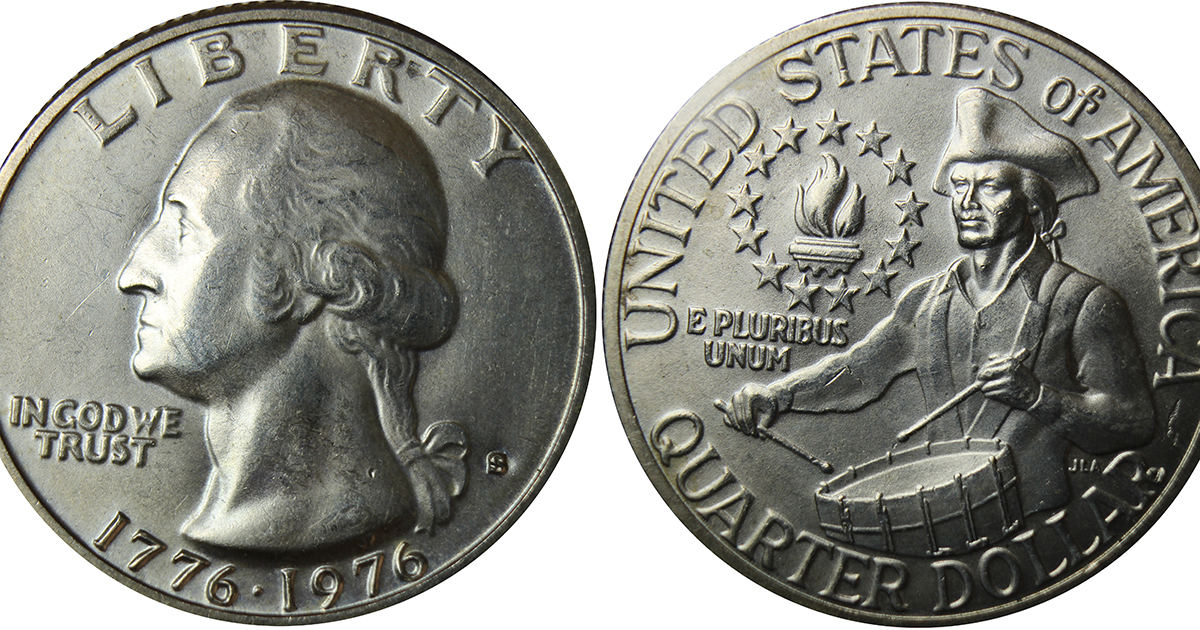
The Bicentennial quarter, with the colonial drummer on the reverse and the dual date “1776-1976” on the obverse, is one of the most recognizable coins in American history. The circulation version, made of copper-nickel clad, is worth face value. A second version exists that most people don’t know about.
The U.S. Mint produced a silver clad version of the Bicentennial quarter exclusively for collector sets. The San Francisco Mint struck limited quantities of 40% silver proof versions, sold only to collectors, featuring a frosted, mirror-like proof finish and a slightly heavier feel. A standard copper-nickel Bicentennial quarter isn’t worth hunting; the silver proof version is.
These coins regularly trade in the $10 to $20 range for typical examples, with gem proof specimens graded by PCGS or NGC fetching considerably more from collectors who specialize in modern proof coinage. They won’t make you rich, but they’re absolutely not worth spending at face value, and many people do exactly that without realizing what they have.
9. 2004-D Wisconsin Extra Leaf Quarter
The 50 State Quarters program ran from 1999 to 2008 and put billions of coins into circulation. Most of them are worth exactly 25 cents. The Wisconsin quarter from 2004 is the exception that keeps coin roll hunters going.
The Denver Mint struck coins with an extra leaf on the ear of corn. One variety had an extra leaf extending upward; another had an extra leaf bent downward. Both are genuine die errors, and both are collectible. According to a 2026 errors guide from PriceSnap, the 2004-D Wisconsin Extra Leaf quarters and 2005-P Minnesota doubled die varieties bring $25 to $400 depending on condition and the strength of the error.
These coins are still out there in circulation. To spot them, look at the ear of corn on the reverse. The standard design has one leaf curving up from the husk. The error versions have an additional leaf that shouldn’t be there, and once you know what to look for, it’s hard to miss.
10. 2005-P Minnesota Doubled Die Extra Tree Quarter
The year after Wisconsin, Minnesota gave collectors another modern error worth tracking. On the 2005-P Minnesota quarter, one of the pine trees in the design appears duplicated, with a ghost image of an extra trunk standing where no tree should be. The 2009 District of Columbia quarter also carries a doubled die reverse variety worth watching for.
The Minnesota error can bring $25 to $400 depending on the strength of the doubling and the coin’s condition. Some examples show the error dramatically; others require magnification to confirm. Stronger, more visible doubling commands the higher end of that range.
Like the Wisconsin quarter, the Minnesota error circulated widely before anyone realized what had happened, which means examples in average circulated condition are the most commonly encountered. If you find one with strong luster and minimal wear, it’s worth having professionally graded.
11. 1999-2008 Silver Proof State Quarters
The State Quarters program produced two versions of each coin: the standard copper-nickel clad coins that went into circulation, and a silver proof version sold directly to collectors. From 1999 to 2008, the San Francisco Mint struck limited quantities of 90% silver proof state quarters exclusively for collectors, the same composition as pre-1965 quarters.
Silver proof state quarters are worth $5 to $12 each. That’s modest, but it’s still 20 to 48 times face value, and it adds up quickly across a complete set of all 50 states. The problem is that many of these ended up in circulation after collector sets were broken up, meaning someone may have spent them without knowing. They look nearly identical to the standard version but have a mirror-like proof finish and weigh slightly more due to their silver content.
A full silver proof state quarter set, maintained in original condition with the original packaging, can carry a significant premium over the individual coin values. If you inherited any collector packaging from the late 1990s or 2000s, look before you liquidate it.
12. 2019-2020 West Point “W” Mintmark Quarters
The newest valuable quarters on this list are also the most democratic: these coins were deliberately released into general circulation and can still turn up in change today. Quarters struck at the West Point Mint carry a “W” mintmark and, unlike almost all other West Point coinage, were released directly into circulation in 2019 and 2020, making them genuinely findable in rolls.
The West Point Mint almost never releases coins into general circulation, it’s primarily a bullion and commemorative facility. That makes the “W” mintmark on a circulating quarter genuinely unusual, and collectors noticed immediately. Even in circulated condition, these bring $10 to $25 or more. That sounds modest until you consider that finding one costs nothing beyond the attention it takes to check your change.
The mintmark is on the obverse, just to the right of Washington’s ponytail, where you’d look for a “D” or “P” on other modern quarters. If you find a “W” there, set it aside. It’s worth considerably more in uncirculated condition, so handle it minimally and store it in a coin flip rather than tossing it back into the jar.
What to Do If You Think You Have One
The most important step with any potentially valuable quarter is to stop spending it and start verifying. A jeweler’s scale is useful for checking weight on silver transitional errors. A 10x loupe, available for a few dollars from any coin or hobby shop, will show you doubled die errors, overmintmarks, and extra leaves that are invisible to the naked eye. The date and mintmark are always the first things to check.
For coins that might genuinely be worth significant money, professional grading through PCGS (the Professional Coin Grading Service) or NGC (the Numismatic Guaranty Corporation) is worth the submission fee. Both services encapsulate the coin in a tamper-evident holder with a certified grade and authentication, which makes the coin far easier to sell and removes any question about its legitimacy. The grading fee typically runs $30 to $50 for standard submissions, which makes no sense for a $5 coin but makes a lot of sense for anything in the hundreds.
The market for valuable quarters is active and well-documented, which means pricing is reasonably transparent. Heritage Auctions, Stack’s Bowers, and eBay’s sold listings all give you real-world data on what coins have actually changed hands for, not asking prices, but closed sales. Check those before you accept any offer. A coin dealer will generally pay 60 to 80 percent of retail for a common collectible quarter; for rarer pieces with strong demand, the spread narrows. Knowing what you have before you walk into a shop is the single most useful thing you can do.
The Ones Worth Taking Seriously
Most of the quarters in this list don’t announce themselves. The 1982-P looks like every other clad quarter from the early 1980s. The 2004-D Wisconsin Extra Leaf looks, at a glance, like every other state quarter in the series. The 1965 silver transitional error looks exactly like a standard 1965 quarter until you put it on a scale. If these coins were visually obvious, they’d have been pulled out of circulation decades ago.
The research takes minutes, the tools are cheap, and the downside is zero. You’re already holding the coins. A 10x loupe and five minutes with the dates in this list is genuinely all it takes to find out whether something unremarkable in a coin jar is, in fact, remarkable. Some of these patterns go back to production decisions made eighty years ago. Naming what you have doesn’t guarantee anything, but it’s always where the real conversation starts.
AI Disclaimer: This article was created with the assistance of AI tools and reviewed by a human editor.