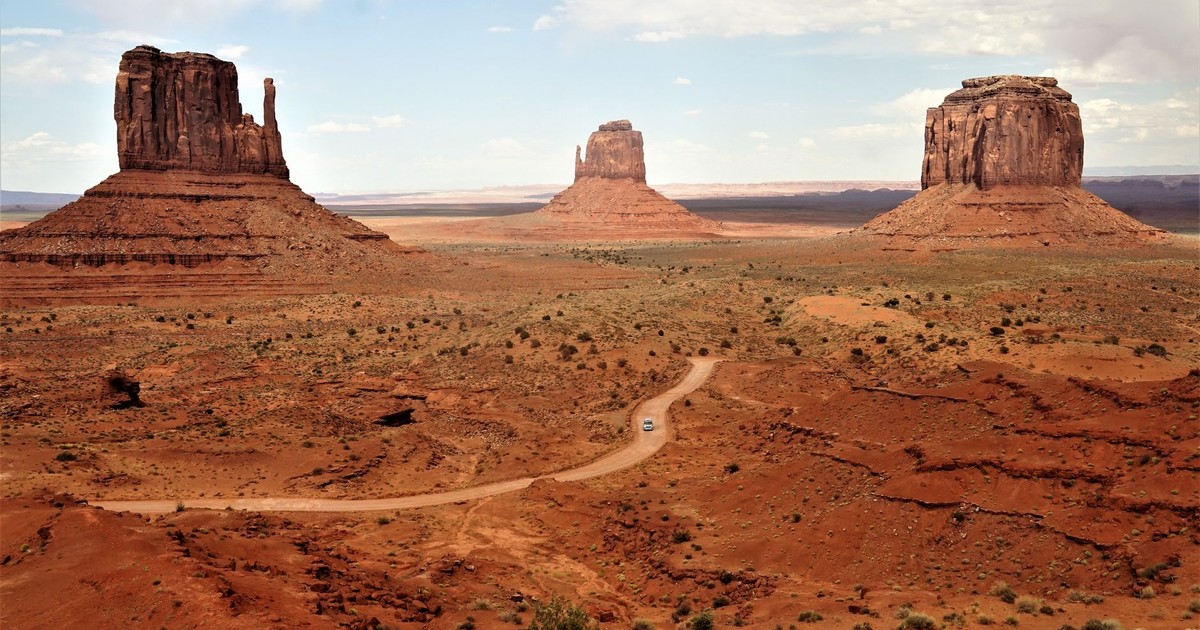

The canyon walls in southern Utah’s Bears Ears country have been around for roughly 300 million years. They have outlasted at least a dozen civilizations, thousands of years of human habitation, and more than a century of federal land management debates. What happened on July 13, 2026, in an Oval Office signing ceremony, was just the latest chapter in a fight that has been running for three decades and shows no sign of ending.
The signing had a celebratory atmosphere. Utah’s full congressional delegation stood around the president’s desk alongside the state’s governor and House Speaker. When the executive orders landed, the crowd applauded. Outside in southern Utah, tribal leaders and conservation groups were already drafting statements they had, by their own admission, been preparing for months.
The signing triggered a cascade of legal threats, tribal condemnations, and a public lands debate that cuts right to a constitutional question no American court has ever fully answered: can a president undo what a previous president protected?
What Actually Changed and By How Much
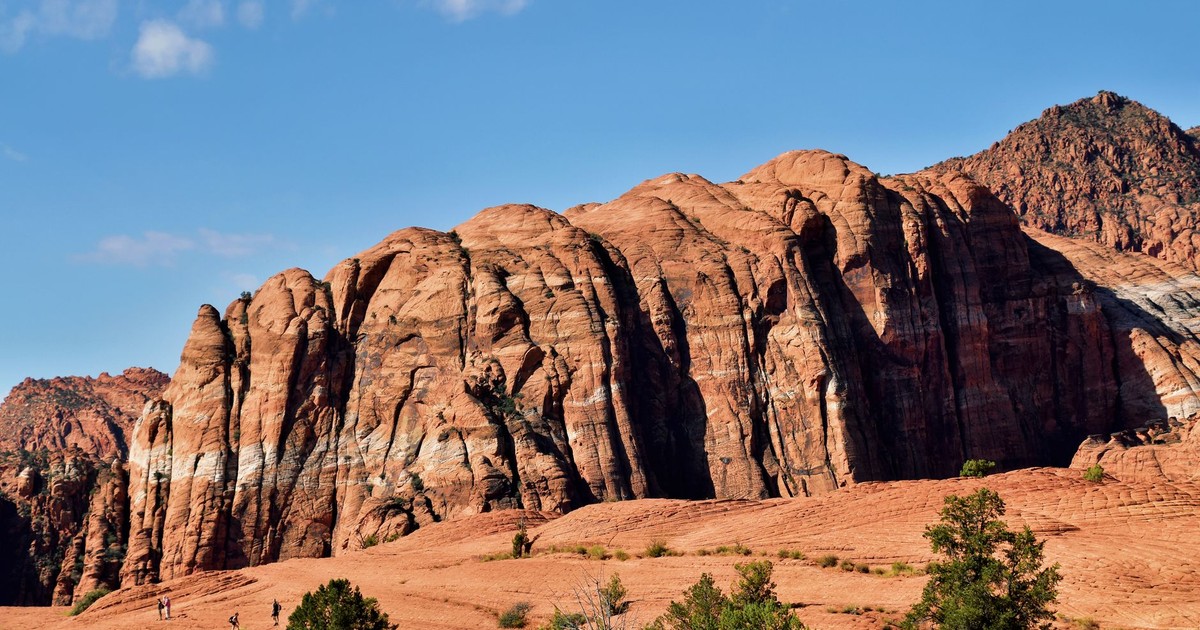
Grand Staircase-Escalante will now stand at 182,000 acres, down from the previous 1.87 million acres; Bears Ears will be reduced to 121,000 acres, down from 1.36 million acres. According to the Deseret News, the proclamations reduce Bears Ears to just 8.9% of its prior size; Grand Staircase-Escalante loses more than 90% of its previous area. That’s a loss of more than 2.9 million acres of monument protection, the largest rollback of federal public-land protections in U.S. history.
The cuts go considerably further than Trump’s first-term reductions. During his first term, Trump shrunk both monuments, Bears Ears by 85% and Grand Staircase-Escalante by almost half, only for President Joe Biden to restore both of them to their previous boundaries in 2021. Those Biden-era restorations are now gone.
According to the White House, specific landmarks, structures, and objects of historic and scientific interest that the Antiquities Act safeguards will continue to be protected, while surrounding lands not relevant to those protected objects will now be available for development. Conservation groups dispute that framing sharply, pointing out that the monuments were drawn with those surrounding landscapes in mind.
A Decade of Back-and-Forth
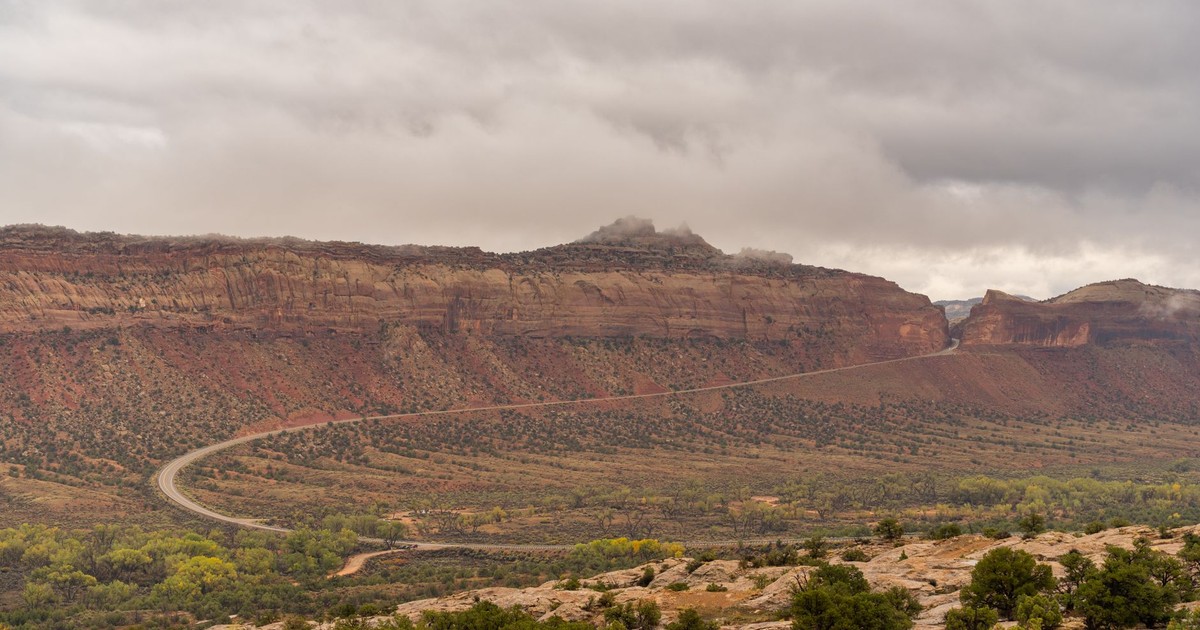
President Bill Clinton established Grand Staircase-Escalante in 1996, and President Barack Obama created Bears Ears in 2016, both under the Antiquities Act, the 1906 law that gives presidents the power to protect sites considered historic, archaeologically significant, or culturally important.
When President Obama used his authority under the Antiquities Act to designate Bears Ears National Monument on December 28, 2016, he granted protection to some of the most spectacular places in southern Utah and elevated the voices of the Native American tribes who have ancestral ties to the region. According to the Southern Utah Wilderness Alliance, nearly 100,000 archaeological and cultural sites were covered by the proclamation, including House on Fire and Moon House ruins. The land holds ancestral villages, ceremonial and burial sites, and features in several tribes’ creation and migration stories. It also holds coal and uranium deposits.
Sen. Mike Lee has said he began conversations to shrink the monuments shortly after Trump was reelected a year and a half ago. Those conversations led to meetings with local stakeholders and officials at the Interior Department. The changes are part of Trump’s broader push to increase oil and gas production on American public lands after declaring a “national energy emergency” in early 2025.
What’s Inside the Boundaries and What’s Now Outside Them
Grand Canyon Trust data shows that there are over 660 species of bees in the monument, making Grand Staircase-Escalante one of the richest bee diversity hotspots in the country. Over 200 bird species call the Grand Staircase-Escalante region home. Scientists have unearthed new dinosaur species and surveyed archaeological sites and rock writings. Grand Staircase-Escalante’s library of fossils includes turtles, crocodiles, lizards, dinosaurs, and more.
Not all of the lands removed from the monuments are completely unprotected. Some sites remain within federal Wilderness Study Areas and Areas of Environmental Concern, designations that shield them from development, at least for now. Trump’s Interior Department announced a review of policies around those Wilderness Study Areas last month, which conservation groups say could weaken the protections they offer.
A large coal deposit exists within the original boundaries of Grand Staircase-Escalante. Mining there wasn’t considered profitable enough for companies to dig after Trump opened the land during his first term. Whether that changes with this round of cuts remains to be seen.
The Argument from Utah Republicans
The Utah delegation’s position has been consistent: the monuments were too large, created over local objections, and the Antiquities Act was never meant to protect tens of millions of acres under a single presidential signature.
Gov. Cox said the monument designations are supposed to be “the smallest area possible to protect the antiquities,” and that multimillion-acre monuments “bigger than the state of Delaware certainly do not fit that designation.” Sen. Lee said the Antiquities Act has been “abused” and that Trump is “right-sizing it to bring it in compliance with what the law says.”
Rep. Celeste Maloy said both monuments were created “over the unanimous opposition of Utah’s federal delegation, our governors, county commissioners, the locals who were worried about losing multiple uses on these federal lands.”
Trump himself claimed during the signing that the national monuments are off-limits for hiking, fishing, and hunting. In fact, the monuments are used for exactly these purposes by hundreds of thousands of visitors.
What Tribal Nations and Conservationists Said
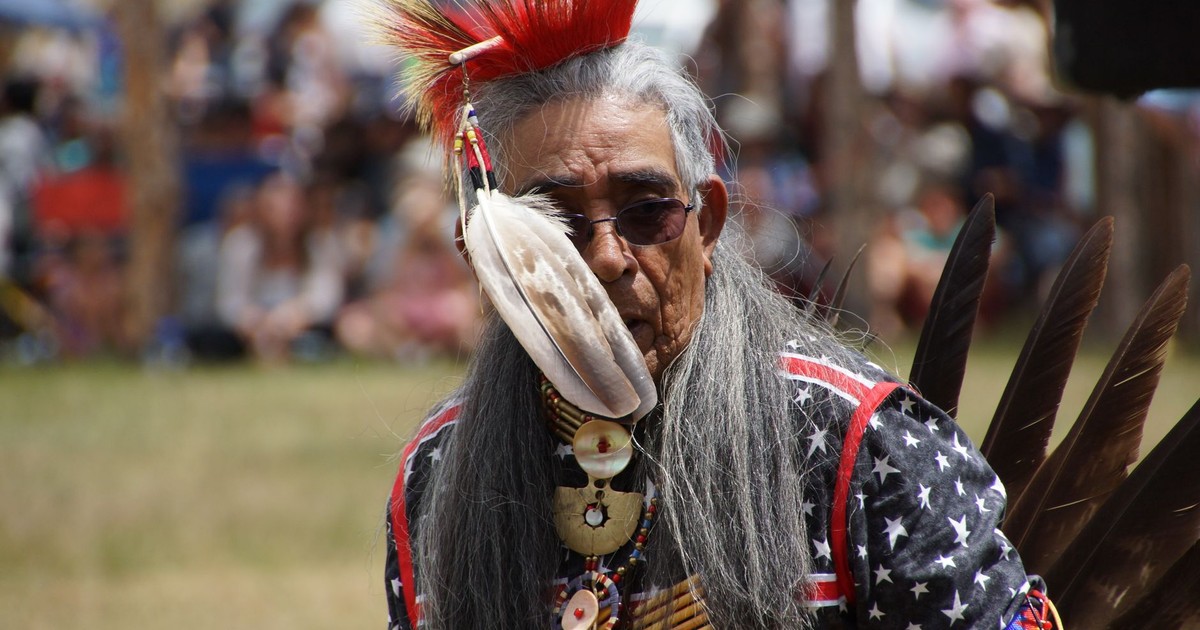
Members of the Grand Staircase-Escalante Inter-Tribal Coalition issued a statement condemning the move to “virtually eliminate” the monuments while calling for “the defense and protection” of their ancestral lands. “Our Tribes were not informed of or asked about this decision, and that’s unacceptable,” said Autumn Gillard, the coalition’s inter-tribal coordinator and a descendant of the Cedar Band of Paiutes.
Gillard continued: “Today’s action is a direct strike against the federal government’s duty to consult with Tribes. It also profoundly disrespects our intergenerational Traditional Knowledge by destroying a framework for Tribal co-stewardship over our ancestral lands in which we invested years of effort.”
Davina Smith-Idjesa, a citizen of the Navajo Nation and co-chair of the Bears Ears Inter-Tribal Coalition, said tribal leaders had braced for a reduction since Trump was elected to a second term. She called it “heartbreaking” and accused federal officials of sidestepping their legal responsibility to consult with tribal nations. “From a Navajo perspective, Bears Ears is not simply a piece of federal public land,” she said. “This is a living cultural site that holds our histories, our ceremonies, our traditional foods and medicines and our ancestors’ footprints.”
The Southern Utah Wilderness Alliance said it is committed to defending the monuments and will challenge the decision in federal court. Earthjustice managing attorney for its Rocky Mountain Office, Heidi McIntosh, said: “National monuments belong to all of us, including the local communities and Tribes that have worked for years to protect them and honor this country’s natural and cultural heritage. The Trump administration is once again looking to give away our national public lands to industry, putting at risk the invaluable places we know and love.”
The Legal Question Nobody Has Answered
Legal challenges have centered on whether a president has the authority under the Antiquities Act to substantially reduce national monuments established by previous presidents. Legal challenges to Trump’s 2017 monument reductions never reached the merits, including in two stayed lawsuits filed by tribes and environmental groups that year. Judge Tanya Chutkan of the U.S. District Court for the District of Columbia ruled in 2024 in Wilderness Society v. Trump and Hopi Tribe v. Trump that the cases would remain on hold pending the Tenth Circuit’s ruling.
The Tenth Circuit Court of Appeals reversed a district court decision that found courts are barred by sovereign immunity from reviewing presidential proclamations under the Antiquities Act. The decision is in keeping with case law establishing that courts may review monument designations, albeit under a deferential standard. The lawsuit from the state of Utah, which attacks Bears Ears and Grand Staircase-Escalante National Monuments and the Antiquities Act itself, will now be remanded to district court for review under the correct standard.
Earthjustice argues that the Antiquities Act of 1906 authorizes presidents to designate national monuments, but does not give them the power to shrink the monuments created by their predecessors or to undercut their protections.
The proclamations are expected to go into effect within 60 days, on September 11, 2026, meaning legal challenges will need to move fast if any injunction is sought before that date.
The Polling Numbers Republicans Don’t Talk About

Polling of voters in seven Western states found that support for keeping existing national monument designations in place has increased from 88% in 2025 to 91% in 2026. Additional polling found that Utah voters support keeping Bears Ears and Grand Staircase-Escalante as national monuments by 71% and 74%, respectively.
Polling shows that 89% of Utah voters said that Tribes should have a say over how their ancestral lands that are now called public lands are managed. Even among voters who identify with the MAGA movement, support for monument protection runs nearly as high, 87% of them don’t want national monuments to shrink or be eliminated.
The loudest political energy around this issue has come from the Utah delegation and a slice of the ranching and extraction industries. The broader electorate, including Republican voters across the West, reads quite differently.
What Happens Now

The proclamations don’t transfer the land, it remains federal public land. But it loses the specific designation and the management rules that came with it. The Interior Department has already rescinded the Bureau of Land Management’s Public Lands Rule, reaffirming a commitment to what it calls “restoring balance” in federal land management by prioritizing multiple-use access, local decision-making, and energy development.
The change could have real impacts on everything from native plants and wildlife to dark skies, said Jackie Grant, who directs Grand Staircase Escalante Partners. She’s especially concerned about the monument’s wilderness study areas, which are undeveloped. “It seems like this is laying the groundwork to further degrade and develop the national monument by opening up other areas that we thought were protected to development and extraction,” Grant said.
Courts will almost certainly be involved. The underlying legal question, whether a president can substantially reduce a national monument created by a predecessor, has never been answered definitively by the Supreme Court. This could be the set of facts that finally forces that answer.
The Stakes Under the Surface
For tribal nations, it isn’t about acreage calculations. The land contains ancestral villages, ceremonial and burial sites, and features in some tribes’ creation and migration stories. The co-management framework built under Bears Ears represented something that took decades of organizing to achieve, formal recognition that Indigenous nations have standing to help govern land they’ve lived on for centuries. That agreement is now effectively dismantled.
For conservationists, the concern extends beyond these two Utah national monuments. The Bears Ears and Grand Staircase cuts are the most dramatic in U.S. history, but the White House has signaled that monument reviews in Maine and Oregon may follow. The legal precedent being set here, if it holds, shapes what any future president can do, or undo, on public land.
For outdoor tourism communities in southern Utah, which have built their economies partly around the draw of these monuments, the economics are also unsettled. Development that seems financially attractive in the short term has a history of depressing the tourism appeal that drives local business. That tension existed after 2017 and wasn’t fully resolved before the boundaries were restored.
The land itself isn’t going anywhere. The canyon walls, the cliff dwellings, the desert bighorn sheep moving through juniper scrub at dawn, none of that changes the day after a proclamation is signed. What changes is who has the legal authority to decide what happens next, and how much protection those places actually carry.
Read More: These Cities Could Be Wiped Off the Map or Completely Flooded by 2030
What’s Next

The proclamations are signed. The courts are slow. And the land that has been stripped of protection will sit in legal and administrative limbo for months, possibly years, while lawyers argue over questions that have never been fully resolved in over a century of Antiquities Act use.
For the tribal nations whose ancestral connection to this land predates the Antiquities Act by thousands of years, the stakes are not abstract. Ceremonial sites, burial grounds, places written into the origin stories of multiple nations, these aren’t interchangeable with acreage figures in a White House fact sheet. The co-management agreement that gave tribes formal standing in how Bears Ears was managed took years of organizing to achieve.
Majorities of Utah voters, including a substantial share of Republican voters, supported keeping both monuments intact. The decision reflects the priorities of the state’s congressional delegation, the energy industry, and the Trump administration’s “national energy emergency,” not a groundswell of local demand. The courts will ultimately sort out whether the president had the legal authority. What’s already clear is that the political authority is a much shakier claim than the signing ceremony suggested.
Disclaimer: This information is not intended to be a substitute for professional medical advice, diagnosis, or treatment and is for information only. Always seek the advice of your physician or another qualified health provider with any questions about your medical condition and/or current medication. Do not disregard professional medical advice or delay seeking advice or treatment because of something you have read here.
AI Disclaimer: This article was created with the assistance of AI tools and reviewed by a human editor.