

Most people, if asked how much they spend on subscriptions each month, will guess a number. Then they’ll revise it upward. Then, if you actually sat down and went through every recurring charge on your bank statement – the streaming service signed up for during a bored weekend, the fitness app used for three weeks in January, the meal kit that arrived twice before being quietly forgotten – the real number turns out to be something else entirely.
The gap between what people think they’re paying and what they’re actually paying isn’t a rounding error. It’s a pattern. And the data behind it is more striking than most people expect.
Subscription spending has become one of the most invisible line items in the modern household budget, not because people are careless with money, but because the entire model is engineered to stay invisible. Charges hit on different dates. Annual plans get forgotten within weeks of renewal. Free trials convert to paid plans while you’re busy with something else. The math adds up in the background, and most of us only notice when we sit down and actually look.
What the Numbers Actually Show

A 2026 survey on behalf of Self Financial, which collected responses from 1,272 Americans who pay for at least one subscription service, found that the average person now carries 3.4 active paid subscriptions each month – up from 2.8 in 2025, but still below the peak of 4.4 in 2023. Average monthly spending sits at $35.03, down from $37 in 2025.
Almost three in five respondents (59.9%) said they have at least one paid subscription going completely unused – up from 54.9% the year before. On average, people are carrying 2.6 subscriptions they’re not actually using each month.
The monthly cost of those dormant services averages $26.79 – an increase from $10.57 in 2025, though below the $32.84 recorded in 2024. Per year, that adds up to $321.48 going to services someone opened, probably enjoyed briefly, and then forgot entirely.
A separate angle comes from a 2025 survey CNET conducted with YouGov. The average American spends $1,080 per year on subscriptions in total, of which around $205 goes toward services that are rarely or never used. Four out of five U.S. adults – 80% – paid for at least one subscription between April 2024 and April 2025. The sheer universality of it is part of what makes the waste so easy to overlook: when practically everyone is doing the same thing, it stops feeling like a problem worth examining.
Where the Money Goes
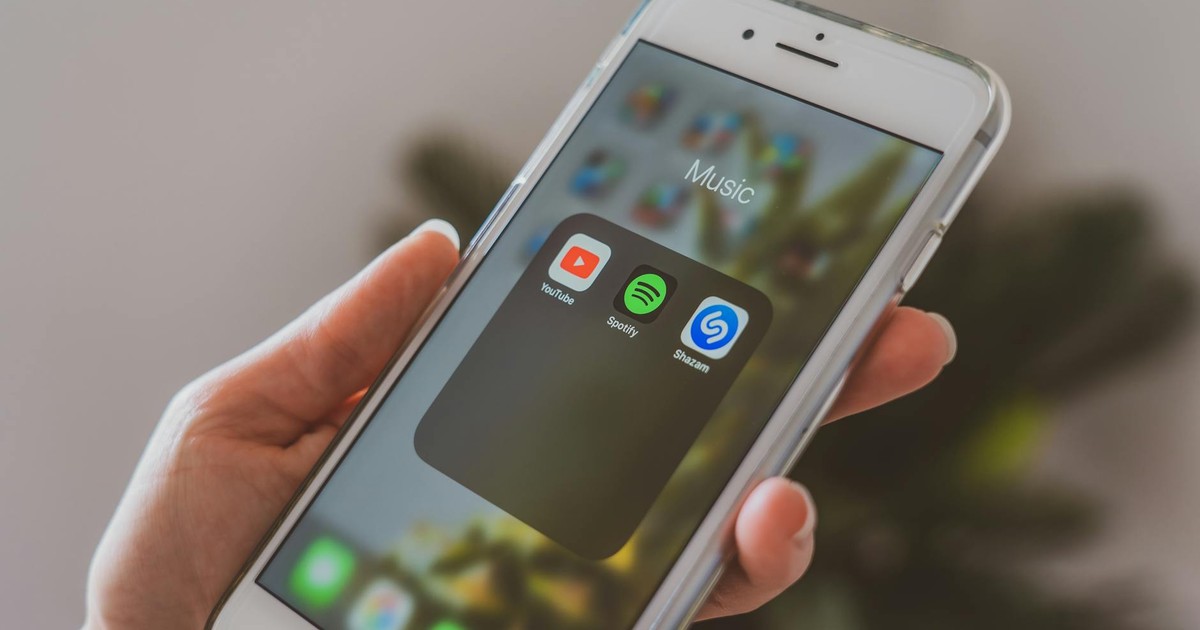
Among U.S. adults who carry subscriptions, 61% pay for video streaming services, 37% pay for e-commerce memberships like Amazon Prime or Walmart+, and 33% pay for music streaming. Those are the obvious ones. The less obvious ones are the subscriptions that feel small individually – a premium newsletter, a recipe app, a cloud storage upgrade, a meditation platform picked up during a particularly stressful month three years ago.
On the food delivery side, DoorDash leads the list of unused paid services at 48.2%, with Grubhub second at 38.5% and Caviar close behind at 38.4%. In streaming, Disney+ had 44.4% of respondents leaving their subscription unused in 2026.
The Netflix number is worth pausing on. Only 17.1% of Netflix subscribers don’t use their subscription – making it the most-used streaming platform in the survey. But even a platform most households treat as essential still has roughly one in six people paying for it each month without opening it once. For smaller, more niche services, the gap between paying and actually watching is far wider. A subscription to a platform you’re not using still sends a charge on the first of every month, regardless of what else is competing for your attention.
Two-thirds of respondents (66.9%) said they have wanted to cancel a paid subscription but didn’t follow through. The top reasons: fear of missing out on content or features (52.3%), plain forgetfulness (51.7%), and the pull of convenience or habit (44.2%). Those three motivations aren’t irrational. They’re exactly what subscription businesses count on.
Why Canceling Is Harder Than It Should Be

There’s a reason the free trial model is so widespread, and it isn’t generosity. Free trials that quietly convert into paid plans are a central driver of unused subscription waste. The 2026 Self Financial survey found that 70% of participants have forgotten to cancel a free trial at some point, locking them into a paid subscription – and of those, 50% said it happened twice, while 20% admitted it had happened at least three times.
The design is intentional. So-called “negative option” subscription contracts, which automatically renew unless consumers actively cancel, have generated a growing number of complaints over time. Congress is aiming to pass a bipartisan bill called the Unsubscribe Act, introduced in January 2026, which would require businesses to obtain explicit approval before charging consumers when a subscription teaser period ends, simplify the cancellation process, and allow cancellation in the same manner used to sign up.
The Unsubscribe Act aims to reduce surprise renewals and simplify cancellations. The FTC had already tried a similar approach, announcing a “click-to-cancel” rule back in 2023 – only for a federal appeals court to nullify it on a technicality in July 2025, just days before it was set to go into effect. So the legislative push is, in part, an attempt to finish what the FTC started. Whether those congressional proposals gain traction or stall in committee is still an open question.
For now, the structural advantage still sits firmly on the company’s side. Signing up takes thirty seconds. Canceling, depending on the platform, can involve phone calls, hidden settings buried four menus deep, or a customer service chat that opens with a retention offer and ends twenty minutes later.
The Perception Gap and Unused Subscriptions Cost

One of the more telling findings from the Self Financial research is how far people’s estimates of their own spending land from reality. The average person reports having 3.4 active subscriptions and spending $35.03 per month. But with 2.6 of those subscriptions going unused, a significant portion of that spend is effectively lost every billing cycle.
Subscriptions are structured to stay below the threshold of financial attention. A $12.99 charge doesn’t feel the same as walking into a store and handing over $13. It arrives automatically, mixes into a long statement of other transactions, and gets filed away as a background expense rather than an active choice.
Most people prefer monthly payment cycles, with 61.9% of subscribers choosing to pay monthly – even though annual plans often cost less. Disney+ Premium, for instance, works out to $15.99 monthly or $159.99 annually, a saving of nearly $32. But people choose monthly anyway, because flexibility matters more than efficiency. The option to cancel quickly if the content disappoints or the budget tightens feels worth more than the discount.
The problem is that the flexibility is rarely used. The option to cancel exists, and then the months pass, and the charges keep coming.
For anyone who has tried to cut household costs, this is familiar territory. The big expenses get scrutinized. The small recurring ones slip through because individually, none of them feel urgent enough to deal with right now.
The Generational Split

Self Financial’s 2025 data shows the average household had already trimmed its paid subscriptions from 4.1 in 2024 to just 2.8 in 2025 – a 32% drop in a single year. The 2026 rebound back to 3.4 suggests the purge wasn’t permanent, but rather a temporary reset. People cut, felt the absence, and then slowly started signing back up.
Millennials pay the most of any age group on subscriptions, while Gen Z tends to spend the least. That’s partly a life-stage story – more disposable income, a household suite of services assembled one platform at a time – but it’s also a behavioral one. Millennials came of age during the subscription boom, often signing up during promotional periods that felt like a good deal at the time.
Nearly half of subscribers (49.7%) now say that any further price increase would be unacceptable. A few dollars more for Disney+, Hulu, or Apple TV+ might not seem like much alone, but across several services, it starts to resemble a small rent payment.
Frustration is also feeding a parallel trend. 76.2% of paid subscription customers share logins with other people – up from 46.5% in 2025 – with 35.8% admitting the reason is to save money. Password crackdowns from Netflix and Disney+ were meant to push shared account users into paying individually. The evidence suggests a meaningful portion of them are choosing a third option instead.
Read More: What Wealthy People Spend Money On That Others Often Don’t
What to Do With All of This

The most practical thing anyone can do isn’t glamorous: go through twelve months of bank and credit card statements and write down every recurring charge. Not a quick skim – a real list, with the service name, the amount, and the last time you actually used it. Most people who do this find at least two or three charges they’d completely forgotten about, and at least one that makes them say out loud, “I didn’t even know that was still running.”
Putting calendar reminders ahead of free trial end dates is one of the simplest interventions that actually works. Tracking which shows you’re watching and which publications you’re reading makes the cancel decision easier when the time comes. A useful rule of thumb: any subscription you haven’t touched in the past 30 days can probably go.
Subscription spending behaves differently from every other kind of spending. It doesn’t require a decision at the moment of purchase – only at the moment of cancellation – which means the default is always “keep paying.” The companies that built these models understood human inertia better than most consumers do, and that’s the asymmetry worth holding onto when you open your next bank statement.
AI Disclaimer: This article was created with the assistance of AI tools and reviewed by a human editor.