

Every so often, history records the last known position of a person and then goes silent. No body. No confirmed motive. No resolution. Some of these vanishings took decades to partially explain. Others are as open now as the day they happened, carrying the full weight of unanswered questions across centuries.
The cases below are not just famous because of who disappeared. They changed something after they vanished: a law, a cultural assumption, an entire field of investigation, or the map of a continent. A few have found partial answers in recent years. Most have not. All 27 qualify as genuinely unresolved in some meaningful sense.
1. Amelia Earhart and Fred Noonan (1937)
In 1932, Earhart became the first woman to fly solo across the Atlantic Ocean, a record that made her a global celebrity and set the stage for an even more ambitious goal: circumnavigating the globe. On May 20, 1937, Earhart and her navigator Fred Noonan set out from Oakland, California. The pair were attempting to fly around the world when they lost their bearings during the most challenging leg of the journey: Lae, New Guinea, to Howland Island, a tiny coral territory 2,227 nautical miles away in the center of the Pacific Ocean.
The United States government mounted an extraordinary attempt to find Earhart. The search went on for 16 days and involved nine vessels, 4,000 crew, and 66 aircraft, costing more than $4 million. Nothing was found. Private groups have continued the search since, including Nauticos, which made three unsuccessful expeditions from 2002 onward. In 2024, Deep Sea Vision reported a sonar image it believed was Earhart’s plane, but the formation turned out to be rock. The more widely discussed theory holds that Earhart and Noonan reached an uninhabited island called Nikumaroro, where artifacts have been discovered, but no evidence has been definitively connected to her plane. According to the National Air and Space Museum, interest in the disappearance is especially alive online, with speculation covering a wide range of hypotheses, none of them proven.
2. The Roanoke Colony (1590)
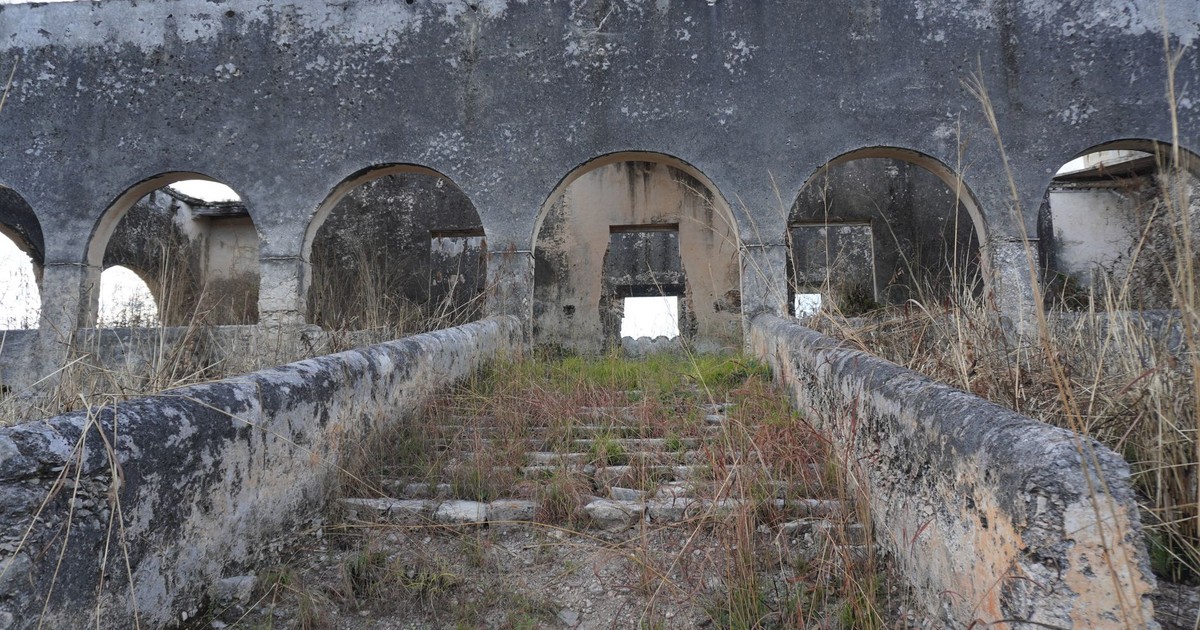
In July 1587, roughly 115 English men, women, and children landed on Roanoke Island off the coast of North Carolina. Less than a month after their arrival, the settlers welcomed the birth of Virginia Dare, the first English baby born in the Americas. As tensions mounted between the colonists and local tribes, the town’s governor, John White, who was also Virginia’s grandfather, set sail for England to seek help and supplies. He expected to be back within months. The war with Spain kept him away for three years.
When he returned, the settlement was completely deserted and all of its inhabitants had vanished. The only clues left behind were the word “CROATOAN” carved into a post and the letters “CRO” etched into a nearby tree. Various theories, including disease outbreaks and conflicts with indigenous peoples, have been proposed, but modern investigations suggest the colonists may have split up and dispersed among nearby tribes. Four centuries of inquiry have not settled the question.
3. Jimmy Hoffa (1975)
Hoffa, a prominent labor leader who served as president of the Teamsters union from 1957 to 1971, vanished on July 30, 1975. He had previously been sentenced to thirteen years in prison for jury tampering, mail fraud, and bribery, but President Richard Nixon commuted his sentence in 1971 on the condition that he would not stay involved with union activities. He had been fighting that condition ever since.
An FBI memo in 1975 stated that Hoffa’s disappearance was probably connected to his attempts to regain the Teamsters presidency. The day he vanished, Hoffa was scheduled to meet with known mobster Anthony “Tony Jack” Giacalone as well as Anthony “Tony Pro” Provenzano, a member of the Genovese crime family. He was last seen in the parking lot of the Machus Red Fox restaurant in Bloomfield Hills, a suburb of Detroit. While it is widely accepted that Hoffa was murdered by members of the Mafia, it is unknown with certainty who was involved. Many believe the motive was opposition to Hoffa’s efforts to regain the presidency of the Teamsters. There were rumors for years that he was buried in Giants Stadium in East Rutherford, New Jersey, but when the stadium was demolished in 2010, no body was discovered. Though Hoffa was declared legally dead by a Michigan probate court in 1982, officially the Detroit branch of the FBI says the case remains open.
4. D.B. Cooper (1971)
The D.B. Cooper hijacking is the only unsolved instance of air piracy in U.S. history. On the afternoon of November 24, 1971, a man aboard a flight from Portland to Seattle threatened to detonate a bomb if he didn’t receive a ransom. The man, who used the alias “Dan Cooper,” boarded Northwest Orient Airlines Flight 305 armed with what he claimed was a bomb. After receiving $200,000 in ransom and allowing the other passengers to leave, he instructed the crew to take off again, ultimately leaping from the aircraft into the night sky. He vanished over the vast wilderness of the Pacific Northwest. Forty-five years later, CNN reports the FBI closed the books on the unsolved case. “We have arrived at our conclusion today that it was just time to close the case because there isn’t anything new out there,” said Special Agent in Charge Frank Montoya, Jr. Amateur investigators have never stopped searching. After more than 50 years, his identity, whereabouts, and motive remain unconfirmed.
5. Percy Fawcett (1925)
British explorer and cartographer Percy Fawcett, along with his son Jack and Jack’s friend Raleigh Rimell, set off from Cuiabá, capital of the Brazilian state of Mato Grosso, on April 20, 1925, in search of the mythical Amazonian city he called “Z.” After reaching the ominously named Dead Horse Camp, they sent their guides back with the last of their dispatches and went alone into the bush. They were never heard from again.
Fawcett was one of the most experienced explorers of his era. He went in knowing the risks and specifically instructed rescuers not to come looking. Despite those instructions, a number of disastrous search parties were launched over the years, resulting in the deaths of at least 100 people. His fate was dramatized in the 2016 film The Lost City of Z, but the real answer has never come. Whether he died from a hostile encounter, starvation, or illness remains unknown.
6. Judge Joseph Force Crater (1930)
The disappearance of New York Supreme Court judge Joseph Force Crater captured so much media attention that “pulling a Crater” briefly circulated as slang for going AWOL. Crater, known for his ties to the corrupt New York City political machine Tammany Hall, disappeared in 1930 after getting into a cab in midtown Manhattan. He became known as “the missingest man” in New York City, and his disappearance sparked one of the most sensational manhunts of the 20th century.
The judge had recently been appointed to the New York Supreme Court by Governor Franklin D. Roosevelt, was known for his shady dealings, and had reportedly received a mysterious phone call and cashed two large personal checks in the days before he vanished. He was 41 years old. Despite a massive investigation, no body, no motive, and no confirmed fate were ever established. He was declared legally dead in 1939.
7. Malaysian Airlines Flight MH370 (2014)

MH370 took off from Malaysia’s capital Kuala Lumpur shortly after midnight on March 8, 2014, on what should have been a routine six-hour flight north to Beijing. About 40 minutes later, the aircraft’s transponder switched off, making it disappear from civilian air traffic control monitors. Military radar picked up the plane banking sharply west, back over the Malay Peninsula and out over the Indian Ocean. The initial search for the aircraft covered more than 46,000 square miles off the coast of western Australia, an area larger than the state of Virginia. Neither the plane’s full wreckage nor a definitive explanation has ever been found.
Fewer than 30 fragments believed to be from MH370 have washed up on different shores across the Indian Ocean. The first was found in 2015, on the French island of La Réunion, more than 400 miles off the eastern coast of Madagascar. The main wreckage of the Boeing 777-200ER carrying 239 people has never been located despite years of searching, and the cause of the deviation from its flight path has never been confirmed. The families of those 239 people have been living with that open question for more than a decade.
8. Louis Le Prince (1890)
Regarded by many as the true father of movies, Louis Le Prince was a French inventor who developed the first motion picture camera and projection system. In 1888, he used his invention to film Roundhay Garden Scene, a nearly two-second clip considered the world’s first motion picture. Two years later, he boarded a train in Dijon, France, with his luggage, and was never seen again. Neither his body nor his bags were ever recovered.
Le Prince was on his way to Paris, from where he planned to travel to the United States to publicly demonstrate his invention and file patents. Instead, Thomas Edison filed his own patent shortly afterward and is often credited in popular history as the film camera’s inventor. Whether Le Prince was murdered to clear a competitor’s path, took his own life, or met some other end has never been established.
9. The Beaumont Children (1966)

On Australia Day in 1966, siblings Jane, Arnna, and Grant Beaumont, aged nine, seven, and four, vanished from Glenelg Beach in Adelaide, South Australia, in what became one of Australia’s most closely followed cold cases. They were last seen boarding a bus in the afternoon, hours after their mother had dropped them off at the beach, and they never came home. Despite numerous investigations spanning decades, no remains have ever been found, and no one has ever been charged.
The case transformed Australia’s relationship with childhood and public spaces. Before 1966, it was common for children to spend summer days at the beach unsupervised. Afterward, it was not. Witnesses reported seeing the children with an unknown tall, blond man at the beach that morning, but the man has never been conclusively identified. Several suspects have been named over the decades, and excavations at a former industrial site in Adelaide were conducted as recently as 2018 without result.
10. Natalee Holloway (2005)
In May 2005, 18-year-old American Natalee Holloway disappeared while on a high school graduation trip to Aruba. Her classmates last saw her outside a restaurant with locals Joran van der Sloot and the Kalpoe brothers. When Natalee missed her flight home, authorities began searching. Aruban investigators and the FBI conducted an exhaustive search but found nothing.
Van der Sloot’s accounts of the night changed over time, and he and his companions were arrested multiple times but released without charges. In 2010, van der Sloot allegedly demanded money from Holloway’s mother in exchange for information about her daughter’s remains. In 2023, van der Sloot was extradited from Peru to the U.S., where he faced federal extortion charges related to the case. Her body has never been found, and no one has ever been convicted of her disappearance or presumed death.
11. Henry Hudson (1611)
Explorer Henry Hudson made four voyages to North America searching for a northwest passage to Asia, giving his name to the Hudson River, Hudson Strait, and Hudson Bay. On his final voyage, after a brutal winter frozen in the bay that now bears his name, his crew mutinied. They set Hudson, his teenage son, and seven fellow crewmembers adrift in a small open boat with no provisions. The mutineers sailed home. Hudson was never seen again, and despite the scale of the betrayal, most of the mutineers escaped punishment because they were the only ones who knew how to navigate home.
What became of Hudson and the men cast overboard with him is unknown. They may have reached shore and survived briefly among the local Cree people, or they may have died on the water within days. No remains were ever found. For a man who contributed so fundamentally to the map of North America, the complete erasure of his end remains a striking irony.
12. Etan Patz (1979)
On May 25, 1979, six-year-old Etan Patz left his apartment in New York City’s SoHo neighborhood to walk two blocks to his school bus stop alone for the very first time. He never arrived. His face became one of the first ever to appear on a milk carton, helping launch a national missing-children awareness movement. May 25 is now National Missing Children’s Day.
In 2017, after decades of wrongful suspicion falling on various individuals, a man named Pedro Hernandez was convicted of Etan’s murder and sentenced to 25 years to life. He had confessed to leading the boy away from the bus stop. The conviction finally resolved the question of what happened, even though Etan’s body was never recovered, but for the 38 years the case remained open, it cast a long shadow over the simple act of letting a child walk alone down the street.
13. Glenn Miller (1944)
Big band leader Glenn Miller was at the height of his fame when he disappeared over the English Channel on December 15, 1944, aboard a small single-engine UC-64 Norseman plane traveling from England to Paris to organize a concert for Allied troops. The plane never arrived. No wreckage was ever found, no distress signal was sent, and the flight took place over water in poor weather conditions.
The official explanation is that the plane went down in the Channel, most likely due to icing on the wings or carburetor. The absence of any physical evidence, combined with the circumstances of the flight, has kept alternative theories alive for decades, including the claim that the plane was accidentally hit by bombs jettisoned by returning RAF bombers. Miller was 40 years old and had recently given up his lucrative civilian career to serve in the military. He was officially declared dead on December 15, 1945, exactly one year after he vanished.
14. Dorothy Arnold (1910)
Dorothy Arnold was a wealthy New York socialite who walked out of a Fifth Avenue shop on December 12, 1910, and was never seen again. She had been carrying a box of chocolates and several recently purchased books. No body, no note, and no confirmed sighting was ever produced despite one of the most heavily covered missing persons cases in the American press of that era.
Arnold had been secretly involved with a man her family disapproved of and had recently suffered a significant personal disappointment when a short story she wrote was rejected for publication. Her family delayed reporting her missing for six weeks, then hired private detectives who eventually concluded she had likely died from a botched illegal abortion. That theory was never proven, and her case has never been formally closed.
15. Frederick Valentich (1978)
On October 21, 1978, 20-year-old Australian pilot Frederick Valentich disappeared while flying a Cessna 182 over Bass Strait between Melbourne and King Island. His last radio conversation with air traffic control made his vanishing extraordinary. He reported an unidentified aircraft flying above him, described its strange green lights and metallic appearance, said it was hovering, and then his transmission ended abruptly mid-sentence. His plane was never found.
The case became one of the most cited pilot disappearances in UFO literature, but aviation investigators have pointed to more grounded explanations, including spatial disorientation, in which a pilot becomes confused about which way is up, leading to a controlled flight into terrain or water. Whatever happened, Valentich’s calm, detailed radio description of something he could not identify in the minutes before he vanished has given the case a staying power most aviation disappearances don’t have.
16. Solomon Northup (1841, Rescued 1853)
In January 1841, Solomon Northup, a free Black man from Saratoga Springs, New York, accepted work as a musician with two men who took him to Washington D.C. He woke up in chains in a slave pen. For the next twelve years, his family had no idea where he was or whether he was alive. He was sold into slavery in Louisiana under the name “Platt,” and it was only through a chance encounter with a Canadian abolitionist in 1852 that a letter reached his family. He was rescued and returned to New York in 1853.
His memoir, Twelve Years a Slave, published in 1853 and adapted into the 2013 Academy Award-winning film, documented his experience in precise detail. The men who kidnapped him were identified and indicted but never successfully prosecuted. Northup’s own ultimate fate is a historical mystery: the historical record trails off around 1857, and no reliable account of his death has ever been established.
17. Michael Rockefeller (1961)
Michael Rockefeller, the 23-year-old son of New York Governor Nelson Rockefeller, disappeared off the coast of New Guinea in November 1961 while on an art-collecting expedition. His catamaran capsized, and he reportedly chose to swim for shore, telling his companion he could make it. He was never seen again. The Dutch government launched a major search operation, but no trace of him was found.
The most persistent theory, supported by extensive investigative work by journalist Carl Hoffman in his 2014 book Savage Harvest, holds that Rockefeller made it to shore and was killed by members of the Asmat tribe in retribution for a Dutch colonial massacre years earlier. The Dutch government and the Rockefeller family have never officially accepted this account, and no remains were ever recovered. The official cause of death is listed as drowning.
18. Virginia Dare (1587)
Virginia Dare holds the distinction of being the first English child born in North America, arriving in the Roanoke Colony on August 18, 1587, just weeks after the settlers landed. Her grandfather, Governor John White, was the man who sailed back to England for supplies and returned in 1590 to find the colony empty. Virginia was among the roughly 115 people who vanished without a trace. She had been alive for three years by then, long enough to have grown beyond infancy.
Some romantic accounts gave her a legendary status, depicting her as having survived among an indigenous tribe. Modern archaeology has found evidence suggesting the colonists may have split into groups and integrated with nearby tribes, which could mean some descendants of the Roanoke settlers exist today. Virginia Dare’s name, however, is likely lost to those records permanently.
19. The Sodder Children (1945)
On Christmas Eve, 1945, a fire broke out in the home of George and Jennie Sodder in Fayetteville, West Virginia. Ten people were in the house; George, Jennie, and four of their children escaped. The bodies of the other five children, aged five to fourteen, were never found in the rubble. Investigators at the time attributed the lack of remains to the intensity of the fire, but the Sodder family never accepted that explanation and spent the rest of their lives searching for their children.
Several aspects of the case were genuinely strange: the phone line had been cut before the fire, the children’s ladder was missing from where it had been stored, and witnesses reported seeing a car drive slowly past the house shortly before the blaze. A private investigator hired by the family years later obtained a photograph sent anonymously to the Sodders in 1967, showing a young man who resembled their son Louis. The family put a billboard up outside their home asking for information and kept it there for decades. No confirmed answers ever came.
20. Raoul Wallenberg (1945)
Swedish diplomat Raoul Wallenberg saved tens of thousands of Hungarian Jews from deportation to Nazi death camps during 1944 by issuing protective passports and establishing safe houses in Budapest. When Soviet forces took the city in January 1945, Wallenberg was invited to meet with a Soviet general, left for that meeting, and was never seen again as a free man.
The Soviet government initially denied having him, then in 1957 announced he had died of a heart attack in Moscow’s Lubyanka prison in 1947. Documents released after the Cold War cast significant doubt on that account. Dozens of witnesses reported seeing Wallenberg alive in Soviet prisons throughout the 1950s and 1960s. Sweden has formally sought a full accounting from Russia for decades, and Russia has never provided a definitive, credible explanation of what happened to one of the most remarkable humanitarian figures of World War II.
21. Ettore Majorana (1938)
Italian physicist Ettore Majorana was one of the most brilliant theoretical minds of his generation. Enrico Fermi, the Nobel Prize-winning physicist, reportedly said that Majorana was in a class of genius that only comes along a few times in a century. In March 1938, at the age of 31, Majorana boarded a ship in Palermo with a ticket to Naples and vanished. A letter he left suggested he was considering suicide, but no body was ever found.
The mystery deepened decades later when a 2015 Italian cold-case investigation concluded he had likely emigrated to Venezuela and lived there under an assumed name until the 1960s. A photograph from 1955 apparently showed a man resembling him in Caracas. Whether he fled the implications of nuclear physics research in fascist Italy, suffered a breakdown, or met another end is still debated. He was officially declared dead in 2015.
22. Antoine de Saint-Exupéry (1944)
The author of The Little Prince, one of the most translated books in history, Antoine de Saint-Exupéry disappeared on July 31, 1944, during a reconnaissance flight over the Mediterranean. He was 44 years old, had already been grounded several times due to injuries from previous crashes, and had persuaded his commanding officers to let him fly one more mission. He never returned.
Fragments of his aircraft were recovered from the Mediterranean seabed in 2003 and 2004, near Marseille. A German former Luftwaffe pilot named Horst Rippert came forward in 2008, claiming he had shot down Saint-Exupéry’s plane without knowing who the pilot was, and said he would have held his fire had he known. Neither Rippert’s account nor any other has been officially confirmed. The author who gave the world the Little Prince still has no officially established cause of death.
23. Brandon Swanson (2008)
In May 2008, 19-year-old Brandon Swanson called his parents after his car got stuck in a ditch near Lynd, Minnesota, telling them he could see the lights of a town and was walking toward them. They stayed on the phone with him for nearly an hour. Then he said “oh shit,” and the line went dead. His parents drove the roads looking for him. No one has found him since.
Swanson’s case is unusual among modern disappearances because of the presence of his voice right up until the moment he vanished. The phone call has been analyzed repeatedly. The lights he saw have never been identified as matching the geography of the area. His disappearance contributed directly to a change in Minnesota law that expanded the criteria for law enforcement to declare a missing person at risk, now known informally as “Brandon’s Law.”
24. The Franklin Expedition (1845)
Sir John Franklin led 129 men and two ships, HMS Erebus and HMS Terror, into the Canadian Arctic in 1845 in search of the Northwest Passage. The ships became icebound and were never seen again. Search expeditions over the following decades eventually pieced together a grim picture: the ships had been trapped in ice for nearly two years before being abandoned, and the crews had died one by one on a desperate overland march toward the mainland, with some evidence pointing to lead poisoning from improperly sealed food tins, scurvy, and starvation.
The wrecks of both ships were eventually discovered: HMS Erebus in 2014 and HMS Terror in 2016. The ships themselves are no longer missing. What remains unresolved is the precise sequence of deaths, the final resting place of most of the crew, and whether any of the men survived long enough to reach help. Indigenous oral accounts recorded in the 19th century suggested some men did survive longer than previously believed. Forensic excavations of the site are ongoing.
25. Agatha Christie (1926)
In December 1926, the author of dozens of mystery novels, a woman who made a career of constructing disappearances, disappeared herself. Christie’s car was found near a quarry in Surrey with its lights still on and her coat inside. She had vanished without explanation at a moment of acute personal distress: her mother had recently died and her husband had asked for a divorce.
Eleven days later, she was found at a hotel in Harrogate, Yorkshire, registered under the name of her husband’s mistress. She claimed to have suffered a complete loss of memory and never gave a definitive account of what happened. Whether it was a genuine dissociative episode, a calculated act of revenge against her unfaithful husband, or a publicity stunt has never been settled. Christie herself refused to discuss it for the rest of her life.
26. Madeleine McCann (2007)
On the evening of May 3, 2007, three-year-old Madeleine McCann disappeared from her family’s vacation apartment in Praia da Luz, Portugal, while her parents dined at a nearby restaurant with friends. The McCann case generated one of the largest and most prolonged missing child investigations in European history, drawing in police forces from multiple countries and remaining active nearly two decades later.
In 2020, German prosecutors named a convicted sex offender named Christian Brückner as a prime suspect in Madeleine’s presumed death. Brückner was already serving a sentence in Germany for the rape of a 72-year-old woman in the same area of Portugal in 2005. In 2024, German prosecutors charged him with five sex crimes related to other alleged victims. As of 2026, Madeleine’s fate has not been confirmed and her remains have not been found.
27. The Mary Celeste Crew (1872)
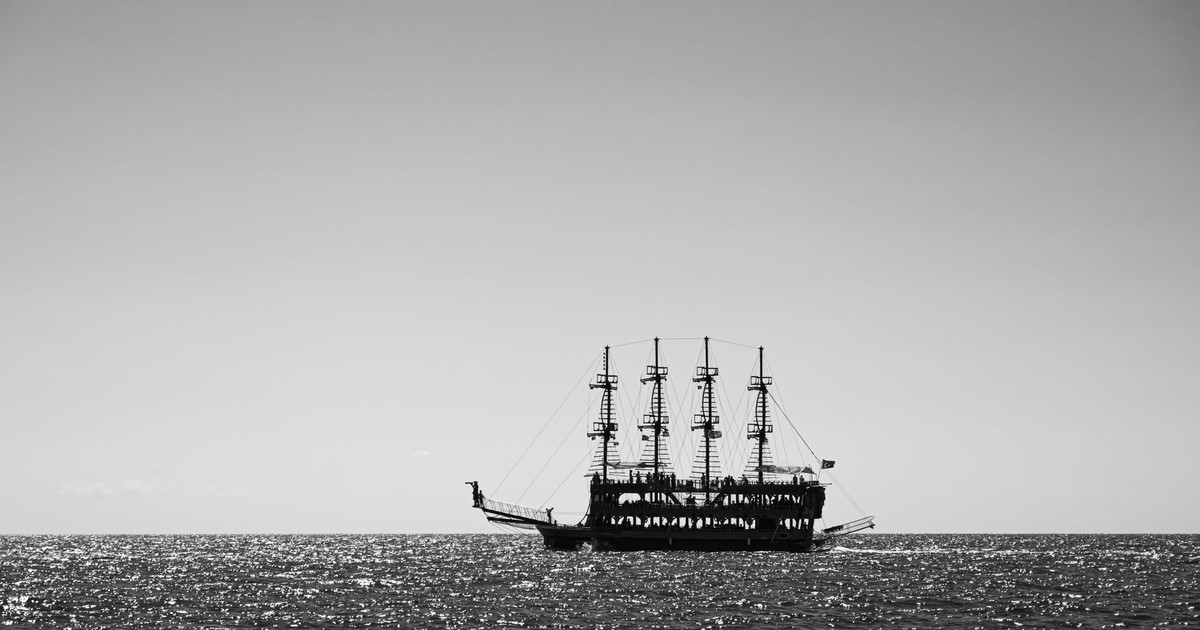
The Mary Celeste was an American merchant brigantine found adrift in the Atlantic Ocean in December 1872, between the Azores and the coast of Portugal. The ship was in good condition, fully provisioned, and sailing under minimal canvas. The cargo of 1,700 barrels of industrial alcohol was largely intact. The entire crew of seven, plus the captain and his wife and two-year-old daughter, had simply vanished.
No signs of struggle were found. The ship’s last log entry was dated November 25, 1872, ten days before she was discovered. The lifeboat was missing. Theories have ranged from mutiny to a waterspout to a sudden rush of gases from the alcohol cargo that caused the crew to abandon ship in a panic, only to be lost at sea before they could reboard. The fate of all ten people aboard has never been established and, given the passage of time and the nature of the sea, almost certainly never will be.
What History Keeps
These 27 cases span five centuries and six continents, and they resist any single explanation. Each one is a story that stops mid-sentence. The evidence runs out. The trail goes cold. The sea gives nothing back.
Some of these disappearances changed laws, as Etan Patz’s did, or reshaped a nation’s relationship with public life, as the Beaumont children’s did. Others shifted the way we understand history itself, because the people who vanished were carrying the thread of something larger with them. Raoul Wallenberg, Ettore Majorana, the Roanoke colonists: their fates are not just personal tragedies. They are gaps in the record that no amount of research has been able to fill.
The honest answer is that most of these cases will stay exactly as they are. A handful may yet yield to new forensic technology or a deathbed confession. Most will not. History is not a complete document. It never was. The missing are not footnotes; they are proof that what happened can slip out of human knowledge entirely, and the fact that people keep searching says more about us than it does about the answers we’re likely to find.
Disclaimer: This information is not intended to be a substitute for professional medical advice, diagnosis, or treatment and is for information only. Always seek the advice of your physician or another qualified health provider with any questions about your medical condition and/or current medication. Do not disregard professional medical advice or delay seeking advice or treatment because of something you have read here.
AI Disclaimer: This article was created with the assistance of AI tools and reviewed by a human editor.