Celebrity deaths hit differently when there’s no warning. Not the long farewell of a documented illness, not the gradual decline that lets people begin grieving in advance. Just a Saturday morning news alert or a social media post that stops you mid-scroll, and suddenly a person who felt like part of the fabric of your life simply isn’t in the world anymore.
The connection is real, even if you never actually met them. The actor you watched every week for ten years, the musician whose album carried you through something you’d rather not name, the star who looked so young and vital that their death forces you to reckon with the fragility of everyone around you, including yourself. That’s not nothing.
Some of the celebrities on this list kept their struggles deeply private. Some showed no signs of trouble at all. Others had histories that, in retrospect, could have pointed somewhere dark, but nobody expected it to end the way it did. What they share is the shock they left behind.
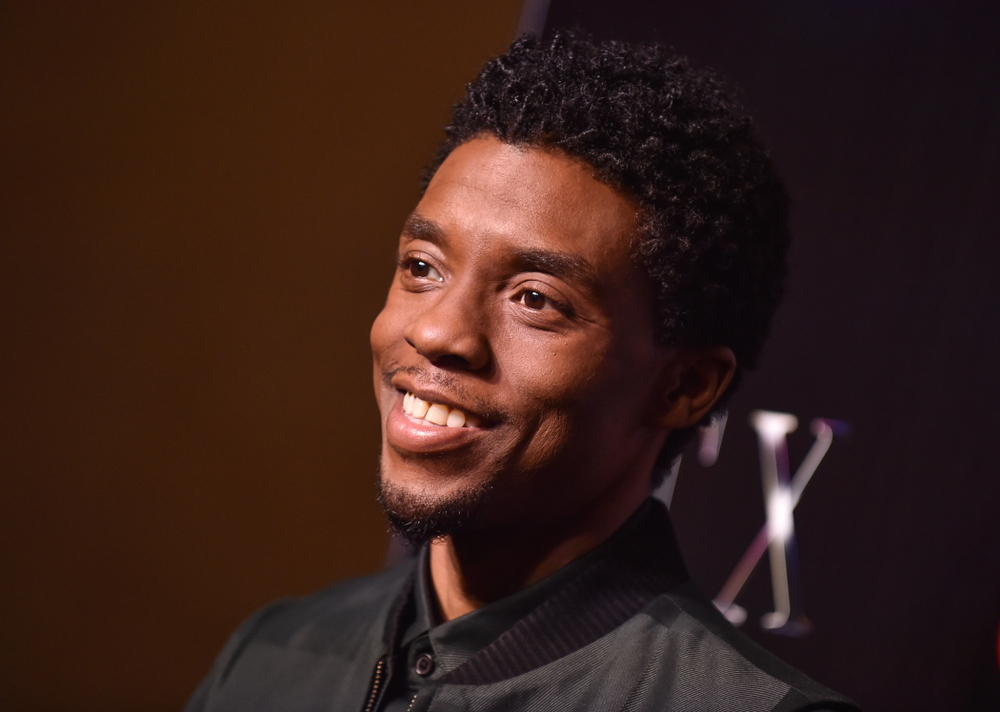
1. Chadwick Boseman
Chadwick Boseman died after a four-year battle with colon cancer he never spoke publicly about, leaving his fans and colleagues reeling at the loss of a man whose career was just beginning to reach its peak. He was 43.
Diagnosed with stage III colon cancer in 2016, Boseman battled the disease for four years, during which time it progressed to stage IV. He had been working “during and between countless surgeries and chemotherapy,” filming some of his most iconic work as he underwent treatment. That included Black Panther, Da 5 Bloods, and Ma Rainey’s Black Bottom – performances of extraordinary physical and emotional intensity delivered by a man who had every reason to step back from the camera.
The announcement was shocking because he was a seemingly healthy young man whose diagnosis had never been disclosed to the public. In a 2026 interview on Today, his widow Simone Ledward Boseman described how certain they had been that he would survive. “We both felt very sure that he would make it through,” she said, describing it as “a challenging moment, but something that he would come out on the other side of and be fine.” He briefly went into remission in 2018 – what she called “a beautiful year” – but the cancer returned more aggressively, and that certainty was taken from them.
His death changed conversations in real and measurable ways, forcing a public reckoning with rising colorectal cancer rates in younger adults and the particular risk faced by Black Americans. His passing prompted a significant spike in cancer screenings, particularly in communities with higher proportions of Black Americans.
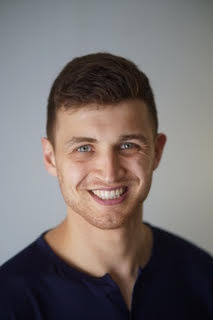
2. James Van Der Beek
James Van Der Beek, the actor best known for his role in Dawson’s Creek, died on February 11, 2026, at the age of 48 from colorectal cancer – a diagnosis he had revealed publicly in a social media post in November 2024. He had been diagnosed with stage III disease after noticing a change in his bowel movements and undergoing a colonoscopy. The diagnosis came as a shock to the actor, who was 46 at the time.
Van Der Beek told People magazine, via a Today interview recap, “I’d always associated cancer with age and with unhealthy, sedentary lifestyles. But I was in amazing cardiovascular shape.” That assumption is exactly what makes early-onset colorectal cancer so dangerous. Like many patients with early-onset colorectal cancer, he had no significant family history and considered himself healthy and active.
In one of his last TV appearances in December 2025, he said he was feeling fine, describing himself as “really fortunate in an unfortunate diagnosis.” He used his platform to urge people to get colon cancer screening starting at age 45 and to notice even small changes in their bodies. His death in early 2026, just weeks after that interview, devastated fans who had genuinely believed he would pull through.
His death arrived against a grim statistical backdrop. A 2026 report from the American Cancer Society found that colorectal cancer is now the leading cause of cancer-related death among people under 50 in the United States – climbing from the fifth most common cancer death in that age group in the early 1990s to first place, with death rates increasing by around 1% per year since 2005. Van Der Beek’s death at 48 put a human face on that trajectory in a way no chart or press release ever could.
3. Matthew Perry
When Friends ran from 1994 to 2004, Chandler Bing was appointment television for a generation. Matthew Perry had written candidly in his memoir that by age 14 he had become an alcoholic. He became addicted to Vicodin after a jet ski accident in 1997, completed rehab, and at his worst dropped to 128 pounds while taking as many as 55 Vicodin pills per day. He had spent decades struggling publicly with addiction, and he had also spent years advocating openly for recovery. Nobody saw how it ended coming.
The autopsy report noted his past drug use but stated he was “reportedly clean for 19 months.” He had been receiving ketamine infusion therapy – a treatment used for severe depression and anxiety – with his most recent infusion having occurred about a week and a half before his death.
The Los Angeles County Department of Medical Examiner determined that the cause of death for 54-year-old Perry was acute effects of ketamine, with contributing factors including drowning, coronary artery disease, and the effects of buprenorphine. The manner of death was ruled an accident. On October 28, at approximately 4:00 PM, he was found unresponsive in the pool at his residence.
Five people were charged in connection with supplying him lethal doses of the drug, and all five pleaded guilty. The investigation exposed a network of dealers, a personal assistant, and two physicians who had supplied ketamine to a man who had gone to considerable lengths to protect his sobriety. He had said he hoped to be remembered more for helping people achieve sobriety than for his acting career – a mission continued by the Matthew Perry Foundation, launched days after his death.
4. Lisa Marie Presley
Lisa Marie Presley, the only daughter of Elvis Presley and Priscilla Presley, died hours after being hospitalized following an apparent cardiac arrest on January 12, 2023. She was 54. She had attended the Golden Globe Awards just two days earlier, sitting alongside her mother to support the Baz Luhrmann film Elvis. That public appearance – looking well, carrying the weight of her father’s legacy with her usual composure – made the news of her death all the more impossible to process.
An autopsy report obtained by NBC News found that the cause of death was a strangulated small bowel obstruction – a blockage in the small intestine caused by adhesions (bands of scar tissue) that had formed after bariatric surgery she had undergone years earlier. The Los Angeles County medical examiner determined the manner of death was natural, and noted the complication was a known long-term risk of that type of surgery. Without rapid treatment, a bowel obstruction can cause intestinal tissue to die and lead to fatal infection. The report also detailed that Presley had been complaining of abdominal pain on the morning of her death.
None of that made it feel any less abrupt. The daughter of one of the most mourned musicians in history became a devastating loss in her own right – not as a footnote to Elvis, but as herself.
5. Heath Ledger
Actor Heath Ledger died in January 2008 at the age of 28, just months before his performance as the Joker in Christopher Nolan’s The Dark Knight reached audiences everywhere. He was found unconscious in his SoHo apartment. He had delivered what many consider the greatest villain performance in superhero cinema, and he would never see the reaction it produced.
An autopsy and toxicological analysis determined that Ledger died from the accidental combined effects of oxycodone, hydrocodone, diazepam, temazepam, alprazolam, and doxylamine – prescription drugs taken for insomnia and anxiety. These weren’t street narcotics. The intensity of his roles, and a documented struggle with sleeplessness, had led to a heavy reliance on medications that, in combination, proved fatal.
His death was particularly hard to absorb because of the timing. The Dark Knight had not yet been released. He had recently completed work on The Imaginarium of Doctor Parnassus, a film that couldn’t be finished without him. Three of his friends – Johnny Depp, Colin Farrell, and Jude Law – were brought in to replace his character, playing alternate versions of the same role as he travels through magical realms. The film became, unavoidably, a memorial. He was 28 years old, at the precise moment his talent was breaking fully open.
6. Philip Seymour Hoffman
On February 2, 2014, Philip Seymour Hoffman was found dead in the bathroom of his New York City apartment at the age of 46. He had won the Academy Award for Best Actor for Capote in 2006, and in the years since had become one of the most reliably extraordinary performers in American film – the kind of actor other actors watched to see what was possible.
Hoffman had struggled with drugs in his early years but entered rehab at 22 and remained sober for much of his adult life. He relapsed in 2013, and the following year he was gone. The relapse had been known to those close to him but was largely invisible to the public. The New York City Chief Medical Examiner ruled his cause of death as acute mixed drug intoxication, including heroin, cocaine, benzodiazepines, and amphetamine.
The quietly heartbreaking part is the twenty-plus years of sobriety he held before the relapse. He was also, at the time of his death, midway through filming The Hunger Games: Mockingjay, a role that had to be completed using existing footage and script rewrites. He left behind a partner and three young children. For people who loved his work, the sorrow came tangled with anger at the waste – at every performance that simply ceased to exist as a possibility.
7. The Sudden Deaths Nobody Saw Coming
Some losses don’t fit neatly into a single story but stay fixed in the culture regardless. Cory Monteith, the Glee actor, was 31 when he died from a heroin and alcohol overdose in 2013, stunning a fanbase made up largely of teenagers who had no frame of reference for it. Chris Farley was gone at 33 in December 1997, a cocaine and morphine overdose after years of playing the funniest man in any room – a public persona that bore little resemblance to what was happening privately. Amy Winehouse died at 27 in July 2011, ruled as acute alcohol poisoning – a loss that felt both foreseeable in retrospect and completely stunning the morning it happened.
What these deaths have in common isn’t recklessness or carelessness so much as the particular cruelty of addiction and illness. In almost every case, the person had tried. Had been in treatment, had stretches of sobriety, had undergone surgeries and chemo, had kept working through things that would have stopped most people entirely. The tragedy isn’t only that they died young. It’s that so many of them were fighting hard.
Read More: Heartbreak to Healing: Stars Discuss Life After Dating Narcissists
Why These Deaths Stay With Us
There’s something specific about the shock of a celebrity death that isn’t easily dismissed as parasocial or trivial. When someone has been part of how you understand joy or humor or beauty or music – when their face and voice have been present during the most charged moments of your own life – their absence creates a real gap. Not imaginary. Real.
The deaths on this list are particularly hard to process because they offered no preparation. No slow farewell, no gradual lowering of expectations. Just here, and then gone. And with them, the specific versions of ourselves that were formed in part by watching them – the teenager who had Ledger’s poster on the wall, the adult who could recite every Chandler Bing punchline from memory, the Dawson’s Creek generation that read the Van Der Beek news on a Wednesday morning in 2026 and couldn’t quite believe it.
Grief for public figures is real grief. It doesn’t need justification or a disclaimer that it isn’t as serious as other kinds of loss. The particular quality of an unexpected death – the way it arrives without preparation and sits in the body like something that hasn’t settled yet – is something that lingers. Not forever, maybe. But longer than people expect. And the fact that millions of other people feel the same thing doesn’t dilute it. If anything, it’s one of the few moments when a shared sense of loss is openly permitted, acknowledged, and understood without anyone having to explain themselves.
AI Disclaimer: This article was created with the assistance of AI tools and reviewed by a human editor.