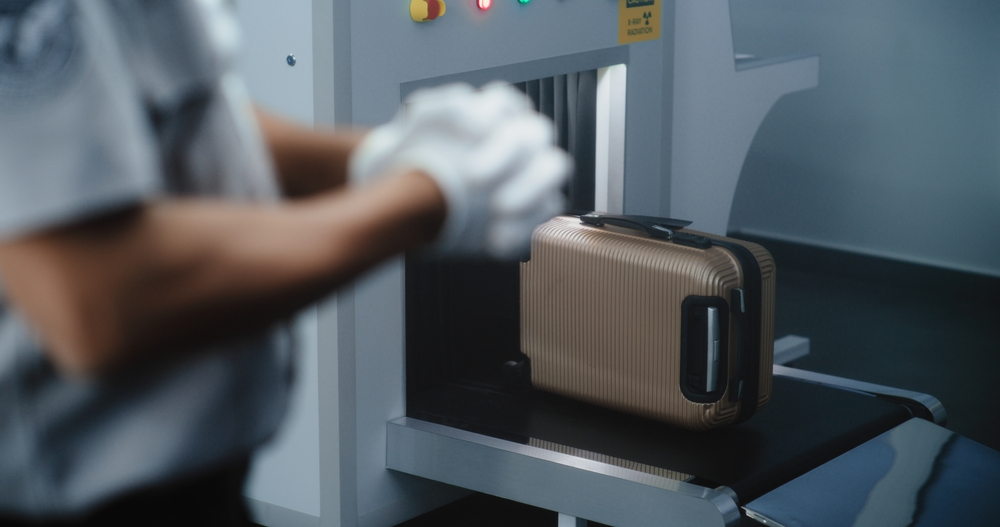

You packed your lunch, grabbed your carry-on, and made it to the gate with time to spare. The problem shows up at the security checkpoint, not at the boarding door. A TSA officer flags your bag, you wait while they dig through it, and what comes out isn’t a forgotten water bottle or a rogue tube of toothpaste. It’s your takeout.
This happens more often than most travelers realize, and the foods getting confiscated aren’t obscure or unusual. They’re the exact kinds of meals people grab on the way to the airport – a curry from the Thai place near the terminal, a foil-wrapped burrito, a container of guacamole picked up at the gate-side market. The frustrating part is that the rule making all of this happen isn’t new, and it isn’t really about food at all.
The TSA’s liquid restrictions apply to every substance that can pour, spread, or drip – not just the toiletries in your overnight bag. Once you understand how broadly that definition reaches, the list of confiscated takeout stops being surprising and starts being completely predictable.
What the TSA Liquid Rules Actually Cover
The Transportation Security Administration allows travelers to bring a quart-sized bag of liquids, aerosols, gels, creams, and pastes through the checkpoint, with each container limited to 3.4 ounces (100 milliliters) or less. This is the 3-1-1 liquids rule. Most people know this applies to shampoo and perfume. Far fewer realize it applies equally to their lunch.
Figuring out what actually counts as a liquid is less straightforward than the rule itself. According to AFAR, former TSA spokesperson Lisa Farbstein put it plainly: “if you can spill it, spray it, spread it, pump it, or pour it, then it’s a liquid, gel, or aerosol.” That single sentence covers a remarkable amount of food. Peanut butter is a paste. Yogurt is a gel. Soup is a liquid. And a curry, no matter how confidently it sits in its takeout container, is absolutely a liquid the moment it touches a TSA X-ray belt.
One part that surprises travelers consistently: TSA checks the container size, not how much liquid is actually inside. A container larger than 3.4 ounces will be confiscated even if it’s mostly empty. A half-eaten tub of hummus is just as non-compliant as a full one. The TSA’s food guidance page confirms that spreadable, pourable, and gel-like foods all fall under the same rules as toiletries.
TSA PreCheck does not get travelers out of this. PreCheck members still cannot bring liquids larger than 3.4 ounces through the checkpoint. The program only exempts people from removing shoes, belts, and light jackets – not from liquid restrictions.
The 5 Takeout Items TSA Confiscates Most
1. Saucy Meals: Curries, Enchiladas, and Pasta
This is the biggest category and the one most likely to result in a pulled bag. Meals with a lot of visible sauce are especially prone to getting flagged. That enchilada plate with red sauce pooling at the bottom might not make it through. The same goes for curries, pastas with heavy sauces, or stir-fries with glossy, broth-based glazes. TSA officers aren’t judging your taste – they’re trained to stop anything that looks like it could leak, drip, or be hiding something more suspicious than spicy peanut sauce.
The issue isn’t just the sauce quantity; it’s also the container. Most takeout boxes aren’t transparent, which means agents can’t assess what’s inside without opening the bag or running it through a secondary screen. A meal that might have technically squeaked through on volume alone can still get flagged simply because it looks ambiguous on the scanner.
2. Foil-Wrapped Foods: Burritos, Tacos, and Sandwiches
Foil is one of the fastest ways to guarantee a manual inspection. Foods wrapped in foil, like tacos or sandwiches, often get pulled aside because the scanner can’t tell what’s inside. If there’s moisture – like sauce or anything vaguely squishy – a manual inspection is likely.
The foil itself blocks the X-ray image, so even a completely dry sandwich can trigger a secondary check. Add any kind of wet filling – salsa, chipotle sauce, oil-soaked ingredients – and the odds of confiscation rise sharply. The fix is simple: swap foil for clear plastic wrap or a transparent container. Agents can do a visual check without opening a thing, and the line keeps moving.
3. Guacamole and Avocado-Based Dips
Guacamole is one of the most reliable ways to lose food at security, and it catches people by surprise because it doesn’t obviously seem like a liquid. It is. Foods like hummus, yogurt, peanut butter, salsa, and even fruit packed in juice all count as liquids under TSA’s definition. Anything over 3.4 ounces gets flagged or tossed, no matter how solid it looks.
Guacamole sits squarely in the “spreadable” category that TSA treats the same as gel. A small individual-serving cup – the kind you’d get with chips at a restaurant – often runs about 2 ounces and would technically pass. But the standard takeout container, the kind that comes alongside a burrito bowl, is typically 4 to 6 ounces. That’s over the limit before you’ve even accounted for the rest of your carry-on liquids.
4. Hummus and Other Spreadable Dips
Hummus gets people consistently. Even when it comes in a travel-friendly snack pack with pretzels, hummus is a spreadable liquid and falls under the 3.4-ounce rule. Unless it’s frozen solid or in a very small container, it won’t make it through the checkpoint.
The same logic applies to baba ganoush, tzatziki, soft cheese spreads, whipped feta, and anything else you’d use a knife or cracker to scoop. If it can be spread, it’s a gel. This trips up travelers who’ve bought a snack pack specifically for the flight – a perfectly reasonable purchase – only to have it confiscated because the hummus portion is labeled as 3.5 ounces rather than 3.4. One-tenth of an ounce over the limit is still over the limit.
5. Salsa, Sauces, and Condiment Containers
Salsa causes consistent confusion. Even the chunky kind counts. Reporting from TheStreet notes that takeout food packed in the same container can be confiscated if it contains a particularly watery sauce or salsa – including cases where the meal itself might have passed, but the sauce that came with it did not. That last scenario is the one nobody anticipates.
This extends to any sauce packed alongside a meal: hot sauce, gravy, teriyaki glaze, mole, or a marinade picked up as a souvenir from a local market. Frozen food transported with ice causes a related problem. Once the ice melts, it becomes a liquid and gets flagged at screening – even if the food inside was perfectly solid when you packed it.
The Container Problem Nobody Talks About
Even when travelers know the rule, they often underestimate how aggressively the container size limit is enforced. TSA checks the container size, not the liquid amount inside. Bring a container that exceeds 100ml – even if it’s half-empty – and it gets confiscated at security. This is the part of the TSA liquid rules that feels most counterintuitive. You ate half the guacamole in the car on the way to the airport. The container now has maybe two ounces of food left in it. Doesn’t matter. If the container is labeled 8 ounces, it goes in the bin.
The solution isn’t to empty your food into a smaller container at the curb (though technically that would work). The cleaner approach is to either eat what you can before security, transfer anything liquid into a 3.4-ounce travel container before leaving home, or simply pack these items in your checked bag. Liquids in checked baggage face no size restriction, with only rare exceptions for certain flammable materials.
Knowing what flight attendants actually watch for at the gate can also help you move through the airport with a lot less friction – and a lot more of your food intact.
Why Frozen Doesn’t Always Save You

One workaround that travelers try: freeze the food before packing it. The logic is sound, because TSA does treat frozen-solid items as solids rather than liquids. If a liquid is frozen rock solid at the time of screening, it passes as a solid. If it’s slushy or showing any melt at the bottom, it will be confiscated.
The practical problem is timing. A curry that was frozen solid when you left the house may be slushy by the time you reach the checkpoint an hour later, especially in a warm terminal. If an agent squeezes the container and feels movement, the item gets confiscated. The frozen workaround is only reliable if the food stays completely solid all the way to the X-ray belt – not just when you leave home.
The Surprisingly Easy Fix
Most of the friction at the checkpoint comes from opacity: opaque containers, foil wrapping, and dark sauces that make the X-ray image hard to read. It’s not just what you pack, it’s how you pack it. Using clear containers or transparent wrap gives TSA agents a cleaner visual and speeds up the screening process considerably.
A clear zip-lock bag holding a turkey wrap moves through the scanner in seconds. The same wrap in a foil sleeve can trigger a secondary check, a bag opening, and an uncomfortable conversation about whether your lunch counts as a security risk. Swap the packaging, keep the meal.
For anything that genuinely qualifies as a liquid or gel, the best approach is the simplest one: check it, eat it before security, or portion it into a 3.4-ounce container and add it to your quart bag alongside your toiletries. TSA officers may also ask travelers to separate food items from carry-on bags when they clutter the bag and block clear X-ray images – so keeping things uncluttered helps the line move faster for everyone around you, not just you.
Read More: Airport Security 101: What to Know Before You Fly
What to Do With All of This
The TSA liquid rules have been in place since 2006, and they apply to food exactly as they apply to shampoo. The rule didn’t change – the awareness just never caught up. Most people who lose food at security aren’t breaking any rule they knowingly ignored. They just never had reason to think about whether their lunch counted as a liquid.
The good news is that the fix requires almost no effort. Clear packaging moves through security faster than opaque packaging. Checking your bag costs a little money but saves a meal. Portioning a dip into a small container before you leave the house takes about 30 seconds and has a 100% success rate. None of this is complicated – it just requires knowing the rule applies to what’s on your plate, not only to what’s in your toiletry kit.
And if you’re someone who flies with food regularly – especially if you travel with dietary restrictions or pack meals because airport options don’t work for you – it’s worth knowing that change may be on the way. TSA is currently testing 3D CT scanners at select airports that could eventually allow agents to clear larger liquid quantities with greater confidence. The rollout is uneven, and the policy varies by location and staffing. Until TSA formally updates its rules, assume the 3.4-ounce rule still applies everywhere. So for now, that curry goes in your checked bag. Or you eat it at the restaurant, sit for a minute, and board the plane lighter than you planned.
AI Disclaimer: This article was created with the assistance of AI tools and reviewed by a human editor.